
MY CONNECTION TO HAITI
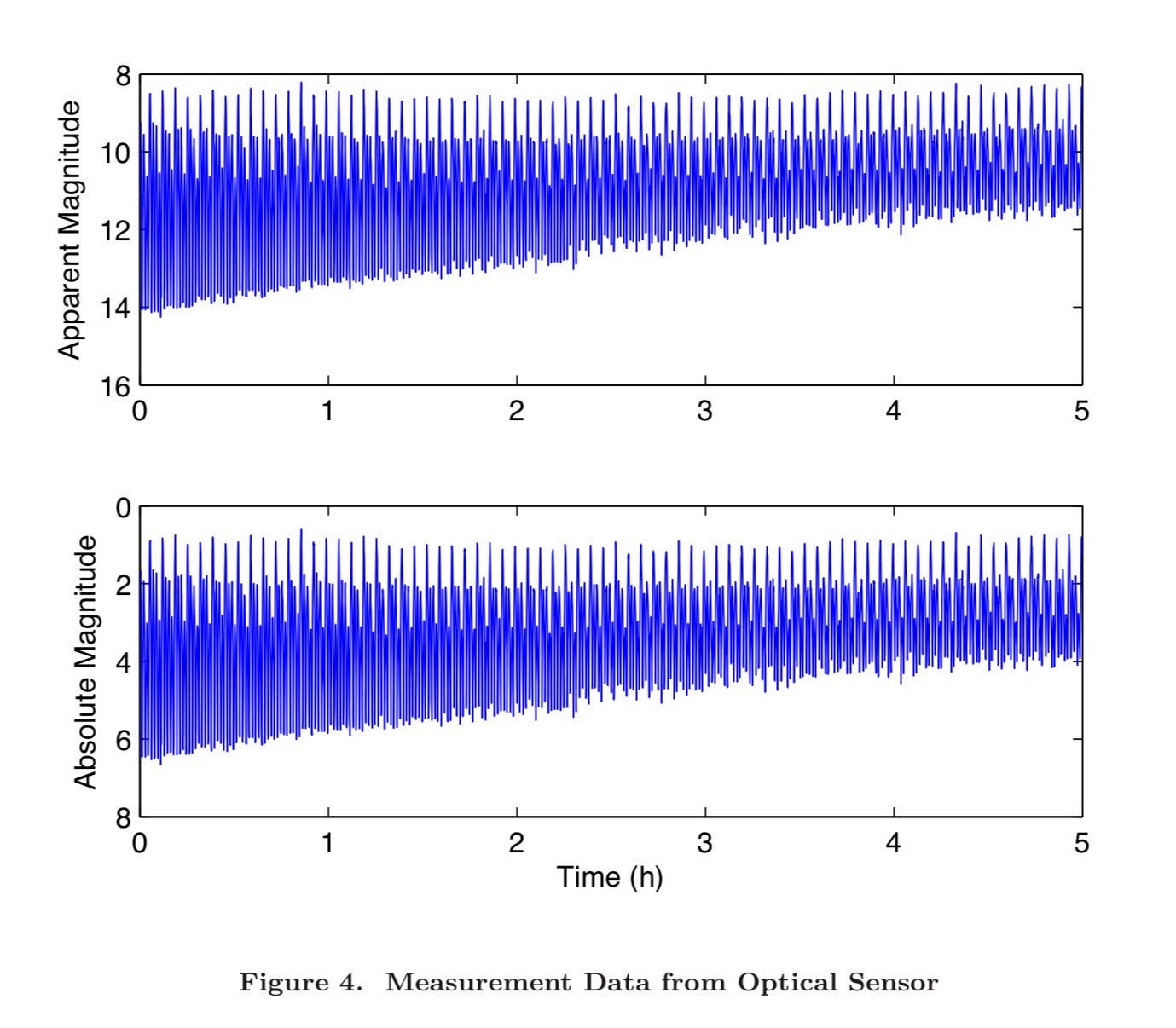
In 2008, I was working an internship for the U.S. Air Force. I was tasked with estimating the trajectories of a constellation of spacecraft we were using to study the effects of the ionosphere on navigation signals. I also studied how to reconstruct the density of the ionosphere using the “twinkling” of signals from GPS spacecraft. Another assignment of mine was to use single-point optical observations to estimate the trajectory, as well as the shape of objects in orbit. All of this was done for the national interests of the United States. This work was formative for my career, and as I struggled through these assignments that built my skill, passion, and perseverance, I had awesome leadership and instruction.
My work, as a “natural born” American, was done under the leadership of a space physicist who immigrated from Taiwan, and another, an astrodynamicist, who is the descendant of Haitian immigrants: Moriba Jah.
Moriba, who at the beginning of our friendship was an academic supervisor, has been a lifelong supporter of my work and my winding career, through academia, government, and the private sector, from the lab to the cockpit.
Moriba encouraged me through the toughest years of my Ph.D. program. He supported me to grow as a scientist, an engineer and friend. He has had a similarly positive effect on many others as an academic mentor and a decorated tenured professor at UT Austin. Before he and I met, he was an operational engineer who navigated U.S. spacecraft to Mars. Moriba is also a veteran of the U.S. Air Force.
Moriba has contributed to the United States not just with his talents as a brilliant and relentless engineer and veteran. He also has spent decades of his life dedicated to training the next generation of talent in our country. He’s a vocal advocate for the sustainable utilization of space so that our species doesn’t create so much space debris that no spacecraft can fly without the high probability of collision and destruction (listen to the Space & Satellite Professionals International podcast for a great interview on this topic).
Imagine life without GPS or internet available everywhere. Moriba spends his time fighting that these services will always be available for us in the U.S., and people all over the world.
Our country is also indebted to Moriba’s family. Both of his grandparents were Haitian, and they worked for the U.S. government. His grandmother, Rolande Turnier, was the first military professor of Haitian descent at the Defense Language Institute in Monterrey, CA, where she taught the U.S. military for over three decades.
I, and many others, have benefited immensely from Moriba’s dedication to engineering, teaching and friendship. Part of why I write essays on this Substack site is because I know of my privilege to pay his work forward, especially in advancing the cause of public science literacy.
Moriba was the first person I became friends with who had a Haitian background. My story is not unique, because Haiti and the United States have had a close relationship for centuries. Haitians fought in the American Revolutionary War and they are integral to our communities, just like every group of immigrants in history. The communications director for Jeb Bush’s campaign, Tim Miller, offers ‘without Haitians, New Orleans would be Alabama’ on his The Bulwark podcast.
This week, the Supreme Court week allowed the Trump Administration to revoke the Temporary Protected Status (TPS) of Haitians living in the United States after an earthquake that crippled their already poverty-ravaged country in 2010. This clears the way for the Trump Administration to forcibly deport this community, after they’ve been in the United States for over a decade. This is plainly immoral. This is a story on repeat through all of human history: an “out group” that is easy for some to villainize is attacked by an “in group” that victimizes itself.
The excuse that our lives are worse because of the presence of 350,000 Haitians legally in the U.S., 0.01% of the population of the U.S., is just that: an excuse. It psychologically feels good to blame others for personal and national problems. Blaming others is a form of self-victimization so that perpetrators don’t need to self-assess and correct their own lives.
In this community of 350,000 people, there are cab drivers, cooks, nurses, doctors, and entrepreneurs. There are the moms and sisters and children of all of these as well. There’s the father of an engineer in this group. If we deport these people, the U.S. becomes weaker. We also become less American.
Another group affected by the revocation of TPS is Syrian immigrants. Steve Jobs, the founder of Apple, the most valuable company in the world for many years in a row, was Syrian. Books have been written on this repeating story about the plight of immigrants.
The exclusion of these populations hurts the United States economically, culturally, and morally. Further, it’s not a sustainable policy. American economic might is based on immigration. The foundation of the U.S. economy is the hard work, ingenuity, resourcefulness, and collaboration of various populations of immigrants, no matter if they came from England in the 1600s or Haiti in 2011. By attempting to exclude the next generation of immigrants to the U.S., the U.S. only hurts itself.
And I need to say that I am in no way arguing for an open border. I’m arguing that we need to address immigration more humanely, consistently, and efficiently - but above all humanely, in a way that respects the dignity of human beings. The answer, I am sure, is not to treat human beings and human families as if they can be moved immediately on pallets. It is also certainly not to blame this community for legally residing in the U.S. while the U.S. couldn’t get its own immigration policy in order.
I don’t have a solution for this problem right now. All I know is that it will take time for U.S. voters, and the U.S. government, to realize the mistakes they are re-making, such as when they turned away ships of Jews escaping Nazi Germany, or blamed the country’s problems on Irish or Chinese immigrants in the 1800s.
I also know that we came back from dark periods such as this. I know that voters are getting sick of the constant excuses and corruption of this generation of oligarchs. People are starting to see the light on the other side of lies being used to villainize others and victimize themselves.
The first step in turning the corner on cynicism is experiencing a feeling of “connectedness,” be it to the universe through awe, or through emotional connection to another human. In that spirit, I offer this:
Haitian families in the United States are not the reason the cost of gas at the pump is high. They’re not the reason housing is unaffordable and healthcare is dysfunctional. Furthermore, if Haitians in the U.S. succeed in their businesses, in their careers, in raising their families, and mentoring the next generation of American engineers, then we all succeed. And the same thing goes for the rest of us non-Haitian Americans. If we Italian-Americans succeed, we help our Haitian brothers and sisters succeed. And, I will also offer that, if the country of Haiti itself succeeds, the U.S. will be better off. These two countries are neighbors in the New World with centuries of cultural exchange at this point. We either help one another or perish apart. I think most of us prefer helping, but only after we dissolve the claws of the lies of cynicism with the warmth of connection.
Thank you & the honor is mine if you’ve read this piece.
You can subscribe to all of my writing for free at the link below. If you choose to contribute, I would be honored, but it’s not necessary. Your contributions go helping me advertise these essays to new audiences of people that aren’t reached by traditional media.
Comments
Nothing yet. Say the first thing.
Sign in to join the conversation.