
Mexico was the first foreign country I loved. I was also captivated by Peru, Nicaragua, and Guatemala, but Mexico felt supercharged. I became enthralled with the culture—the mysterious sophistication of the ruins and art, the way people seemed to live in the forefront of their lives, the vibrant cuisine, and the frequent ceremonies and manifestations. I responded to the majestic loneliness of the Yucatan countryside—coming upon those mysterious jungle temples, feeling some currents in the art that connected to Egyptian tomb art Those frontal, stark carvings! I appreciated Octavio Paz’s statement In Mexico, surrealism runs in the streets.
Traveling with Victor Perrera, author of The Last Lords of Palenque, Ed and my daughter and I got to roam around the villages around Villahermosa. We stayed in a concrete block hotel where dinner was served outside with howler monkeys swinging in the trees, and yes, howling. We swam in a cenote (a deep blackwater sinkhole in the porous lime soil) before I learned it was a place of former human sacrifice. Victor proposed a hike to meet the ruler of a lost-in-time tribe, a man in his late eighties still fathering children. I balked when he explained that we had to wear flea collars around our necks and ankles as we traipsed through the jungle.
I spent a summer in San Miguel de Allende, long before it became a tourist mecca. Groups of pilgrim men passed under my window, flagellating themselves with plaited ropes. The rattling pickup truck came and ladled milk into my pitcher. Flocks of egrets perched in the trees of Benito Juarez Park across the street. At any loud car backfire, they rose in grand flurry of flapping wings into the sky. My Spanish teacher despised the classroom. Lessons were in his broken old car, riding back roads and stopping in a crumbling church decorated with lurid frescoes. We walked in fields, picking up shards of Chichimeca pottery. With a guy I met in a restaurant, I went to Real de Catorce, a ghost town then but once a thriving silver mining area. The church was completely covered in ex voto paintings. We slept at some birthplace of bedbugs and ate crackers for dinner. At night I went to a restaurant owned by a woman who was having a baby with a matador. I was mightily impressed.
The next summer I went to Italy for a month and that became a long story.
Recently, I’ve been longing to go back to Mexico. From our airport, RDU, we now have a non stop flight, 3 1/2 hours. I could be there by dinnertime. Mexico City was aways a magnet and now is rife with galleries and interesting restaurants. The National Museum of Anthropology is up in the top museums I’ve ever been to. When my wonderful artist friends Robbin Gourley and Jeffrey Stern told me they were spending a month in Mexico City, I couldn’t wait to hear about everything. I’m sharing with you the experience of these two great travelers, wide awake to art, nuance, atmosphere. “Every afternoon at four it rained…” Robbin began.
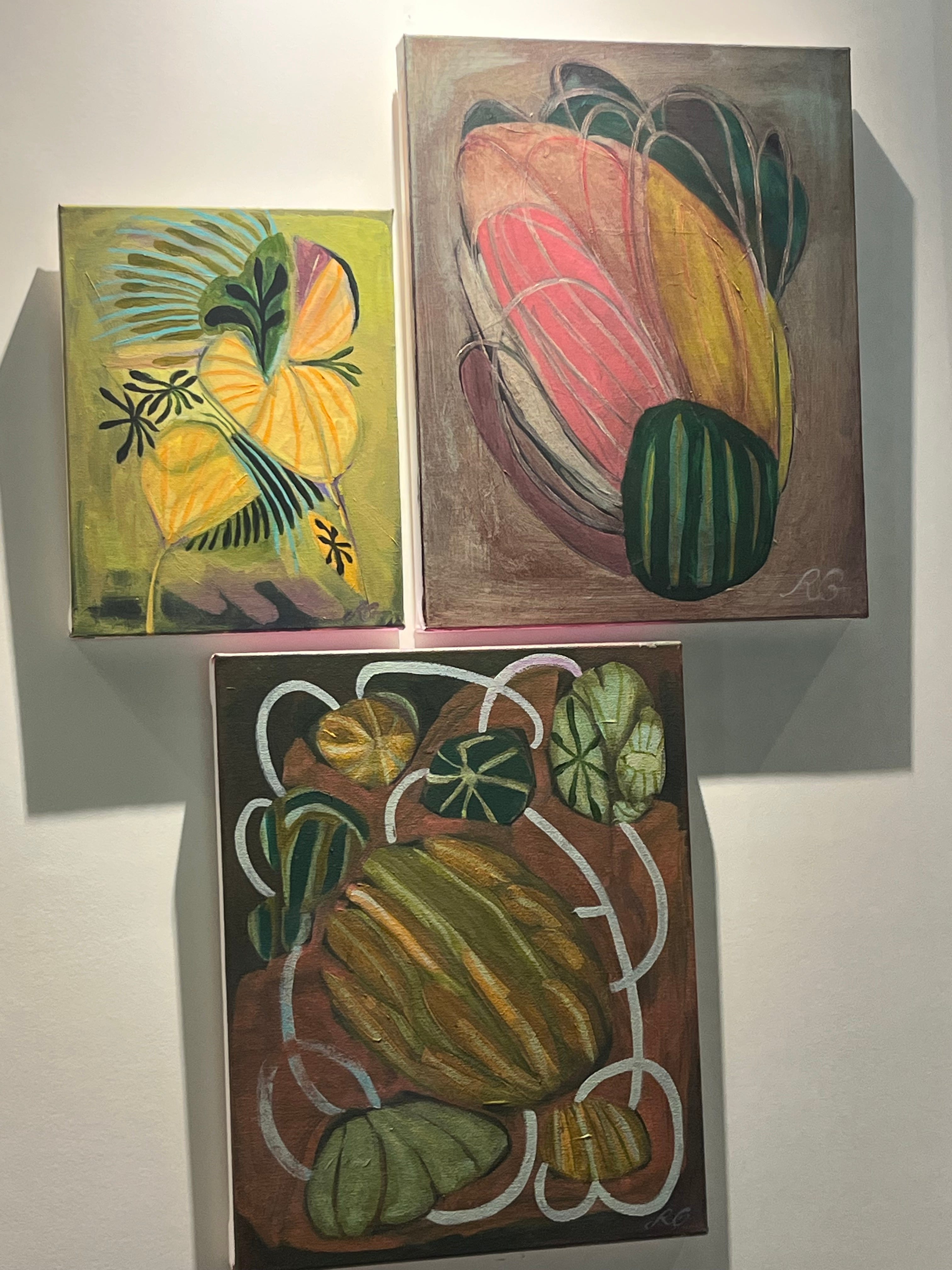
I love this recent work by Robbin, above. The three talk to each other. They hang in our friends Elizabeth and Eric’s house so I get to see them often.
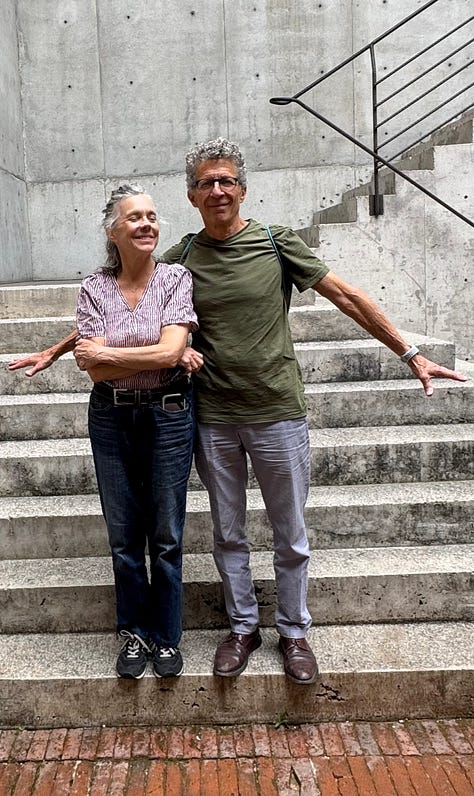
Robbin’s career has been as an illustrator, cookbook and children’s book writer, editor, book designer, and now full time painter.
Jeffrey taught film at the University of Miami, has engineered major film productions, and now also is totally focused on making art. Their son lives in Mexico City and is traveling for the summer so they had a nest ready for them in his Art Deco apartment.
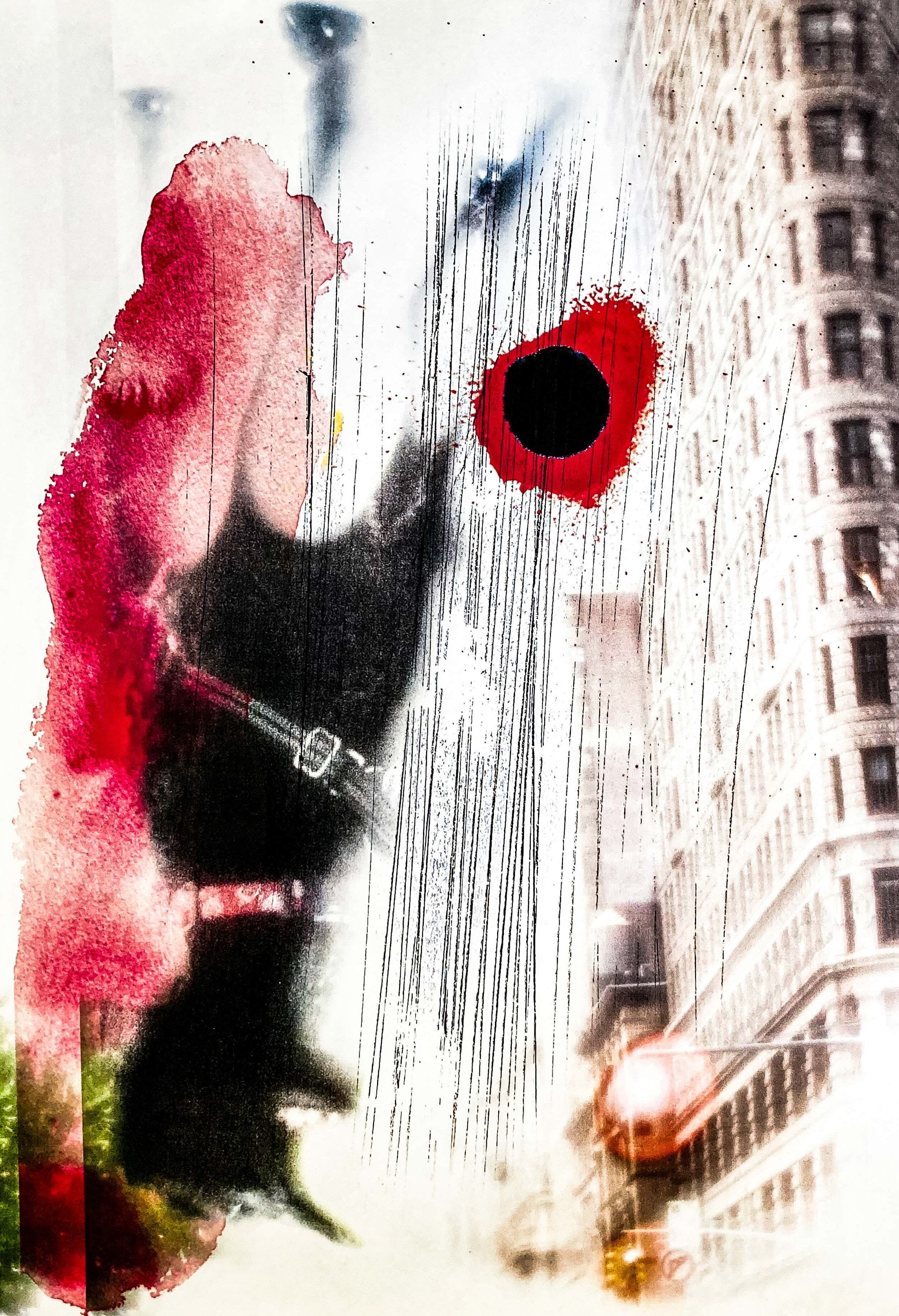
Frances: Okay, you two. How was it!! Tell me everything. How is the food?
Robbin: The food is amazing. For example at Rosetta, Jeffrey had a mezcal old fashioned. I had a fermented plum something. The salad was white peaches with radicchio, pistachios, and parmigiano with a citrusy, peachy vinaigrette. Wagyu steak with black mole sauce! The dessert was so sublime. Honey jelly with peach and brown butter ice cream. Everywhere fresh, fresh, fresh. Robust. Presented with gusto, confidence, and pride. The Tuesday Condesa farmer’s market was abundant and bursting with color and variety. Have you ever had vanilla mangoes? Of the three different mangoes available, they are the best. You reach the market through a beautiful neighborhood of art deco buildings. You spend a fraction of what it costs in the states.
Jeffrey: We ate at least one meal out every day. Whether it was a corner street stand or white tablecloth dining, the food rated a 99% of fabulous. Per capita, CDMX would appear to have the largest percentage of restaurants of anywhere in the world. Food is clearly a priority that is taken seriously.
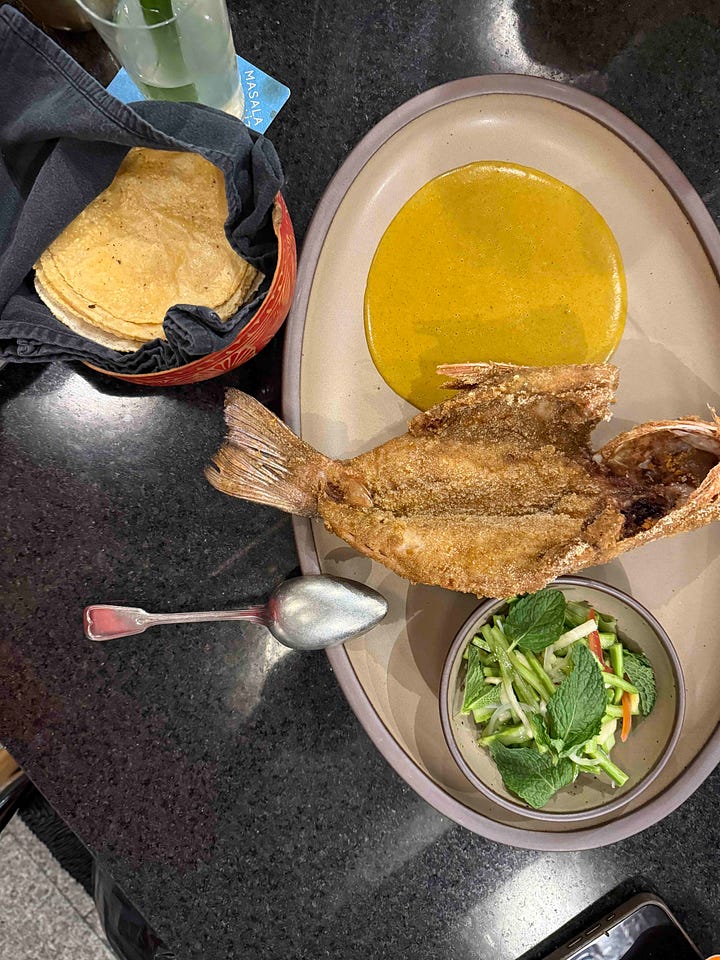
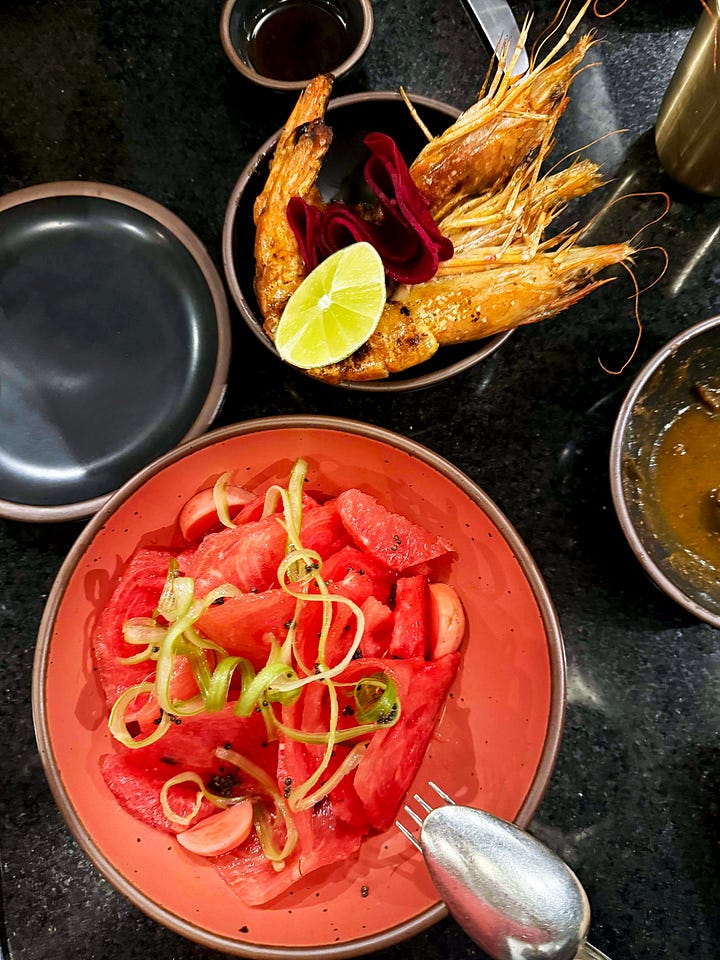
Frances: What were your top three restaurants?
Jeffrey: I might have to do four. Lardo, created by the celebrated Mexican chef, Elena Reygadas, is a Mediterranean mix in a casual setting—big windows open to the street. Most restaurants have the most innovative and delicious salads. Fruit with greens, soft and crunchy, sour and sweet all on one plate. Fugaz, a low-key café that leans into vegetables in most all the dishes and innovative use of greens and herbs from starters to dessert. Voraz, fully Mexican, starring ingredients taken to another level. I ate so much that I stumbled home and fell down comatose. Enough said!
Frances: I bet you tried every taco stand in town!
Jeffrey: Cariñito Tacos, Mexican-Thai fusion Tacos. Perhaps not for the die-hard Mexican taco lover. There are carnitas and al pastor tacos shops galore. These were distinctively different.
Taqueria Orinoco (in the Condesa district). If you’re not a fan of the fusion, this is the real thing. It’s a chain, but this one is great. Noisy, busy, and checks all the taco boxes. Okay. I know. That was five. But the food scene is just that amazing.
Robbin: I’m adding more. All of our restaurant meals were exceptional: Rosetta, Meroma, La Once Mil, Masala y Maiz (African, Indian, Mexican!). There are white tablecloths at the most casual restaurants. And bakeries! Odette was our favorite.
Frances: If you were not staying at your son’s place, where would you like to stay?
Robbin: There are many small, charming hotels in Condesa and Roma Norte. I would like to try a full service hotel such as Casa Polanco Hotel on my next visit.
Frances: I’m imagining you strolling along leafy streets, popping in galleries and artisan shops. Are there good coffee shops? Did you see the ghosts of Frida and Diego? Could you live there?
Jeffrey: Yes, yes, and yes. Coffee shops are everywhere and lovely, delicious. We occasionally had trouble finding certain galleries, or finding them open, but when we did the work was always interesting. We did purchase a few local goods of ceramic and glass that fit, just barely, into our carry-ons. Frida and Diego are everywhere, in the many museums and frescoed walls. Their images linger like the patron saints of the city.
Frances: Did you feel safe?
Jeffrey: Always. We never felt uncomfortable in the least. We heard that there are neighborhoods one should avoid. We travelled in a thirty-minute drive radius in very reasonably priced Ubers. So much to do, see, eat, and we were never concerned.
Robbin: We felt very safe and walked as much as possible. Loved the strolls home at night after dinner. We did not spend much time in the high-rise neighborhoods, as we preferred the relaxed neighborhoods of Condesa, Roma Norte, and Juarez. There is a concerted effort for clean streets, and we saw beautiful new, fabulous architecture in the city center. The art deco buildings and Luis Barragán’s incredible work did it for me. I DEFINITELY could live there.
Frances: I remember Sunday afternoons in Chapultepec park, the little girls twirling in their pastel dresses, the deep shade with people lounging on blankets. Is it still like that? I know it’s huge—1,700 acres so it must be endless to explore.
Jeffrey: In the busy section near the museums, walkways are lined with food and trinket stalls. The craze this season were furry monkeys that children, and a few adults, would wear on their heads and shoot each other with water guns built into the tails. I kept trying to interest Robbin, but she wouldn’t go for it. In the quieter sections, couples and groups would spread out on blankets to eat and relax or siesta.
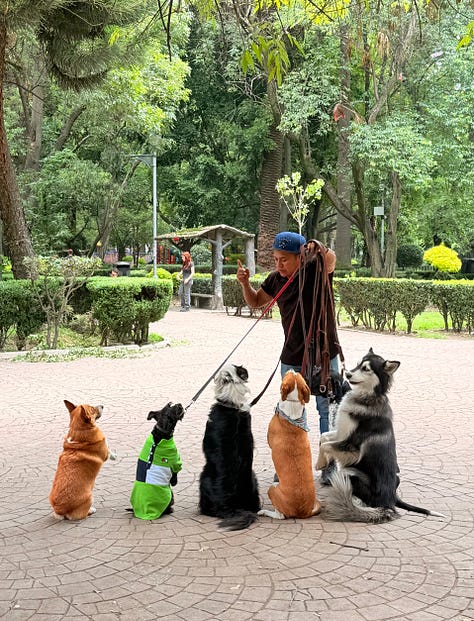
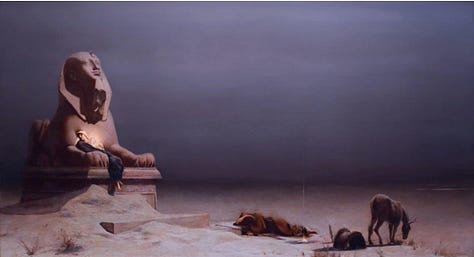
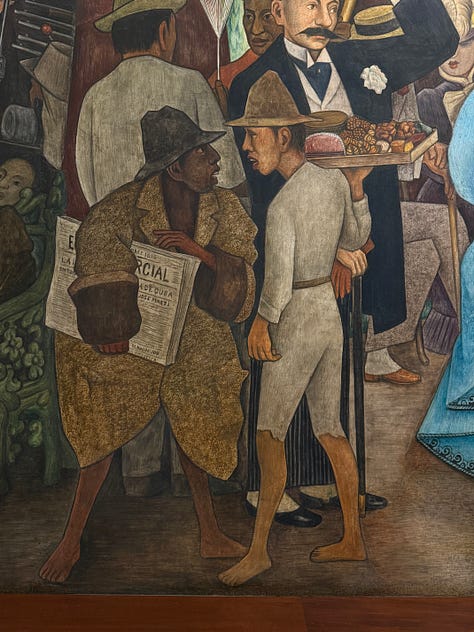
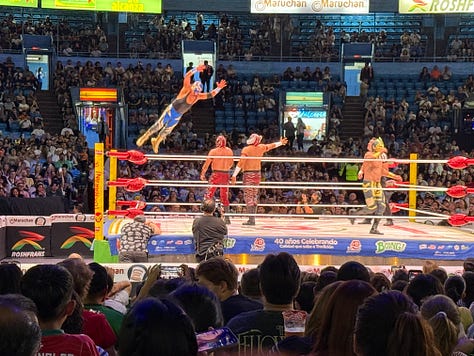
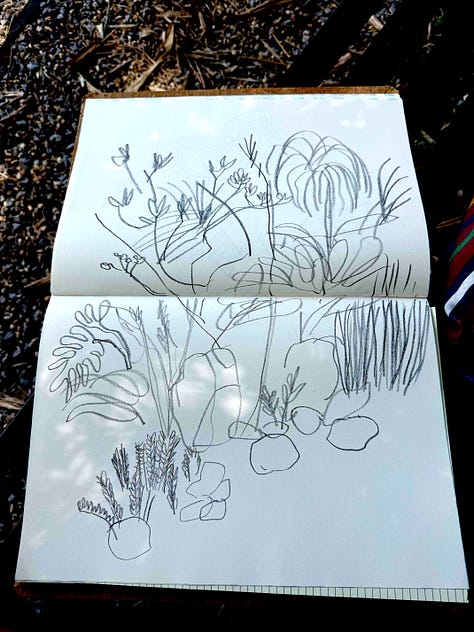
Robbin: The parks of the city are much beloved and busy. In Parque Mexico, across from our building, there is a crowded plaza where during the day there is frisbee throwing, dogs chasing balls, children playing, people strolling and exercising, tai chi, salsa lessons, and no one gets in anyone’s way. Lots of lovers on benches. People relaxing on blankets. Not often mentioned but not to be missed in the western section of the park is the Dolores Cárcamo Museum. Not a museum by usual standards but a former hydraulic pumping station. A below-ground, open room lined with the MOST exquisite Diego Rivera murals.
Frances: I’ve read that CDMX is a center for architecture now. What’s the feeling of the city—still deep vibes of Spanish revival architecture? Big high rise feel? Good vibe or jarring?
Jeffrey: There are a few high-rise buildings. I assume the fact that Mexico City is built on what was once a lake, and that the region is prone to earthquakes, keeps them to a minimum. Instead it is a huge sprawling city of buildings mostly under five stories. For a big city this lends it an open airiness. Combined with its many small parks, garden-lined streets, balconies of hanging gardens and double boulevards with center tree-lined walkways makes it a city within a garden. There is Spanish revival but the prominent style is the hundreds of beautiful Art Deco buildings. There are also striking examples of 20th century architecture, Diego and Frieda’s Bauhaus influenced studios, mid-century Mexican UNAM Central library, the work and influence of Luis Barragán, through to the 21st century futuristic Biblioteca Vansconcelos, and, in particular, many of the large art institutions.
Frances: The National Museum of Anthropology, of course, is not to be missed. I’ve read about Museo Soumaya. What other museums do you recommend?
Jeffrey: The National Museum of Anthropology is a must, multiple times, to explore and to draw. Equally wonderful for varied reasons, Museo Tomayo of Contemporary Art, the Modern Art Museum, Palacio de Bellas Artes, Diego River Mural Museum and Museo Anahuacalli, which houses a vast hoard of Diego Rivera artifacts.
Robbin: My favorite museum experience was the Museo Tomayo Arte Contemporaneo in Chapultepec. It had a fabulous exhibition: Archaic Futures—blown away by it and the way it was exhibited—a black room! How bold. We visited many galleries, and there is fabulous art to be purchased if you have the budget. It is an ART city. We met a couple who did just that. They came for the weekend and walked around the galleries of Roma Norte and bought art.
Frances: I know you went there armed with art supplies. What did you plan to do?
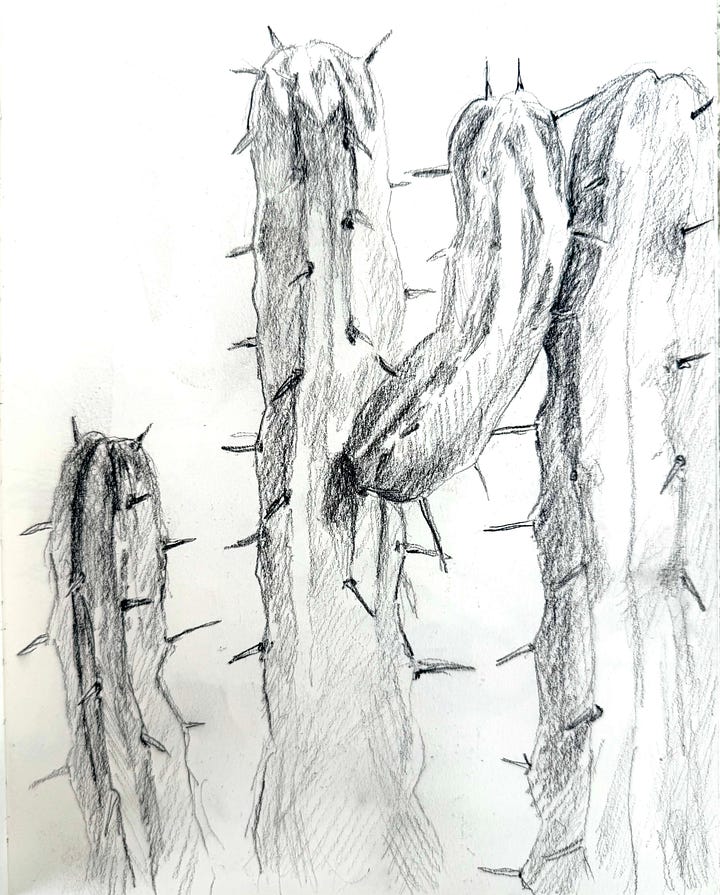
Jeffrey: I only took a blank notebook and a box of varied drawing implements. My goal was to draw everyday and fill the book. I didn’t quite make it, though between The National Museum of Anthropology and two incredible botanical gardens , we had an inspiring time.
Frances: What surprised you?
Jeffrey: The city is beautiful, livable, affordable, endlessly fascinating and entertaining, and the people are warm and welcoming.
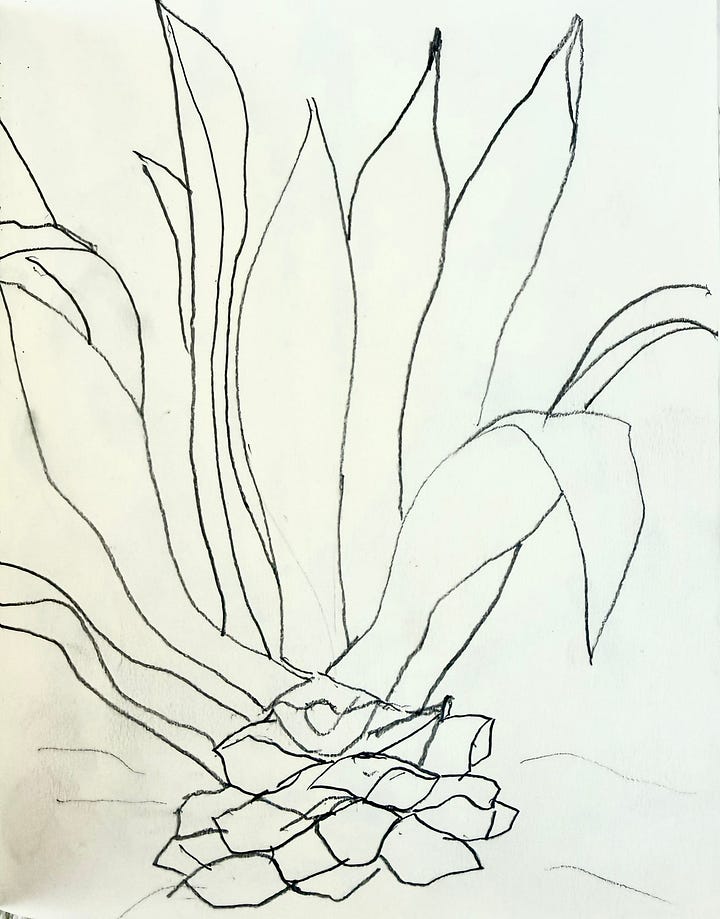
Robbin: We had been to Mexico before: CDMX, Merida, San Miguel de Allende. Jeffrey had been there as a young teenager with vibrant memories. We have traveled quite a bit, but we have never gone to another country for a one month stay. What happened unexpectedly was that with the luxury of a longer stay, I left my identity behind. I took a blank notebook, water colors, pencils, pens and intended to make a drawing/painting a day. I began drawing as I usually do—still lives, the cat, a simple view out a window. We took our notebooks to the National Museum of Anthropology.
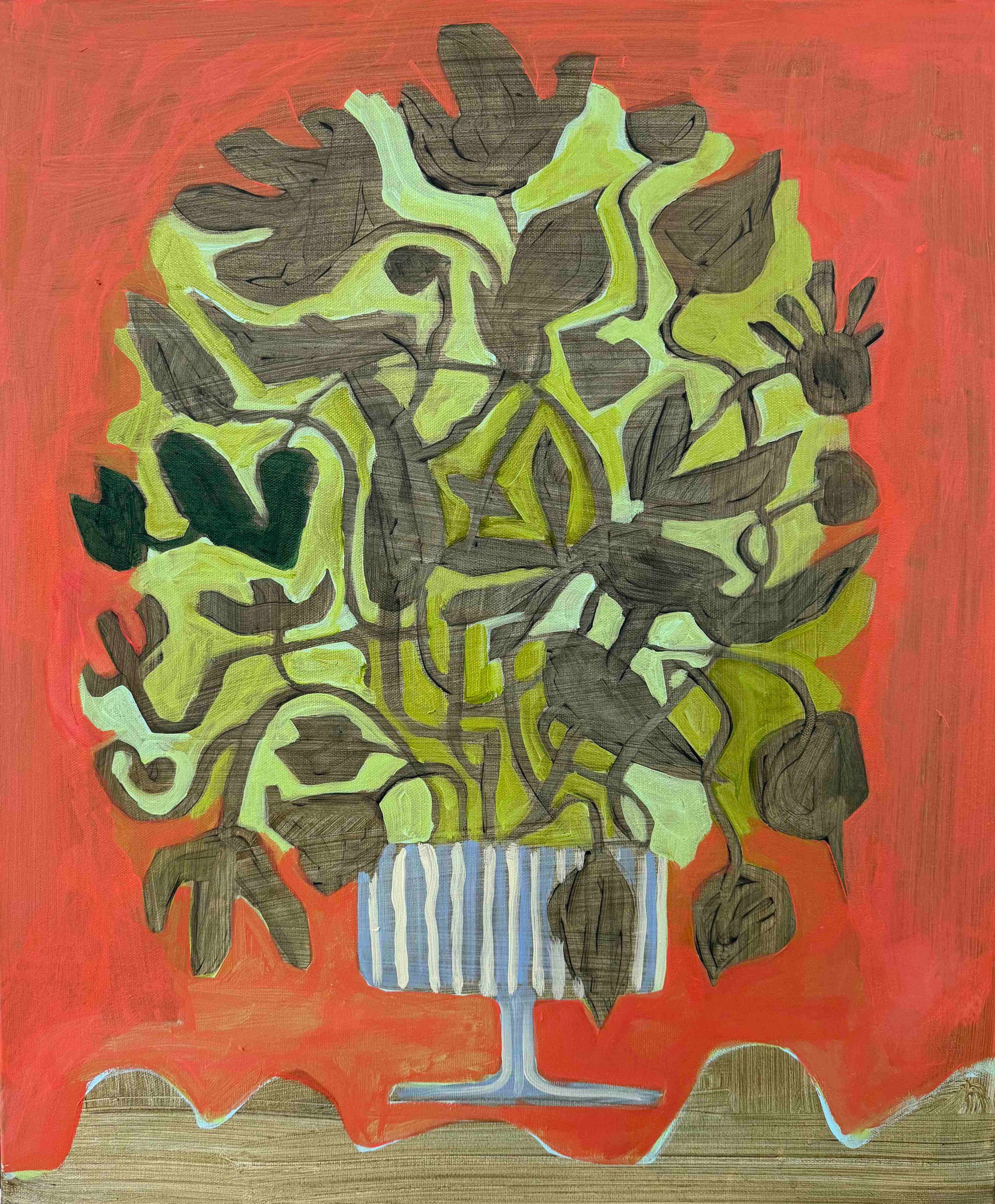
Nothing really clicked for me in terms of drawing there, even though the magnificent museum is over-the-top rich with drawing, painting, and sculpture from the beginning of Mexican civilization—botanical, figurative, and geometrical decoration. Afterwards we walked through the botanical gardens and decided to come back for a day of drawing in the garden. That is when it hit me—I found my muse. I did drawing after drawing of the giant, loopy, scalloping leaves and tropical groupings: BIG almost giant botanical shapes; cactus, trees, rocks, flowering everything. I was intoxicated by the jungle of it. I believe this is what artists hope for—unexpected inspiration.
Frances: I’ve felt that in several places—when the new place seems just waiting to let you expand.
Robbin: Yes. The entire outdoor experience of the city contributed to my fascination. The cool weather, the short rains everyday at 4-ish in the afternoon (it was rainy season), which we learned to work around, the walks among lush trees and plants, vines twirling up poles and metal fences when we stepped out of the door of our building. There is pride and respect in the entire city of that unique feature: a city in a garden. Everywhere, in the art, the colors of buildings, the architecture, I felt a sensual, earthy, even lusty reference; a city with a unique climate and geography and gentle, artistic people.
Frances: That’s the great revelatory thing that can happen to a traveler. A place can transform you. Or as Ed wrote in one of his poems, Change me, change me into something I am. You’ve always been obsessed with flowers, plants, leaves, organic shapes.
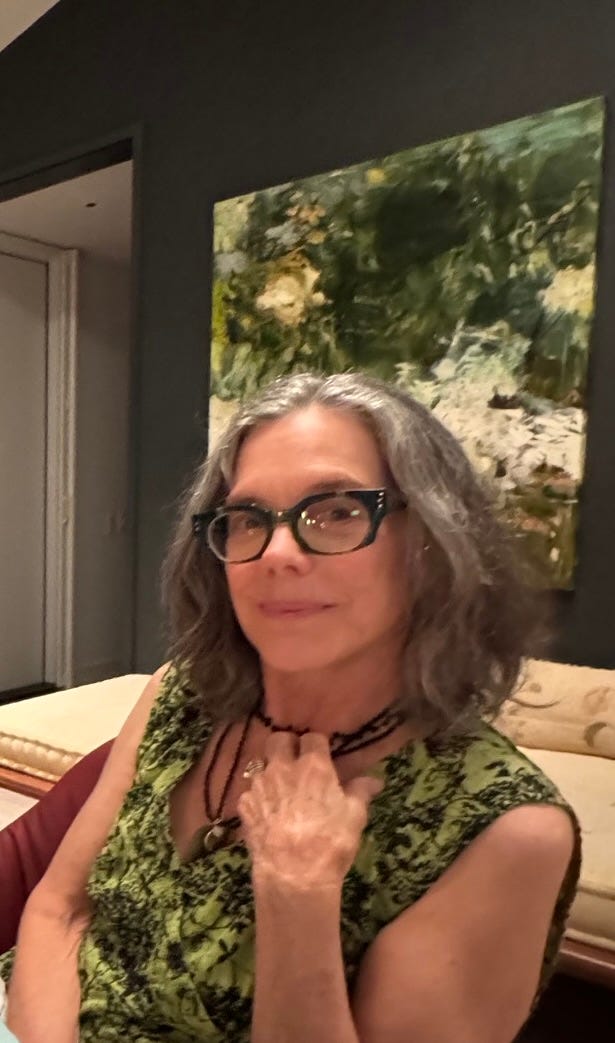
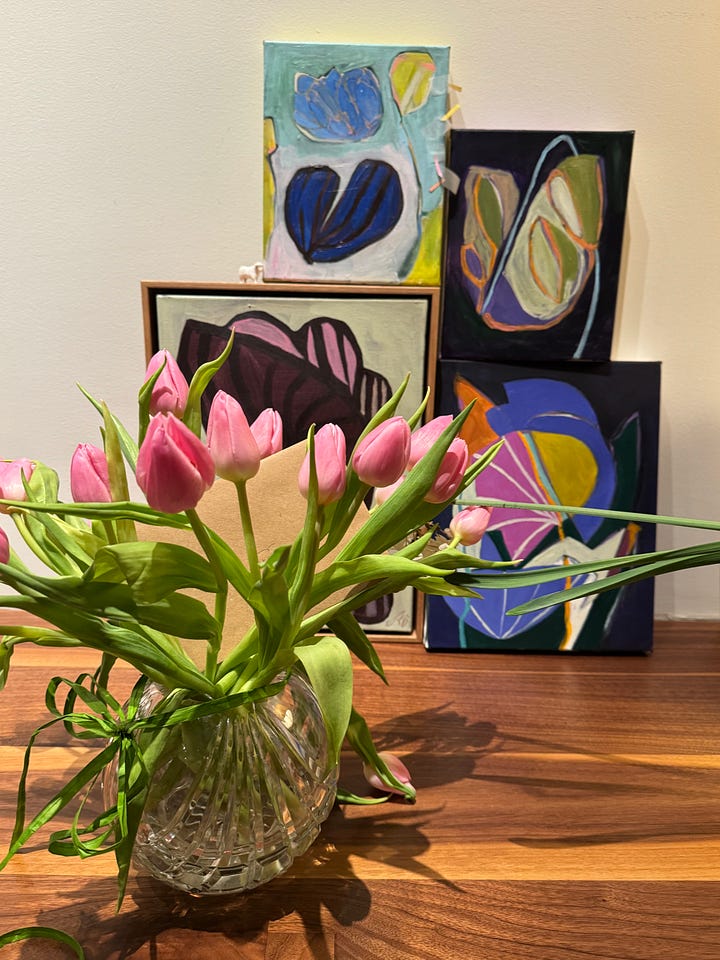
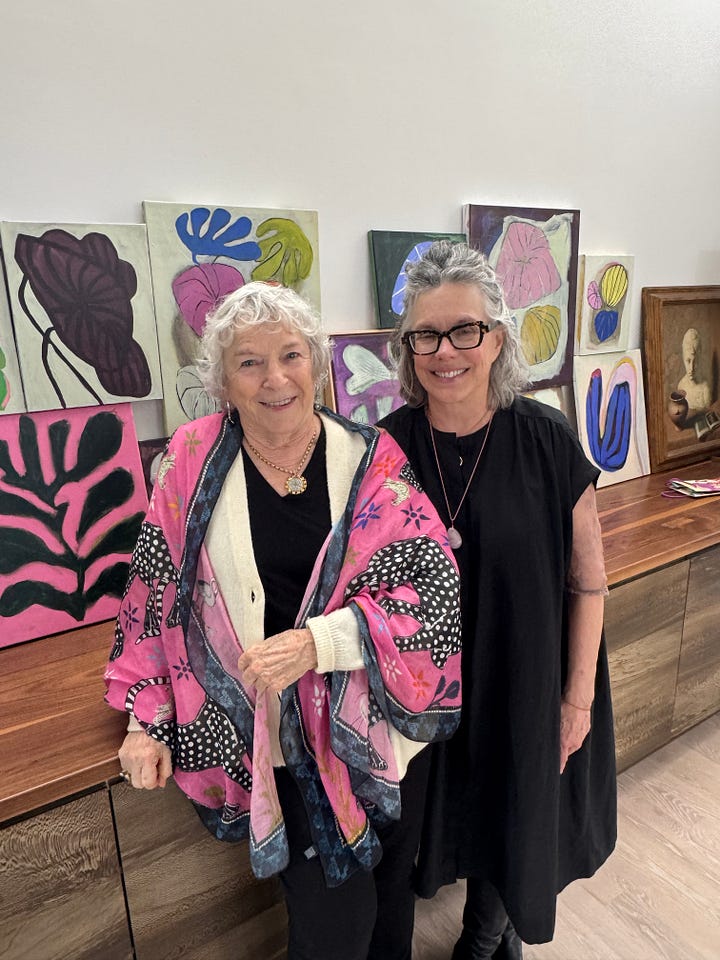
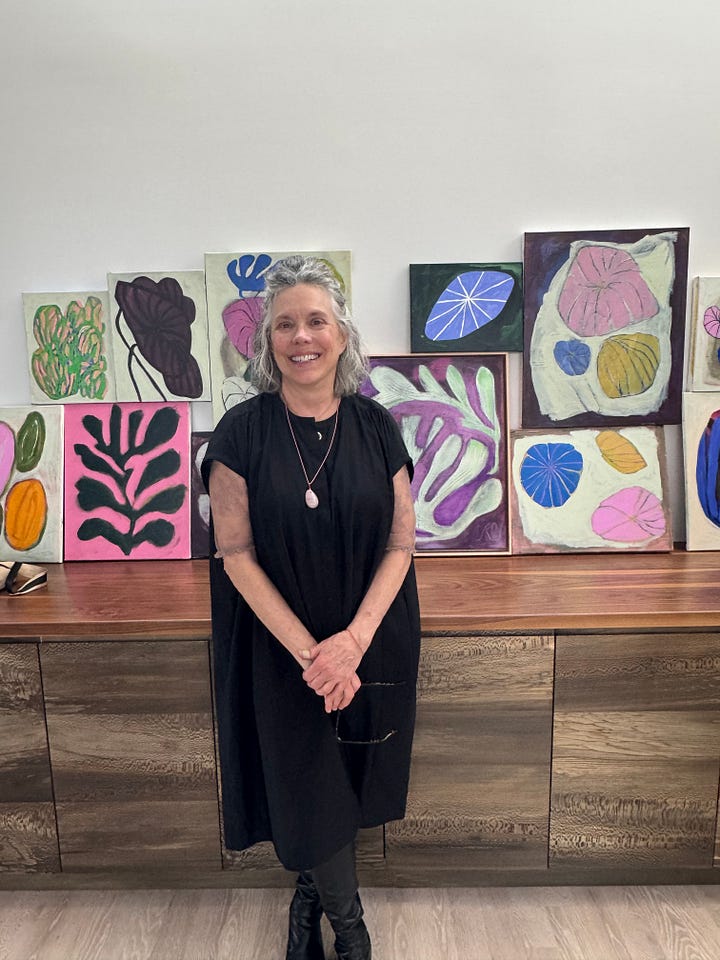
Your work was already waiting for Mexico!
Gracias for cementing my desire to go back to CDMX.
Notes: You can reach Robbin and Jeffrey via Instagram. @jffrystrn @robbingourley
Thank you, my fine readers, for subscribing, and a special thank you to thosewho become extra special paid subscribers. I’m honored by your vote of confidence. Please leave comments!
No posts
Comments
Nothing yet. Say the first thing.
Sign in to join the conversation.