
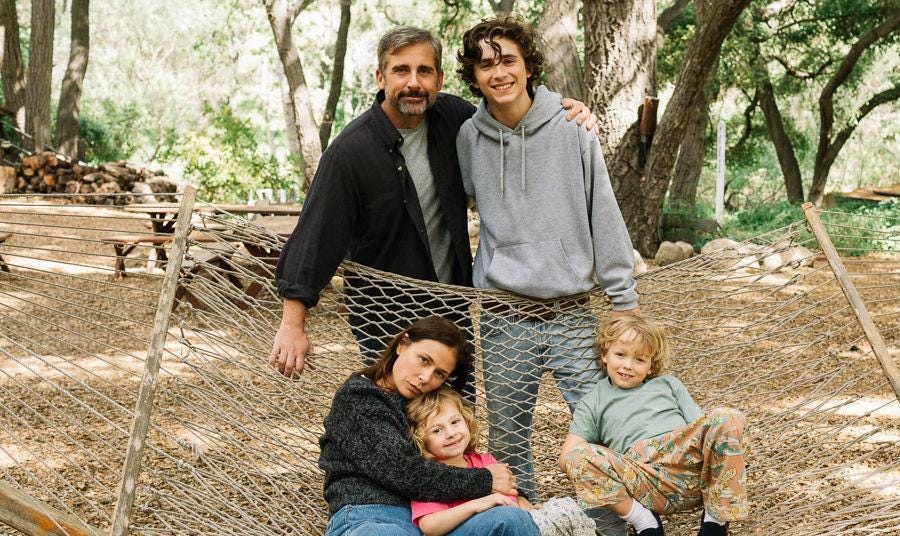
Based on a true story, Beautiful Boy (2018) concerns Nic Sheff (Timothée Chalamet) and his journey with addiction, particularly to crystal meth. Throughout the story, we see how Nic’s actions impact his family, particularly his father, stepmother, and siblings.
Spoilers ahead. If you haven’t yet seen Beautiful Boy I would highly recommend that you watch it before reading this article—I’d hate to spoil the magnificently moving cinematic experience that the film provided me.
When designing this series, Beautiful Boy (2018) immediately came to mind because of its harrowing tale of drug addiction.
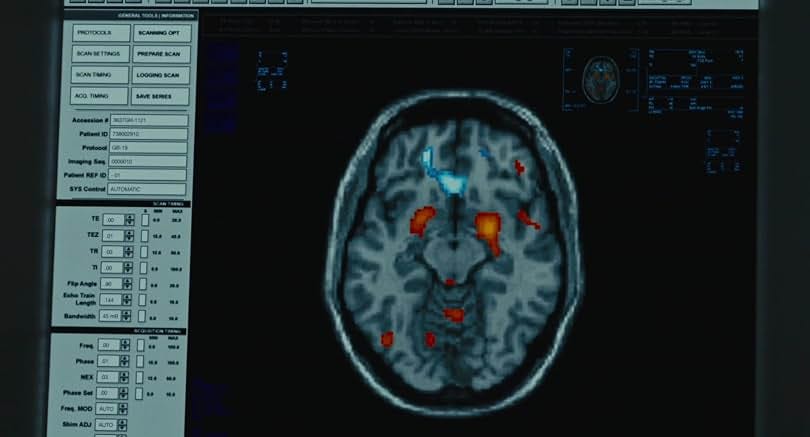
Both times that I’ve watched Beautiful Boy, David’s conversations with Dr. Brown have stuck with me because of the critical information they provide to the viewer. Coming into Beautiful Boy, I knew very little about crystal meth and its properties. Dr. Brown explains to David the addictive nature of crystal meth:
“So crystal meth gives the user a feeling of instant euphoria, at least when he takes it. But when it wears off with a depletion of as much as 60 percent of the dopamine the user has to up the doses. Double it, triple it, just to feel something, causing even more nerve damage which increases the compulsion to use. Horrible cycle.”
Addiction spirals.
The dose must be upped every time just to achieve the same high. Eventually the dose becomes too much and kills the user.
During his teenage years, Nic experiments with progressively harder and more dangerous drugs with the goal of finding a bigger hit. His father eventually realizes this dynamic:
“I was worried you were smoking too much pot meanwhile you’re out doing every drug on the planet.”
Addiction spirals.
It can easily begin with a safer drug such as marijuana and quickly become spiral into something worse. Trying one drug is like opening a gate to the entire universe of drugs. Nic understands this. Once he tries something, he truly struggles to go back to less dangerous substances.
One day, I tried methamphetamine… Yeah. That felt good… And I thought, “this is what I’ve been missing.” I felt complete. Today’s a good day. Yeah, I’ve been chasing that high ever since. No matter… how much meth… or whatever else I can find to shoot up into my body… I do, it’s never enough.
Every time Nic does drugs, he wants more out of it. A higher high. But he can’t keep chasing that forever before he would overdose. That’s the spiral of drug addiction: a spiral that ultimately leads to death, unless one finds some way to exit the spiral. That is the core story of Beautiful Boy. It’s a story that ponders whether or not Nic can exit the spiral of drug addiction when he is hooked on one of the most addictive drugs—crystal meth—with some of the lowest recovery rates.

Beautiful Boy presents addiction as a disease rather than an inherent condition. Two attributes are attached to addiction: transmissible and treatable. These polar characteristics widen the range of possibility for Nic’s addiction. While he is ultimately treated successfully at the end of the film, he also introduces others to drugs.
During one of his periods of sobriety, Nic is suddenly reunited with a fellow addict, Lauren. Even though he has been sober for more than a year, Nic and Lauren go to buy drugs together, both of them influencing the other one’s downward spiral. Their addiction, or, in the case, history of addiction is transmissible. Lauren’s presence reminded Nic of the joy of the high. On the other hand, Nic both procured and administered the drug to both himself and Lauren. They are each complicit in the other’s vicious spiral of addiction. I don’t believe that either of them wish for the other one to devolve back into addiction. Instead, it’s just a virtue of their presence as a reminder of their previous struggles.
Lauren and Nic experience an inevitable pull towards each other as if they share the same energy. Perhaps their trauma bonding as recovering addicts explains part of this. Both of their faces brighten as they reunite. It’s an awkward interaction but you can see that they’re happy to see each other.
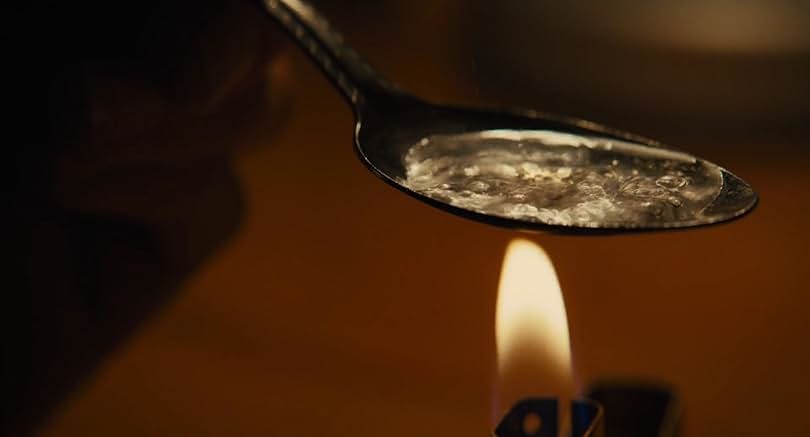
In addition to just the transmissibility of addiction, this encounter also indicates the volatility of those struggling with drug addiction. One spark—an inciting event—can rekindle the flame of addiction and prompt another spiral, one that could potentially lead to their demise.
In fact, this relapse is nearly lethal for both Nic and Lauren. A few nights later, Lauren becomes unconscious in Nic’s car. Thankfully, Nic is able to successfully perform CPR and resuscitate Lauren but she still requires immediate medical attention.
Even later, Nic injects more drugs into his system in a public bathroom stall and evidently overdoses. We see him wake up in a hospital where he pledges to his father that he is done with drugs forever. I really struggle to believe Nic because he has made the same promise time and time again, yet fails to deliver on it. Nonetheless, something feels different this time. After all that’s happened—Nic’s multiple relapses, his near-death experience, and his increasingly more successful periods of sobriety—I still have hope in Nic.
Chalamet truly embodies Nic’s character. He apologizes to his family with what feels like genuine remorse. And I do think that it is genuine remorse. But the drugs have separated his remorse from his actions. He doesn’t want to be addicted to drugs, but his addicted self does. His addiction has split him into two separate personas: the realistic, caring, kind, “beautiful boy” Nic and the self-centered addicted-to-drugs Nic.
We feel this distance between his genuine comments because of his emotional split. We understand that what he is saying is what he truly wants, but it isn’t what his inner addict wants. There’s a big difference between his rational human side and his drug-ridden unreasonable self. Nic experiences this divisive inner conflict that makes it so difficult to exit the spiral because voices are calling at him from both sides of the chasm of addiction.
The portrayal of addiction as a disease is perhaps the most important decision made while producing Beautiful Boy. It doesn’t present the addiction as inherent to the person, but rather as a temporary part of the person that can be changed, like a tumor or cancer. Nic still has that beautiful boy inside him; it just had to be recovered.
No posts
Comments
Nothing yet. Say the first thing.
Sign in to join the conversation.