
The first Calypso is the nymph who feeds Odysseus lotus blossoms and keeps him from remembering his painful past, so that he will languish on her isle with her. It’s lonely and boring being immortal, can you blame her?
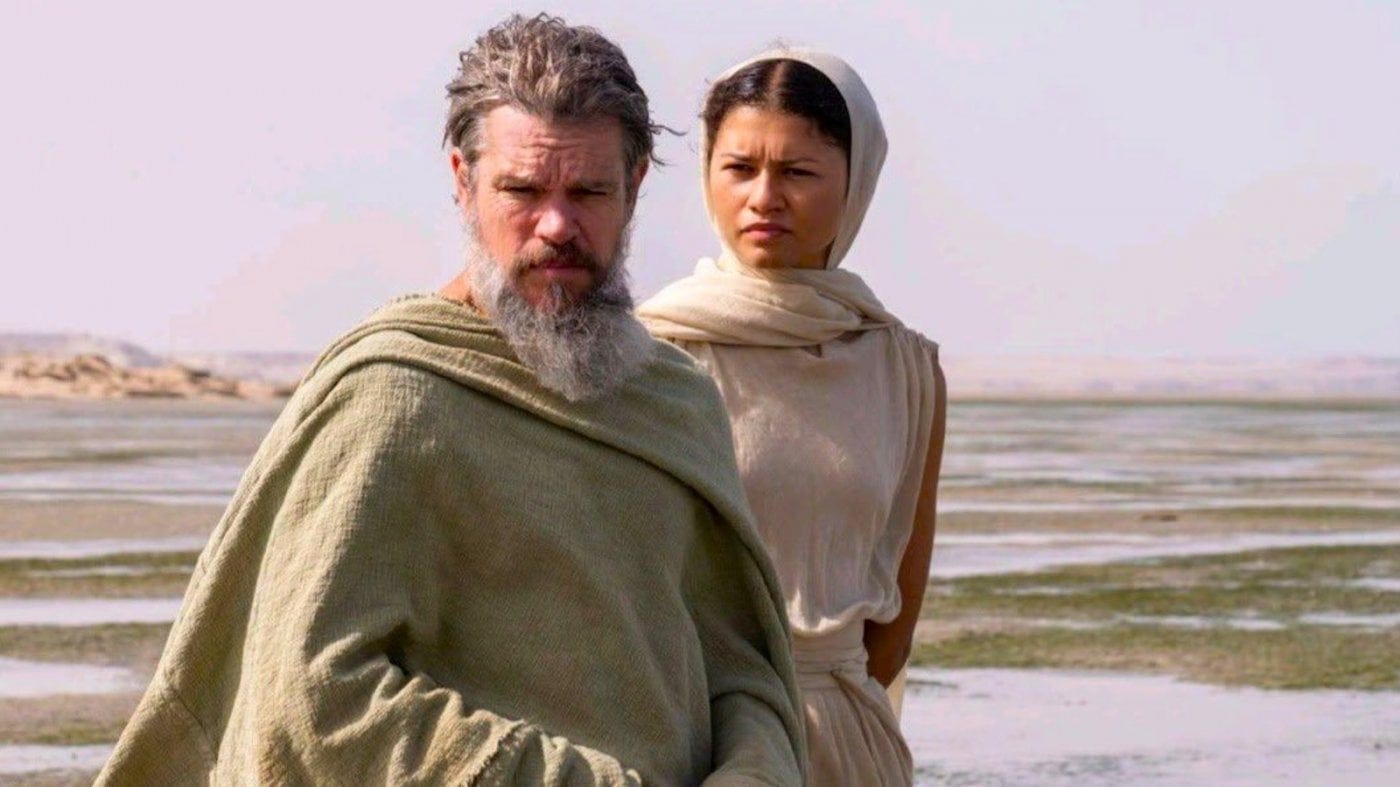
We meet her early on in the latest film version of Homer’s The Odyssey, which was inspired by Emily Wilson’s wonderful translation. I read her book on publication and loved it, more so than the Lattimore and Fagles versions I had read before. She brings the story to wondrous life without dulling the edges for modern audiences. Odysseus is after all, as her first line tells us, a “complicated man.” He is imperfect. In Nolan’s version he grieves for his own behavior, but not enough to change all that much… he is human, after all.
The movie has helped sell millions of copies. It’s on backorder everywhere. But is the movie any good?
For Hollywood, yes. As a great fan of the story, I am grateful to finally see one that respects it as an epic about human nature and the gods. The cyclops, Athena, Scylla, Circe… they are all real. Odysseus is a trickster and great archer, the right hand man of an obsessed warrior-king who wages ten years of war to go home to die and not see what destruction his will has wrought. But he is a modern man. One with regrets, who won’t cry. Full of contradictions.
The culture warriors hate Nolan’s The Odyssey because it’s a story about how being inhospitable to strangers and starting needless, ego-driven wars ended a civilization. Nolan, to his credit, makes this undeniable. I mean, the characters literally say this. That and the “people from the sea,” or what historians call “The Sea Peoples,” ended “our age of bronze.” Dialogue isn’t the strong point.
The film is exciting, the actors are fine, but don’t feel like they have much life when they are off screen. Nolan isn’t very good at portraying women, and for them this might as well be an episode of Game of Thrones. You’re either a harpy or a victim. Circe got her due in Madeleine Miller’s excellent novel, but here she’s literally a traumatized woman turned “misandrist,” which is a sad simplification, like someone who felt compelled to not excise her from the story, but was not going to waste much thought on her scene.
Anne Hathaway is memorable as Penelope, and does what she can, but feels like she exists for her husband, even at her son’s expense. Sinon, played by Elliott Page, has some agency and demands justice in the underworld; Himesh Patel has fury that makes him feel more alive, but only barely, than his shipmate who peels the wax from his ears to hear the deadly Sirens’ song and jump overboard. Robert Pattinson has a blast chewing the scenery as the head suitor, but makes the heroes look uncompelling in comparison. Wilson thought of all the cast, he’s be the most Oscar-worthy, and I’m inclined to agree.
Maybe the problem is that they all live in a wind-scoured colorless Greece that makes you wonder how far Ithaka is from Santorini. I looked up images of Ithaka, and I don’t recall much beauty in the film besides craggy rock faces, which do have a beauty to them. Agamemnon is stunning in his armor, but gets few words. A visit to the Land of the Dead is as boring as a zombie flick. I was seriously disappointed there. See What Dreams May Come for some imaginative ideas of the afterlife. The Tiffany Problem is in full force; we know that the Egyptian pyramids were sheathed in blinding white limestone and topped with gold, but would that “look real”? Troy is just another stone walled city.
Despite my criticisms, it was enjoyable enough as three hours of popcorn, with few meaningful scenes. The ending is much too quick, and feels like a death scene. In fact, everything feels so vague that some viewers thought Athena was a hallucination and the fantastic elements were like the tiger in Life of Pi, there to keep traumatized Odysseus from going mad. I don’t think this theory holds any water, but it shows that the pre-modern world of gods is not fully embraced by the film. To quote Emily Wilson:
“One of my favorite moments was when Zendaya assures Damon that gods are not hard for mortals to understand: ‘Who doesn’t understand thunder? Fire?’ But the film wants to have it both ways. There are no gods, and yet shipwrecks and death are presented as the inevitable consequence of blinding the son of Poseidon and devouring the Cattle of the Sun. Zeus’ law is portrayed as being crucially important, and yet there is no Zeus. Nolan’s vision of the world is not quite big enough to include either real gods or real people who might be different from us.”—Emily Wilson, “An Uncomplicated Man”
I’m not as critical as Emily Wilson herself is in the London Review of Books; she tears apart its contradictions. As someone who knows Homer’s story and loves it as few others can, she is utterly unforgiving. I’m not a big Nolan fan; most of his movies are big, noisy, and mostly forgettable. I like the ones where he at least dares to show us things we haven’t seen before, like the polygonal robot and twisted space in Interstellar, and the Michael Mann-worthy heist kicking off The Dark Knight. But we’ve storms before. We’ve seen war before. When we get to the island of the Cattle of the Sun, they look like scrawny cows. There is not even a blinding sunset to make us think that Helios, the sun god, might be visiting to tend his herd. He should’ve taken some shrooms with the cinematographer.
The closest we get to wonder is the Laestrygonians, giants in iron armor who march wordlessly like automatons. It was terrifying to watch when they rocked the ships to drown the men, but again, we’ve seen such things before. There’s not one scene like the future of Interstellar with the streets bending up to the sky, or seeing the event horizon of the black hole. The past is past, and mostly gray. Beautiful Helen is disfigured for her infidelity, and the wine-dark sea is monochrome. (Lupita Nyong’o plays a dual role as Helen’s twin sister Clytemnestra, so we get a brief glance of her without the scars.)
I like that Odysseus is wracked with guilt over betraying Troy; but that is Nolan’s nod to modern values. In the original, he grieves his lost men, but war is war. And when he gets home in both versions, he kills the suitors with gusto. (Nolan gives them weapons to make it less of a slaughter.) The most heartbreaking scene from the book, when Argus recognizes his long-lost master, is nearly an afterthought here. On Calypso’s island, Odysseus cries every day until she relents; here he barely can cry for his dying dog. It feels more of a story of revenge than redemption for a man who insulted the gods with his hubris—and in this version, for betraying a neighboring kingdom’s hospitality to win an unjust war where “rescuing” Helen was just an excuse to take over trade routes.
To take a quote that’s all I remember from Inception: “Dream bigger.”
Wilson may sound ungrateful, because we are used to hearing soft critics. Even Roger Ebert, who once wrote a book called I Hated, Hated, Hated This Movie, was a softy compared to some; now we critique off “vibes” and whether a character who isn’t morally perfect gives us the “ick” for being human. Wilson ends her review with gratitude; I’m grateful as well for Nolan’s The Odyssey, even if it’s tailored to the lowest common denominator. It’s better than another remake or sequel, for sure.
Despite all this, the release of The Odyssey is still an event to celebrate. In what we are told is the streaming era, this epic is bringing audiences back to cinemas. In what we are told is a time of declining literacy and the ‘death of the humanities’, translations of The Odyssey, including mine, are flying off the shelves. Some of those who buy the book or show up in cinemas to watch Tom Holland may go on to study ancient Greek. Perhaps the film will persuade a few college administrators not to cut their literature, language and history departments. Nolan, who studied English at University College London – where students still study The Odyssey as a first year ‘foundational text’ – is doing his best to get the general public reading again, and I am grateful.
The second Calypso is perhaps the king of calypso, at least from an American standpoint. Everyone knows Harry Belafonte, who drove his Banana Boat through the heart of American culture and made his native calypso music impossible to ignore. Whether you first him on the radio, on Sesame Street, or in Beetlejuice his voice and his energy are unforgettable, and giving him the mic for a week on television when the U.S. was beginning to reckon with its awful history of civil rights was a daring and effective move. Johnny Carson was the King of Late Night and gave that seat to a voice everyone knew, but had not all had listened to.
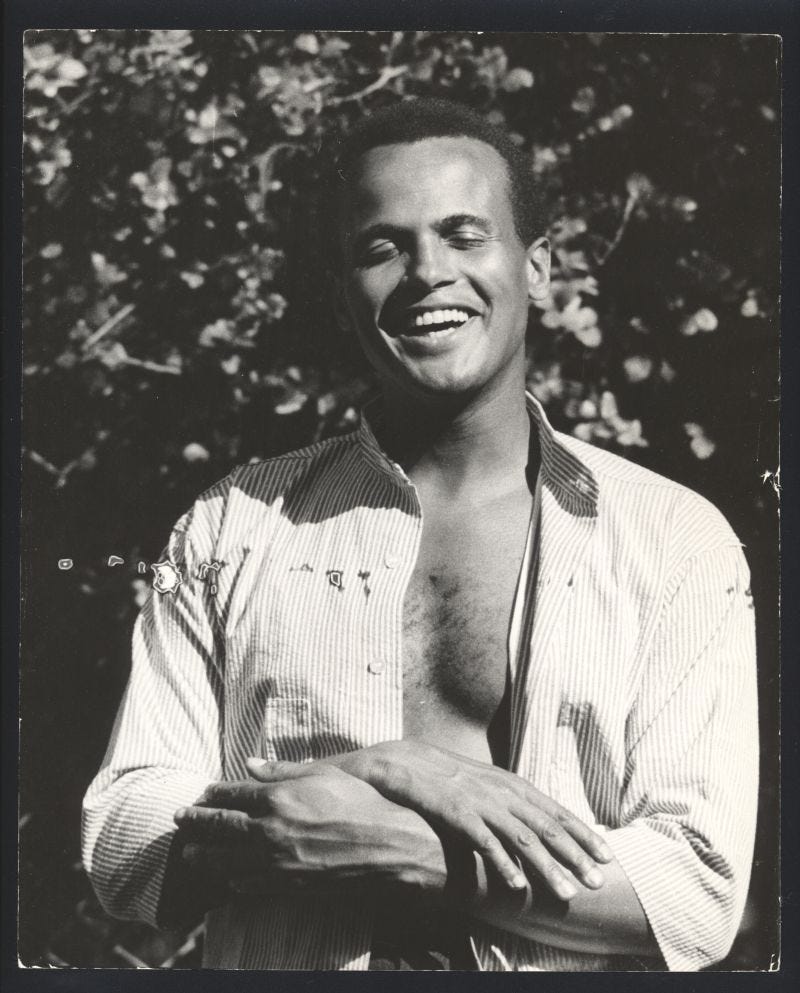
It happened a few years before I was born, but I’ve known of Harry Belafonte’s week-long tenure on The Tonight Show for a while. It’s one of those things that gets forgotten, and is worth remembering, and reviewing, again and again. Because it has been nearly sixty years since Belafonte invited Dr. Martin Luther King to tell millions of Americans, on television:
“The fact is we spend approximately five hundred thousand dollars to kill each Vietcong soldier while we spend only about fifty-three dollars a year for every person characterized as poverty stricken.” And he has a plan. He wants to use the same methods he used to advocate for civil rights for Black Americans to confront more far-reaching ills: “I think the time has come to bring to bear the nonviolent direct action movement on the economic conditions that we face all over the country.”
Two months later he was assassinated, and Senator Bobby Kennedy, the Presidential candidate most likely to both win and listen to King—he was also invited by Belafonte that week—was assassinated not long after. The methods used to assassinate them are still used today by the ones who profit from spending on war instead of our own citizens; they give voice to hatemongers who call them communists or some other meaningless hate word that inspires violence without critical thinking.
We’re already hearing the same words used against mayors who dare work for their citizens, and other politicians who dare demand that billionaires pay the same tax rate as the peons. As usual, rather than compete, we will attack. China is eating our lunch in the renewable energy revolution, the corrupt regime is stealing and spending on a useless war with Iran faster than they can tax us with tariffs, and trying to make it harder for us to vote them out.
The third calypso is photographic artist Juno Calypso. I’m not sure where I first encountered her art, but in 2017 she visited an infamous Honeymoon Hotel that’s not far from the Pinelands, and created a legendary photoshoot with her “Joyce” character, a bored and lonely single working woman meant to lampoon societal norms like a Bridget Jones meets uber-femme Christina Hendricks in an Eyes Without a Face mask, hiding whether those eyes gleam desire or glare contempt.

Confession: Firecracker and I had wanted to visit this hotel for years, and we finally did. I wrote about our trip there, and we stayed in the same model suite that Calypso used for her series.
My favorite of the bunch is A Dream in Green:

You’re lured in with callipygian majesty and then get flummoxed by the shattered narcissism of the mirror wheel, her hidden face, the full wickedy-witch green of the facial mask makeup covering her whole body, like she wants to peel off the layer she’s used as armor for so long. You can view the entire series on her website. She also explained her methods in an entertaining presentation for the Sarabande Foundation.

She also visited a Vegas mansion with an underground bunker that included a fake forest and a ridiculous pink kitchen, owned by cryogenics enthusiasts. That inspired What to Do With a Million Years:

She’s been working on commercials, but I can’t wait to see what she does next.
With that, a little calypso to send you on your way…
Thanks for reading Fox at Timber Creek! This post is public so feel free to share it.
Comments
Nothing yet. Say the first thing.
Sign in to join the conversation.