
Most birds are tiny. They are wee. Only a few grams, yet so full of life. But you’d be hard pressed not to notice the smallest woodpecker in North America, the Downy Woodpecker, a mere twenty-five grams of feisty delight, as it chirps and cackles and drums.
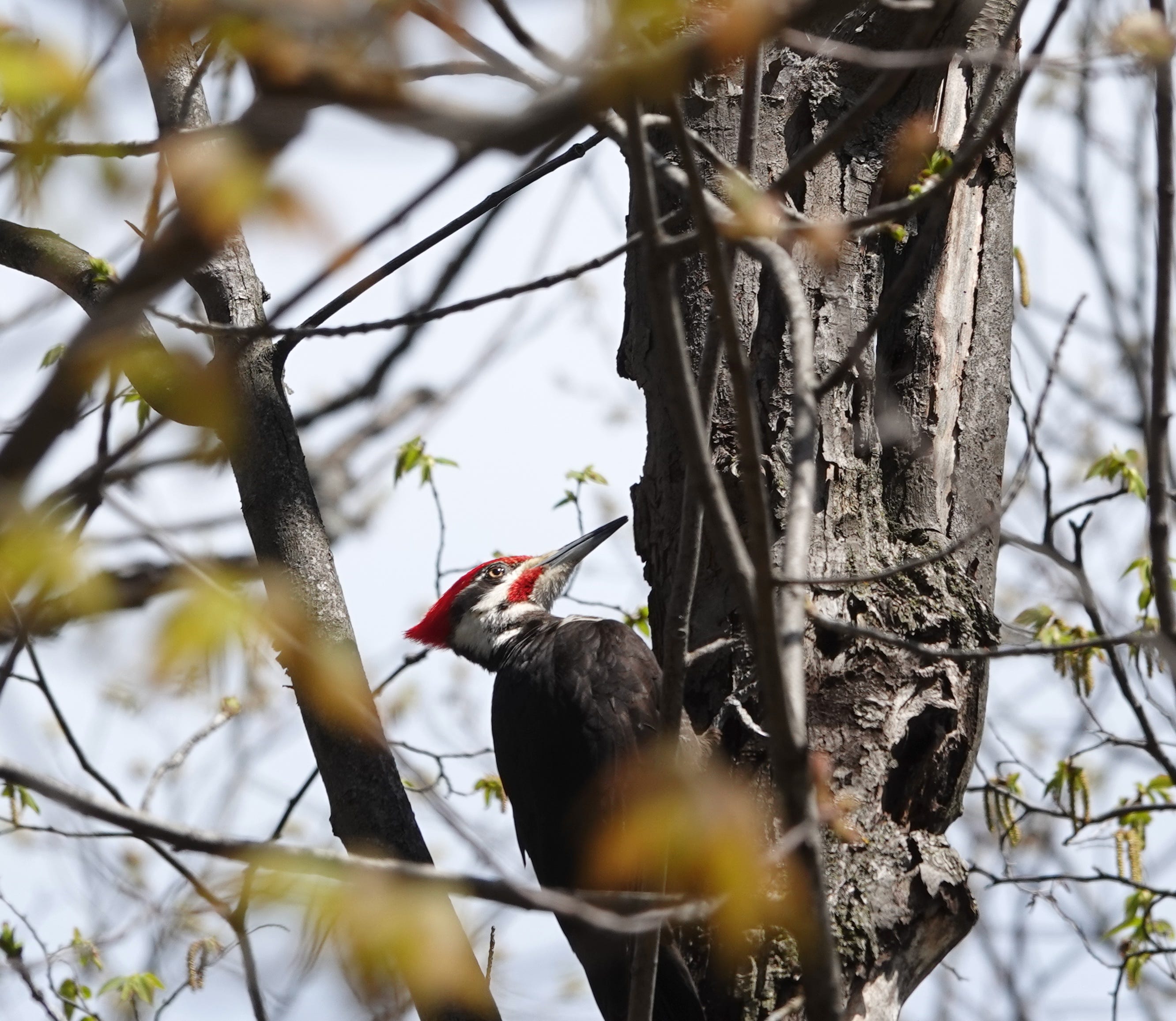
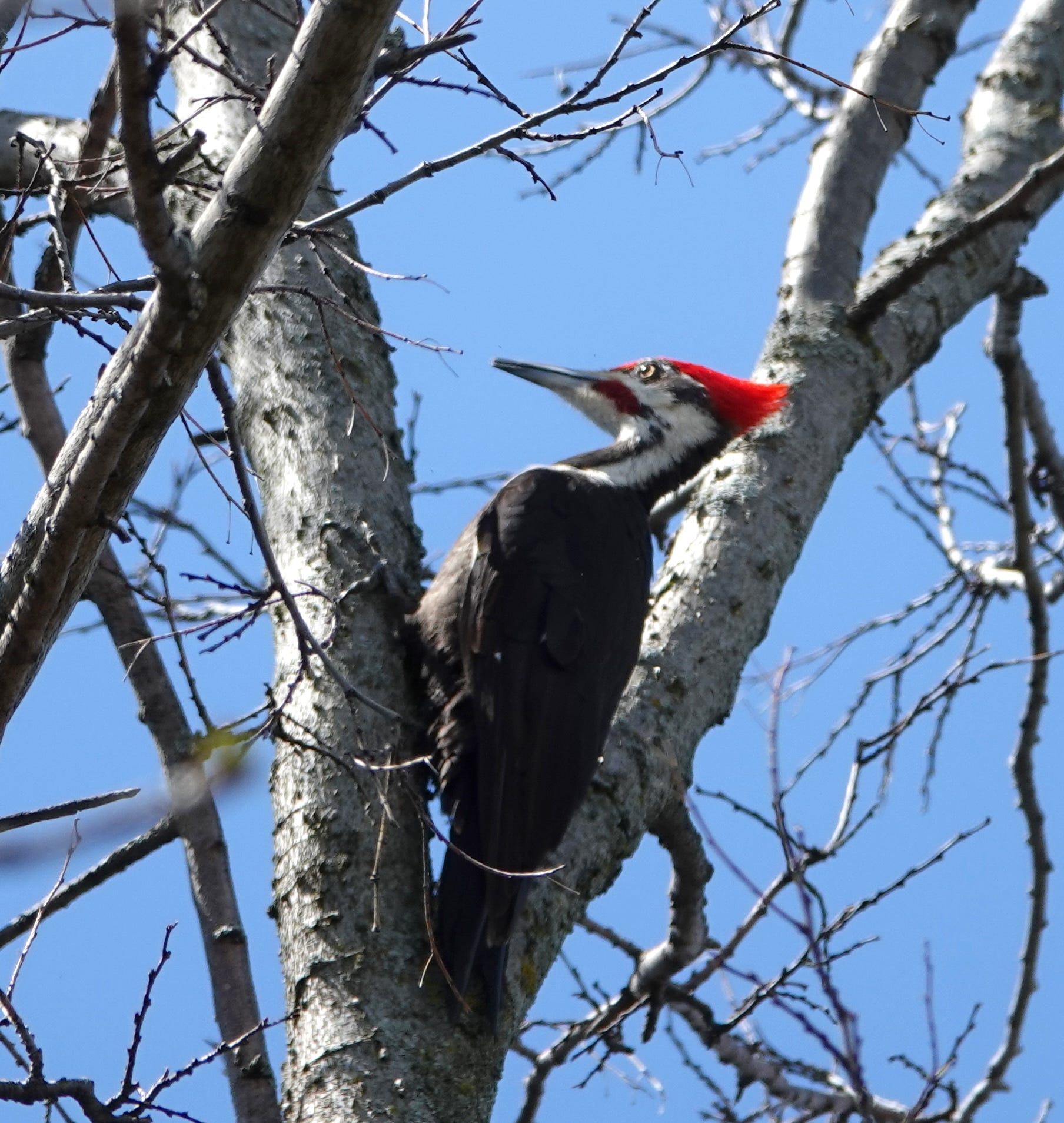
Which makes the largest North American woodpecker, the Pileated, so exciting to see. They are vibrant, active birds with an enormous eponymous crest, and weigh ten times as much as a wee Downy. I’ve seen them a few times on hikes and bike rides without my camera. So, when I encountered one on a walk on top of Mount Royal in Montreal, I took my time watching it and taking photographs.
We took the bus to the top of the mountain to walk its hiking trails and admire the view of the city. I’ve been to Montreal a few times, mostly in May and October. Not during winter. During mild weather, it is a wonderful city. Friendly people, excellent food, year-round markets, good public transport. Like many cities in North America, there are homeless people and the drivers are aggressive, but nothing out of the ordinary. (I found it funny that the locals complained about the potholes, which were nothing compared to New Jersey or New Orleans.)
The old city has a lot of history and sits on the St. Lawrence. Last year I shared photos of herons and cormorants from the Rapids, and Wood ducks in the Botanical Garden:
This year we visited the Biodome, which has a small zoo and aquarium that includes Rockhopper penguins, otters, enormous sturgeon, and waterfowl. I saw a Roseated Spoonbill, Crimson Ibis, Common Eider, and a Harlequin Duck for the first time.


Photos, even when they capture details like the raised crest feathers and the peek of a tongue, don’t translate how alive these big birds are. This short video gives you an idea, as the woodpecker listens for prey beneath the bark.
The first time I saw a Pileated that I can remember was in the Torne county park, in the chill of January, as I hiked up the gravel trail cut into the small mountain. I heard their long laughter, then saw two of them high up on a tree trunk, circling it to look for food. I took a few blurry phone photos, but I enjoyed watching them fly away, through the web of bare branches and twigs.
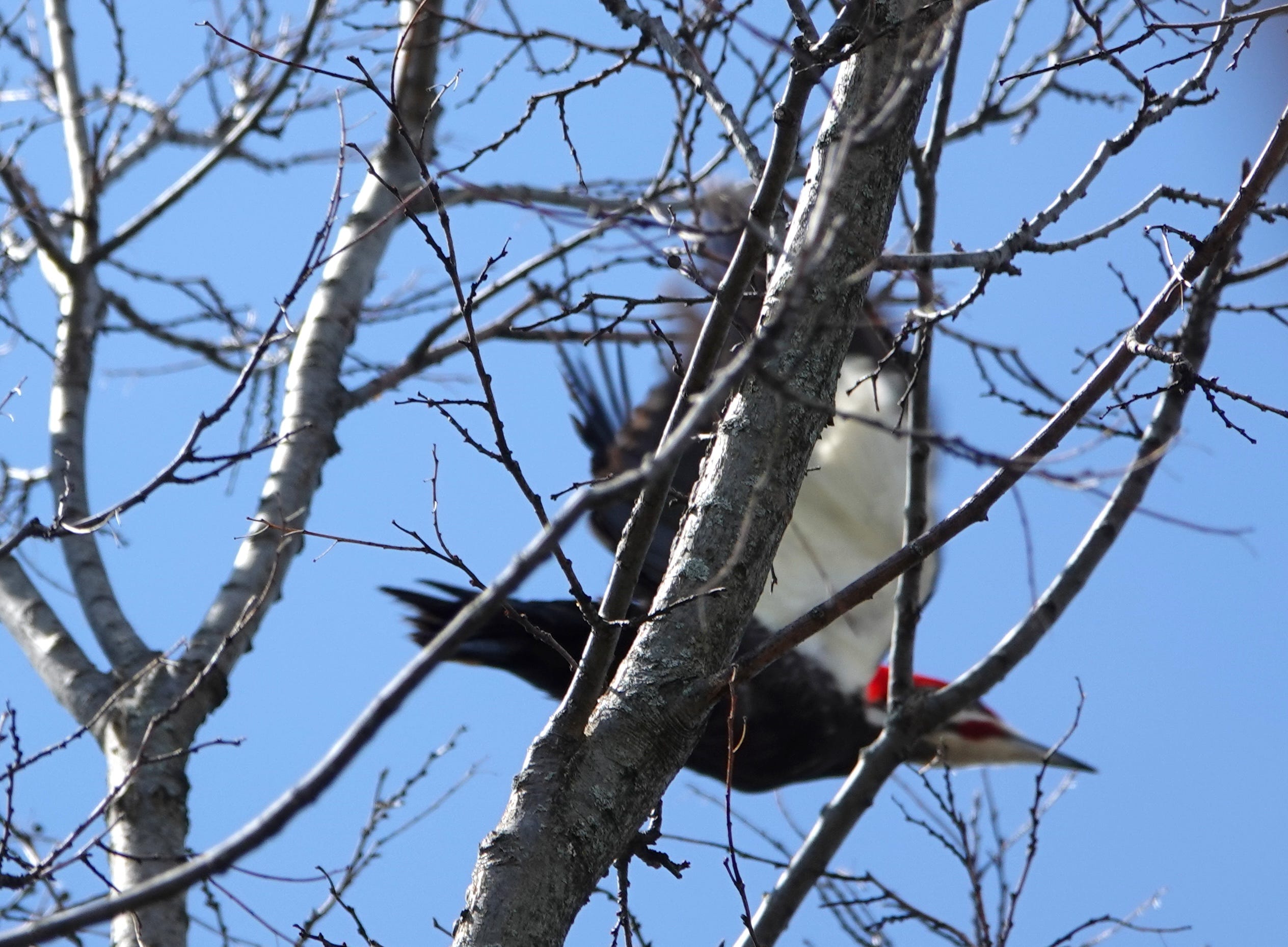
When in brief flight, they resemble their ancestor the pterodactyl the most. Perhaps it’s the oversized beak built for plunging into bark and softwood, or the crest on their “pileum,” the top of their head, which gives them their unwieldy name. The males sport a red bar “mustache,” so this was a male. Without their red crest and piercing eye, their ebony body could be mistaken for a crow’s, except for the long tail feathers. This redhead wears a topcoat and tails, and has a grace that belies their gawky build.
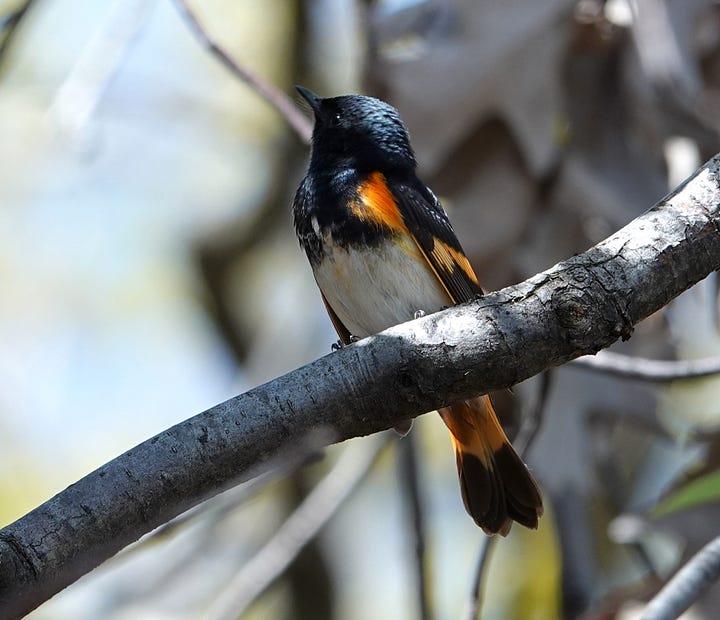
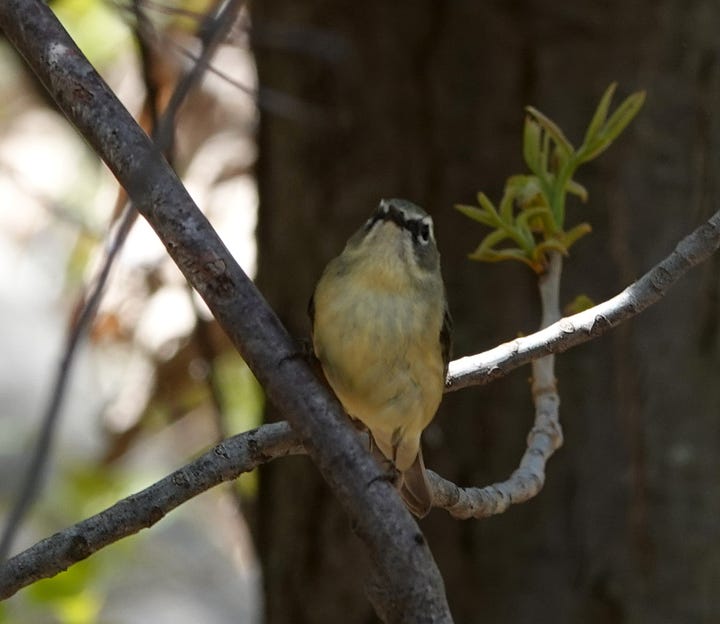
We also spotted some American Redstarts, and I think two Bay-Breasted Warblers, male and female, cavorting in the trees. I could have stayed there all day, and wish I had. Are the lighter-colored birds the warblers? Or did Merlin mis-identify?


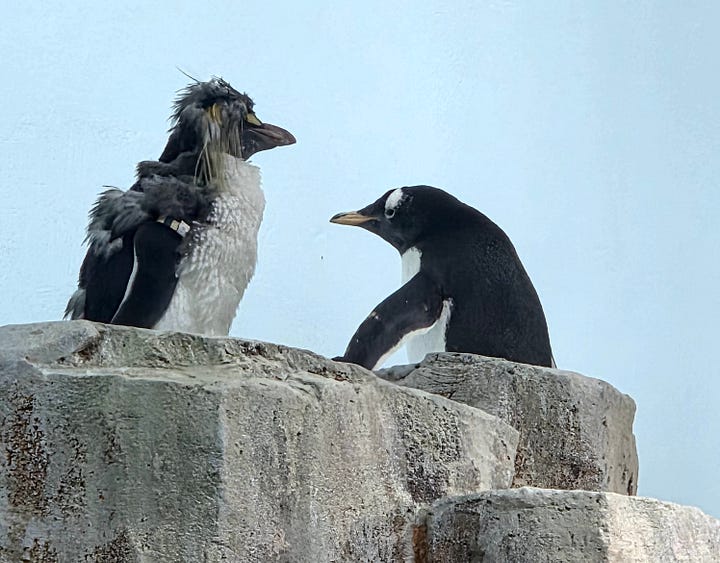
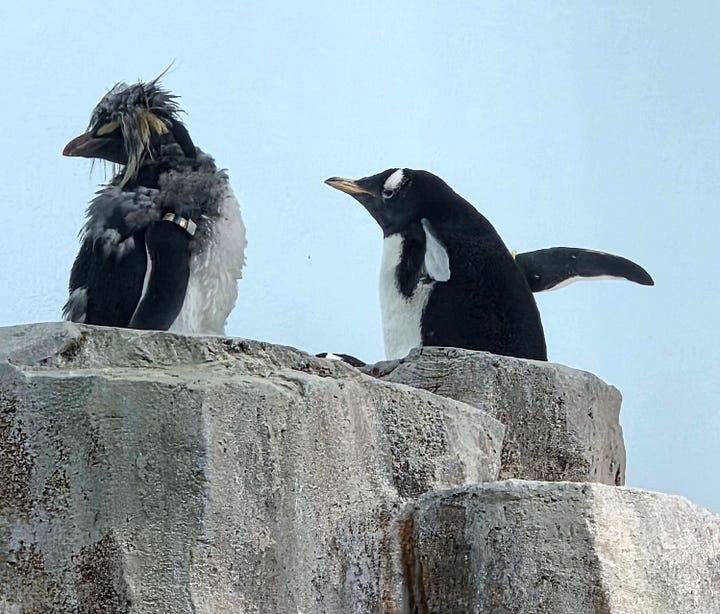
We made use of the great weather up there on the mountain. On a drizzly day we visited the Biodome. I wasn’t sure if this Rockhopper penguin was mocking its elder when it looked away:
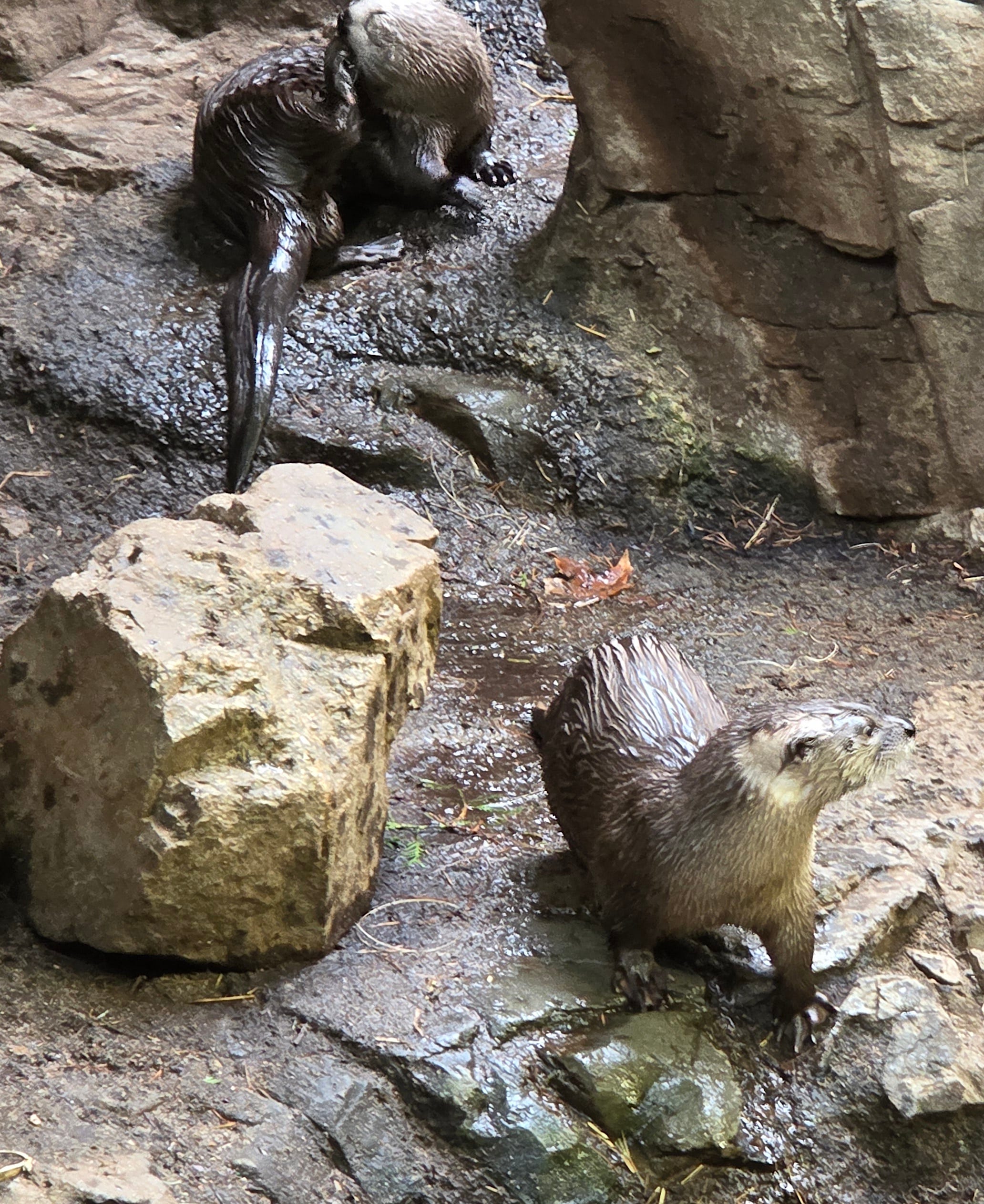
River Otters are either constantly moving or taking a nap.
This is the closest I’ll ever get to a Common Eider. There were a few Harlequin Ducks as well, but they hung back out of phone camera range.
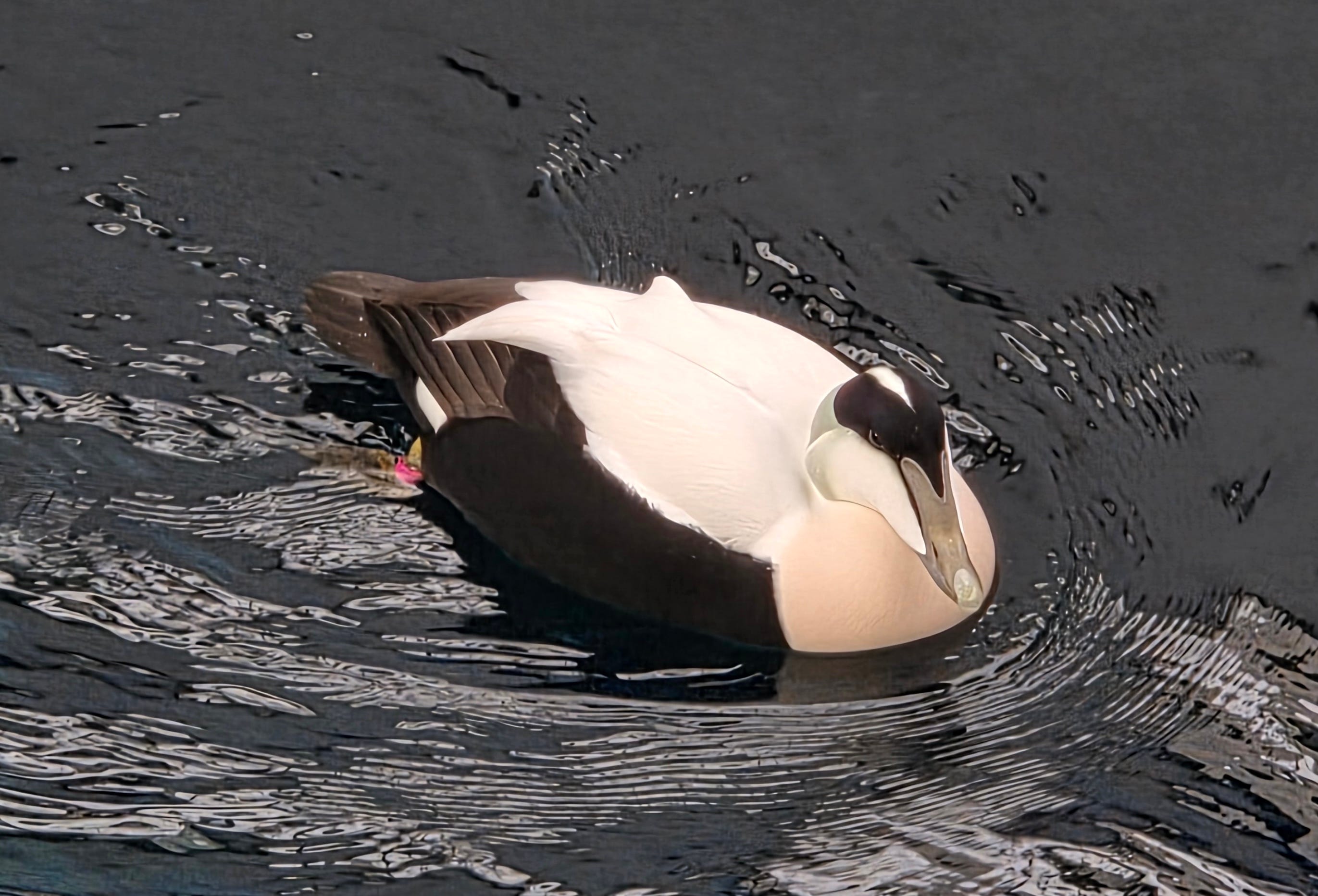
Such a handsome waterfowl. From afar, their eyes tend to blend into the black of their head coloring and disappear, giving them a sleek and aloof look, more like an art deco design than a living creature. Up close, they squabble like other ducks, but look snazzy doing it.
Comments
Nothing yet. Say the first thing.
Sign in to join the conversation.