

How the Unsplash algorithm interprets the adjective ‘delightful’. Photo by Mohammad Alizade
George Orwell’s essay Politics and the English Language is the most frequently cited list of writing rules. With good reason: they are concise, short, practical and also contain a very handy get-out clause (‘Break any of these rules sooner than say anything outright barbarous’).
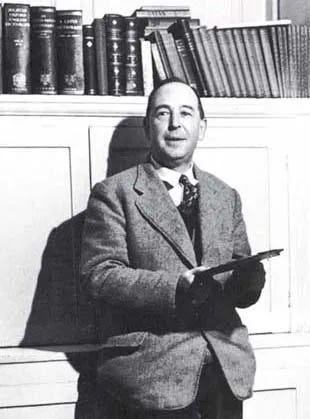
But I’ve just come across another set of rules from a contemporary of Orwell’s: C S Lewis. They are well worth pinning to your laptop, tablet, favourites list, escritoire or whatever surface or interface you use.
In 1956, the last of Lewis's Chronicles of Narnia had been published. Beginning with The Lion, the Witch and the Wardrobe, they were an immediate success; and their reputation and sales have only grown over the succeeding 70 years.
Almost straight away, children began writing letters to Lewis: and he always replied. This middle-aged bachelor and Oxford don understood how children see the world. Avuncular he may have been, but he was also sensible, sympathetic and never patronised his young correspondents. (If this blog continued my last theme, tone of voice, I’d happily analyse how Lewis achieves that not very easy feat. Another time, perhaps).
Many of his correspondents had questions about Narnia and the animals who lived there. But occasionally a budding author sought his advice. Joan from Florida was one. And it was in his reply to Joan that Lewis (known to his friends as ‘Jack’) revealed ‘what really matters’ when you are writing:
1. Always try to use the language so as to make quite clear what you mean and make sure your sentence couldn’t mean anything else.
2. Always prefer the plain direct word to the long, vague one. Don’t implement promises, but keep them.
3. Never use abstract nouns when concrete ones will do. If you mean ‘More people died’ don’t say ‘Mortality rose.’
4. Don’t use adjectives which merely tell us how you want us to feel about the thing you are describing. I mean, instead of telling us a thing was ‘terrible,’ describe it so that we’ll be terrified. Don’t say it was ‘delightful’; make us say ‘delightful’ when we’ve read the description. You see, all those words (horrifying, wonderful, hideous, exquisite) are only like saying to your readers, ‘Please will you do my job for me.’
5. Don’t use words too big for the subject. Don’t say ‘infinitely’ when you mean ‘very’; otherwise you’ll have no word left when you want to talk about something really infinite.
I thought it’d be interesting to apply Lewis’s tests to the latest press releases grown-ups have sent to my inbox.
Top of the pile is an exclusive culinary collaboration event in the Maldives.
One chef ‘celebrates the marriage of technique and terroir’ while another’s culinary journey brings ‘structure and subtlety to Middle Eastern and Mediterranean flavours, creating dishes that are both refined and deeply soulful’.
Let’s go straight to Lewis’s third rule: Never use abstract nouns when concrete ones will do.
We have five abstract nouns here: ‘marriage’, ‘technique’, ‘terroir’, ‘structure’ and ‘subtlety’.
Although we know what a marriage looks like and maybe a picture comes to mind when someone writes ‘terroir’, these words, in this passage, are abstractions. I don’t really know, and can hardly guess, how a Middle Eastern or Mediterranean flavour changes when this chef brings structure and subtlety to it.
Like a lot of corporate writing, these sentences look important and clever. But when you poke your fork in them, there is nothing there.
Perhaps sensing this, the writer reaches for adjectives – ‘refined’ and ‘soulful’, throwing in the adverb ‘deeply’ because well, it seems to go with ‘soulful’.
There’s an idea here, counterpointing this chef’s technical ability (‘refined’) with something that’s more emotional and instinctive (‘soulful’). But I am just adding more adjectives. Read what Lewis says: ‘instead of telling us a thing was ‘terrible,’ describe it so that we’ll be terrified’. If I’d been give the job of writing this release, I’d have sat down with the chef and got a story out of them. What does soulful mean? What’s the one flavour that conjures up a place, a time for them? How do they use it?
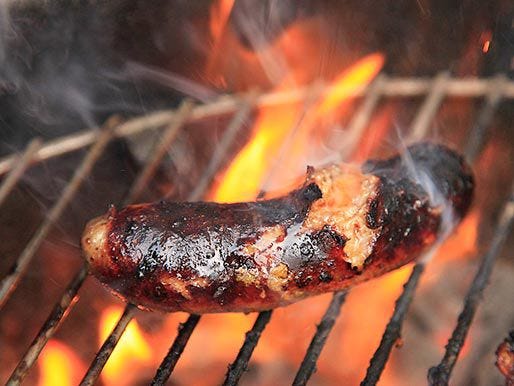
Nutritious writing in action. Serious Eats / J. Kenji López-Alt
Lewis, who created the Narnia books at a time of post-war rationing and hunger, loved to read and write about food. Here is a Narnian supper cooked by dwarves in The Silver Chair.
There are lots of sausages:
And not wretched sausages, half full of bread and soya bean either, but real, meaty, spicy ones, fat and piping hot and burst and just the tiniest bit burnt. And great mugs of frothy chocolate, and roast potatoes and roast chestnuts, and baked apples with raisins stuck in where the core had been…
You could use a lot of clever words to describe the supper – heartwarming, nourishing, natural or, indeed, the one Lewis uses, breaking his own rule, Orwell-like – delightful. But by showing what they ate, and how it was cooked, with the short adjectives doing a lot of hard work – as does the proposition ‘and’ – you can taste the food as if you were there. It’s that kind of skill that makes a fantasy land a place we all feel we can get to.
The next day, Jill, who has eaten that delightful supper after emerging from a terrifying experience in a dark underworld, wakes up ‘lying on a bed of heather with a furry mantle over her, and saw a cheery fire crackling (as if newly lit), on a stone heath and, farther off, morning sunlight coming through the cave’s mouth…’
Or, as the copywriter for (say) a Nordic lodge might put it, ‘luxury and comfort combine in our truly natural and sublime bespoke cave experience’.
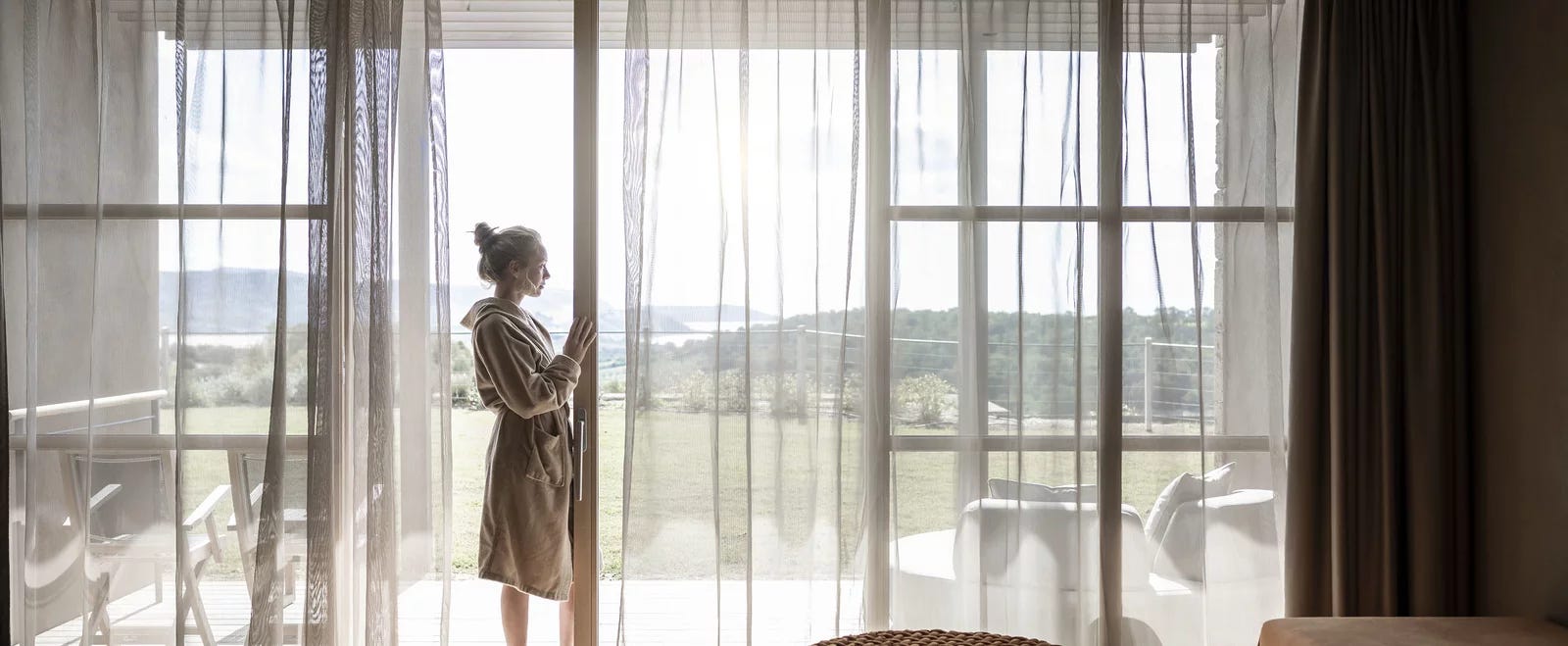
Credit: Adler Spa, Sicily
Be concrete, not abstract. Call it the sausage test. Lewis tells us what the Narnian sausages are – hot and spicy, while that little word ‘burst’ conjures up many a finger-burning, sausage-specific evening around the camp fire. He also tells us what they are not – ‘wretched things, half filled with bread and soya’. I guess that’s what post-war sausages were like. I’ve been carrying that phrase around with me since I was about nine years old and judge all contemporary sausages by it – though today’s supermarket bangers are filled with even more wretched and nasty things.
Talking about bangers, when I coach hospitality writers and PRs I usually bang on about stuff – materials, textiles, types of wood and fabric. Here’s a rule of mine:
Put the nouns in a bank until you’ve got enough to earn an adjective.
Back to posh hotel suites: especially at the higher end, provenance – where stuff comes from, how it’s made and what it’s made of – matters to the designer and they should matter to the guest too.
Here’s an attempt to get more specific from another press release:
The suites are spacious and bright, finished with natural materials such as timber and terracruda for a healthy and restful atmosphere.
Perhaps your eye, like mine, went to that word terracruda, which I learn is a concrete effect wall tile. At least that sounds different. ‘Timber’ is annoyingly vague.
Then we get a classic press release non-sequitur: how, precisely, do timber and wall tiles make the atmosphere healthy and restful?
What to do instead? Well, I had a look at the said suites, in a Sicilian resort, and – this is based on the single photograph above, so forgive me – I saw a few details the writer might have used. The French windows open onto a wide private terrace, with its promise of al fresco pizzas and slow breakfasts. Beyond, there’s a wide expanse of lawn leading to a low line of olive trees. Beyond that, thickly wooded (pine? oak?) hills. Two minutes on Google maps reveals that we are looking towards not one but two national parks. That detail gives some credence to the adjectives ‘natural and restful’. And I see a blogger averred that the nearby beach is ‘Sicily’s wildest’. I think I’d use that somewhere. And the surroundings do look unspoilt. I might write, looking out from that room on a bright morning, that you could almost imagine a Phoenician bireme rounding the headland.
Mind, an editor would probably take that out.
I get that owners and hotel marketing teams have their talking points and there is an established way of describing places like these. But relying on vague descriptors and the tired platitudes of luxury travel deprives the hotel of distinctiveness and, much worse, makes it sound as if it could be anywhere. And in travel, the place is your main character.
More on details vs abstractions here.
No posts
Comments
Nothing yet. Say the first thing.
Sign in to join the conversation.