
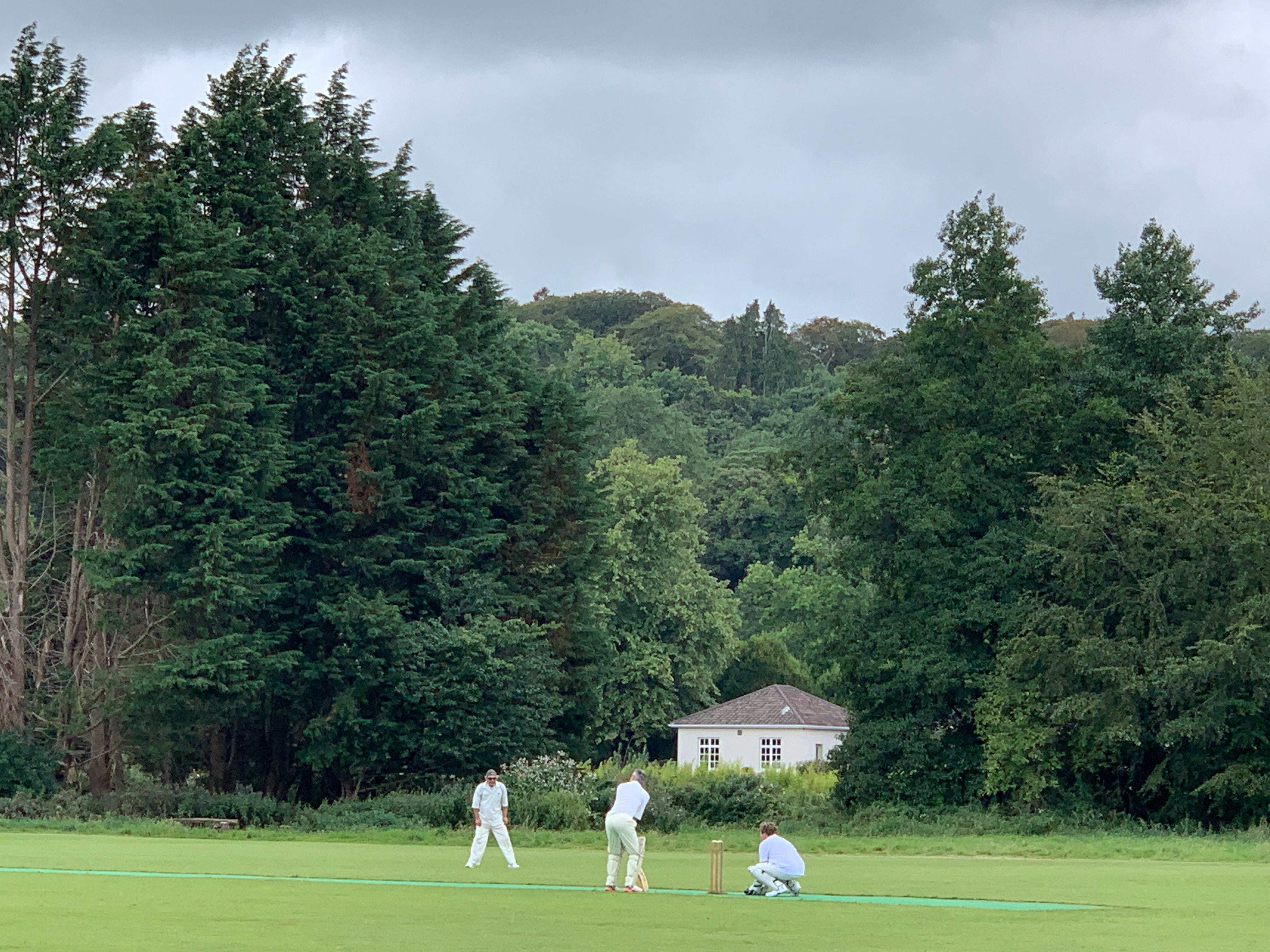
I was playing cricket in Ireland the other day. Among sports, perhaps only fishing allows you more time for contemplation and dreaming: and I don’t fish. So there I was, wandering around the outfield or looking into the middle distance when I decided I wanted to describe the match we were playing in the style of Finnegans [sic] Wake.
Here’s how the match report went:
Solaris ballybally was in droughtywoughty skybluely. Caliente, missus. Your Citymen then propelled laurelwards by Poulterpumped swingybat. But Old Grizzleskip did declaim fiftynomorelore. Bleeding Tony bench-bound.
But wither and when tea oh Halverstoony cunningfellows?
Long wicketfree on wispygrass. Sphere went high-handywards. Butterfingerly clusterfeck.
EllieBill lo! did reversesweepy catchshock but Hades drew in inevitabilly-boo and Kildare killers ferry Alansilvercuppy home doom.
Ah well next year betterluckychaps.
Perhaps I had better translate.
It was a sunny and hot day near Halverston, a part of Ireland that had not seen rain in a month. Our team, the White City All Stars, did well when we batted, led by a fine innings from Tony Poulter. But our veteran captain decided Tony should retire when he reached 50 runs. He did, nursing a cut finger.
There was some controversy about when we would take tea and thus how long Halverstown had to reach our target.
We found it hard to take their wickets, not helped by a succession of dropped catches.
There was hope when Bill pulled off a great catch from Elena’s bowling, but it proved too late. The cup, named after our late friend and fellow cricketer Alan Ruddock, went back to Halverstown.
I tried hard to capture the diction and flow of James Joyce’s modernist classic. A couple of people noted, correctly, that my version made too much sense. You can wade through pages of Finnegans Wake without knowing what the hell it’s about.
For example:
This is the jinnies’ hastings dispatch for to irrigate the Willingdone. Dispatch in thin red lines cross the shortfront of me Belchum. Yaw, yaw, yaw! Leaper Orthor. Fear siecken! Fieldgaze thy tiny frow. Hugacting. Nap. That was the tictacs of the jinnies for to fontannoy the Willingdone. Shee, shee, shee! The jinnies is jillous agincourting all the lipoleums. And the lipoleums is gonn boycottoncrezy onto the one Willingdone.
This is a description of the Battle of Waterloo.
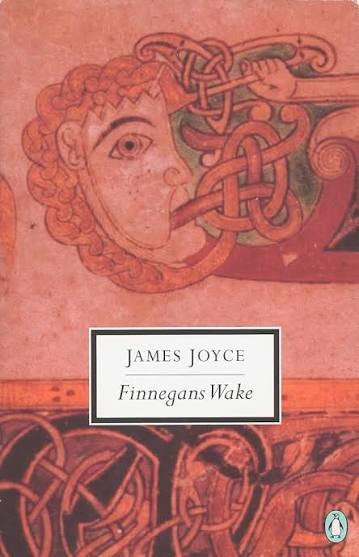
If you had a bookshelf with all the great modernist works of literature lined up, Finnegans Wake (1939) is the one at the end. After this, yes, writers experimented with plot, language and consciousness. But no-one went further.
But why? Why did 20th century writers feel they had to tear up the conventions of the novel and poetry, write anew, start afresh?
Because they felt it had all been done. Novelists had said everything there was to say in the conventional way of an all-knowing narrator telling you a story.
And you know what? I am beginning to feel the same way: not because we are at the end of a way of writing and seeing the world that has exhausted itself: It’s because we are at the beginning of a revolution and we need to revolt against the revolution.
Yes, I mean AI. My news feed today is begloomed with a story about an American author whose agents will not be taking up a $2 million advance following a 14-publisher auction because his manuscript failed their AI testing software. This is at least the third time a high-profile contract has been terminated on these grounds.
It’d be easy if AI copy was all like much of it is – correct, smooth, characterless. Then we humans could rebel and joyously express our humanity with unexpected phrases, allusions only we know and unreplicable personal insights.
But as everyone now knows, all you have to do is tell the software to write something in the style of…
And that’s what I did with my cricket report. Here is Claude’s rival Finnegans Wake report on the Halverston epic:
Sunnysided and scorchscorched the day was, hot as blazes over Halverstonhalverstown, that parish of Erin’s green unwatered where no rain-dhrops had wept upon the sod this moonsmonth and more, dry as a bishop’s wit, arid as an aunt’s remark.
Our lads, whitecityallstarshallelujah, batted brave and battered on, Tony Poulter poulterpelting the ball to boundary and beyond, an innings finewinefine till our old cap’n (veteransveteranus, rememberrer of retirements past) sent word: retire thee, Tony-my-son, upon the fiftieth run and not a run more! And so he did, nursing his cutfinger, fingercut, dripdripdripping his little red badge of battle-honour off to the pavilion, poor martyr of the boundary rope.
Teatime teatimetumult! When oh when to pause for the cuppa, and how much time then left to Halverstonhalverstown to hunt and haunt and hound our total down — argy-bargy, tea-leaf tealeaved tempest in the committee-cup, a right hullaballoo over the samovar.
Wickets wouldn’t fall, fall wouldn’t the wickets, catch after catch went down like autumn’s leaves that never leaved (for hadn’t the rain forgot to fall too?), dropdropdropped through butterbuttery fingers, howlsome groans risen from the boundary boys.
Then hope! hopeup! when Bill (billiant Bill) plucked one from the air offoff Elena’s spinning arm, a blinder, a beaut, but too late, toolate, toolatetoolate the hour, and the cup — Alan Ruddock’s cup, our Alan, gone-but-not-forgotten Alan, friendfellow cricketer clubbed in memoriam — went homeward, roadward, backward unto Halverstonhalverstown once more, as ever it was, world without innings, amen.
I don’t know whether to be flattered or utterly dismayed that my poor individual human brain picked up the same kind of phrasing and grammatical tricks as the super-colossal large language model. We both looked for lyrical neologisms (my droughtywoughty skybluely, their moonsmonth). We both mashed up proper names and their deeds (Poulterpumped swingybat, poulterpelting). Neither I nor Claude could resist butter/butterly fingers.
If I were being ultra-critical of my rival, I’d point to the tell-tale word-padding (homeward, roadward, backward) and the occasional cliche (hot as blazes). But they got in some good similes, and some of Joyce’s biblical echoes. I didn’t.
But look, neither of us – evidently – is James Joyce. We do not have his learning, his imagination, we are not products of a classical education and his country’s vernacular which, if J M Synge is to be believed, was as rich and deep in the early 20th century as the language spoken in Shakespeare’s late 1500s London, even among the common folk.
Claude and I are just doing pastiche, imitation. He’s the original.
Intention. Claude cannot HAVE the idea to write a cricket report like Finnegans Wake. It can only execute the idea.
In whatever I’ve written I’ve always tried to put something different in, an unexpected turn of phrase, a surprising rhythm. That goes back to my earliest days as a reporter when I was given a depressing sheet of paper prescribing exactly what should be in the five paragraphs of a standard news story.
That habit of mine has understandably annoyed not a few editors over the years. What is this about? Yes, but WHERE are you and WHAT are you describing??
Now that the revolution has happened and we are retreating behind the barricades, I think the only way is to be more, not less weird. More individual. More human. Even pre-AI a lot of copy in my main field, travel, sounded pretty bot-like anyway. So, push the language, upset the narrative: you don’t have to go as far as Finnegans Wake – no-one else has, as I said earlier.
There are some trying it. As we are referring to sport reports, look at Barney Ronay’s work in The Guardian. His massively overblown analogies and arcane allusions have made him a frequent visitor to Private Eye’s compendium of pretentious writing, Pseud’s Corner. Ronay says they don’t get the joke. Whatever, we are going to need to make room for more Ronays.
Going weird might be the only way.
This article was not created with the help of AI apart from the bits where it obviously was. And it gave spellcheck nightmares.
No posts
Comments
Nothing yet. Say the first thing.
Sign in to join the conversation.