
There’s this single word that’s been rampant in my world of late. It’s the kind of word that rings in your ears. The kind of word that makes you ponder, does the fact that we even have this word for this concept impede upon our ability to truly grasp it? That would be perfect, wouldn’t it? Yes. The perfect paradox. Just like the perfect place, the perfect life, the perfect guy, the perfect bite, the perfect risotto.
The idea of the perfect risotto, like a cube of butter in a pan over low heat, has been swirling in my head for a couple of months now, ever since I received an e-mail from a family friend who had recently ventured over to Milan:
“The risotto was a combination of al dente and thick-liquidy that I’ve never tasted before—unbelievably yummy. Do you know how to make that happen? In my experience, the more liquid you add the softer the rice gets, and the less you add, the less liquidy it is at the end. WHAT’S THE SECRET?”
Why is it that perfection comes with secrecy? As if we aren’t supposed to know what exactly makes something perfect? As if perfection lives on a pedestal that we see above us, but we cannot, for the life of us, seem to locate the ladder?
Just, for a moment, think about the phrase “nobody’s perfect,” a spell that reassures us that we will never be perfect, never be the Vitruvian Man. We’re perfectly able to identify the condition of perfection and are quick to claim it as something outside of us, as something unattainable. The consequences of this frame of mind are intangible yet immense.
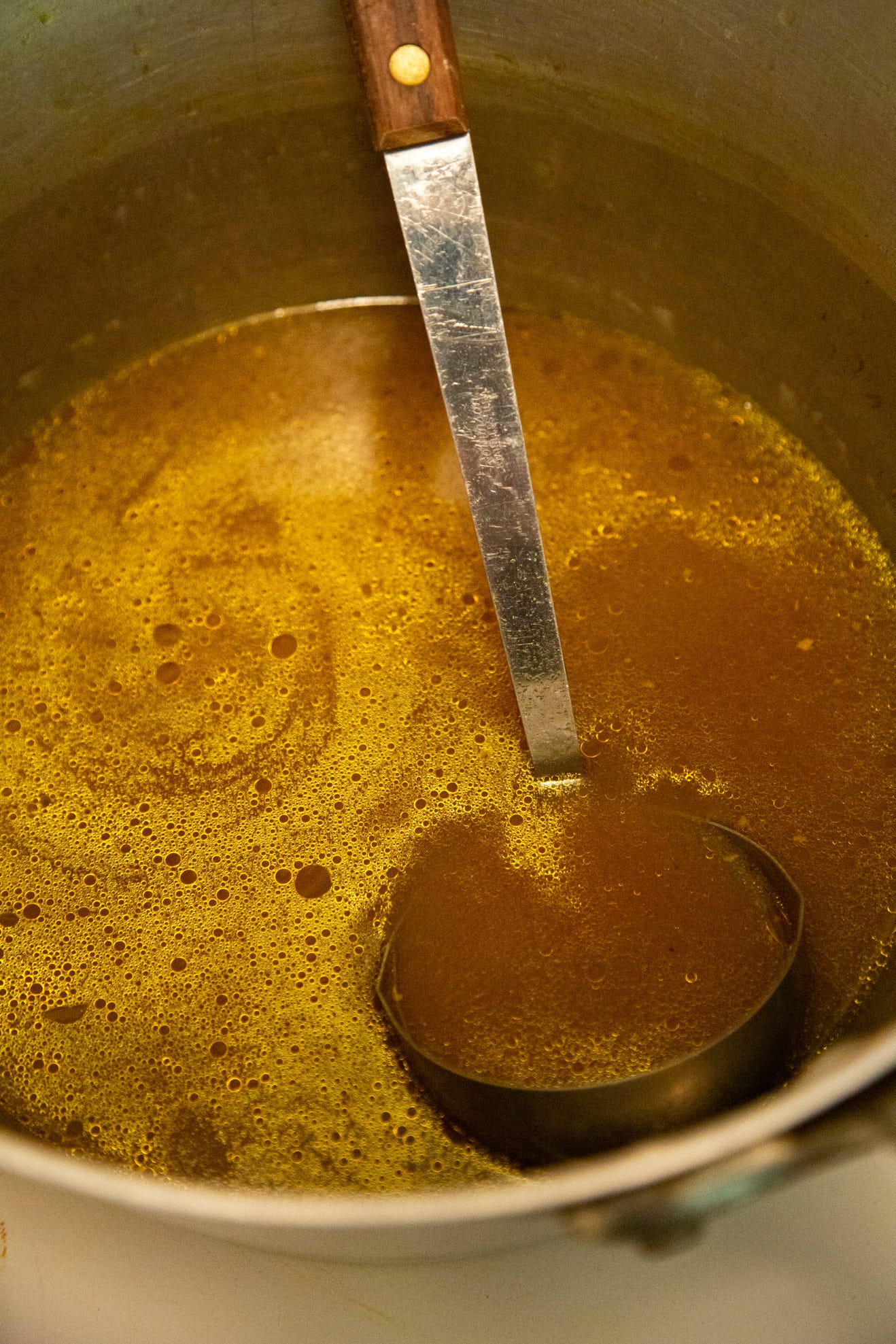
I vividly recall how upon receiving that e-mail I promptly went to open one of my cookbooks to see if I — someone who, yes, lived in Italy for a good eight months yet still had only made risotto a handful of times throughout her life, someone whose breadth of knowledge on the subject might as well be the size of a rice kernel itself — could find the secret. The first and only book I opened, Niki Segnit’s book1, said “Risotto has attracted its share of prescriptivists, who will tell you that no risotto is ready until a spoon will stand up in it, or that its surface should describe a gentle wave like Le Corbusier’s Ronchamp chapel. Take it from me: the only reliable test is to put some in your mouth…” Phew, permission to take some agency.
I replied to the e-mail with photos of Niki’s risotto recipe. I knew that I could end up making this a whole research project (I’m sure someone has), but this would suffice for now, especially with its dash of humour (the kind that calls to mind the film The Golden Spurtle2 about a championship in the Scottish Highlands for the best porridge — seeing that film somewhere between the e-mail and the following scene certainly fuelled this inquiry).
The other day, the heat under the pan was turned up and that cube of butter started to sizzle after I had found a book on risotto at a legendary cookbook shop3 in lower Manhattan that self-proclaimed itself to “instruct and guide you on all the basic information you will need to prepare perfect risotto.” I officially got engrossed in this idea of the perfect version of a dish, fossilised through a recipe so sure in its form it convinces us it is pristine and that its flawlessness must be honoured to the nth degree.
Cooks have been making risotto for ages. Think about how many cookbooks include a recipe for risotto, each slightly different for their own reasons. One way or another, we’re all doing covers of some big hit, with the originally rarely agreed upon.
Perhaps it is the legacy factor that has bred perfection. Time eroded any adaptation that wasn’t favourable for the optimal form. Over generations, all the cooks inadvertently approved a “right” way. After all, the saying does go, practice makes perfect.
But what really is perfect? They say, something that is thoroughly made, without flaw. Then you’re stuck at a fork in the road asking yourself, what on Earth is a flaw? I feel all this need for precision blocks us from understanding what perfect truly is.
Perfect is how you see it. In one sense of the word, what’s perfect to me, may not be perfect to you. There can be a scale of perfection, which depends on what mark is trying to be hit. In another sense of the word, everything is perfect, no matter what either of us say. It’s no secret. We only have to curb our expectations to get that.
You may have not had enough stock and had to add some water, but the conversation you had over dinner was one for the books. It may not have tasted super flavourful, but the setting it was served in was as warm and cosy as could be for these last days of winter. It may have been scooped into a deep bowl rather than dabbed onto a plate, but the creaminess just melted in our mouths. How do we convince ourselves that, still, it was perfect? However it went, was how it was meant to go.
There may be standards to attain to that encourage us to be better cooks, or to fit within a particular pedigree. With that in mind, I’d say the perfect risotto exists only in thought, suspended in air by the references that make us strive for excellence. The perfect risotto is sustained by reverence, with debt owed to the well-seasoned cooks who came before us.
But fundamentally, each and every risotto is perfect, because it is made with the intention to serve something delicious and is backed by an intrinsic desire for delight through the sense of taste. After some practice, I feel that accepting this kind of perfect, an innate perfection, is a means for survival. It is this acceptance that lets us live life fully and be happily full.
My spoon won’t stand up in my plate of risotto, but it sure likes diving in. More cheese please.
Lateral Cooking by Niki Segnit, p. 207
No posts
Comments
Nothing yet. Say the first thing.
Sign in to join the conversation.