
Hi—
I’d like to tell you about a highlight of the recent trip we took to South Devon, in the UK, to celebrate Ben’s birthday. (Have you been there? It was my first time.) Of all the gorgeous seaside sites and rolling farmland we encountered in the region, the memory of our morning at Fowlescombe Farm stands out. The staff, the food, the garden—all incredible. As you’ll read below, standalone breakfast visits are not normally on offer, but dinners and overnight stays (the latter grant breakfast and lunch access) certainly are.
I don’t like to weigh Substack posts down with too many images, but I’ll share some more photos from the trip on Instagram.
Other recommendations (before we get to the piece about Fowlescombe):
Watch
Furious, starring Emmy Rossum and Lola Petticrew, streaming on Hulu;
Get a copy of
The Line of Beauty by Alan Hollinghurst;
Make
Lablabi (Tunisian Chickpea Soup) from Joe Yonan’s Cool Beans cookbook (I made it a few days ago and want it again ASAP)
My two new recipes (“Pasta with lazy romesco and charred green onions” and “Green baked ziti”) in the Guardian Feast’s app
Let me know what you think if you watch/read/make any of the above (or below). Talk to you soon.
Brian
*Formal Assignment P.S. is for paid subscribers. It’s less than $3 a month for an annual subscription.
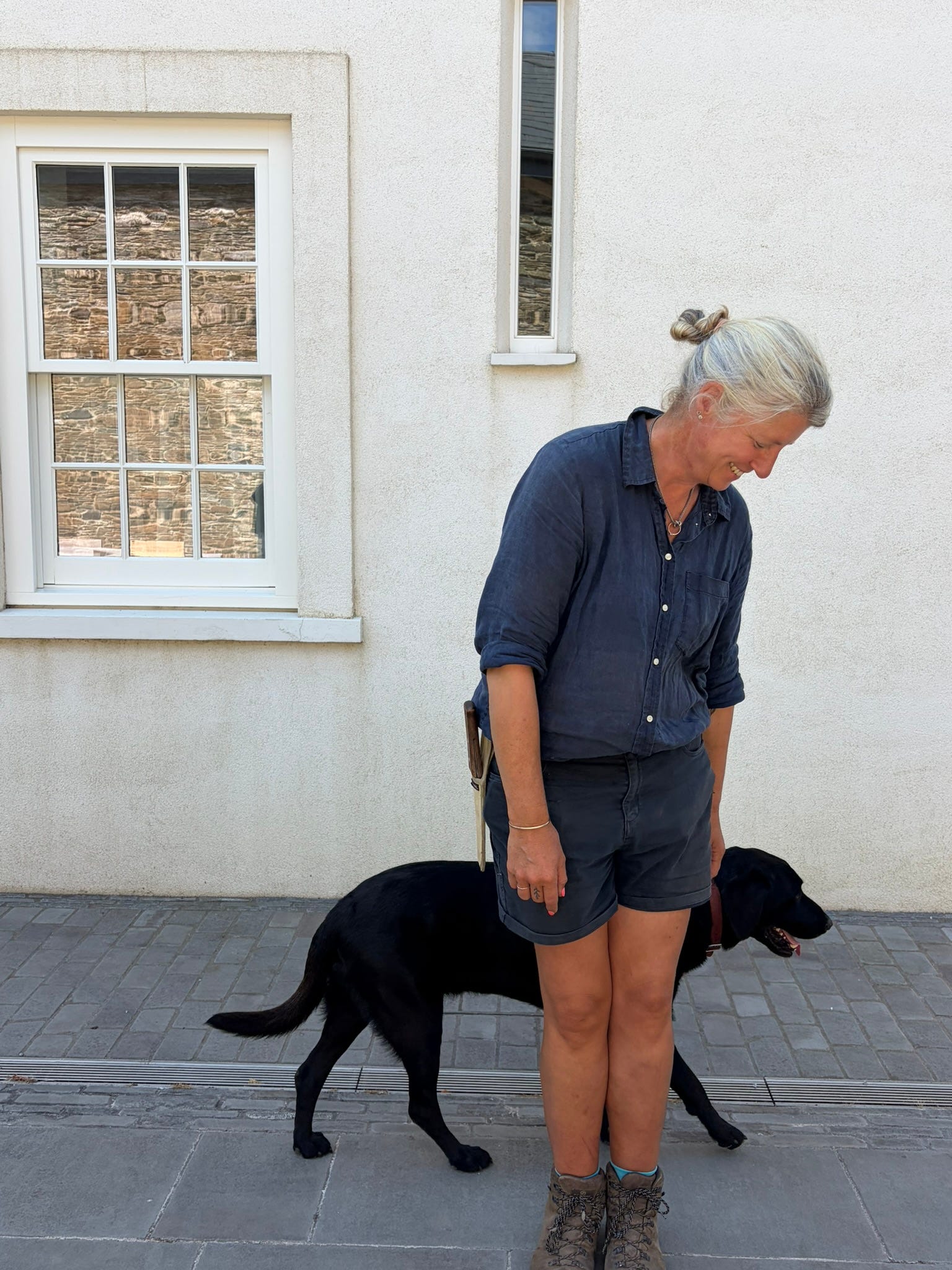
A tall, tanned woman appears at the end of our table, a green bunch of chard captive in her hands, hair the colors of birch bark gathered in a loose chignon. She introduces herself as Shelley, the gardener here. “I’ll be giving you a tour of the garden after breakfast. See you in forty-five minutes?”
I’d read about this place, Fowlescombe Farm, six weeks earlier while researching what to do in the South Devon area of England, where a group of us would be gathering to celebrate Ben’s birthday. I thought breakfast would be the cleverest way to experience Fowlescombe in daylight, but when a WhatsApp reply gently informed me that breakfast is offered exclusively to lodgers, I had to quickly appraise my pride and journalistic integrity, both of which I concluded were far less valuable than the prospect of breakfast at the place in the photos. So, I dangled the only proverbial carrot in my possession—that I was hoping to write a piece about the place—and my wish of breakfast access for four was granted. (Mind you, my little carrot only holds so much power and my ethics only go so low; we paid for our breakfast!)
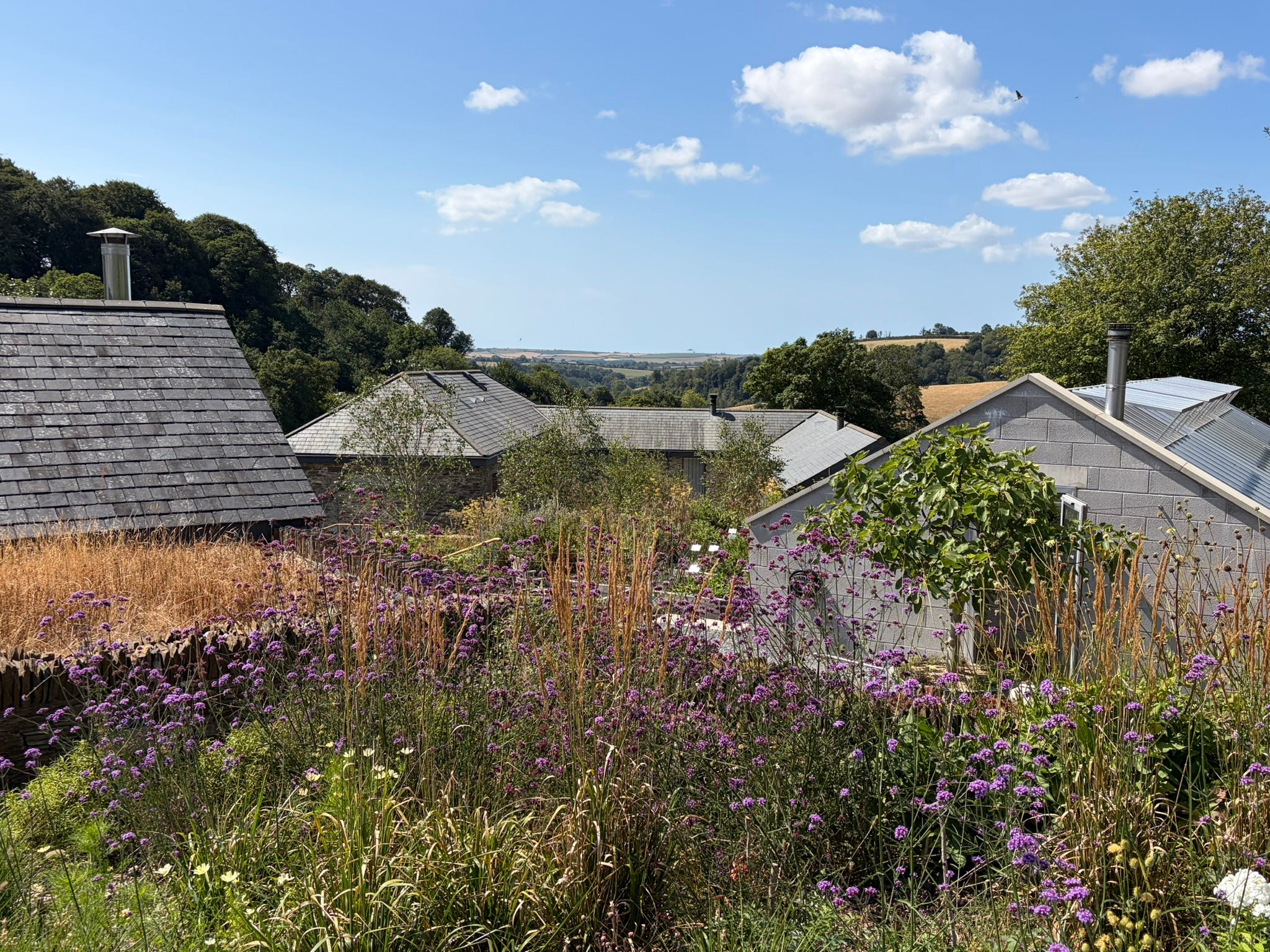
Green-lit though the plan may have been, the literal roads to the farm would prove slightly more challenging. For most of the northerly fifteen miles from the house we’d rented, the roads were little more than trenches carved in the tall, dense hedges that served as agrarian boundaries (plus, I was still within my first twenty-four hours of driving on the left side of the street with a steering wheel on the right side of the car). As we neared Fowlescombe, the tight hedge-walls gave way to views of golden-blonde fields bordered with green on a surface of rolling hills. We turned left onto a relatively prim dirt road, then right up a long, grey-graveled drive bordered by stone walls.
I parked by some other cars and farm equipment. The stucco and stacked stone of the buildings—five or so structures were immediately visible—contrasted with the crisp wood frames of the single-light windows, the roofs’ pristine shingles and sleek gutters. The property introduced itself as a place with history in which a modern, meticulous hand had intervened. (The Owens family, who in 2019 acquired the 450 acres on which the Fowlescombe estate has existed in some form since 1537, spent years developing the present inn, restaurant, and organic, regenerative farm. It opened in 2025, ready to indulge romantic agrarian idealism without denying Wi-Fi and flat whites.)
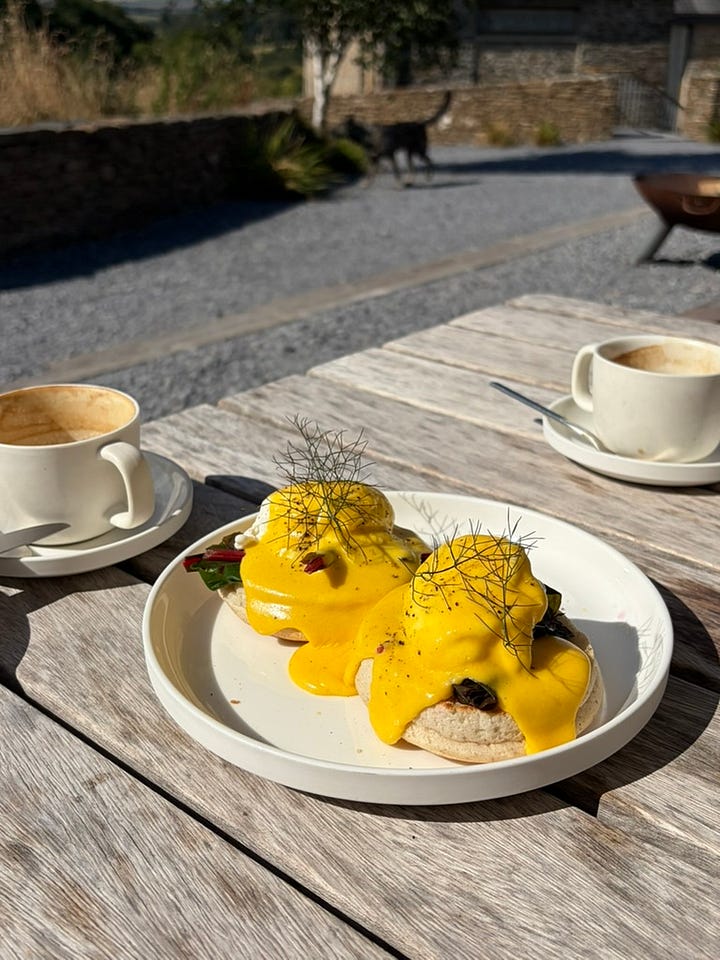
Breakfast-bound, we spot a couple with coffees at one of the cluster of greyed teak picnic tables on a graveled terrace that appear to spill from the wide-open sliding glass doors of a single-story stone structure that houses a long dining table, stainless steel counters and pots, and a couple of busy aproned cooks.
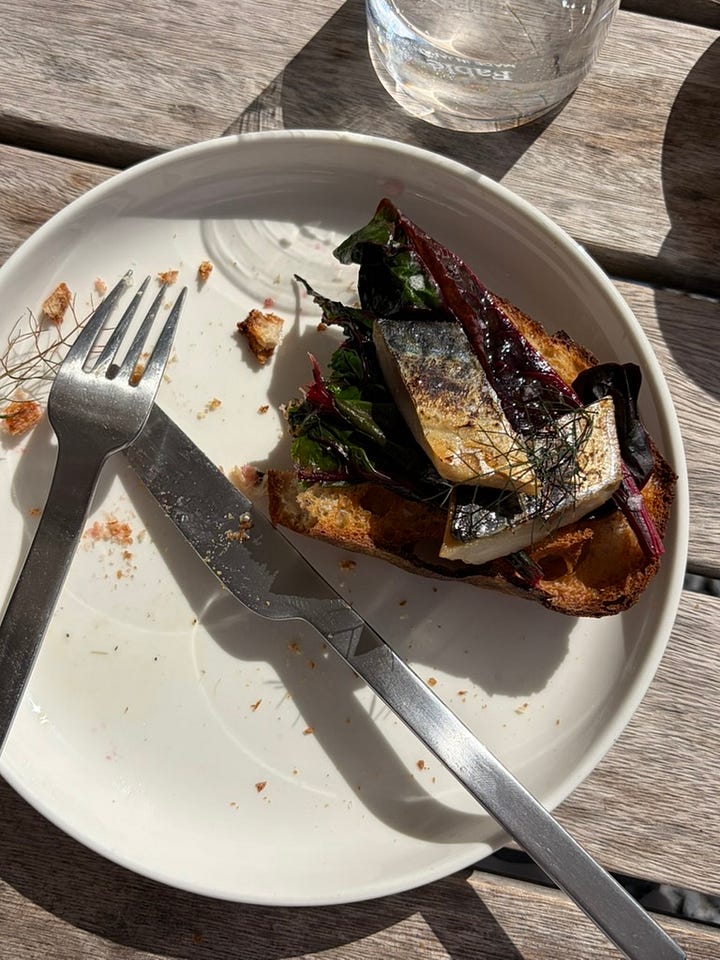
Our breakfast, enriched, we’re told, with ingredients from the farm, alights before us: green juice, a rhubarb-and-cherry kombucha; eggs Florentine doused with hollandaise the color of sunshine, French toast decorated with strawberry preserves and slender orange petals, the most exquisitely crisp and foamy bacon from the farm’s own (formerly) livestock; and my ‘Salcombe Smokie’—sourdough toast topped with glistening red-and-green chard, immaculately segmented salty mackerel, caught nearby, and surprisingly sweet raw fennel fronds.
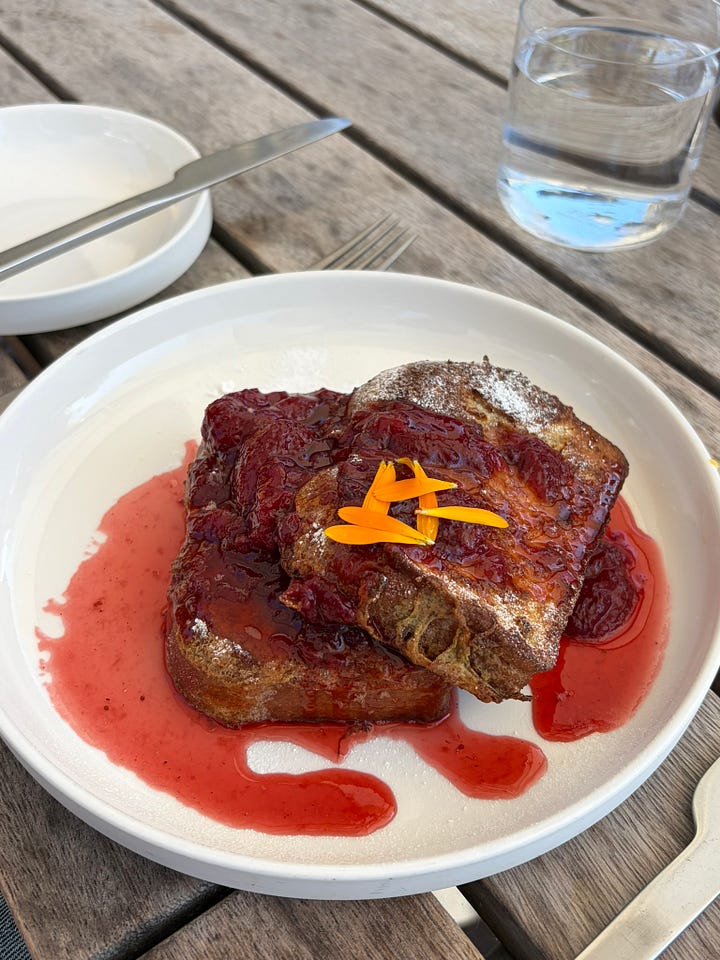
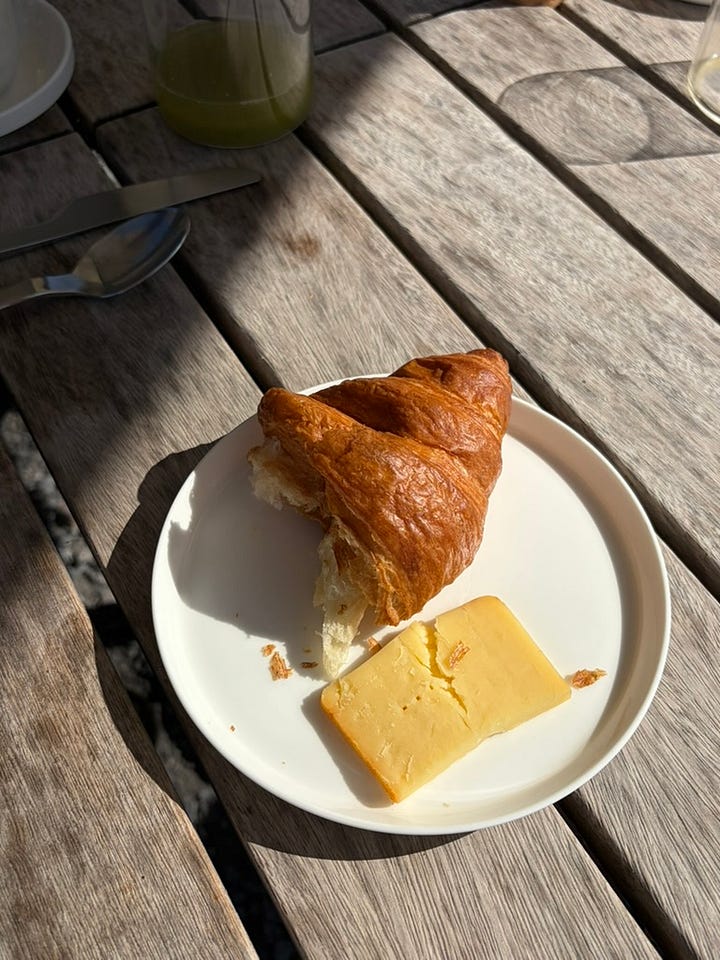
The serenity at this table (“I think the birds are quite loud today,” a waitress, Daisy, jokes), the perfection of every element of the food—you’d think it would all be downhill from here. But then Shelley (Hutcheon) returns to fetch us for our garden tour.
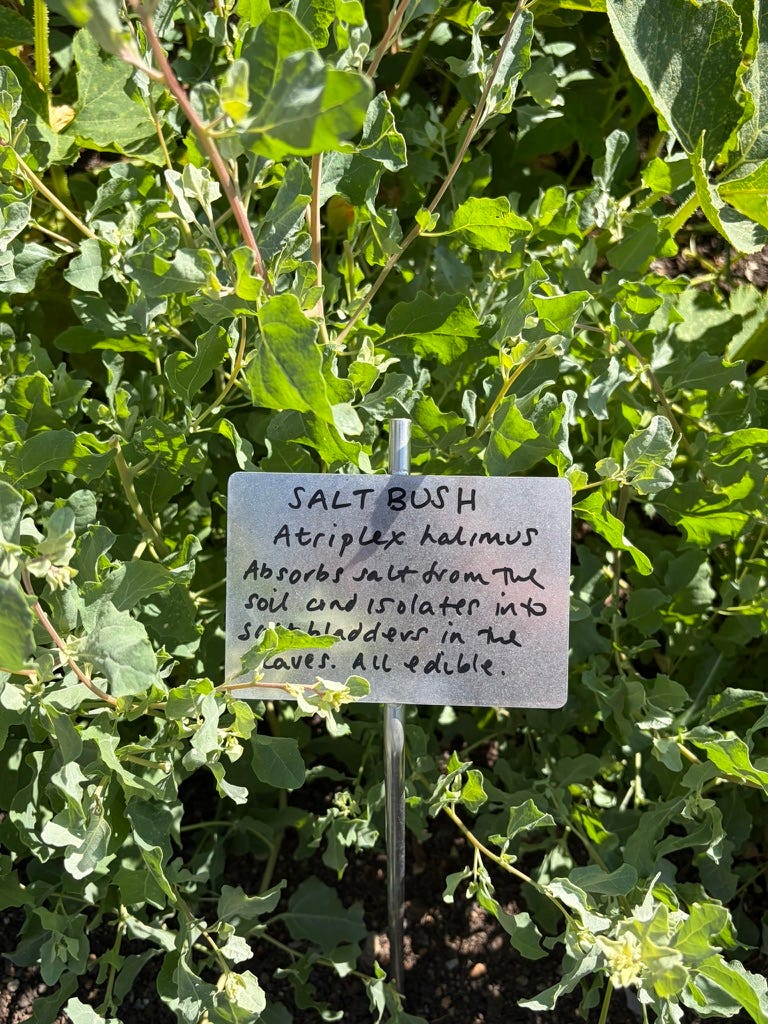
Just behind the kitchen building, on a terrace leveled into the gentle incline of a hill, lives a green haven crammed with edible plants and cutting flowers. The garden is only in its second year, Shelley says, and its high yield, relatively low maintenance, and efficient use of space are owed in part to what she’s learned from local Martin Crawford’s pioneering ‘Forest Garden’ approach. The garden, both open-air and inside a greenhouse that also serves as a winter garden with a sitting room and fireplace, hosts everything from horseradish to Sichuan pepper; ‘Goat’s bag’ tomatoes to artichokes; rose hips to chervil. I pause to take it all in and spy a chef who’s popped out from the kitchen to gather some herbs. I run to catch up to Shelley with more questions.
Comments
Nothing yet. Say the first thing.
Sign in to join the conversation.