
Three weeks ago we named the signal. Last week you held the artifacts. This week the scenario stops being interesting and starts becoming operational.
The question is not whether AI agents can do useful work. Most of them can, and most organizations are already finding out. The question is whether your organization can supervise delegated machine work without creating invisible operational risk in the process.
That is a different problem. And most teams are not ready for it.
Why this week matters
Most firms are still talking about AI in tool language. That framing is already getting weak.
The real shift is this: AI systems are moving from recommending work to taking action inside workflows. Once that happens, the core issue stops being model quality and becomes delegated authority.
Which means the real management questions become: what is the agent allowed to do? What systems can it access? What thresholds force escalation? What must be logged? And who owns the outcome when the agent acts within policy and still causes harm?
This is the management layer for AI labor. It exists whether you have designed it or not.
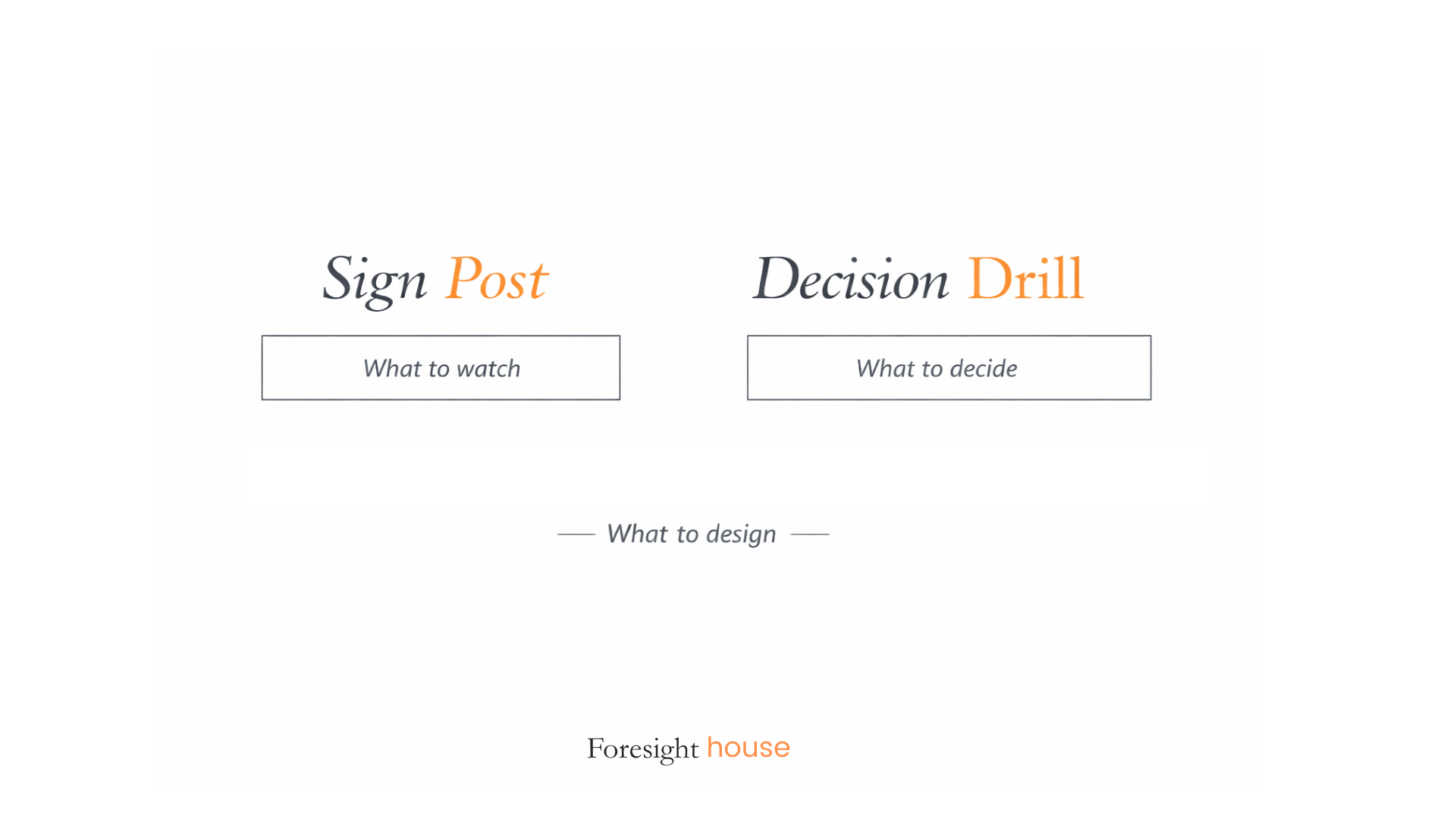
The 20-minute Decision Drill
Run this with a real team. Keep it timed. Force concrete choices. The goal is to decide your organization’s posture toward agent delegation before deployment outpaces supervision capacity.
Step A — Choose your org type (2 minutes)
Pick the closest lens and move on: A) Product or platform team, B) Operations or process team, C) HR or people operations, D) Risk, legal, or compliance, E) Executive or strategy team.
Step B — Read the artifacts (5 minutes)
Open the artifact pack PDF and review all four pages: the Managed Agent Profile, the Delegation Policy Memo, the Exception Review Log, and the Permissions and Oversight Dashboard.
As you read, mark three things: what feels plausible right now, what feels uncomfortable, and what would break first in your current operating model.
Step C — Answer these 4 questions (10 minutes)
1. What work are we actually willing to delegate?
Be specific. Pick the highest level you are genuinely prepared to govern, not the highest level that sounds impressive.
Suggest only / Draft and queue / Act within limits / Act unless blocked / Supervise other automated processes.
Answer based on what you can supervise. Not on what you hope to build toward.
2. Where does accountability really sit?
If the agent acts within policy and still causes harm, who owns the decision boundary, the policy, the system access, the exception logic, and the business outcome?
This is where most organizations get vague. Do not hide behind shared responsibility. Name the real owner for each one.
3. What overloads first if agent adoption scales?
Choose the one most likely to fail first: permissions management, policy maintenance, exception review, employee trust, manager attention, auditability, or incident response.
Then answer honestly: what is your current capacity limit there?
4. What must never be silently delegated?
List three categories of decisions that require visible human responsibility even if automation is technically possible. Employment actions, contract exceptions, external customer commitments, financial approvals above threshold, policy or compliance interpretations, access control changes, sensitive public communications.
If you cannot list three right now, your governance model is not ready for what is coming.
Step D — Commit to 3 moves (3 minutes)
No-regret move: create an inventory of tasks already being delegated, or likely to be, to AI. Classify each one by risk, reversibility, and required human oversight.
Option-creating move: design a simple delegation ladder. Tier 0 is suggest only. Tier 1 is draft and queue. Tier 2 is act within limits. Tier 3 is act with exception escalation. Define what earns each tier.
Risk-limiting move: define a formal exception review path for agent actions. Who can pause deployment? Who investigates incidents? Who signs off on remediation? Who restores authority after review? If you cannot answer those four questions, that is your 30-day deliverable.
Decision record template
Copy this into your shared doc before you start.
Org type: A / B / C / D / E
Highest delegation level we are willing to allow now: (Suggest only / Draft and queue / Act within limits / Act unless blocked / Supervise other automated processes)
Accountability owner if the agent acts within policy and still causes harm: Decision boundary owner. Policy owner. System access owner. Exception logic owner. Business outcome owner.
First management bottleneck if scale increases: (Permissions / Policy maintenance / Exception review / Employee trust / Manager attention / Auditability / Incident response)
Three decisions that must never be silently delegated: list them.
Three moves for the next 30 days with named owners: No-regret. Option-creating. Risk-limiting.
Executive owner. Review date.
Signposts: what to watch monthly
These are not interesting headlines. They are the indicators that this scenario is moving from theory into your operating model. Watch for them. When they cross the threshold, act.
Signpost 1 — Vendors shift language from assistant to agent with authority
Watch for enterprise products that stop positioning AI as a helper and start positioning it as an actor inside workflows. The branding matters less than what the product actually includes: permissions, approval thresholds, action scopes, system access controls, escalation logic. When those features appear as standard, the market is normalizing delegated machine authority.
Signpost 2 — Enterprise tools add agent-specific controls
Watch for platforms introducing role-based access for agents, action logs, override history, approval ceilings, exception queues, and incident review workflows. This is the control surface of managed delegation. Once these features become standard, governance stops being optional.
Signpost 3 — Organizations formally separate AI that suggests from AI that acts
Track whether teams start making an explicit distinction between recommendation systems, drafting systems, bounded action systems, and autonomous workflow agents. Once that distinction becomes formal, delegation design becomes a board-level and operating model issue, not just a tooling choice.
Signpost 4 — Companies assign clear ownership for agent governance
Watch for new ownership models appearing in org charts and job postings: AI operations, delegation governance, agent risk management, automation oversight, trust and controls for agent workflows. The scenario is arriving when firms stop assuming this can be absorbed informally by existing teams.
Signpost 5 — Managers report supervision overhead
The scenario is getting real when managers start saying things like: “I spend more time reviewing exceptions than doing my actual job.” Or: “We don’t know which agent has what permissions.” Or: “The logs exist but nobody reads them.” Or: “We scaled deployment faster than oversight.” The productivity story is starting to collide with management capacity.
Signpost 6 — Failures get described as delegation failures, not technical bugs
Pay attention to incidents where the core diagnosis is not “the model was wrong” but “the permissions were too broad,” “the escalation threshold was badly designed,” “the policy library was outdated,” or “nobody clearly owned the outcome.” That is the exact logic of this scenario showing up in post-mortems.
The threshold that tells you the scenario is arriving
You will know this case is becoming real in your organization when the question changes from: can this AI do the task? to: what authority should this agent have, and who is accountable for supervising it?
That is the pivot. Everything else follows from it.
What weak signals look like inside a company
Most people look for public proof and miss the internal evidence. The earlier signposts almost always look mundane.
An internal policy memo that quietly adds delegation rules for agents. A dashboard that shows agent permissions next to human approvals. A finance threshold created specifically for automated actions. Exception queues filling faster than teams can review them. Business owners asking for more agent authority before governance structures exist. Supervisors inheriting accountability without clear tooling or training.
Those are not side details. They are early infrastructure. If you are seeing any of them, the scenario is closer than your leadership team probably thinks.
What this means strategically
The firms that benefit most from agents will not be the ones with the best demos.
They will be the ones that can define authority clearly, limit access cleanly, escalate exceptions early, review incidents fast, and maintain policy and permissions as living systems rather than one-time decisions.
Advantage shifts from model use to managed delegation. That is the move worth making now, before it becomes obvious to everyone.
Comments
Nothing yet. Say the first thing.
Sign in to join the conversation.