
I’ve happily received some comments and correspondence regarding the series I’ve been writing about Canada’s naval aviators**.
We’ve seen a video of Banshees landing; but how do heavy aircraft get airborne? For example, a Tracker aircraft, many of which were carried over the years by the Bonnie, required a speed through the air in excess of 100 mph in order to take off. BONNIE’S deck was too short for that, unless an absolute gale was blowing straight at her, so enter the catapult. The catapult was located at the very bow of the ship (left in the photo below).
The Banshees always required a cat shot. The Trackers however could do a ‘free-deck launch’ if the wind over the deck was sufficient.
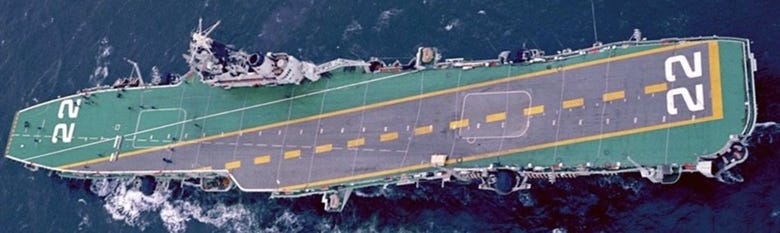
BONAVENTURE’S catapult was driven by steam pressure supplied from the ship’s boilers, and had an acceleration stroke of 112 ft. And at the end of its stroke, it would have provided the Tracker with a minimum single-engine safety speed of 105 knots. Thus, even if one of the twin-engine aircraft’s engines failed, it would still find itself airborne.
To say launching off the ship was a jolting experience would be an understatement. Personnel were cautioned to keep their heads pressed back into the headrest, before giving the “YES-YES-YES” verbally and a salute, at risk of receiving a serious neck injury and blow to the head.
Here’s how it’s explained in Allan Snowie’s book The Bonnie:
After quickly checking his engine instruments at full power, the captain’s order to his co-pilot was for a salute or a thumbs down to the flight deck launch officer. “Go” sounded too close to a “NO-NO-NO” requiring a vigorous thumbs down. If all’s well on the gages, the order was “YES-YES-YES” for a pusser salute. The captain would then lock the throttles forward with a right hand grip on a hold handle to avoid jerking them back on the G-force launch. All the while keeping the control yoke in a neutral position with his left hand and jamming his elbow against his belly so as not to pitch up on the cat shot. All four aircrew firmly pressed their crash helmets back against seat headrests...
— Then WHAM! You’re flying…
** I was not one of the brotherhood myself, being what those aviators would have called a “Fish-head,” ie a non-flying naval type. Some of the more technical aspects of these columns have necessitated running some issues by a friend and fellow author, Allan Snowie. Allan is a former Tracker pilot, commercial pilot, and now very busy historian. Among many other claims to fame he organized and led the replica aircraft that were in the Vimy Flight of vintage World War I aircraft. They overflew the Vimy memorial on July 1, 2017, the 100th anniversary of the Battle of Vimy Ridge.
No posts
Comments
Nothing yet. Say the first thing.
Sign in to join the conversation.