
Home page | Weekly updates | Subscribe
This was the Wellwoods’ third Midsummer Party. Their guests were socialists, anarchists, Quakers, Fabians, artists, editors, freethinkers and writers, who lived, either all the time, or at weekends and on holidays in converted cottages and old farmhouses, Arts and Crafts homes and working-men’s terraces, in the villages, woods and meadows around the Kentish Weald and the North and South Downs. These were people who had evaded the Smoke, and looked forward to a Utopian world in which smoke would be no more.
Welcome to a slow read of The Children’s Book by AS Byatt. I am your guide, Simon Haisell, and this is Footnotes & Tangents, a book group where we take our time to live inside great stories.
Last year, I asked readers which book they would most like to see featured on Footnotes & Tangents. Alongside Middlemarch, Ulysses, and Moby-Dick, many people requested AS Byatt’s novel Possession, a postmodern love letter to nineteenth-century prose and verse and an absolutely enchanting read. Although I was strongly tempted to do Possession, I felt the greater pull of another of Byatt’s novels: The Children’s Book.
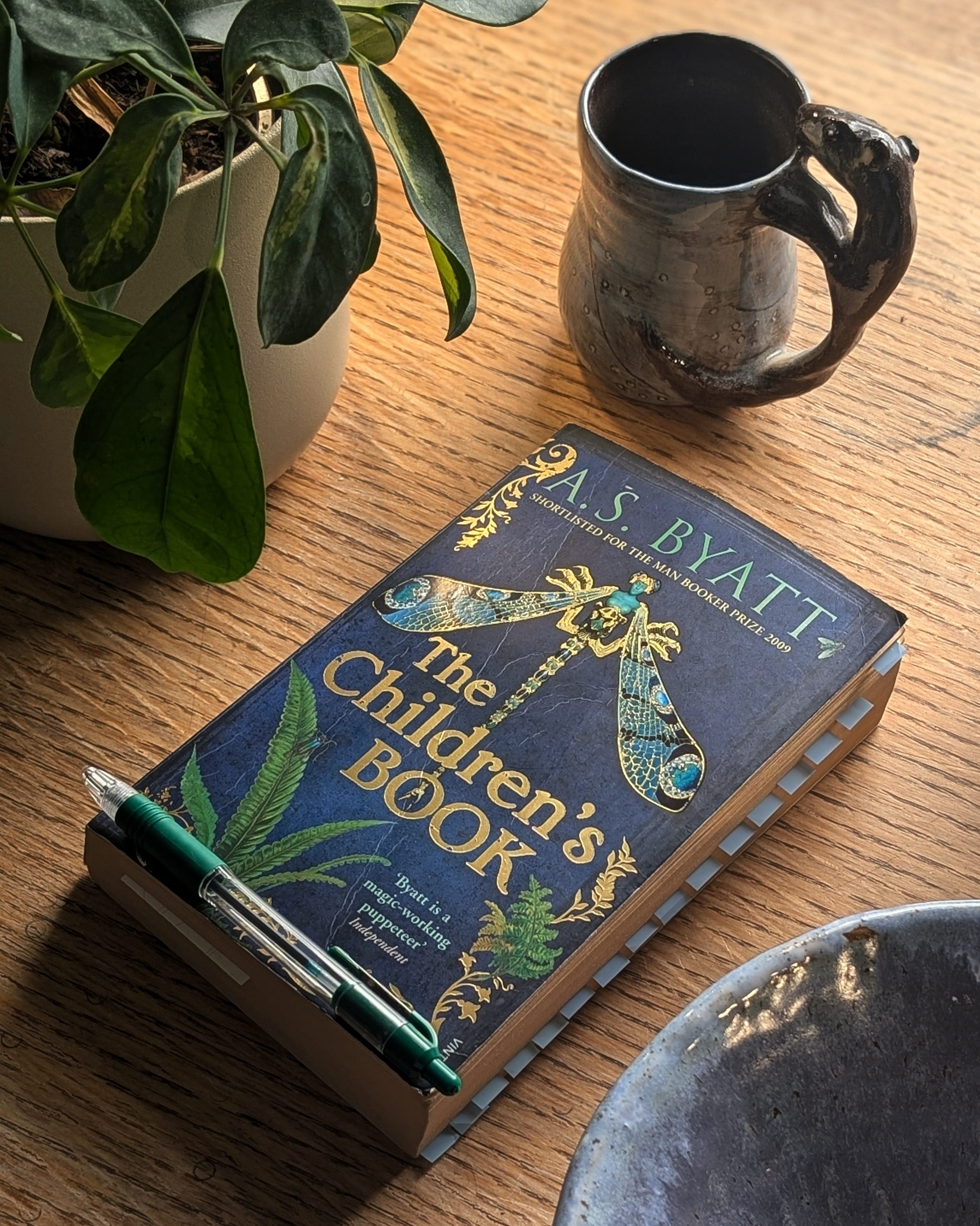
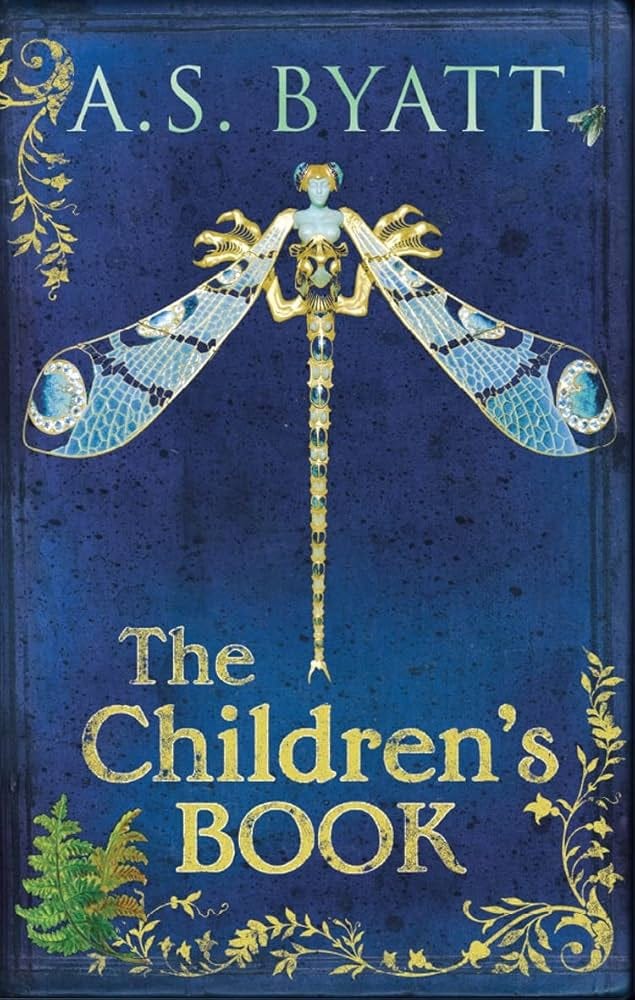
Published in 2009, this was one of her last novels and follows the lives of a group of children and their parents from the last years of the Victorian Era through to the start of the First World War. At its centre is Olive Wellwood, a writer of children’s books, loosely based on E Nesbit, the author of The Railway Children and Five Children and It.
The novel explores communities of optimism and utopianism at the end of the nineteenth century and prior to the Great War. At its heart is a dense fabric of stories, secrets and lies that contrast the high ideals and hopes of the times with the dark realities, hypocrisies, and frailties of those who lived through them. There is a complex constellation of characters to keep in the air and a rich seam of footnotes and tangents to excavate: Fabians, anarchists and suffragettes, pottery and puppetry, children’s literature and fairy lore.
I hope you can join us for The Children’s Book.
The read-along begins on 4 September and runs for 16 weeks.
Every Friday, you will receive a post from me with discussion and resources for that week’s reading, and you can join the conversation in the comments section. In these posts, I offer you my footnotes and tangents. You will have your own, and I encourage everyone to treat the slow read as an opportunity to explore, reflect and create.
To receive these posts, turn on notifications for “Readalong: The Children’s Book” in your settings.
The first post is always free. To access the rest of the read-along, you’ll need to be a paid subscriber to Footnotes & Tangents. This costs £5/month or £50/year. There are discounts for groups and complimentary subscriptions for readers on low or no income.
I am experimenting with something new for this read-along. Alongside the weekly discussion posts, there will be reading groups with their own private chat thread hosted by Substack.
These reading groups will be a more informal space for readers to get to know each other, share their reading experiences and drop in any useful links, insights or research that may help other readers. My hope is that this will help foster a more collaborative community around each slow read.
If you want to join a reading group, just let me know in the comments or send me an email or a DM on Substack. This is a new Substack feature, and I think each chat group can have up to 50 people. Depending on how popular this is, we may need multiple groups.
Everything related to the slow read can be found here:
Friday 4 September – Thursday 10 September
Friday 11 September – Thursday 17 September
Friday 18 September – Thursday 24 September
Friday 25 September – Thursday 1 October
Friday 2 October – Thursday 8 October
Friday 9 October – Thursday 15 October
Friday 16 October – Thursday 22 October
Friday 23 October – Thursday 29 October
Friday 30 October – Thursday 5 November
Friday 6 November – Thursday 12 November
Friday 13 November – Thursday 19 November
Friday 20 November – Thursday 26 November
Friday 27 November – Thursday 3 December
Friday 4 December – Thursday 10 December
Friday 11 December – Thursday 17 December
Friday 18 December – Thursday 24 December
Comments
Nothing yet. Say the first thing.
Sign in to join the conversation.