
My dad enjoyed all food, but Dungeness crab made him happiest. On our family vacations north, our first San Francisco stop was always Fisherman’s Wharf, where we would sit at a window table of one of those massive pier-side restaurants and he would order us all cold cracked crab.
The orders came with those metal claw crushers, narrow-tined forks and of course plastic bibs. Dungeness, a native Pacific Ocean ocean crab, turns bright orange when steamed. We crushed their hard shells open to pull out sweet, cool tender chunks of flesh. Conversation stopped. You only heard the snap of the carapace, a slurp, and an exclamation, an involuntary gush of praise. CRACK. SLURP. “IT’S SO SWEET!” CRACK. SLURP. “OHHHHH.”
I loved the meal — that loaf of warm Boudin sourdough that came first — but I also loved the ritual. Shells strewn across the table, our hands and mouths in constant asynchronous motion, a true feast.
There is no crab in our kosher home, and I’ve long searched for something to serve that brings back the all-in joy of those meals.
And I found it, in our front yard.
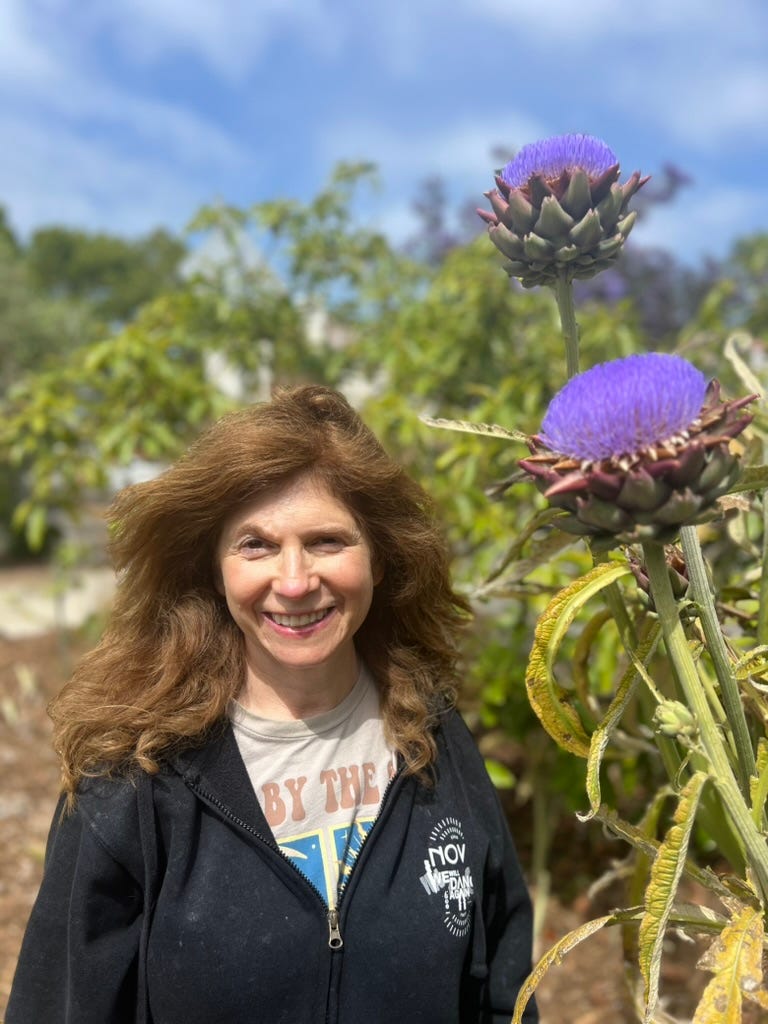
Long ago I ripped out the lawn the previous owner had laid down and replaced it with artichoke plants. There’s some lavender and rosemary, but mostly artichokes. They’re perennials. They love the cool Venice weather — who doesn’t? They’re happy with limited water and my limited attention. And when they’ve produced their buds, I cut them down to the ground — and the following year, two plants grow where one had before.
“What do you do with them all?” passersby invariably ask, as if it’s that difficult to eat 130 pounds of artichokes in the course of a spring.
Artichokes are flowers in the thistle family, and each plant produces 8-10 buds. The large one that grows at the very top is the primary. That’s the one most restaurants serve. But then there are secondary and tertiary buds that grow underneath it, circling the plant and waiting to bloom deep purple.
You can turn these into fried artichokes, artichoke pesto, stewed artichokes — all of which call for some laborious trimming.
Or you can serve them crab-style.
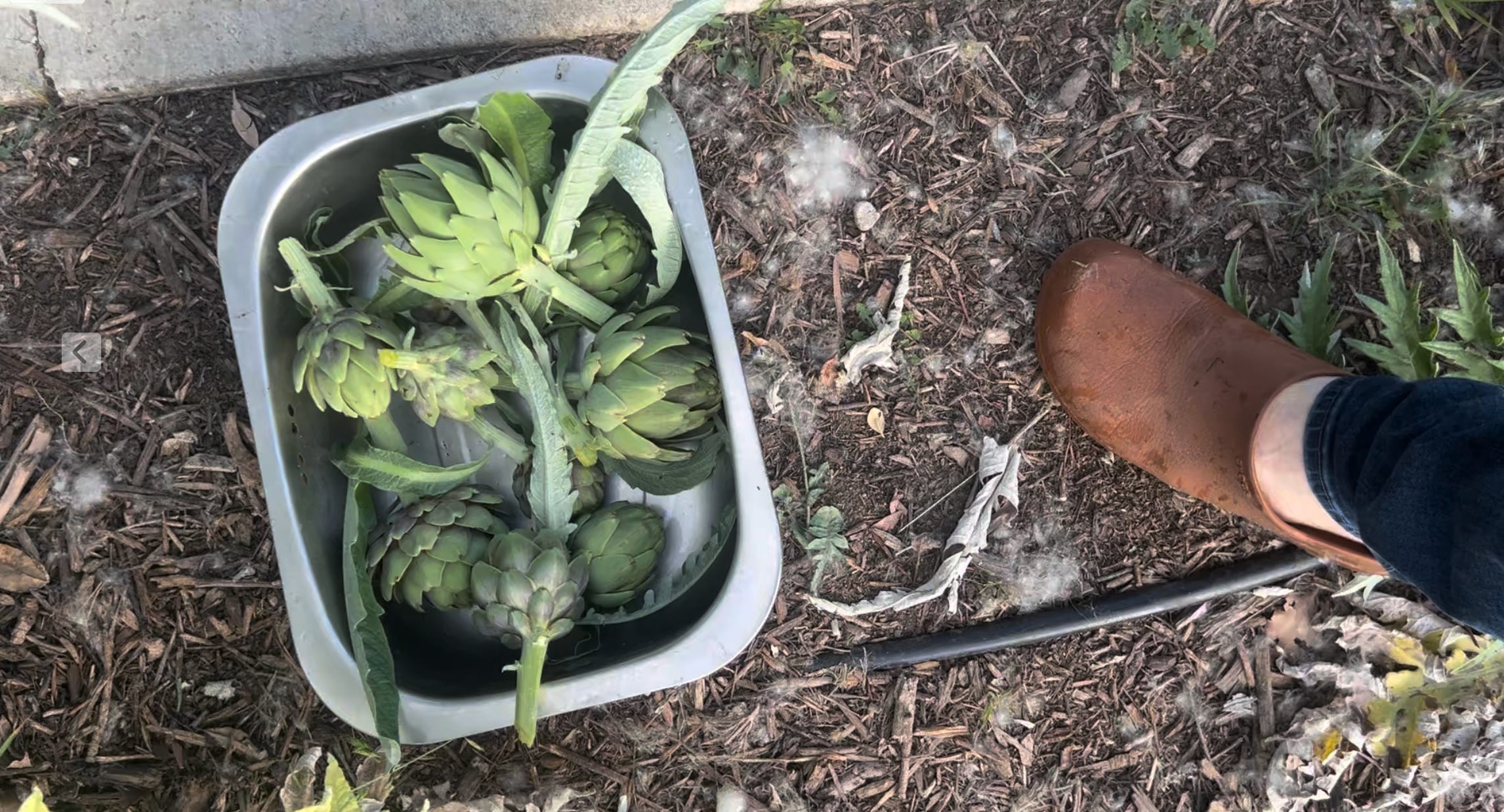
By the end of spring, my plants are tall, rangy and hacked at, their wayward branches stubbed for previous dinners.
Last week, I went through and collected all the remaining buds, most of them tertiary or infant-sized. I washed them well. The good news is earwigs bed down between the leaves and eat any aphids. The bad news is earwigs bed down between the leaves.I rescued what earwigs I could from the water and put them back in the garden on aphid patrol.
It’s a bittersweet time in the front yard. The artichokes are picked clean and I’ll timber their mighty stalks, cutting them at the base. All spring the growing plants were ocean green, filled with buds. People stopped to take pictures and then gawked at the few we let go to flower. Now it looks like a dry hurricane swept through, fallen plants shriveling to gray bones in the sun. A real estate agent would say the sight tanks our curb appeal, but who’s selling? I’m looking forward to recreating a version of the meal that made dad so happy. And I know the truth: Nothing you truly love truly dies.
I picked a lemon and some bay leaves for the rest of the dish, then headed into the kitchen.
How many artichokes did I pick? 10 pounds? 15 pounds? Way more than we could possibly eat all at once. Then again, abundance was kind of the point.
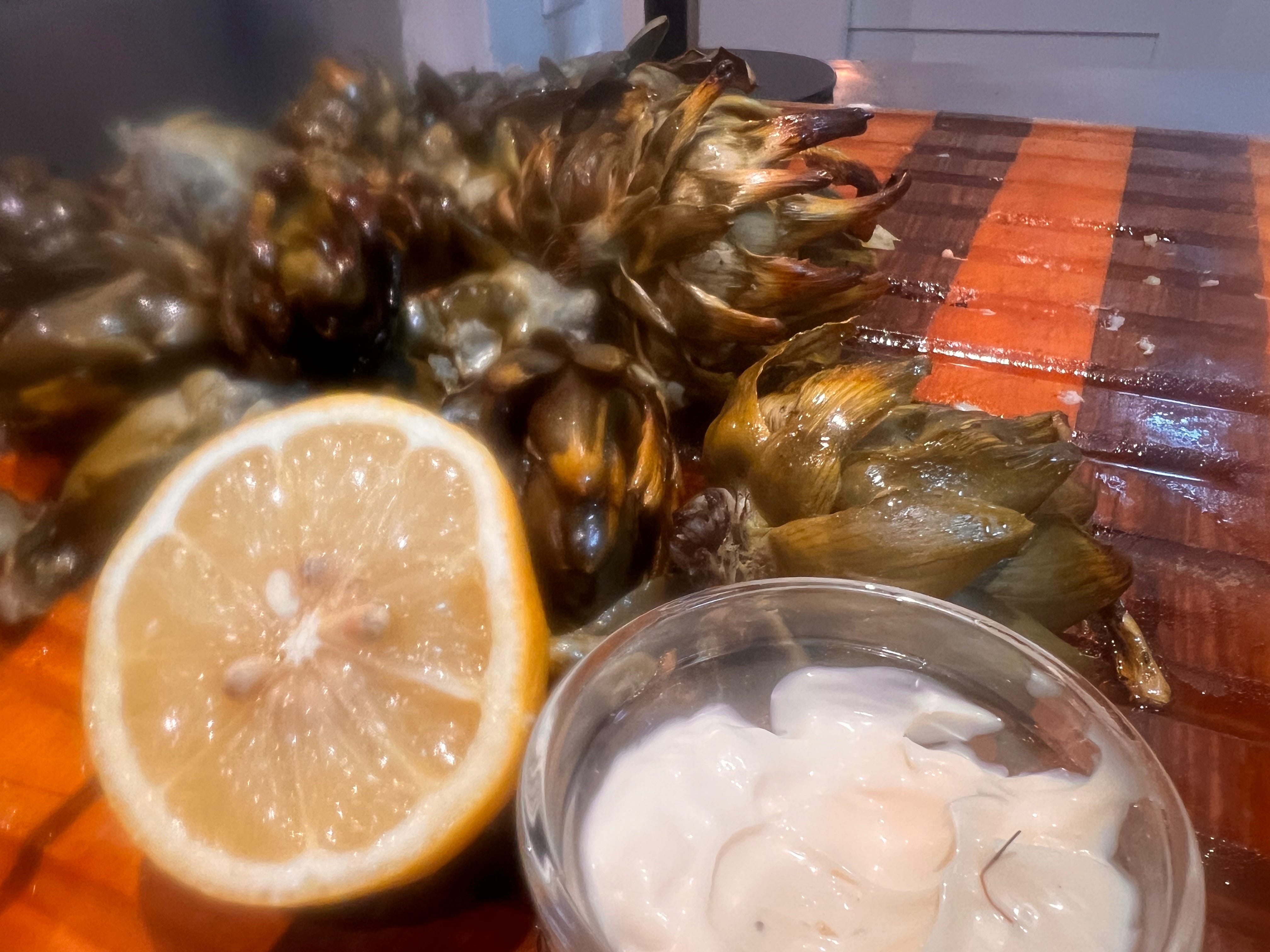
I boiled them in salty water until they were just done. That was the hardest part, knowing when they are tender enough to eat but not cooked so much they fall apart. They still had to be drained, tossed in a sauce of olive oil, lemon juice, garlic and bay leaves, then turned into a heavy pan and roasted in a very hot oven for 15 or so minutes, until some of the outer leaves curled brown and the pan sizzled like an El Cholo fajita platter.
When they were ready, I spilled them out on a wide cutting board I had placed in the center of the table. I stirred some homemade hot sauce into mayo and set a dish of that and a half of a lemon nearby.
We dug in. I couldn’t wait. The hot oil singed my fingertips as I tore off the leaves and dug for the heart, cracking and peeling off those shells to get at the flesh, swiping the hearts through the cool mayo, the juices coating my hands and mouth, the leaves scattered across the table. CRACK. SLURP. “IT’S SO SWEET!” CRACK. SLURP. “OHHHHH.”
There is no crab in our kosher home. Yet still we feast.
This works best with small artichokes, the kind you can buy by the bag at Trader Joes or several to a pound at farmers markets.
4 pounds fresh small artichokes
3/4 cup extra virgin olive oil
6 fresh bay leaves
4 cloves garlic, minced
1/2 cup fresh chopped Italian parsley or mint (optional)
1 lemon, cut in half
2 teaspoons salt
freshly ground pepper to taste
1/2 cup mayonnaise
Serves 4.
Wash and drain the artichokes. Bring a large pot of lightly salted water to a boil. Add the artichokes, return to the boil, lower heat and simmer until just tender, about 15-20 minutes depending on size. You don’t want them to fall apart. A knife tip inserted in the underside should just poke through.
Preheat your oven to 450 degrees F.
While the artichokes are cooking, prepare the sauce: Mix together the olive oil, the juice of 1/2 lemon, garlic and salt and pepper. Stir well.
Drain the artichokes, reserving a cup of water. Pour in the marinade, the reserved water, and add the bay leaves. Stir very gently. Spill the artichokes onto a large roasting pan or rimmed cookie sheet.
Place in oven and roast until some of the leaves start to look crispy, about 15 minutes.
Remove from the oven and spill onto a large serving platter or cutting board. Top with parsley or mint and serve with the half lemon and mayo.
Thanks for reading! Take a second to share this newsletter with a friend who loves food as much as you.
No posts
Comments
Nothing yet. Say the first thing.
Sign in to join the conversation.