

When Naomi told me she had to drive to Altadena for an errand, I immediately said, “I’ll come.”
Altadena is far. At 2 a.m. during, say, a global pandemic with stay-at-home orders, it’s 45 minutes from Venice. In normal times, the drive could take two hours.
“You’re coming?” Naomi asked. “Why?”
And I said, “Betsy.”
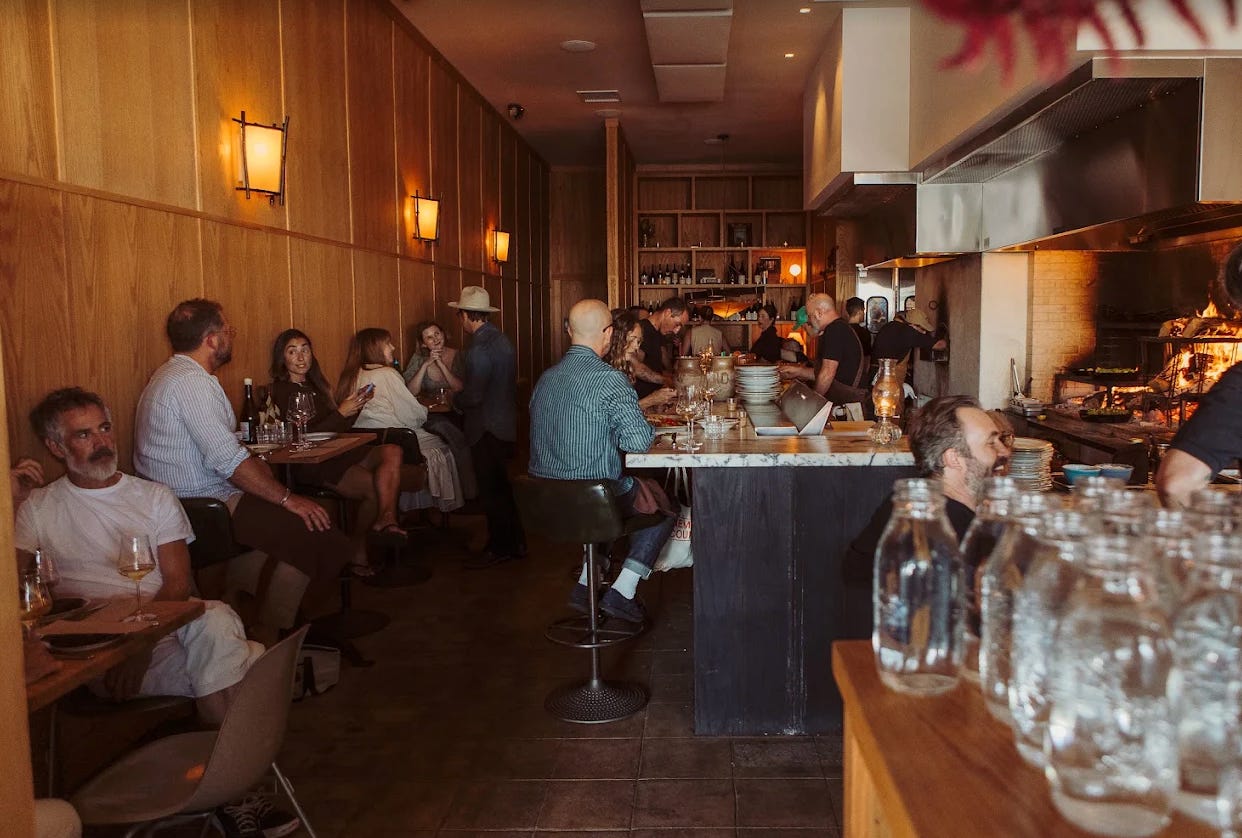
“In an era of extreme division and cynicism, I have all but shed the naive idea of espousing restaurants as hubs of community that bring people closer,” Bill Addison wrote last January in his Los Angeles Times review of Betsy and a neighboring restaurant, Miya. “Dine at either of these establishments, though, and you feel it. The neighborly goodwill. The ache for vitality among ruin. The absolute rightness of being together.”
Addison’s review strongly suggested that if one restaurant reaffirmed his lost faith in the power of restaurants as community hubs, it’s Betsy.
So we drove through Sunday afternoon traffic to the San Gabriel foothills. The Eaton Fire — which last week authorities determined was caused by a Southern California Edison transmission tower — destroyed 9,000 commercial and residential structures and killed 19 people.
Altadena is not back yet. Though there are new homes and many under construction, we passed acres of empty lots, chain link fences and empty storefronts.
Then we arrived at Betsy.
Two weeks earlier, I had managed to get a prime time reservation for a table inside. The place is crowded and living-room cozy, just 40 seats and a counter in front of a wall-sized open hearth where much of the cooking takes place.
But it was a hot night, so we decided on an outside table, with a view of the dusky sky over the vacant lots across the street.
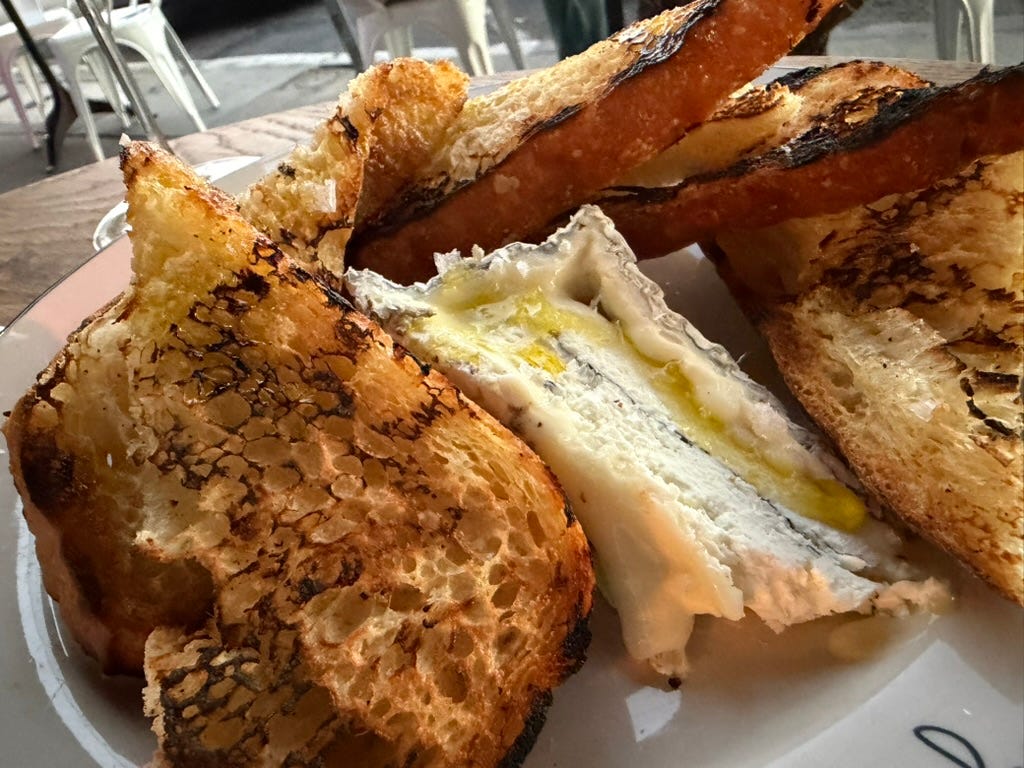
Our first course, a slab of Lindeline goat cheese alongside fire-grilled sourdough, brought the hearth outside with the food. The cheese beneath the ash-covered rind melted into the bread. Instantly, I could taste why Betsy was helping bring Altadena back.
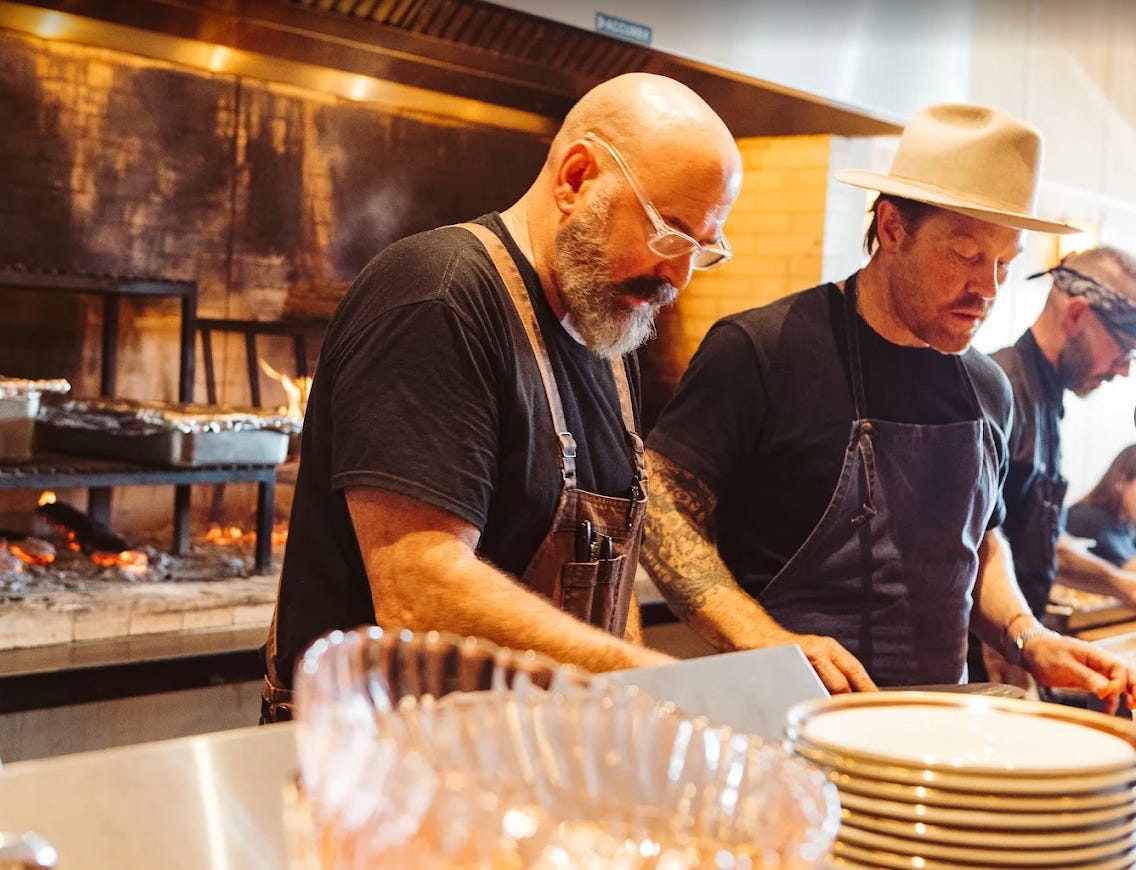
Urban renewal wasn’t the goal when Chef Tyler Wells opened Betsy in August 2025. The Eaton Fire had swept through in January, destroying the building next door to what was then Bernees, the restaurant Wells and his ex-wife had opened just over a month before.
The fire stopped one building from the restaurant, but it burned Wells’ home to the ground. Shortly afterward his marriage ended, the restaurant closed, and Wells had no idea what to do next. A stint at the Ecology Center in San Juan Capistrano reaffirmed his love of cooking and community. He decided to return.
“I can’t give up on our town,” he wrote in his Substack. “I want to be one of the many lighthouses in our community.”
The restaurant, renamed Betsy, reopened in August, and has been packed since.
I emailed Wells after our visit to ask how he saw Betsy’s role in helping Altadena rebuild.
“We really weren’t sure the restaurant would succeed when it reopened,” he said in an email.
They focused on serving neighbors — and on the food.
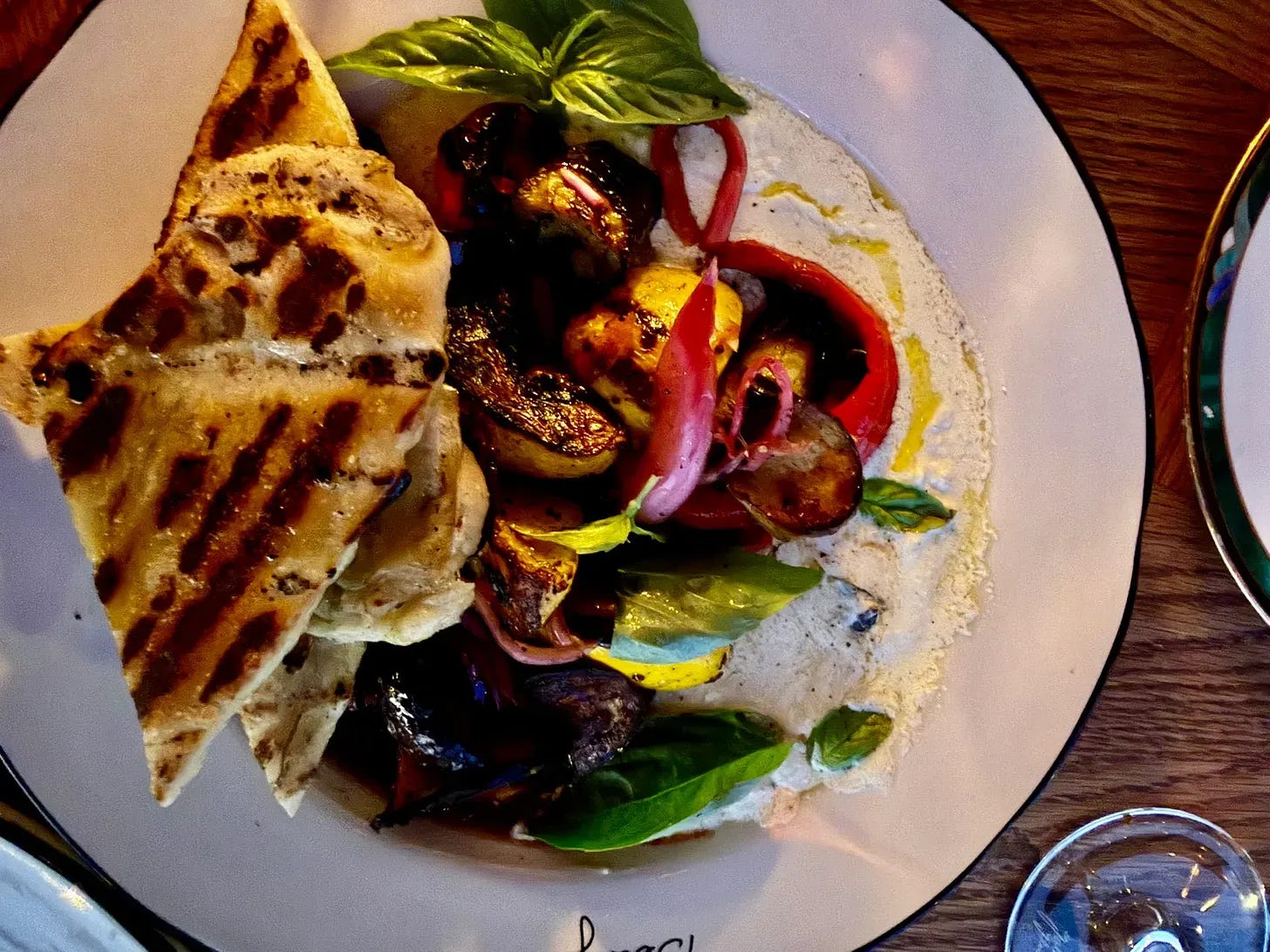
Grilled facet-cut eggplant, zucchini, tomatoes and peppers came next, bathed in olive oil with little charred nubs playing off the cool salty cheese, some grilled flatbread on the side.
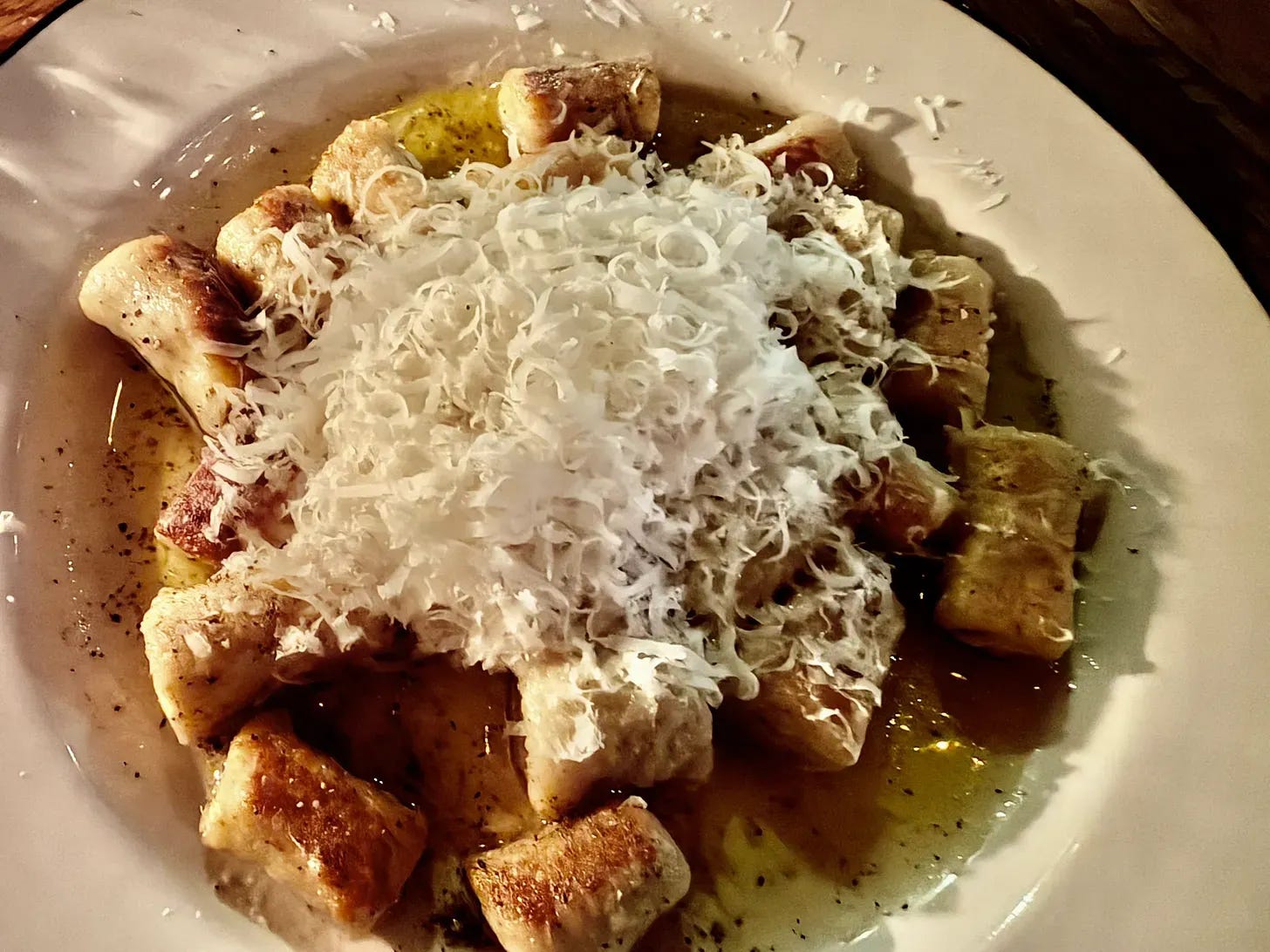
The sturdy ricotta gnocchi were slightly seared atop a pool of lemon and and black pepper, hidden beneath a tuft of Parmesan. We used what bread was left to wipe the sauce.
A moist King salmon filet, it’s skin also charred by that fire, came atop a very California succotash of heirloom beans, sweet corn and bright, tart tomatillos.
On a plain old Sunday night, the food, which changes almost nightly, felt celebratory.
Wells told me that in addition to the usual celebrations Betsy hosts — birthdays, anniversaries — there have been many unique to Altadena.
“We get emails every week from people that want to celebrate breaking ground or moving home or getting permits issued,” Wells said. “And we’ll move heaven and earth to make that happen.”
A neighborhood restaurant serves two communities: The people who work there, and the people who eat there. At Betsy, both have been struggling. Wells was one of those people who had to rebuild, along with staff members who lost their homes.
“This is a wonderful town and people want to support each other,” Well said.
At Betsy they get to eat food that feels homey and comforting, but also elevated.
“We say it’s food you can almost make at home,” Wells said. “I’m not a fan of fussy food or weird ingredients, and since I take about 17 meals per week at the restaurant, it’s food I want in my body.”
The emphasis is on local food from local farmers, but not with “Portlandia”-level obsession — that Lindeline goat cheese comes from Wisconsin, and it’s worth the extra miles. Ditto the Normandy butter beneath those gnocchi. Our server was so enthusiastic describing the glass of Lodi Sandlands Kirchenbloom Rosé we ordered, I felt inhospitable not giving him a sip.
Dessert was the Betsy Crumble, a warm crumbly wedge of rustic cake oozing fresh blueberries and raspberries, its buttery edges crisped in that wood fire.
I’m not the first to point out the irony that Betsy’s signature feature is a raging fire on which much of its food is cooked. But why not? It was fire that tore the community apart, but fire that, since time immemorial, has drawn communities together.
As we left, we passed by the crowded tables of Bar Betsy, an all day cafe made possible by Betsy’s success. This corner of Altadena has come back to life.
I always enjoy that din of happy conversation spurred on by good food and wine. Outside Betsy it felt especially sacred. Neighborhood restaurants aren’t just convenient, they’re critical.
“I know the restaurant is meaningful in a lot of different ways to people and the community,” Wells wrote me. “It’s a sort of canvas that’s hopefully here for what you need — to celebrate, to mourn, to have two hours where someone else takes great care of you. That’s what restaurants have always meant for me.”
Me too.
No posts
Comments
Nothing yet. Say the first thing.
Sign in to join the conversation.