
I walked into Mish, Chef Eric Greenspan’s new Los Angeles deli, and the much-paraphrased quote from Mark Twain popped into my head: News of my death has been greatly exaggerated.
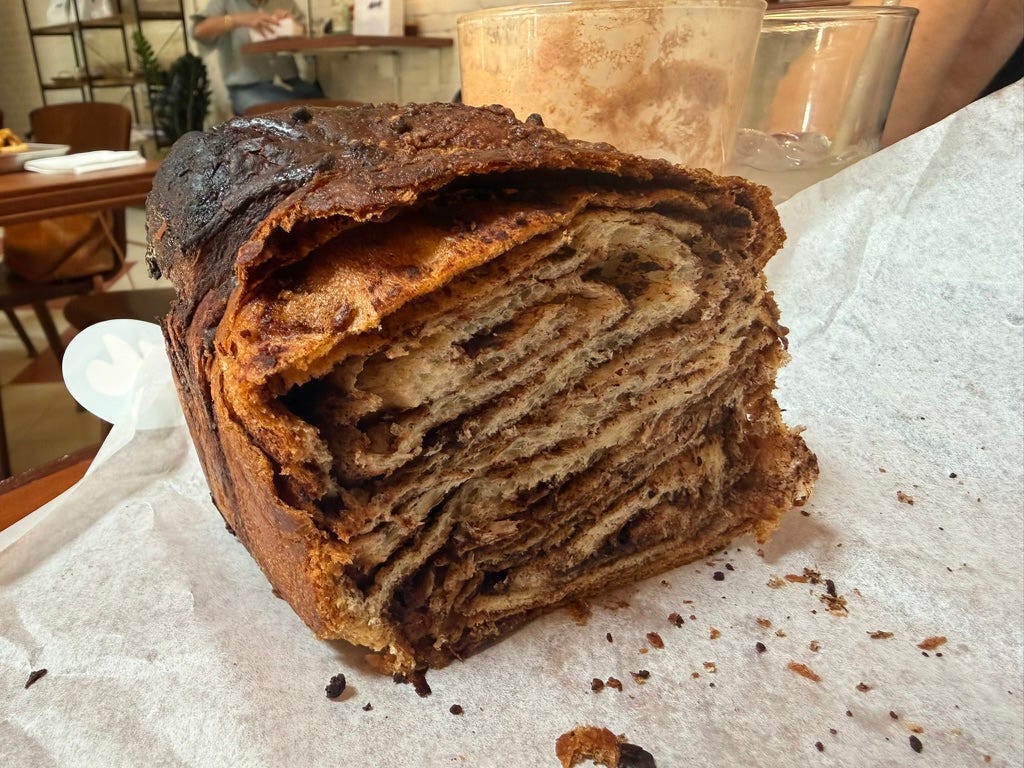
People have been mourning the imminent end of the American Jewish deli for decades now, and yet there I was, in a room the size of a department store ground floor, servers running platters of very familiar-smelling food from a hustling open-counter kitchen to tables full of loud, happy diners. A rack to my left displayed rows of freshly baked rugelach, black-and-white cookies and chocolate babkas. A counterman brought his knife across a slab of pastrami. I took a deep inhale of fat, flesh and spice, the Jewish equivalent of mindful breathing.
The deli isn’t dead, it’s just…Mish.
Several years ago, the deli future looked bleak.
In his 2021 article for the Forward, “Kaddish for Knishes?”, deli expert David Sax surveyed the damage: In Los Angeles, Label’s Table and Jerry’s announced their closures. Sammy’s Roumanian in New York closed as did Moishe’s steakhouse in Montreal, Zaidy’s in Denver, Hamsah Mediterranean Grill in Pittsburgh, Mile End in Birmingham, Alabama and Jay and Lloyd’s and Pastrami Masters in Brooklyn.
The shutdowns came after the 2008 recession and the pandemic tanked business, food and labor costs skyrocketed, eating habits changed.
What we lose when these traditional Jewish food businesses close, wrote Sax, is more than economic. These are places to meet, forge stronger communal bonds, laugh and, of course, complain. They are an inviting entryway into the community as well. No membership dues, no unknown rituals, no sideways glances — if you’re hungry, you belong.
And then there’s the food.
“Outside the home,” Sax wrote, “a Jewish eatery is the one place where the foods that link our traditions, history, and dietary evolution live.”
Judging by my visit to Mish, they aren’t dead yet.
The smell is familiar, the din is comforting. In Mish’s vast space on La Brea Blvd., there are a lot of conversations taking place, many of them at the same table. A good Jewish deli feels permanently festive — and so does Mish.
I went with my friend Lisa, and we tasted everything off each other’s plate because, well, it’s a deli.
You order at a counter and very focused servers run the food out to you. The fast casual set up, which no doubt helps cuts down on costs, has the added benefit of letting you see the food being prepared, and hearing Greenspan himself, a big, voluble presence, call orders and greet customers.
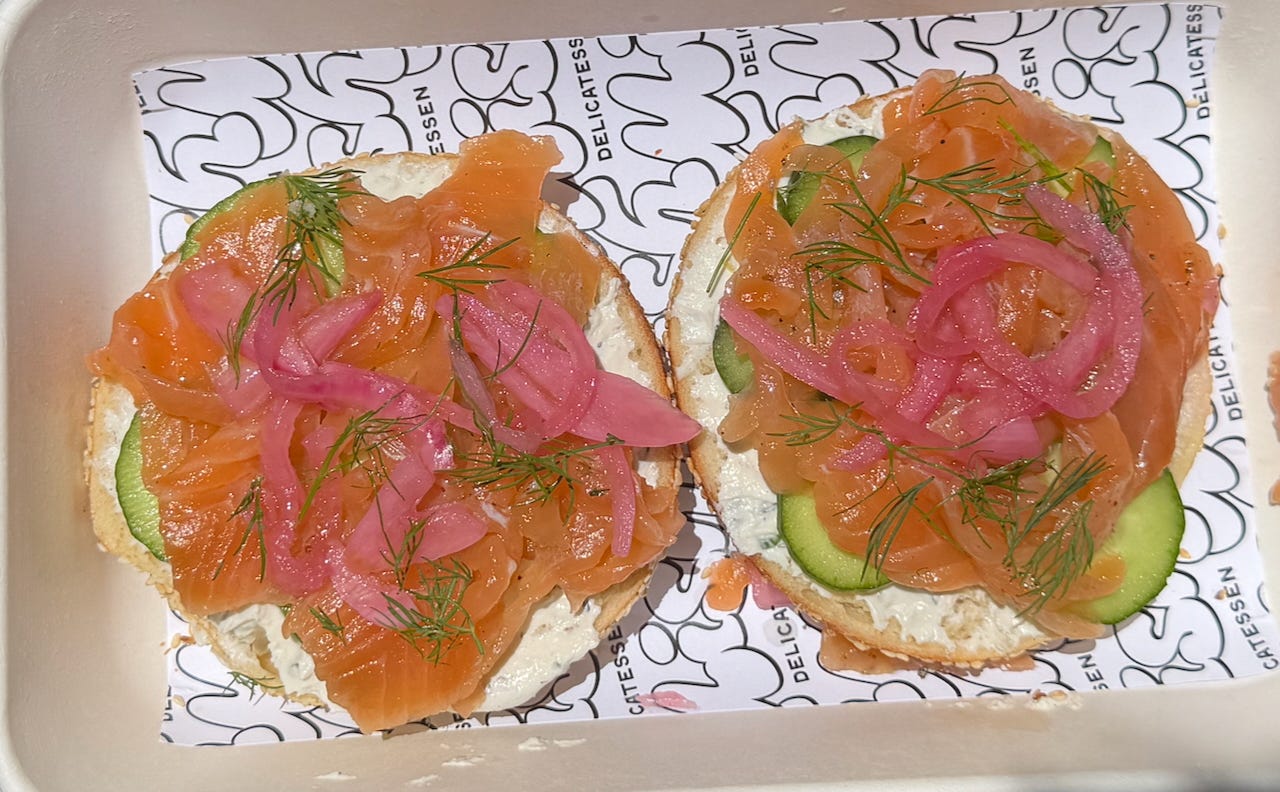
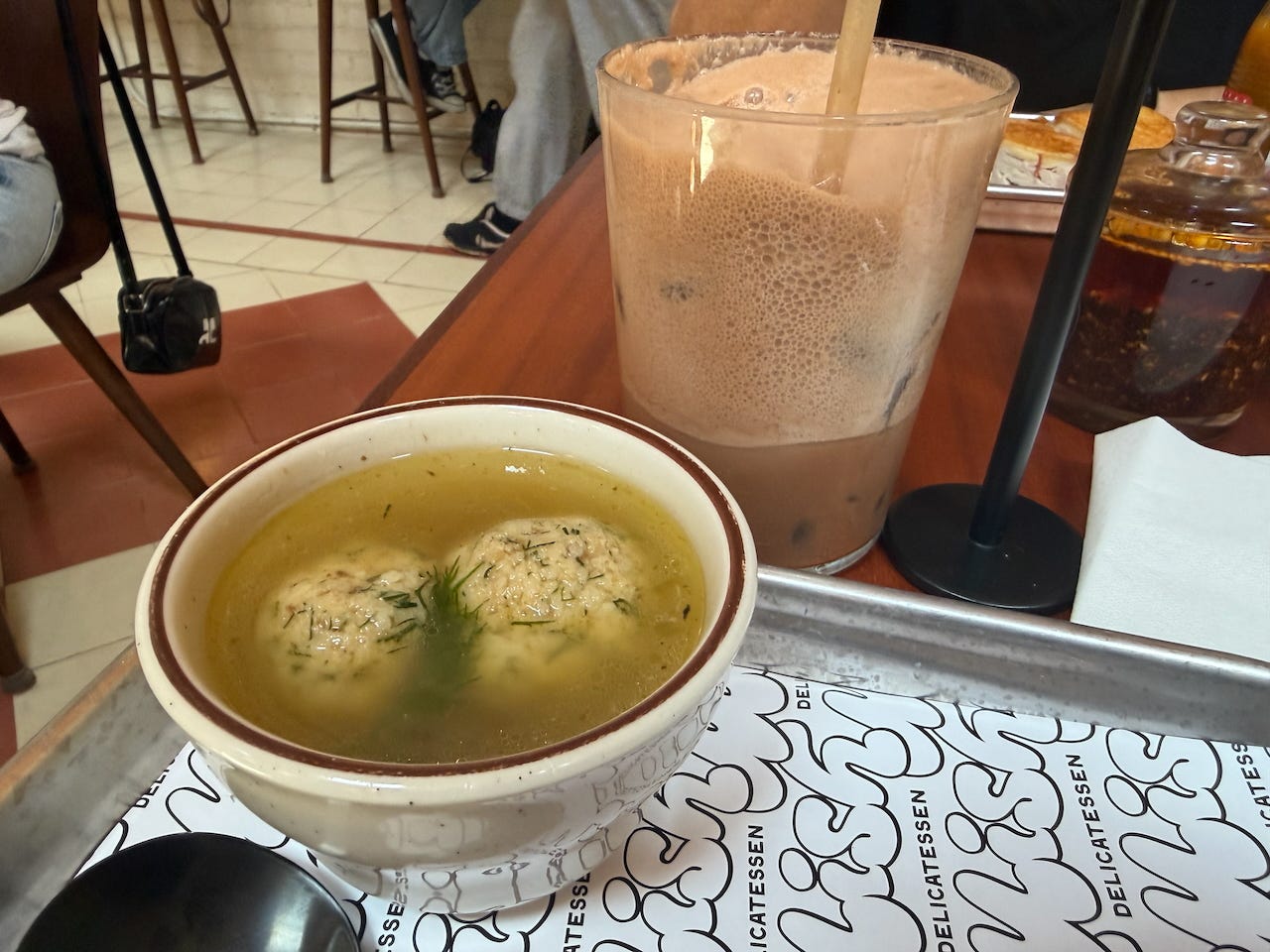
We ordered a bowl of matzo ball soup ($19), the Turkey Rachel sandwich ($28), (“hand carved turkey on schmaltz grilled challah, greeny sauce, swiss cheese and coleslaw”), a take on the Iraqi-Jewish sabich ($15), which featured a house-made wood-fired bagel with eggplant, egg salad, pickled onions and amba, the Bougie Bagel ($19) with house cured gravlax, charred scallion cream cheese, pickled red onion and Persian cucumber, an egg cream ($7) and dark chocolate hazelnut brittle babka ($10).
Mish, like many of the newer Jewish food restaurants, incorporates dishes and influences from Ashkenazi, Sephardic, Israeli, Persian and American menus: kuku sabzi, shakshuka, chopped liver, fried kreplach, hummus, pastrami Reuben.
It’s the “entire culinary diaspora of Jewish cuisine and put it through the lens of a deli,” Greenspan said during a panel discussion at Bagel Fest West at Wilshire Boulevard Temple in April. "There is more of a Jewish melting pot in Los Angeles than there is in New York.”
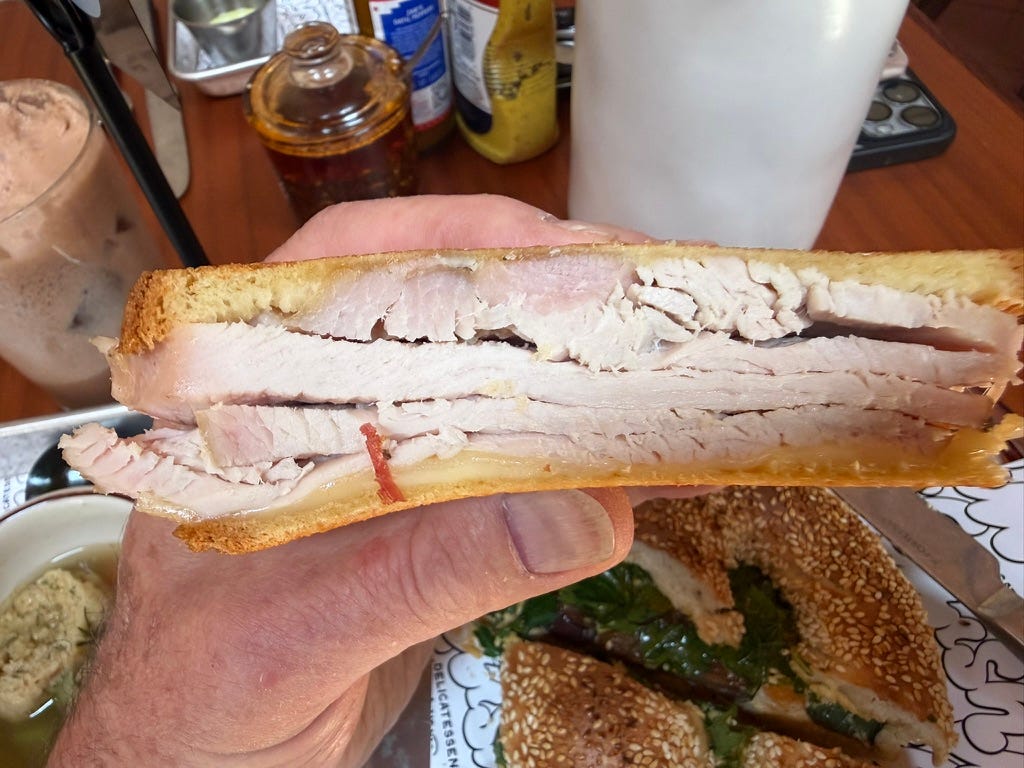
We ate. The schmaltz-grilled challah seemed slightly blasphemous — you can’t boil a kid in its mother’s milk, according to the kosher laws, but you can grill a bird in its own fat? Greenspan did — and it was delicious, the crispy bread providing a flavor boost to the perfectly tender roasted turkey.
The egg cream is rich, with a high Valrhona chocolate-to-seltzer ratio. The bagels, which enter an L.A. bagel market — Layla, Jyan Isaac, Courage, Hank’s, etc. — as competitive as the World Cup knockout bracket, stand up. The sabich wasn’t as sloppy and satisfying as the ones I’ve stuffed my face with on Tel Aviv street corners, but it still had all the familiar flavors.
The bagel and smoked salmon featured a shmear of cool cream cheese on a slightly, warm, chewy bagel, delivering salty, sweet slices of cured salmon. It disappeared very, very fast.
Greenspan had to get bagel and lox right, and he did. Same with the babka, the house-fermented pickles and the matzo ball soup, whose deep chicken umami is balanced with a handful of fresh dill. If delis were starting to die, it wasn’t because of the kinds of food they served. We still love them. We still, in a sense, need them, because they are part of our past, our tradition, that is to say, part of our identity.
“The future of the deli is the past,” Greenspan said at BagelFest West.
The new delis lean into this need: Shmaltz. Lacto-fermented pickles. Boiled bagels. House-cured fish.
But nostalgia alone isn’t enough.
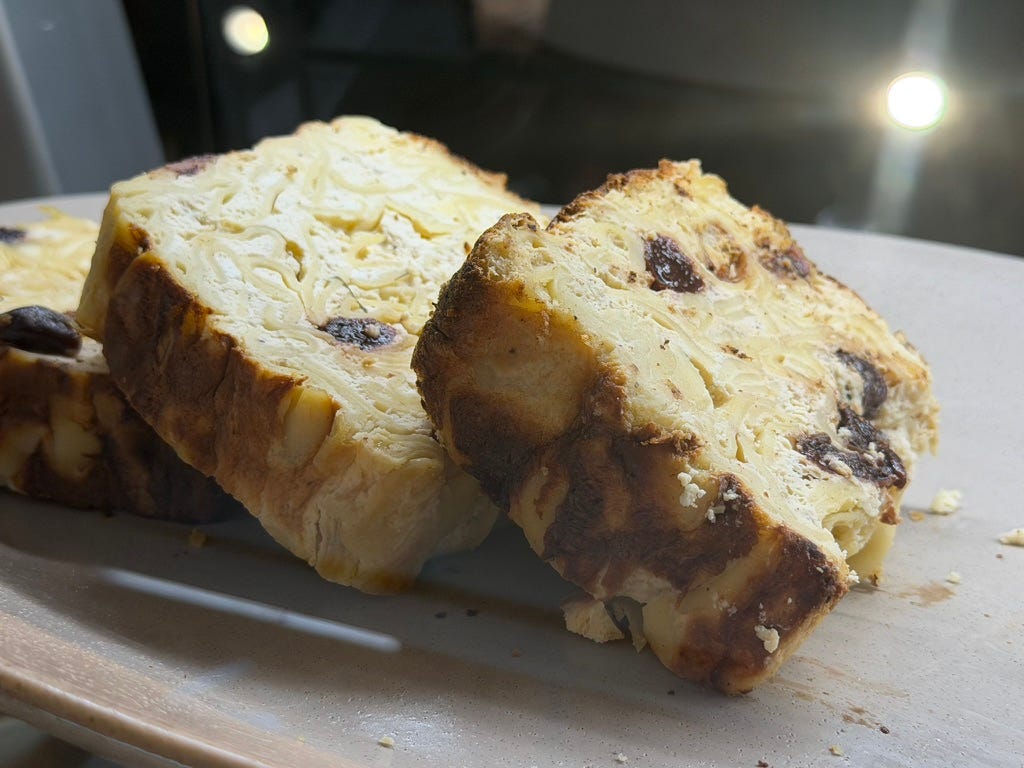
And Mish gets that too. The food has to be on par with the best that non-Jewish restaurants have to offer. Great sourcing, inventive execution, something familiar, but different. The potatoes in that potato salad are from Weiser Farms, whose name I’d guess a good percentage of the customers see every time they go to a farmer’s market. That’s branding, but also, no one grows better potatoes.
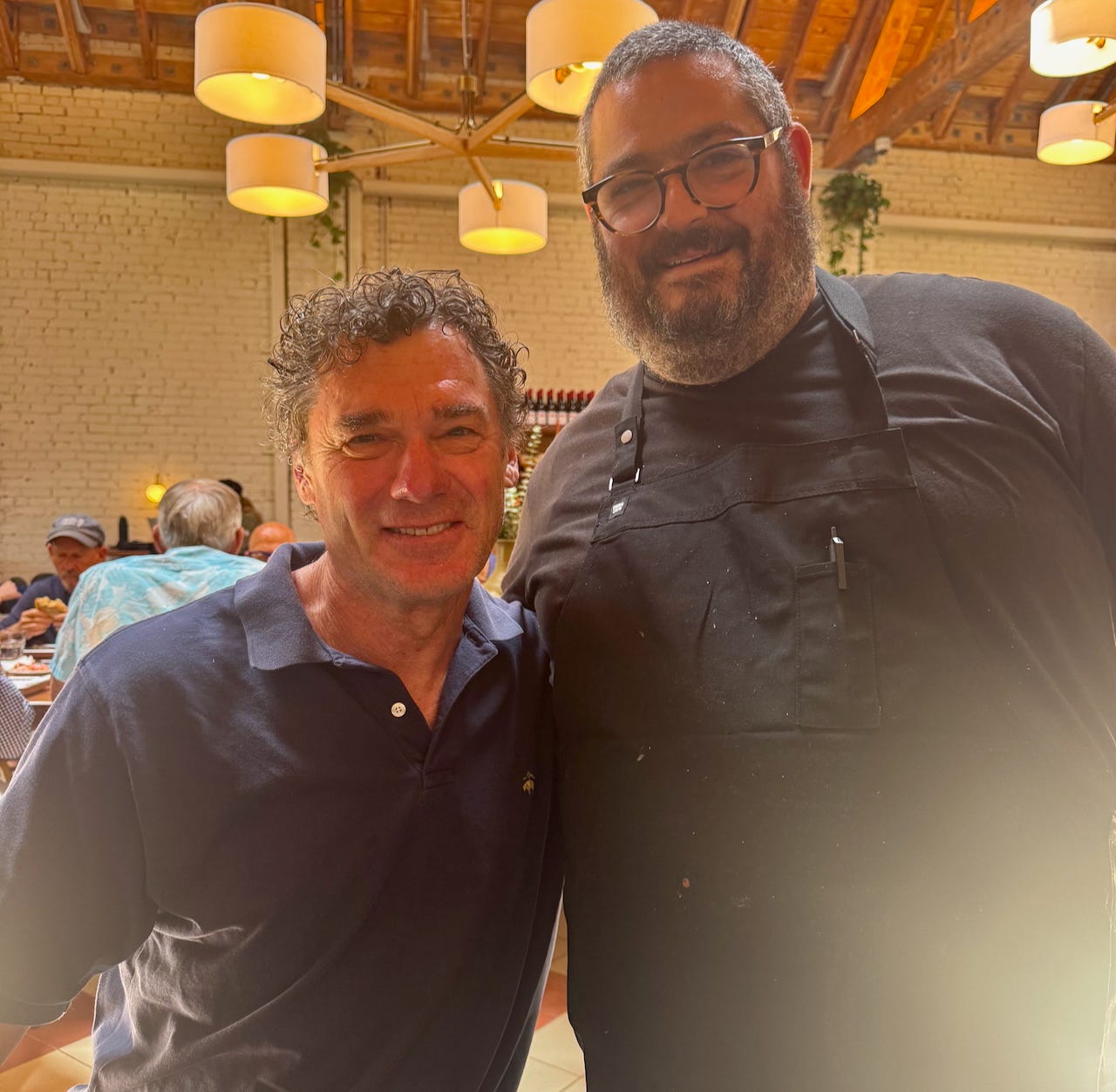
Greenspan walked over to our table. I first met him over 20 years ago when he opened a restaurant on Melrose Ave. called The Foundry. It was updated American food, but I recalled even then he snuck some Jewish food onto the menu.
“Latkes,” he reminded me. “For the appetizers.”
A few years later he opened Fleishik’s, a kosher spot that lasted a year. Fleishik’s had innovative food and a whiskey bar, a precursor to the intense cocktail menu at Mish. Greenspan took time off to raise a family, and did some consulting, including helping to open the Tesla Diner in Hollywood.
When it was time to get back to restaurants full-time, he decided to do the deli, his way.
"It has never excited me,” Greenspan said at BagelFest, “to do anything the way anybody else does.”
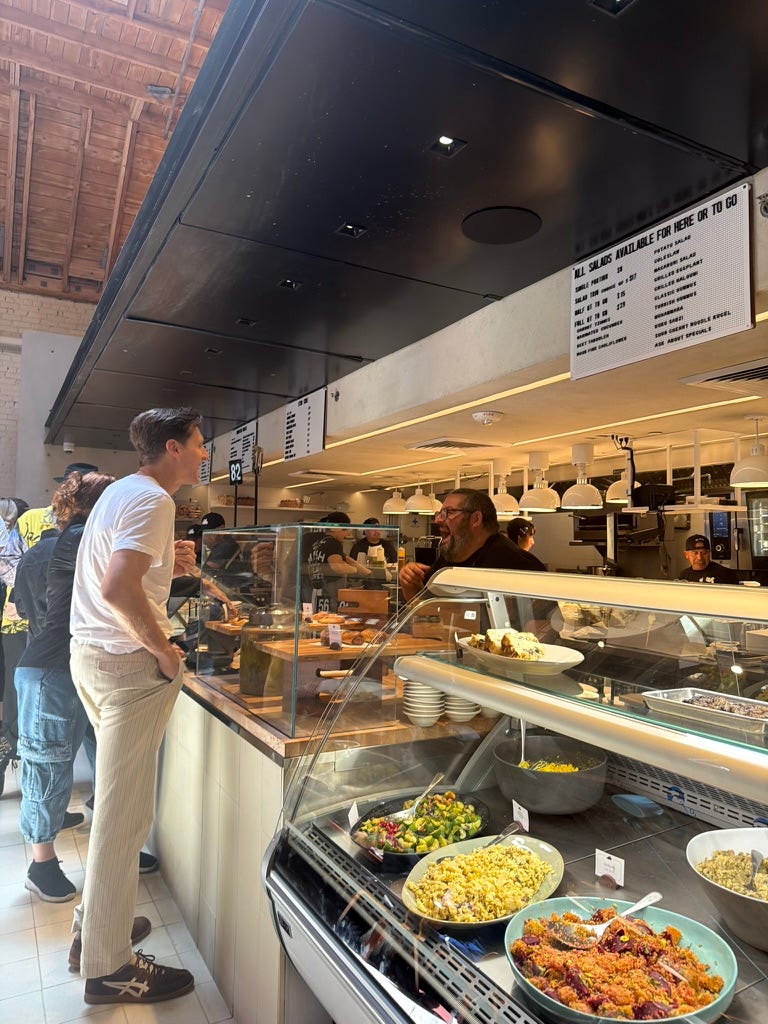
If Mish succeeds — and it really should — it will be because it shares DNA with the great delis of the past without being stuck there. That shouldn’t be surprising. Delis have always evolved in dialogue with the society around them.
Canter’s, the 100 year-old institution, survived because it literally moved with the Jewish community from Boyle Heights to Fairfax, then added a cocktail lounge to serve sleepless Hollywood musicians. Factor’s on Pico, which was packed last month when I met a friend for lunch there, has pastrami as well as soft-shell tacos. It would not shock me if soon they have pastrami tacos. Delis only look frozen in time — because we form our opinions of them in the brief span of our own lives — but change is a constant.
That’s true, by the way, of so much of Jewish life. We think that synagogues or Jewish community itself is dying, even as others are busy reinventing and reengaging with it. The needs remain the same — for community, connection, security, sustenance — but the people and institutions that provide them evolve. Mish proves it: There will always new ways to serve the old hungers.
Yep, you’re getting this newsletter on July 1, when Princess Diana, Estée Lauder, John Ford, Sydney Pollack, Debbie Harry and me were born.
Want to wish me Happy Birthday? The absolute best way is to take one second, click the share button below and send Foodaism to a friend.
Thanks for reading! Take a second to share this newsletter with a friend who loves food as much as you.
No posts
Comments
Nothing yet. Say the first thing.
Sign in to join the conversation.