
“Hope is not the conviction that something will turn out well, but the certainty that something is worth doing regardless of how it turns out.”
Václav Havel
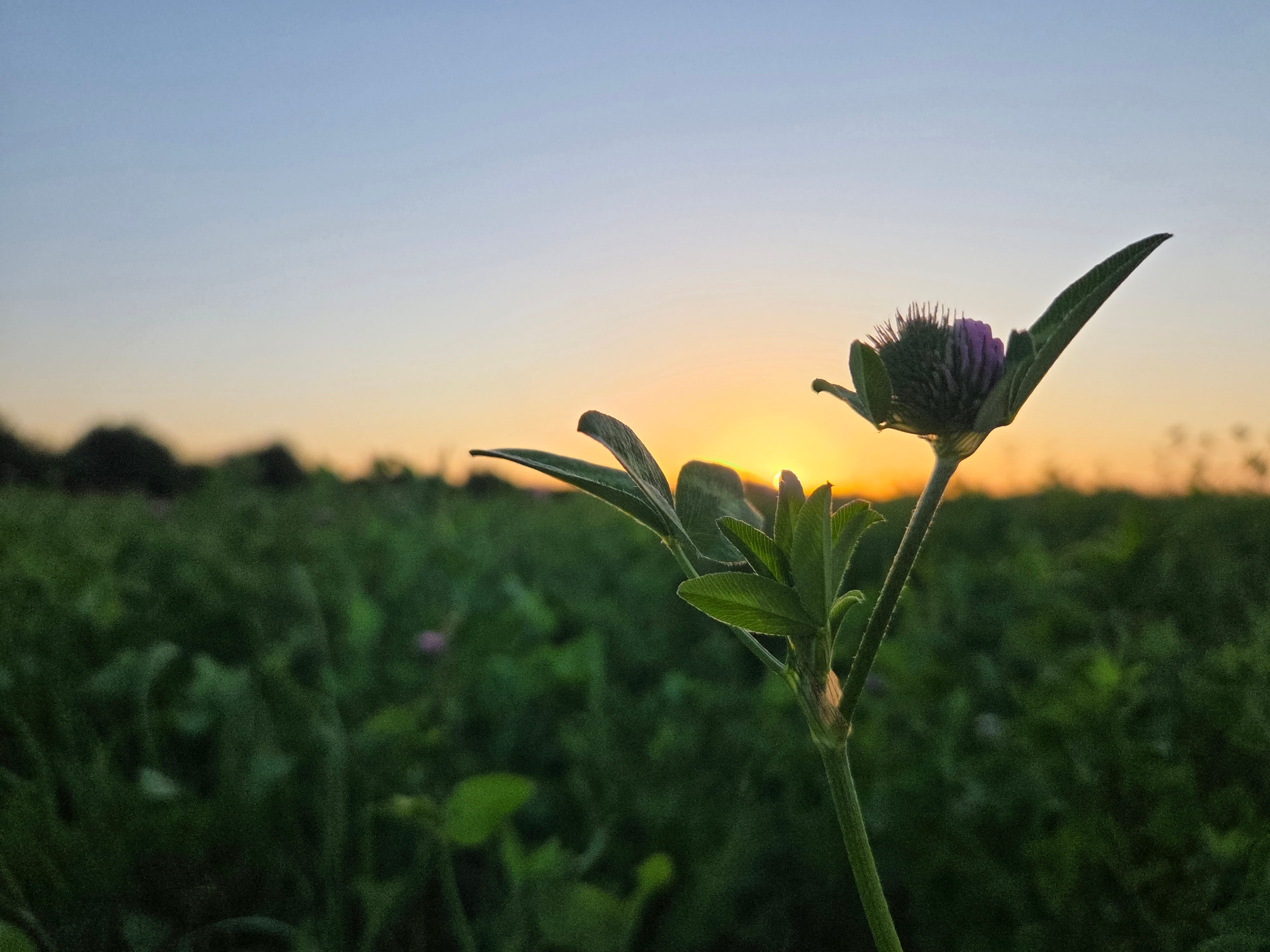
Through our Follow the Signs journey, we have the privilege of meeting people who are already stewarding extraordinary places. Our role is not to own their visions, but to listen deeply and help make visible the wisdom, opportunities and connections that may already exist around them.
One such steward is Fergal Byrne of Coldwinters Organic Farm, a visionary ninth-generation Irish organic farmer based in Calverstown Little, Dunlavin, County Kildare. He naturally integrates organic agriculture, social inclusion and thriving rural business development within a single integrated ecosystem.
Fergal does not really know what Coldwinters will look like in 100 years (2126) or 1000 years (3026) from now. Yet he still manages hedgerows, has created a “Secret Garden,” warmly welcomes people onto the farm and prepares it for the next generation.
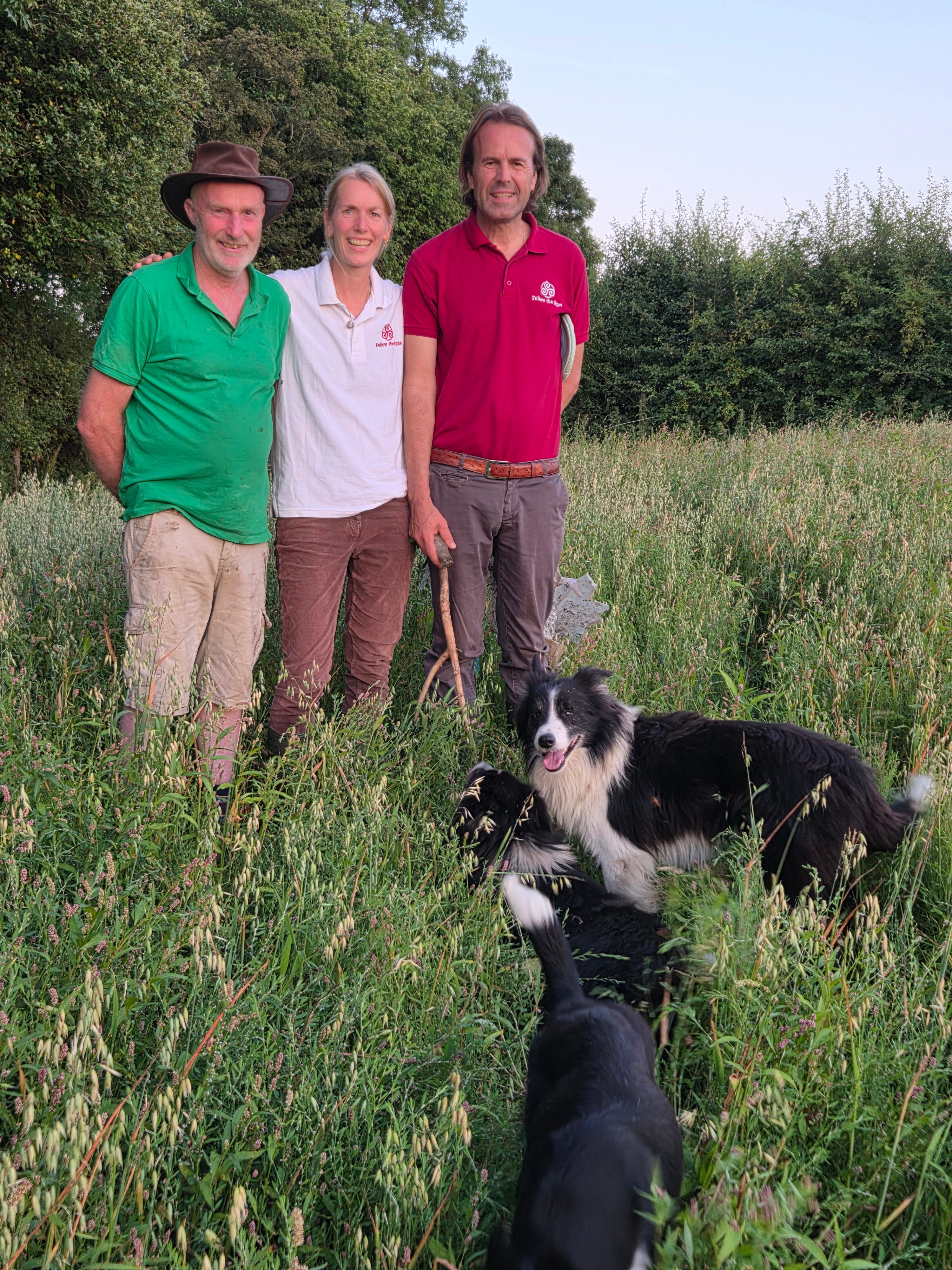
We first met Fergal and his 15-year-old son Philip, who is also hands-on involved with the farm next to his secondary school, last August. Last week, we crossed the Irish Sea from Wales once again, to return to Coldwinters, staying on the farm and walking alongside Fergal during one of the most challenging chapters of his life. “Peter Michel and his family have been putting things in motion so that we can practically move forward,” he said. “We are like a team lining things up for our farm to be economically, ecologically and socially ready for the future. The Heilmann family has also been standing beside me and our farm as we navigate the challenges and opportunities ahead.”
Philip is potentially the family’s 10th-generation steward, already taking responsibility over a lot of the haymaking and silage activities. Today, the farm comprises 58 hectares—43 owned and 15 under long-term lease agreements. All farm activities are managed according to organic principles that prioritise soil health, animal welfare and long-term stewardship, which make this farm sustainable for current and future generations.
Building a diversified farm ecosystem
In 2003, Fergal first looked into organic farming. “In 2014, I started visiting a few organic farms. One of the things I noticed was that these places were not overrun with weeds! In conversations with these farmers, I started to understand that, contrary to my belief, they were financially secure. These experiences convinced me to start looking at alternative options for our own family farm.
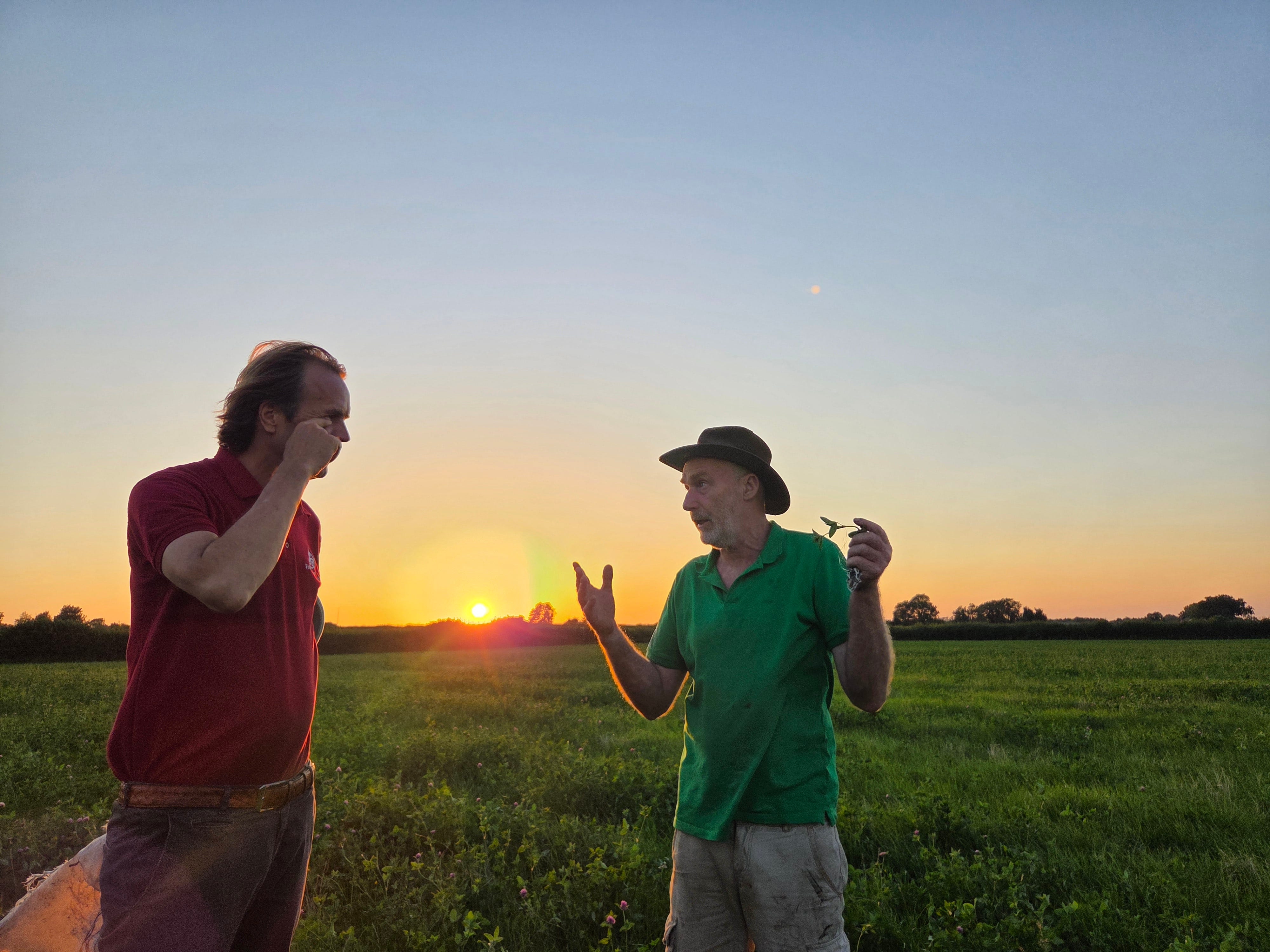
At the time, Fergal was renting quite a lot of land on conacre, a traditional Irish system of letting agricultural land, usually for 11 months, and growing cereals on it. “Every time I went into the field, I was spending a lot of money on chemicals with very little return. What these pesticides were doing to my health and to the environment of our own land were unknown to me. My family and I were in a way suffering from the consequences of their use.” Something started to change in Fergal’s way of farming and, in early 2015, he decided to put the whole family farm into an organic conversion plan.
Today, Coldwinters operates a diversified organic agricultural and closed-loop ecosystem that reduces risk and works with Mother Earth rather than against Her. “Integrating such an esystem directly enhances the farm’s long-term profitability, resilience and unique character,” Fergal added.
Complementary enterprises and activities include:
Organic beef production from a herd of 20 spring-calving suckler cows, 19 calves and one Charolais bull, with cattle finished on homegrown organic forage and feed.
Organic sheep production with approximately 200 breeding ewes and 300 lambs, supplying organic lamb throughout the year.
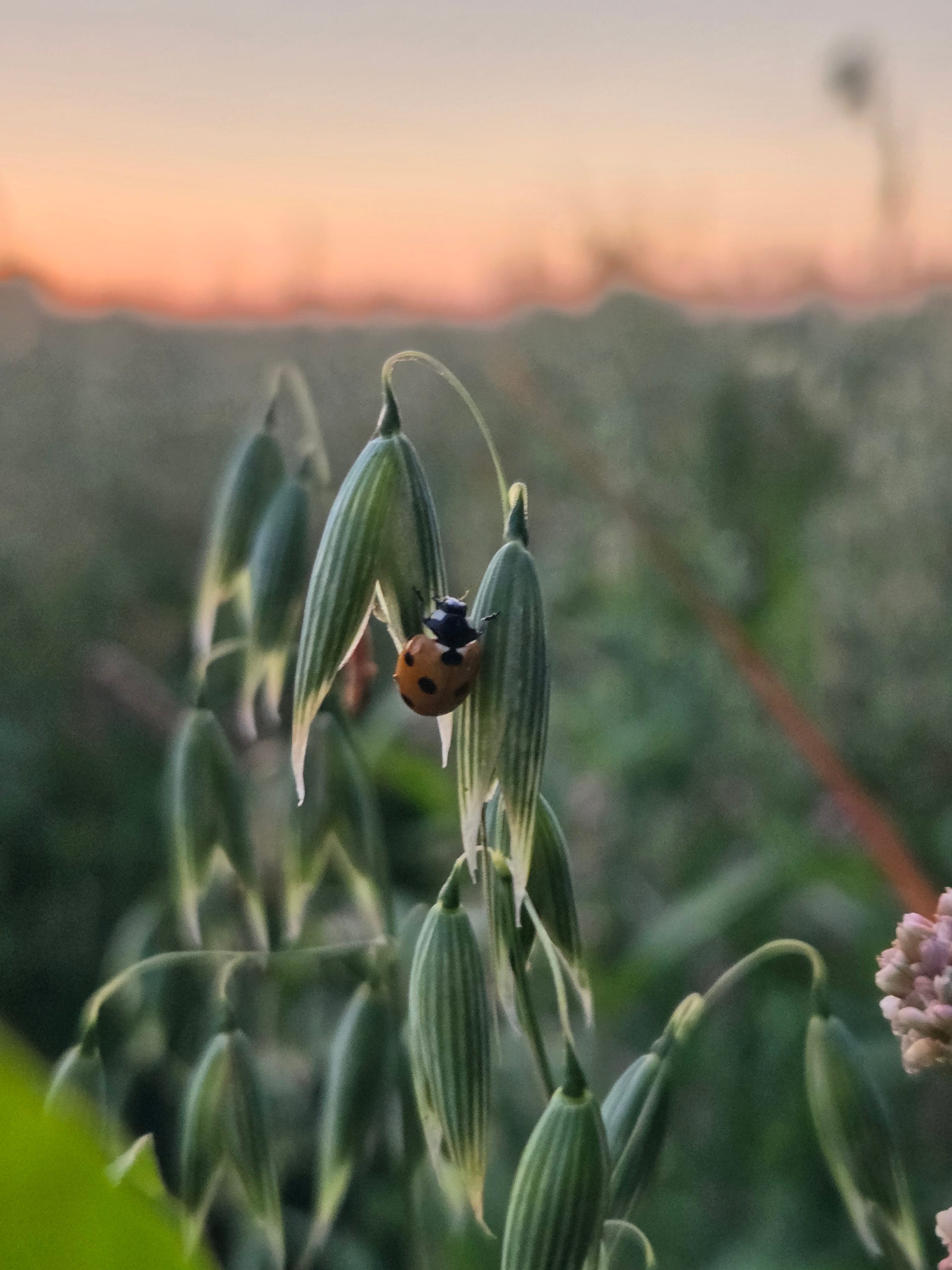
Organic cereal production, including oats supplied to Flahavan’s Organic Porridge and homegrown combi (mixed) crops—peas and barley—that nearly eliminate dependency on imported inputs.
A well-established organic turkey enterprise serving customers nationwide, with over 40 years of selling turkeys, initially free-range and since 2017 organic—half are sold direct-to-consumer, while the other half are delivered to Irish butchers who require organic turkeys for their customers). “Last year, we sold 300 for Christmas and this year we hope to increase our production to 500 organic turkeys.”
Social farming initiatives that are providing meaningful farm experiences for participants, while strengthening community wellbeing and connection with Nature.
Ireland’s first certified organic wool enterprise through a partnership with Yarn Vibes Organic wool.
Going back to our roots
Yarn Vibes is spun using conscious, sustainable and natural processes only, to create Ireland’s first 100% Irish Organic Yarn. It is the passion project of Joan Lucey, the owner of Vibes & Scribes, a long-established bookstore and crafting supplies business based in Cork. Its goal is to produce the finest quality 100% Irish wool, in beautifully natural, traditional and modern colourways. Their fleece comes from Fergal’s flock of sheep, continuing the age-old farming practices of sheep keeping—a tradition that stretches back to the days of Saint Brigid, the only female among Ireland’s three patron saints. She is also the patron saint of, among others, dairymaids, dairy workers, milkmaids, poultry farmers, poultry raisers and travellers. Fergal has been supplying certified organic wool to Yarn Vibes since 2018.
Agroforestry and rewilding
Nature restoration is a central pillar of the farm’s long-term vision. The farm contains 4.4 hectares of woodland established 39 years ago by Fergal and his father, Seamus Byrne. Following significant ash dieback, the family is evaluating agroforestry alternatives. Fergal has created a “Secret Garden” in the middle of the forest, which he created last year and contains a pond. It is one of his favourite spots on the farm. “I envision creating a flourishing and existing reserve that people could visit and where they can experience peace and tranquillity. A place where all sorts of wild birds, butterflies and wildlife can live and call their home. I wish to enrich habitat value for wildlife.”
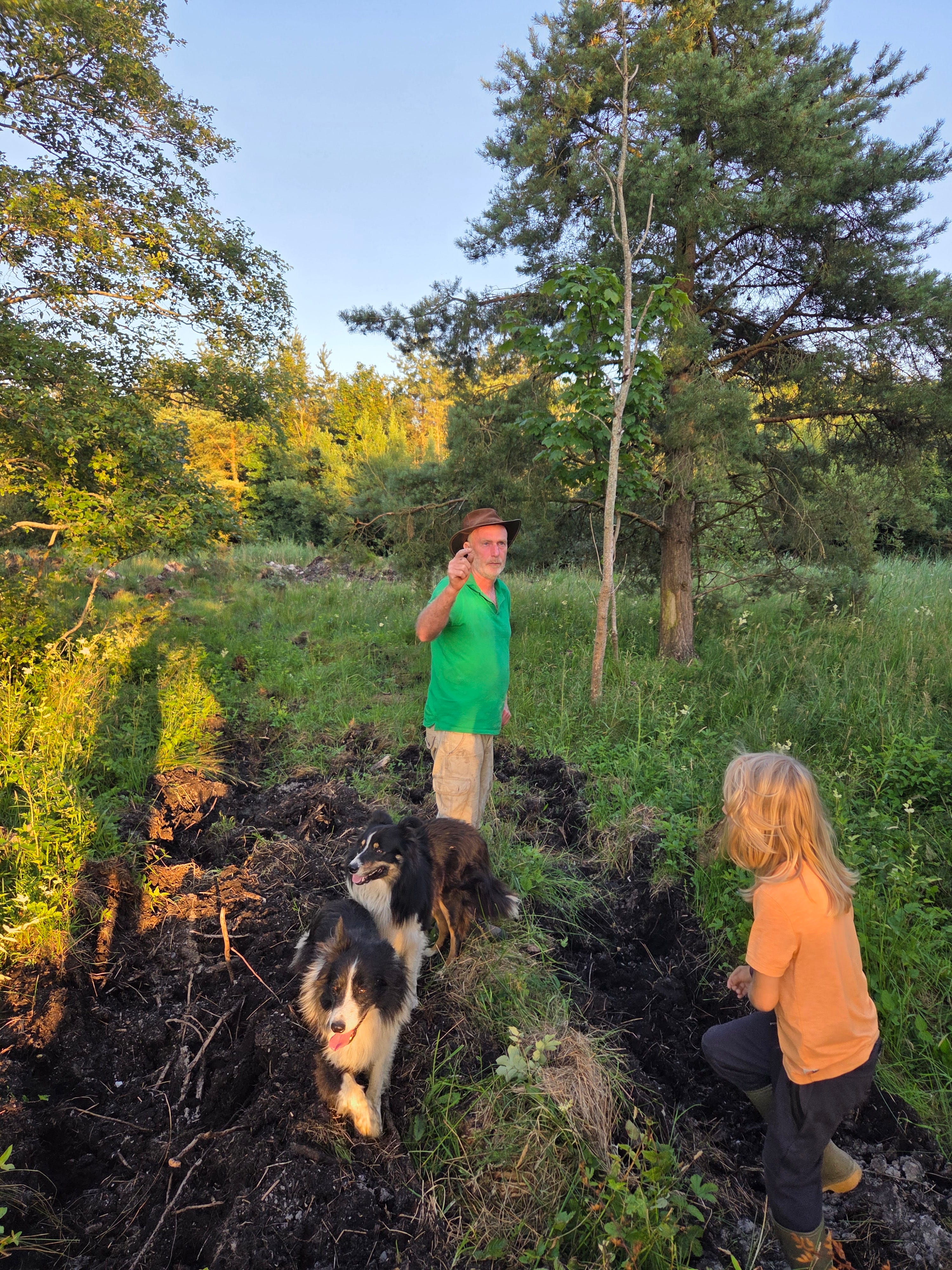
Over the years, Fergal has been creating extensive hedgerows, tree lines, grasslands and mixed habitats, supporting pollinators, birds, insects and native species throughout the land.
Social farming
Social farming is the practice of offering activity on family farms as a form of social support service. In social farming, the farm remains a working farm yet invites people to participate in its day-to-day activities in a safe, non-clinical environment. These meaningful activities could, for example, be feeding, bedding and tagging livestock, herding cattle and sheep, maintenance work, power-washing the tractors and jeep, sweeping up or...drinking tea!
“It’s not all about work,” Fergal clarified with a smile. “Social farming is what it says: it is social! There are different people in your house, aged between 16 and 64, who learn new skills on the farm. This helps build their self-esteem and improve their health and wellbeing. Each person embraces this opportunity with enthusiasm, dedication and, sometimes, great pride.”
Social Farming Ireland pairs family farmers with care workers and their clients—such as those with intellectual disabilities or mental health recovery needs. “Some of the care workers come from outside of Ireland, such as Philippines and Nigeria.”
Social farming provides an opportunity to diversify the income earning capacity of the farm and rural economy. Sources of funding, and payment arrangements vary hugely.
Fergal has been involved in social farming for the last four years. Since September last year, he has been closely collaborating with Camphill Communities of Ireland, welcoming social farming participants to his farm.
Inspired by Rudolf Steiner’s teaching of Anthroposophy, the Camphill Movement established its first community for children with learning disabilities in Scotland in 1940. Today, it has grown to over 100 communities in 22 countries, including 18 in Ireland.
“The more that an individual works for the benefit of society or the needs of others, and the more that each person is supported by others to lead a dignified existence, the greater the wellbeing and overall prosperity of a society will be.”
Rudolf Steiner
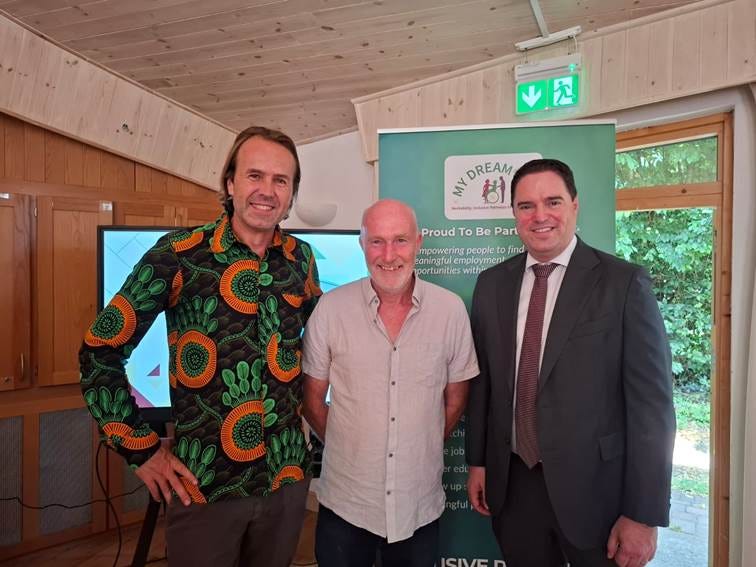
To celebrate the achievements of four people—Laura Dunne, Evan Bowes, Lynden Healy and Liam Dermody, who gained work experience on Fergal’s farm in 2025 and this year—as well as the accomplishments of other Camphill graduates, the second Certification Awards Day took place at Camphill The Bridge, an inclusive community and adult disability day service in Kilcullen, Co. Kildare, on July 16, 2026. Fergal invited Peter Michel to come along and participate in this special event.
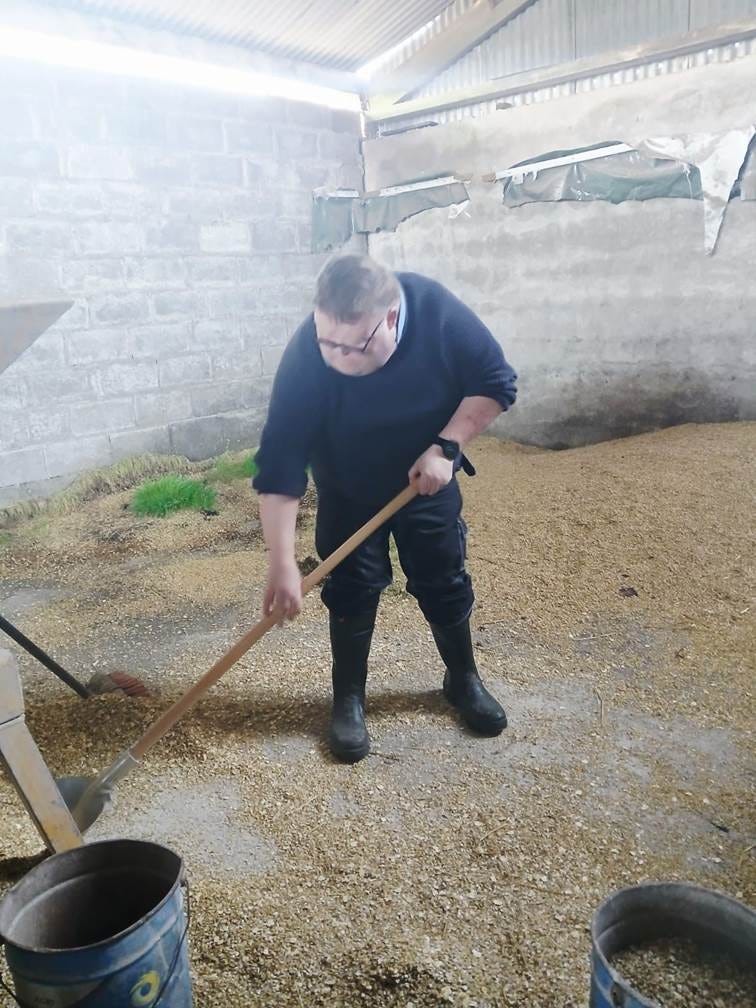
“Thank you, Fergal, for opening your farm and sharing your knowledge, your experience and your time so generously,” Emma Meredith, Career and Employment Facilitator with Camphill Communities of Ireland, said during the awards ceremony. “You didn’t just provide a work placement—you gave a real insight into life on a working farm and created an environment where new skills, confidence and independence could grow.
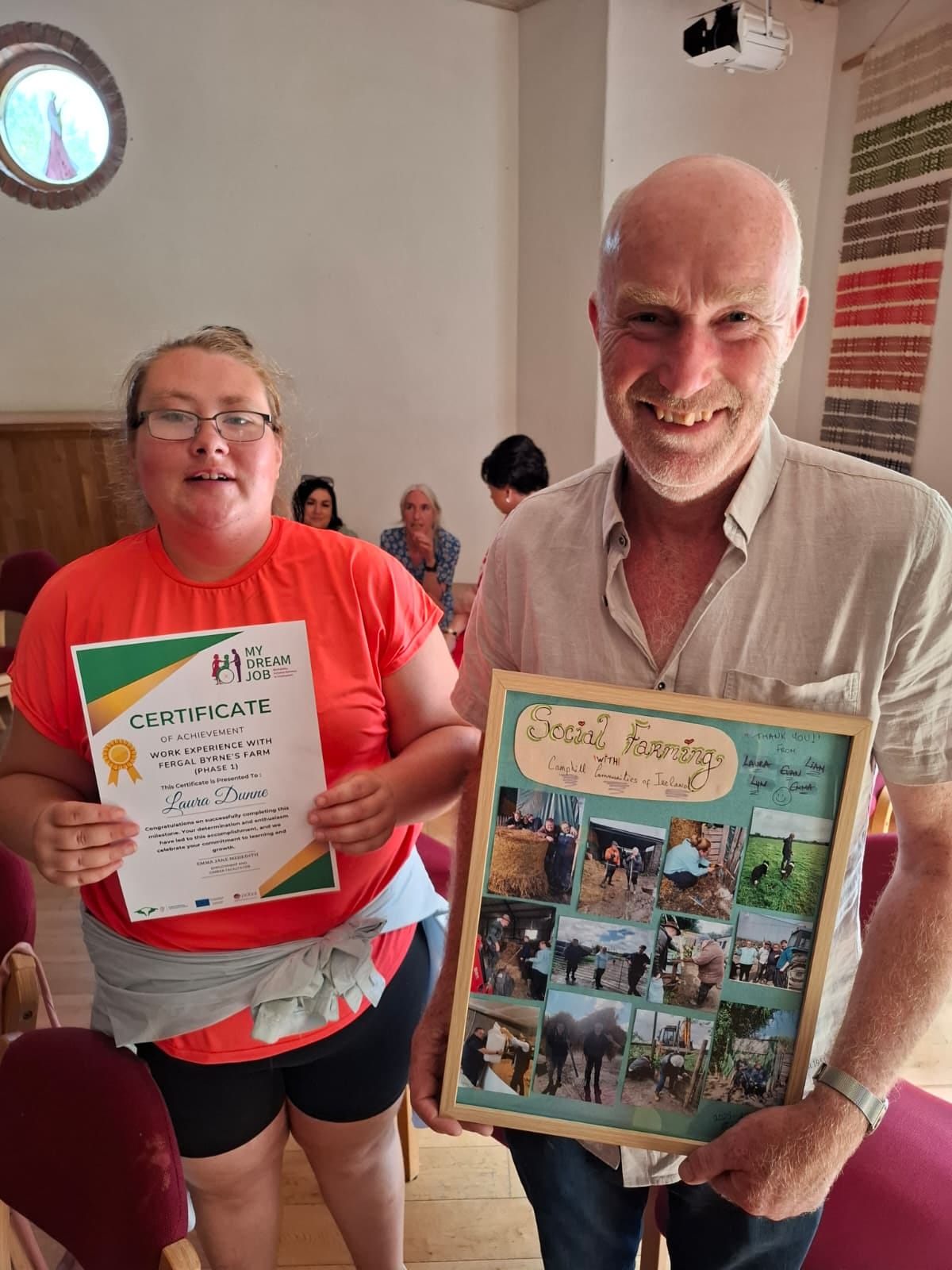
“Your patience, encouragement and dedication have made a lasting difference. You took the time to explain each task, supported learning every step of the way and made every visit a worthwhile experience. Through your guidance, our participants learned general farm duties and experienced farming through every season of the year, gaining valuable life skills that will stay with them.”
Future plans
Fergal’s strategic objectives for the near future include, but are not limited to, the:
Development of Coldwinters-branded wool products using certified organic Irish wool.
Expansion of online sales and nationwide distribution.
Creation of the Coldwinters Guest House and future agrotourism experiences, connecting visitors with Nature and rural Irish heritage.
Acquisition and permanently protection of additional nearby wood and farmland.
Together, these plans synergistically help create diverse, blended revenue streams towards a more profitable and prosperous organic farm, standing the test of time and increasing local ecosystems into the future.
Leadership
Beyond the farm itself, Fergal is an active advocate for Ireland’s organic agriculture and wool sectors. He currently on the management team of ICSA (Irish Cattle and Sheep Farmers’ Association) as well as IGWC (Irish Grown Wool Council), working to strengthen governance, branding, market development and farmer returns for Irish-grown wool. Passionate about the advancement and development of beef, sheep and suckler farmers across Ireland, ICSA represents the voice of Ireland’s drystock farmers, with a clear focus on securing viable incomes and ensuring farming remains sustainable for future generations. He also chairs KPA (Kildare Ploughing Association) and is team leader of the local St. Joseph’s Church in Ballymount, Co. Kildare.
Become involved
This is not a request for charity. It is an invitation to form aligned relationships that can help unlock the potential already present within the farm, the family and the land.
The question is:
Who might carry one of the pieces needed for this next chapter?
Contact details: Calverstown Little, Dunlavin, Co. Kildare W91 X8F5, Ireland. E-mail: Fergal Byrne.
Also read: Ireland’s Calverstown Demesne: where farming flourishes in harmony with Nature’s exuberance (Kim and Mireille McCall are Fergal’s neighbours).
#FollowtheSigns
No posts
Comments
Nothing yet. Say the first thing.
Sign in to join the conversation.