
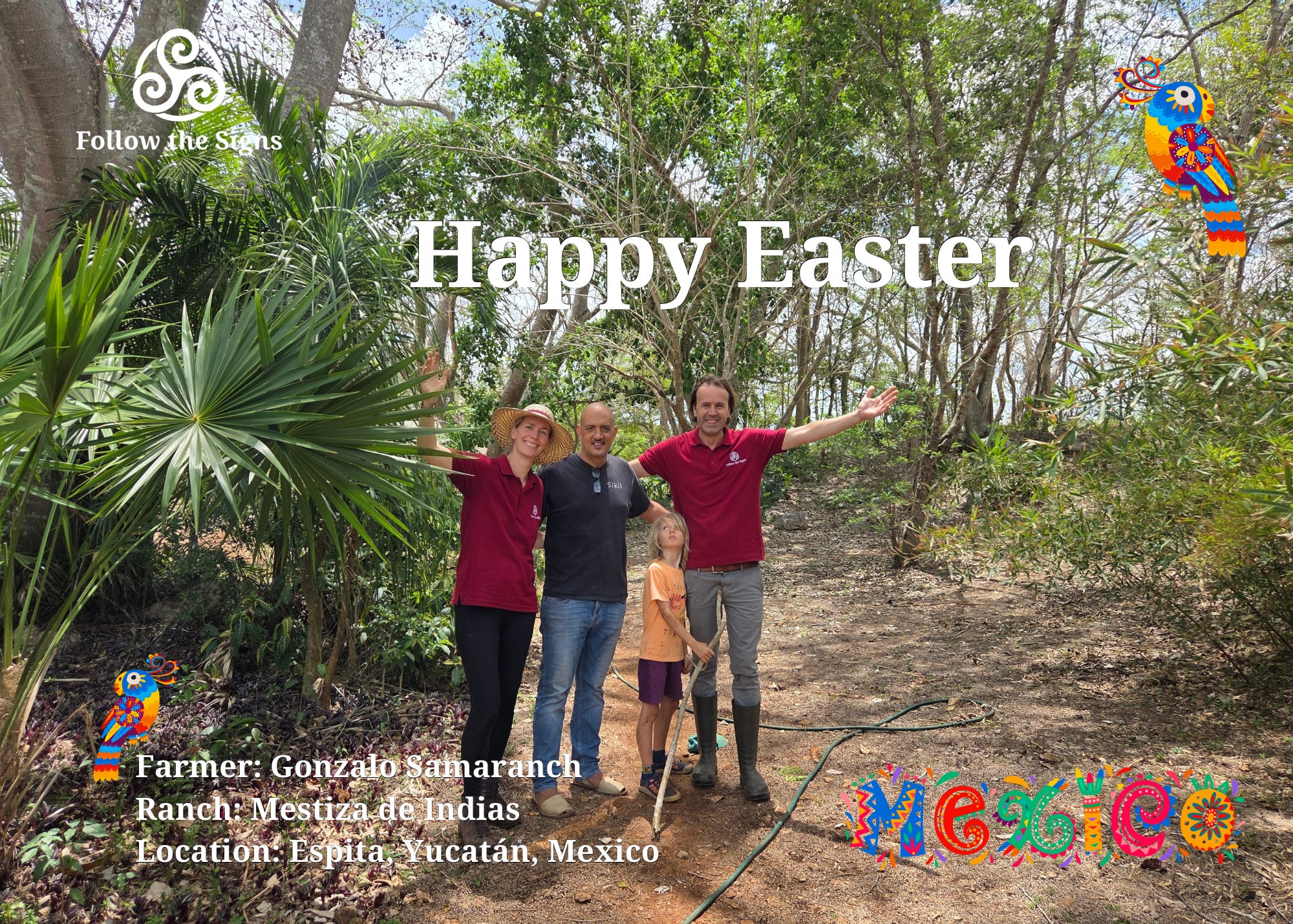
Wow wow wow, what a beauty this farm! So many colours, so many crops and above all: everything we tasted straight from the soil gave us an incredible, tantalising “mouth massage”! 🍅🥒🥕
On Holy Wednesday, we visited 𝗠𝗲𝘀𝘁𝗶𝘇𝗮 𝗱𝗲 𝗜𝗻𝗱𝗶𝗮𝘀, a 220-hectare (540-acre), Catalan-Mayan regenerative farm located in Espita, in the Yucatán jungle. 🦜🐍 🦎
It gives us incredible joy to meet very passionate, visionary and mission-driven regenerative farmers along our Follow the Signs journey. Having now been just over two months in Mexico, we had the pleasure of meeting Gonzalo Samaranch Granados, a guardian of the jungle. Mestiza de Indias is his brainchild, which he prefers to call a “love project,” mixing science with ancestral Mayan wisdom. Gonzalo’s wife, Martha (Mara), is Mayan and also involved in the farm.
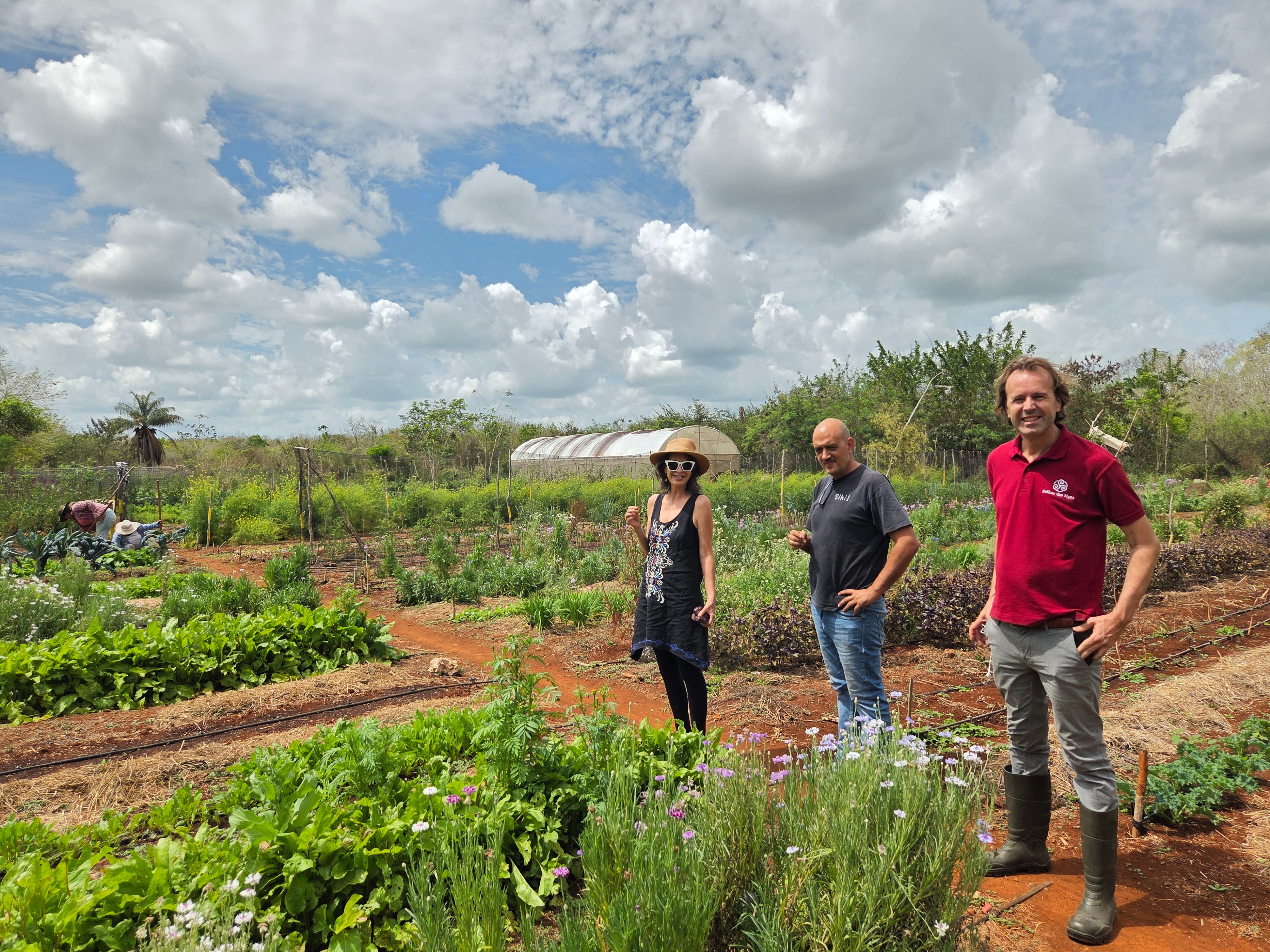
“The traditional Mayan medicine is alive,” Gonzalo told us with great passion. “It has been used for centuries, but it is an ‘oral culture.’ Mara never went to the doctor before,” says Gonzalo, who wants to document all the Mayan wisdom in the Yucatán and validate it scientifically.”
He has major plans for the land. One of them is 𝗺𝗮𝗸𝗶𝗻𝗴 𝗼𝘂𝗿 𝗳𝗼𝗼𝗱 𝗼𝘂𝗿 𝗺𝗲𝗱𝗶𝗰𝗶𝗻𝗲, which is in line with our vision. Regenerative, nutrient-dense food, herbs and drinks can function as preventative “medicine.” Most of the illnesses in the Yucatán are related to food. For example, diabetics is one biggest health issues in the region.
Let food be thy medicine and medicine by thy food!
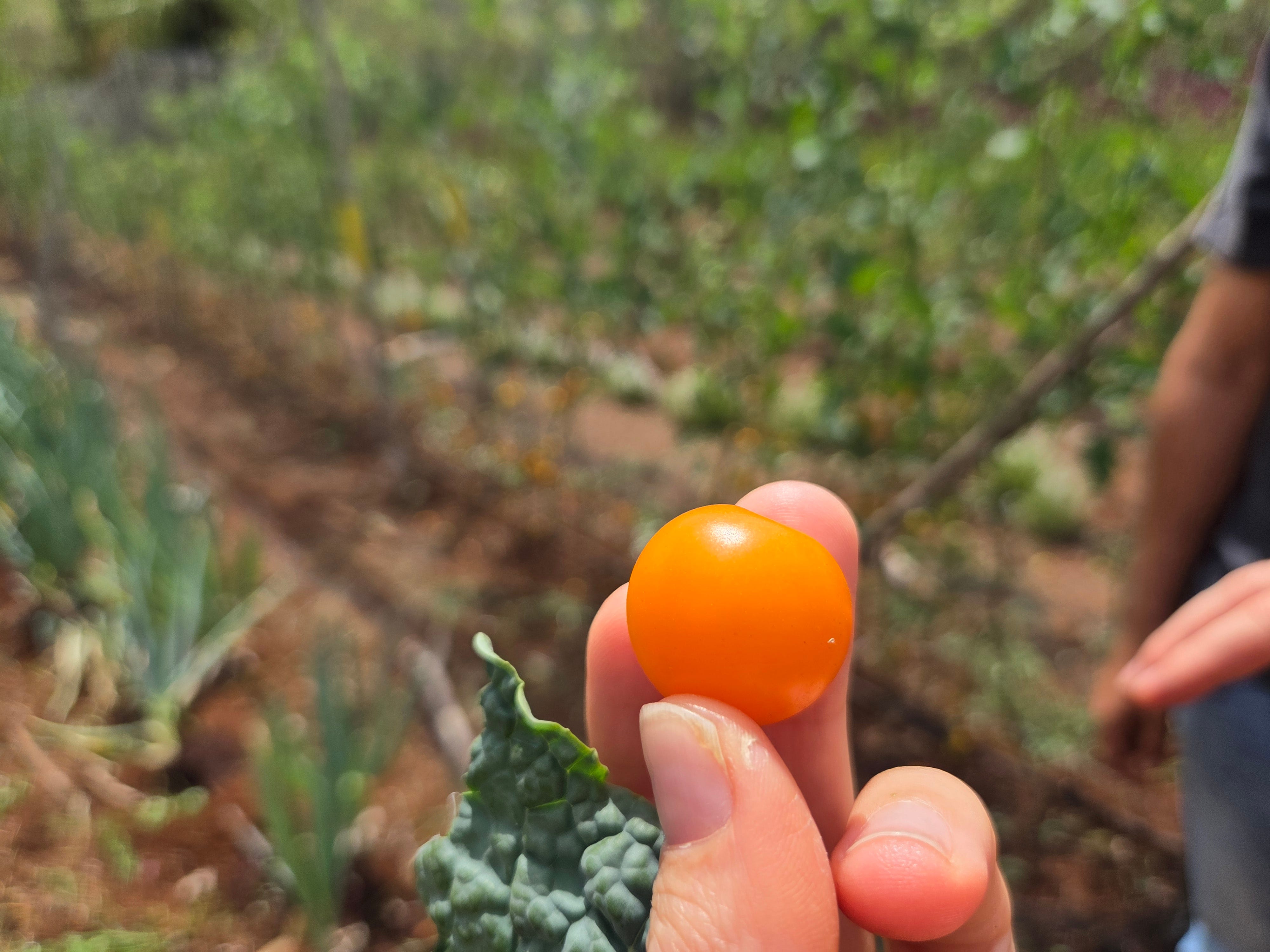
“Nature in the old times was part of their diet,” according to Gonzalo. “Today, neocolonialism of the major food producers is screwing up people’s health. You are what you eat.”
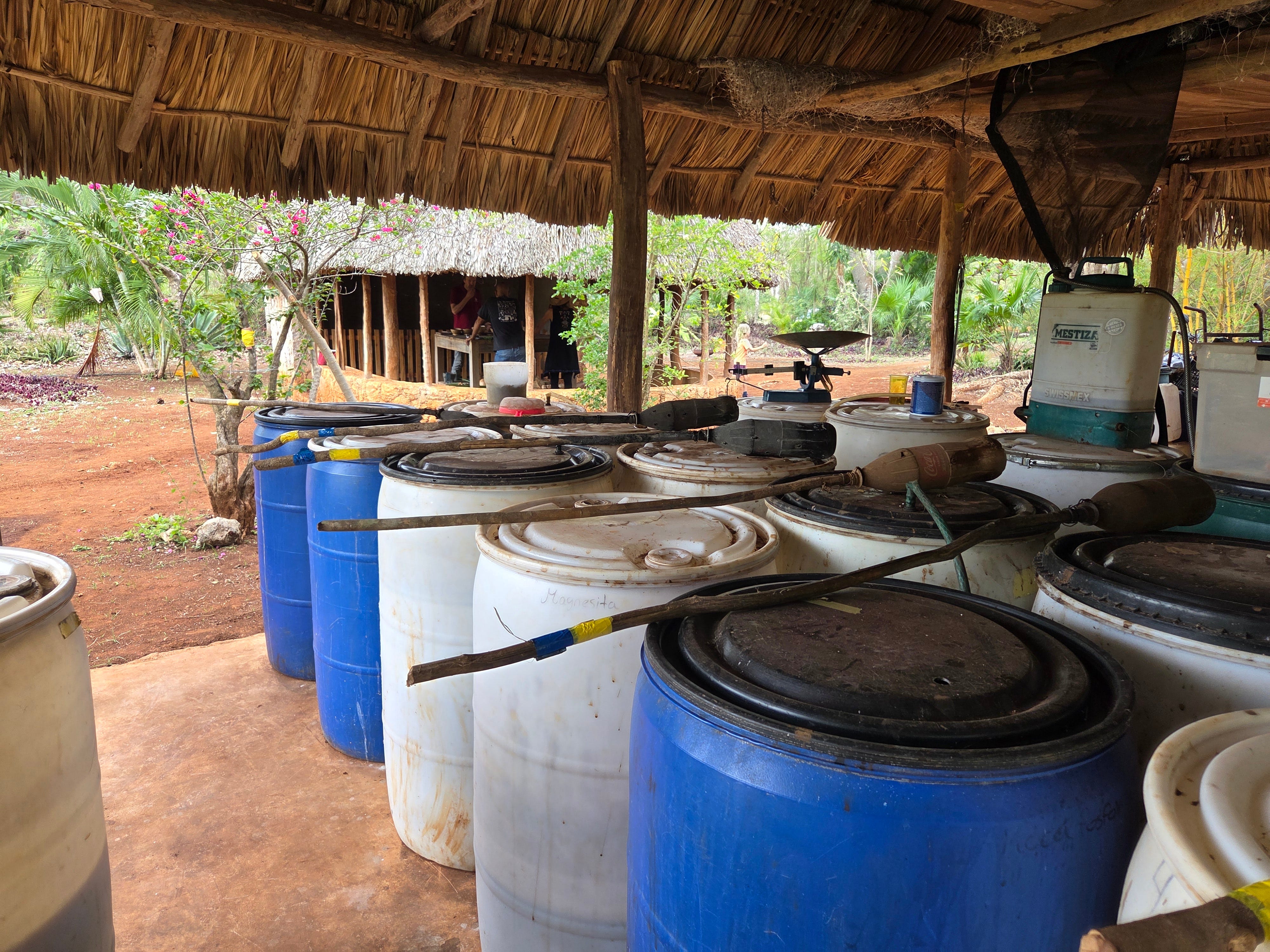
We were quite impressed by the way Gonzalo treats the soil as an “alive being,” the land, people and Mother Nature. For the soil, he showed us his “𝗯𝗶𝗼 𝗳𝗮𝗰𝘁𝗼𝗿𝘆” full of local microorganisms that already exist in the healthy jungle. It is a “silo of life,” as Gonzalo calls it poetically, meaning it is a storage place for microorganisms, which are then fed (by molasses) in order to reproduce them. They are returned to unbalanced, destroyed soil that do not have microorganisms. “What gives life to soil is the diversity of plants, trees, animals, mycelium, fungi, etc.,” Gonzales said. “Microorganisms live under this organic matter, in the dark and under special conditions.” 🍄
Here are some of Gonzalo’s words of wisdom:
🌱 “Educating people is the best thing you can do for ecology. We need to regenerate US, before we can regenerate the Earth. We ARE part of Nature and Humanity has created an unbalanced, extractive system.”
🌱 “Regenerative farming is all about trying to 𝘂𝗻𝗱𝗲𝗿𝘀𝘁𝗮𝗻𝗱 𝗵𝗼𝘄 𝗡𝗮𝘁𝘂𝗿𝗲 𝘄𝗼𝗿𝗸𝘀 and then to replicate its complex interactions. To 𝘁𝗿𝗲𝗮𝘁 𝘁𝗵𝗲 𝘀𝗼𝗶𝗹 𝗮𝘀 𝗟𝗶𝗳𝗲. The more biodiversity there is, the richer the soil is.”
🌱 “Regenerative farming is about 𝗹𝗲𝘀𝘀 𝗲𝘅𝘁𝗿𝗮𝗰𝘁𝗶𝗼𝗻. Let the land 𝗿𝗲𝘀𝘁 𝗳𝗼𝗿 𝗮 𝘄𝗵𝗶𝗹𝗲 and not plant it year after year. We wish to introduce syntropic agriculture.”
🌱 “Regenerative means to restore and balance things. Once restored, you have a balanced way of producing food.”
Another interesting fact is that this extraordinary farm is home to a yellow-green, 𝘃𝗮𝗻𝗶𝗹𝗹𝗮 orchid (Vanilla planifolia Andrews), which is not common to find as a native and wild orchid in the Yucatán. It has been there for centuries, but is endangered. Humans have been cloning vanilla orchids in Mexico and all around the world. The climbing, shade-loving vanilla orchid blooms just once a year and only for a few hours. If you don’t pollinate it, the flower will dry and then you will not be able to harvest vanilla anymore. Mexico’s Veracruz is the historical birthplace of large-scale vanilla cultivation.
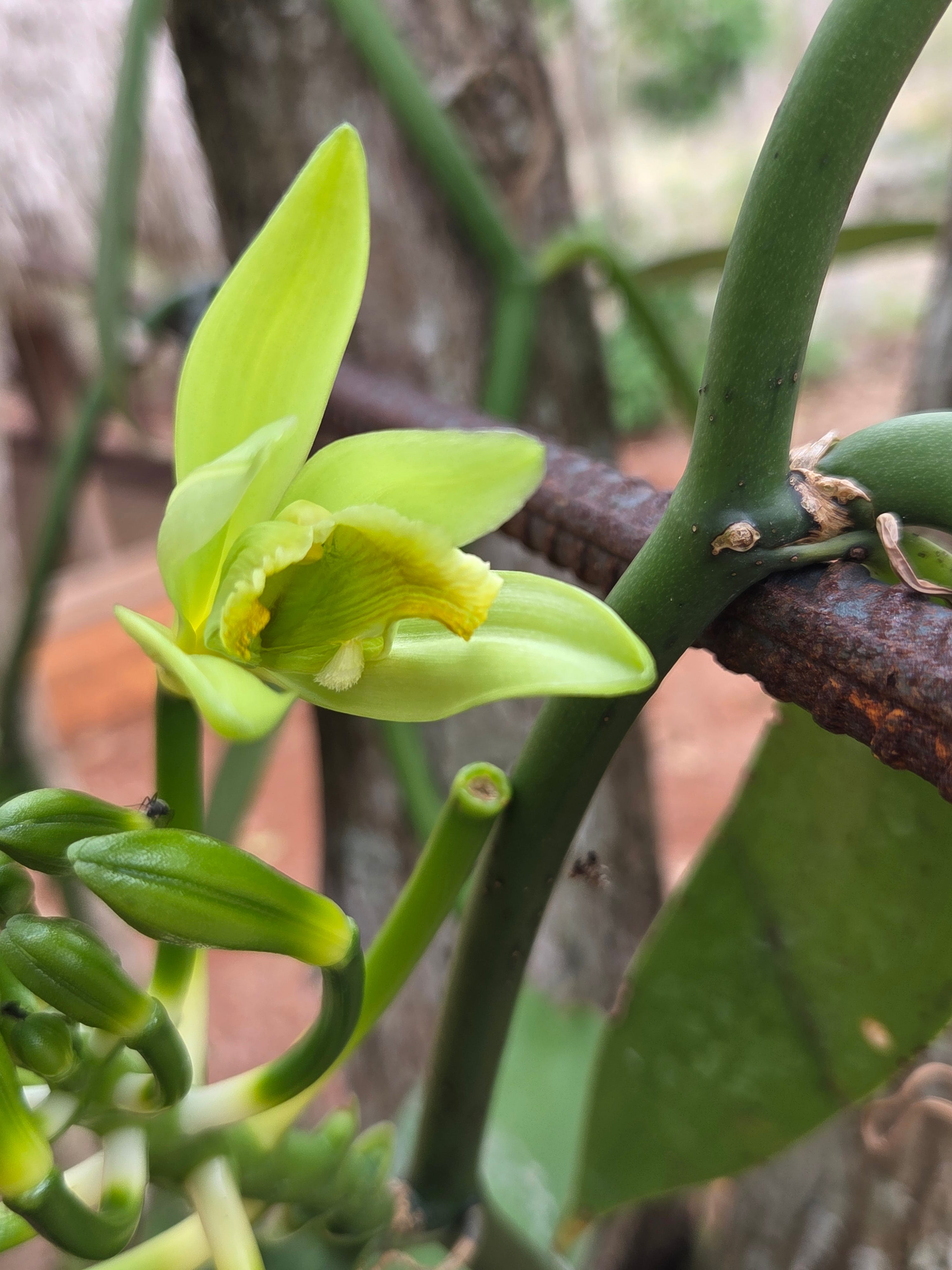
Gonzalo told us that each vanilla bean (pod) contains approximately 35,000 tiny, black seeds.
There are 17 varieties of Melipona bees in the Yucatán, four of which are buzzing around this land. The blue-green-metallic coloured orchid bee (Euglossa), which has an exceptionally long tongue, is big enough to get inside the vanilla tube to pollinate the vanilla orchid flower. It is an endangered species due to pesticide use and deforestation. That’s why the vanilla orchids need to be pollinated by hand, by lifting a membrane (rostellum) and pressing the male (anther) against the female (stigma) with a toothpick. Gonzalo has plans to inspire and help educate Mayan people in the Yucatán to produce vanilla regeneratively. The idea is to create a new way of cultivating a vanilla crop that was not here before, and to adopt it to the local climate and soil conditions. The Mayan people did not produce vanilla as a crop before.
“What is the best way to cultivate vanilla in a regenerative way?” Gonzalo asked. “What would be the best companion of the vanilla orchid? We need to research this.” For this and other reasons, Gonzalo founded a nonprofit called Na’at lab (na’at means wisdom in Mayan) last month, which aims to become a biocultural research centre. Its goal is to research how we as humans can produce in Mother Nature without destroying it. And to research extracting oils from seeds, essential oils and other extraction techniques. Through these techniques and by foraging in the jungle, people can stay in their local communities, create an income for themselves, and produce food, cosmetics, medicine and other products that the market is interested in. “We are creating a local and regional economy,” Gonzalo told us. “We ask ourselves: ‘How can we utilise what the jungle offers us without creating an imbalance in the natural ecosystems?’ It’s a holistic approach.”
Na’at lab also wants to revive meliponiculture, which the Mayan people invented. They use it as food and medicine. 🍃 At the end of the previous century, the stingless Melipona (from Geek: “meli” (honey) + pone (labour or work) = honey labour or honey work) bees were endangered. After introducing a Melipona sanctuary on the land, Gonzalo increased his crop production by 40 percent!
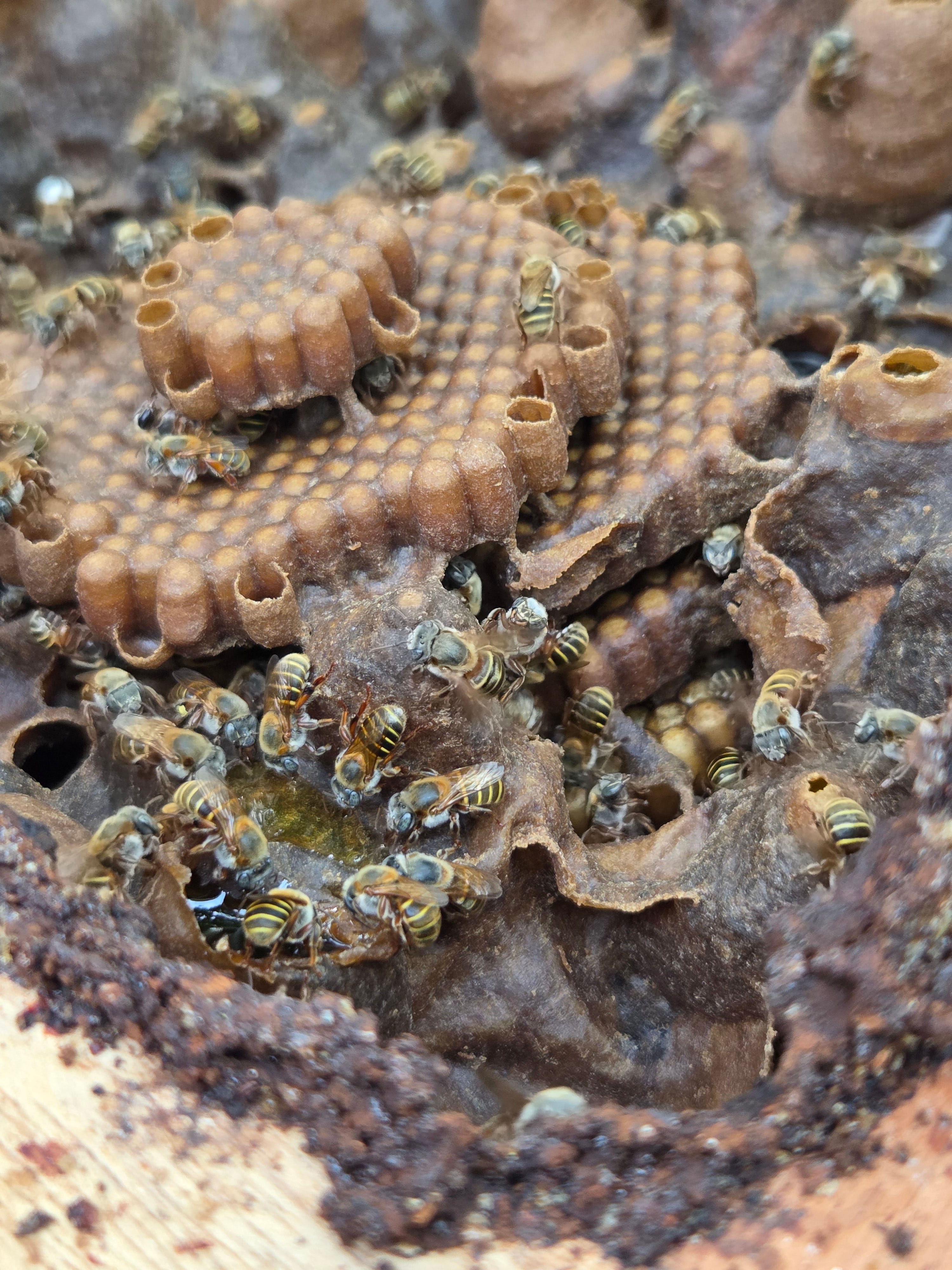
Gonzalo allowed the three of us to taste a sample of the very rich honey that he slowly and carefully removed from a resin pot inside a box full of Melipona bees. It was absolutely mouthwatering!
You can dilute propolis with alcohol (ethanol) and drink it. Propolis is a natural antibiotic. The ancient and modern Mayan people put pure Melipona honey in people’s eyes when they have cataracts.
His farm currently sells to luxury hotels within the triangle Playa del Carmen, Cancun and Valladoid. Crops that Gonzalo sells include Melipona pollen, heirloom carrots, tomatoes, broccolinis, kales, African cucumbers, Asian white eggplants, different kinds of beetroots, tatsoi, Asian mustard, African okra, winged beans, and a lot of different and tasty edible flowers. He also sells native and endemic fruits, such as chooch (Pouteria glomerata), bonete (Jecaratia mexicana), jícara (Crecentia cujete), honey pineapple, apple bananas (which has a texture of a banana, but tastes like an apple) and many others.
Future plans
Transitioning from ownership to stewardship, his plan is to transfer the ownership of the land to the nonprofit Na’at lab. “This land will always be focused on regenerative agriculture and research,” Gonzalo said. “It is a way to protect the land for future generations and keep its purpose intact. We also wish to create and preserve jobs in the local communities. We want to inspire others that we can produce and do business, while respecting and living in harmony with Nature.”
Future plans also include building farm residencies on the land and creating a regenerative farm school. “We research how you can create a soap from A-Z,” Gonzalo clarified with a smile. “Then we give people the know-how and knowledge to be self-sufficient, instead of being depending on governmental support.”
We are not the only fans of Mestiza de Indias. Last week, Gonzalo, Mara and their team were recognised during Mexico’s 2025 Food and Travel Reader Awards as “𝗕𝗲𝘀𝘁 𝗦𝘂𝘀𝘁𝗮𝗶𝗻𝗮𝗯𝗹𝗲 Farmer.” So well deserved!
We hope you will Follow the Signs this Easter and all year round, just like we do. Peter Michel, Mieke and our seven-year-old son, we are on an indefinite journey to help empower farmers, land stewards and wisdomkeepers to thrive (rather than survive) in harmony with Mother Earth for the next 1000 Years. The future of food, medicine and farming is bright 💖
No posts
Comments
Nothing yet. Say the first thing.
Sign in to join the conversation.