
I imagine you’re here for one of two reasons: either a great scaly nuisance has taken up residence near your village, or you’re simply wise enough to prepare in advance. Either way, welcome. I hope you find what you need.
Before we begin, a quick matter of language. In English folklore, especially down south, dragon is a catch-all term. The name we give all manner of fire-breathing beasts with two or four legs and leathery wings. What you’re actually dealing with might be one of several related serpentine monsters.
- Wrym: Pronounced worm, from the Old English word for serpent. Often legless, snakelike, and known to wrap themselves around hills or slither into wells and underground.
- Wyvern: A littler closer to our traditional dragons. Winged, two legs, barbed tails and/or venomous breath.
- Knucker: Water-dwelling, often found living in deep, bottomless ponds in Sussex known as knuckerholes. Serpentine, but sometimes legged and winged.
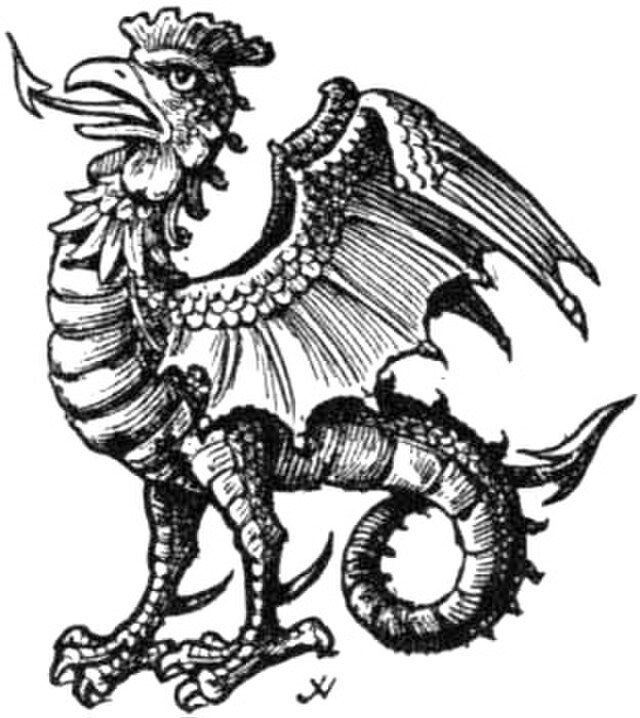
- Cockatrice: Also known as a basilisk. Head and legs of a cockerel, body of a dragon. Deadly stare. Can only be birthed if a toad sits on a duck egg.
They’re all known to terrorise local villagers. They pillage and burn. They steal livestock. They kidnap maidens. And they often guard and hoard.
But, they can be defeated, and many a brave soul has achieved it. Let’s find out how.
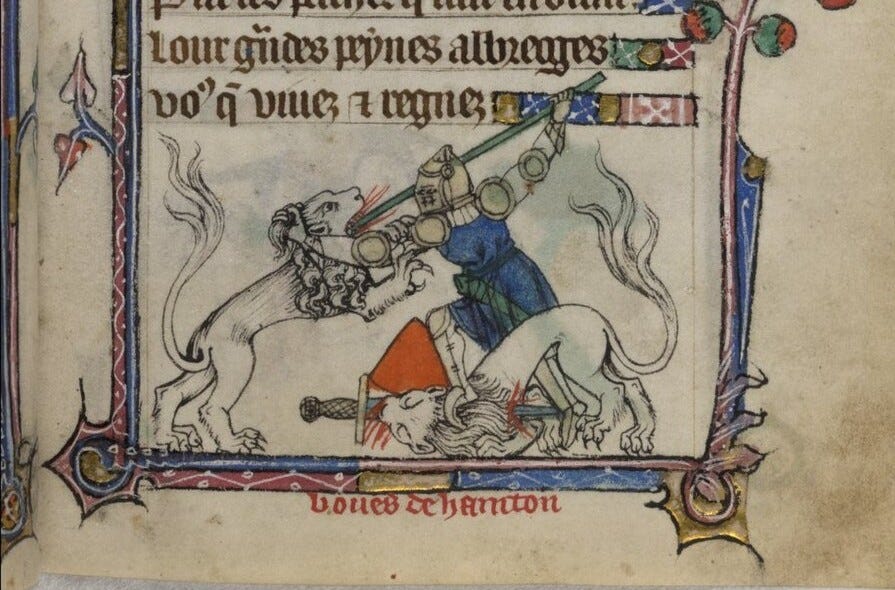
Bevis of Hampton – Southampton’s original folk hero with fame to rival that of the honourable Sir Craig David’s – once faced a terrible dragon demanding sheep, cows, and eventually people. When Bevis learnt his sweetheart was next on the menu, it wasn’t his sword that he drew.
It was a flute.
And when he played it, the dragon danced. And danced. And danced. And as it danced it shrank. It shrank and shrank until it was no more than a green bubble, kicked and popped into nothingness with the hoof of Bevis’ trusty steed, Arundel.
At Burley Beacon near Bisterne in the New Forest, there lived a great dragon who hoarded treasures and demanded pails of milk. Then cows. Then villagers, who had called upon Sir Maurice de Berkeley for help. In an attempt to ambush the dragon, Berkeley hid himself and his dogs in a box of mirrors. But they failed.
In a second attempt, Berkeley covered himself in birdlime and stuck broken mirror shards all over his armour, setting off once more. Grabbing him and then quickly feeling the sharp pain of the broken shards, the dragon tried and failed to let go. They wrestled through the air and came crashing down near Lyndhurst, where Berkeley finally killed it with an arrow. The fallen dragon became a hill named Bolton’s Bench, now a lovely place for picnics.
Elsewhere, in Wherwell, lived a cockatrice in an abbey. Some say he was cared for by monks, others say it was nuns. Either way, it was running riot, killing livestock, people, bishops, and quite violently, too – with its sharp beak and claws. Local knights tried and failed to slay it. In the end, it was defeated by a man named Samuel Green (some say he was a junior priest, others say he was merely a pot washer). He took a mirror (or a metal cooking dish) and placed it in front of the cockatrice as it slept. When it awoke, it fought its own reflection for hours until it exhausted itself, at which point, Samuel jumped out from behind the mirror and stabbed it.
This method is considered to be more accessible than that of a magic flute.
In Shervage Wood lived the Gurt Wurm, devourer of sheep and men. A woodcutter from Stogumber wandered into the area in search of work. After a short while, he sat on a log to take a swig of cider.
The log moved.
He leapt up, swung his axe, and chopped the worm clean in two.
It is said that the two halves ran in opposite directions, never able to reunite. One half fled to Bilbrook, the other to Kingston St Mary. They say the reddish clay of the Quantocks is its blood. Others claim that before it died, it lay eggs and that there may still be dragons running around the Quantock Hills. So if you do head there, pack an axe and do not think twice.
In St Leonard’s Forest, Sussex, a huge knucker emerged from a knuckerhole and bred itself into a plague. The villagers turned to St Leonard, a French hermit who had taken to the forest for a meditative life.
Or so he thought.
Some say he used sword and spear, stabbing the dragon clean in the heart. Others say he used the word of God. But all agree that the battle was long, and Leonard was wounded in the process.
If you find yourself face-to-snout with a knucker, consider using both faith and a sharp blade.
Near Lyminster in Sussex lived another knucker at the bottom of a pond. The terrorised locals begged the king for help, who promised a mighty reward for any brave enough to slay it. Night after night, knight after knight tried and failed – much like the case of the Wherwell Cockatrice.
Then came Jim Puttock, not strong, but certainly cunning. Jim baked a poisoned pie and took it down to the knuckerhole. The beast swallowed it whole and promptly fell unconscious. Jim wasted no time. He took his axe and finished the job, chopping the knucker’s head clean off and dragging it back up to the king for proof.
There are many more tales of dragons across the South. Many were benevolent, like the dragon of Butser Hill, or Dorset’s Bloodstone Dragon. There’s even the Christchurch dragon with five heads who burned down the church of an uncharitable dean.
Then there are dragons who, as far as records show, were never defeated. They still lie sleeping under hills and guarding treasure, like the Cissbury Serpent of Sussex and the Castle Neroche dragon of Somerset. Perhaps, if you pack wisely – a magic flute, a mirror, an axe, some incantations, and a poison pie – you could be the one to do it.
If you dare.
A note from me:
As usual, I’ve included mere snippets of these brilliant folk tales from our southern counties. And it’s worth noting that they’re also only certain versions of these tales. For example, the version of Bevis slaying the dragon is one I took from Michael O’Leary’s telling in his book Hampshire and Isle of Wight Folk Tales. In fact, the more common version of this story is that Bevis slayed a poisonous dragon somewhere near Cologne using his sword and the powers bestowed upon him by a sacred purifying well. But I found more humour in a magic flute and a dancing dragon.
I highly encourage you to seek out the full tales and legends I’ve referenced here. There are books, blogs, and podcasts aplenty. If you’re nearby any of the places I’ve mentioned, check them out. Wander into a pub and ask a local. These folk tales are our land, go and explore it!
No posts
Comments
Nothing yet. Say the first thing.
Sign in to join the conversation.