
Bonjour chers lecteurs,
Il y a eu une barrière sur la route, mais je l’ai ignorée. Parfois il y a des travaux ou autre qui bloquent le chemin pour les voitures, mais en générale les vélos peuvent passer. Cette fois par contre, un demi-kilomètre plus loin…
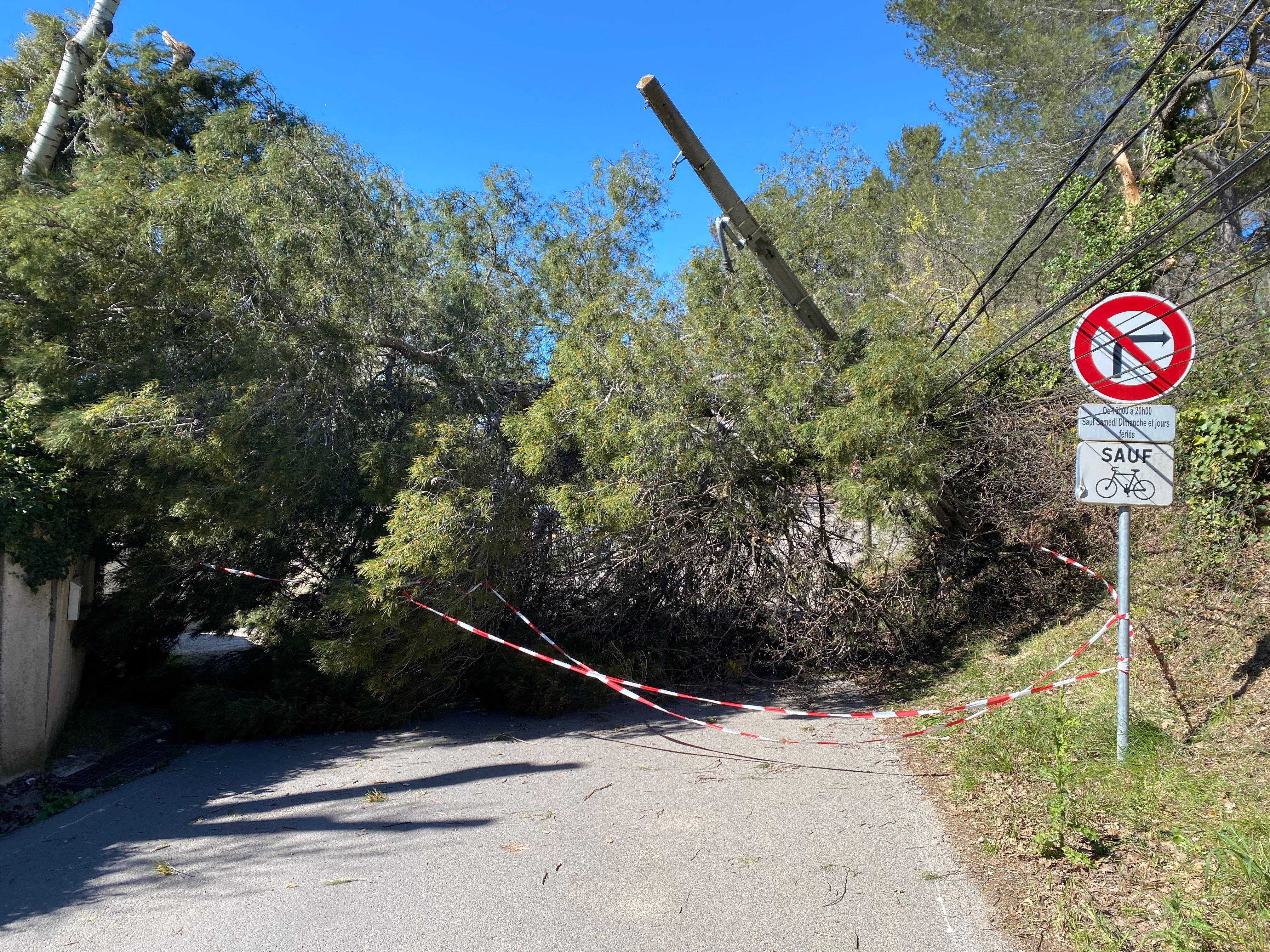
Il y avait eu un vent très fort la veille qui avait, évidemment, fait ses dégâts. Pour moi ce n’était pas grave ; j’ai rebroussé chemin, et j’ai choisi une autre route. C’est bien de se rappeler de temps en temps que le contrôle du monde naturel que nous cherchons n’est pas aussi complet que nous imaginons souvent.
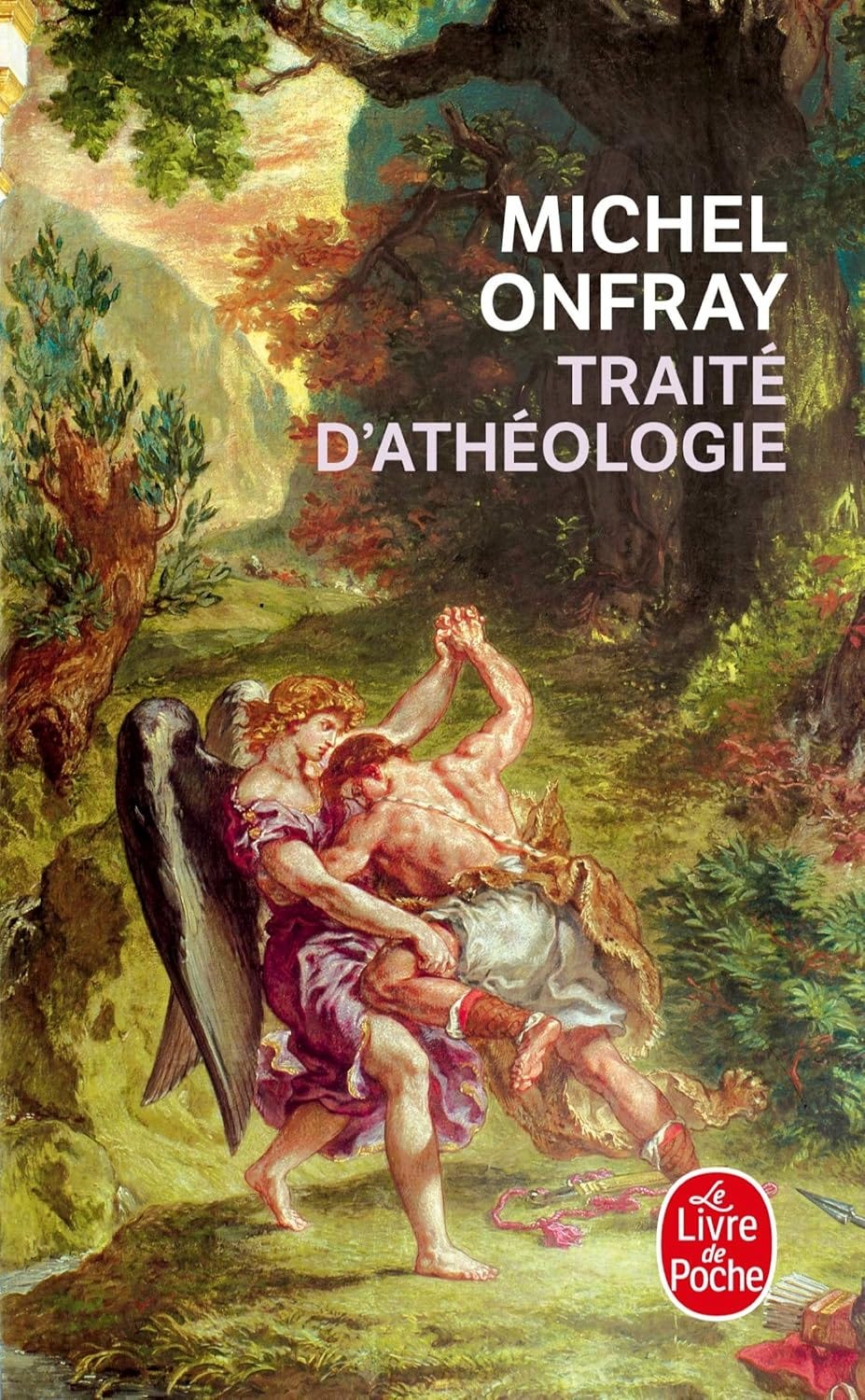
Extraits de mes notes sur Traité d’athéologie
Si l’homme est par nature mortel, alors l’incapacité d’accepter sa mort est un défaut, mais par contre, si l’homme a été créé pour vivre pour toujours, la révolte contre la mort est un signe de bonne santé. « Il a mis dans leur coeur la pensée de l’éternité » (Ecclésiaste 3.11). Le chrétien qui fait appel au fait que le christianisme offre la vie éternelle alors que l’athéisme n’offre rien, ne propose pas simplement qu’il faut croire ce qu’on préfère être vrai. L’évangéliste est convaincu que l’offre de la vie éternelle trouvera echo dans le cœur de l’homme créé pour vivre éternellement. L’affirmation est jugée vraie non pas parce que c’est agréable, mais parce que ça correspond à sa nature profonde. Et pourquoi pas ? Si je crois que 2+2=4 parce qu’il me semble être le cas, pourquoi pas croire que je suis par nature éternel parce qu’il me semble être le cas ? Comme l’aigle sait qu’il a été fait pour voler, l’homme sait qu’il a été fait pour quelque chose qui transcende l’existence animal, quelque chose qui ne s’arrête pas avec la mort physique du corps.
« La silence de Dieu permet le bavardage de ses ministres »
La règle générale est que la contrefaçon est l’imitation d’une réalité. Les faux billets ne sont pas la preuve de l’inexistence de vrais billets, mais plutôt le contraire. Sinon pour les vrais, les faux n’auraient pas été produits. De même les dieux. De même les prophètes.
Mais Dieu, pourquoi n’intervient-il pas pour trancher le débat ? Pourquoi ne pas parler d’une façon inimitable pour se prouver ?
Dieu l’a fait dans le cœur de chaque humain, mais nous résistons à cette révélation.
Dieu l’a fait dans sa création, mais l’homme reste têtu.
Dieu l’a fait dans sa Parole qui porte en elle-même la capacité de convaincre de sa vérité, mais tant que l’auditeur reste dans la rébellion de son cœur, il n’est convaincu par rien.
Dieu l’a fait dans l’incarnation de son Fils. Nous l’avons tué non pas parce que la révélation était obscure, mais parce que la lumière divine a été insupportable pour les fils des ténébres.
Mais la vraie foi nait, non pas quand on fait confiance aveuglement à un messager humain, mais quand l’Esprit ouvre les yeux du cœur pour que la véracité du message résonne dans l’être profond du croyant. C’est le moment où l’enfant reconnait son Père, la créature son Créateur.
Ça fait longtemps que je n’écris pas de fiction, mais en tentant d’imaginer à quoi aurait pu ressembler les événements évoqués de façon énigmatique par Genèse 6.1-4, j’ai eu l’idée pour « La Prêtresse de Malakh. » Je m’excuse de vous le présenter en anglais, mais c’est trop long pour moi de traduire.
It was the bleating of sheep that woke her. She opened her eyes to find herself wrapped in blankets on the floor of a large tent. How gloriously warm she felt. And how hungry! After a few minutes, a grey-haired woman ducked through the opening in the tent.
“So you’re awake then. Quite some nap you took there.”
The woman handed her a bowl, and Tovah gratefully drank. Immediately she pulled a face.
“Not used to goat’s milk I see,” the woman laughed. “Never mind, it’s good for you. Drink all that up now and I’ll get you some bread.”
Tovah was too desperate for nourishment to object. In a moment the bowl was empty, and the woman was back with a small brown loaf. She was followed a minute later by a man with a grey beard and a weathered face.
“Look who’s awake,” he said with a light laugh. “Go ahead and eat, we’ll get your story later. In the meantime, I’m Mahalel and this is my wife Milcah, and we’re honored to have you as our guest. My grandson Enoch found you while he was pasturing the flock. In a right state you were, and I had my doubts about your pulling through. But here you are and with an appetite to boot.”
He smiled at her in a grandfatherly way, and Tovah, hardly able to bear the kindness of these strangers, burst into tears.
“Hush child,” said Mahalel gently placing his hand on her shoulder. “It’ll be all right there.”
Catching her breath, Tovah spoke in a small voice, “May you be blessed by all the Gods, my lord. You have surely saved my life, and I will be your slave forever if you will take me in.”
“Are you all alone then?”
“I have no one. No family. No people.”
Mahalel looked at her thoughtfully a moment. “You’d better not get up today. Get your strength back, and tomorrow if you’re able, Milcah will tell you what you can do.”
~
The next morning Tovah sought out Milcah and found her with her hands in a kneading bowl.
“Come here, Tovah, you can knead this dough, and I’ll see to the fire. After that I’ll show you how to milk the goats.” Looking at her, she frowned and added, “And we’d better see about repairing that robe of yours too. I can see by your hands that you’ve not worked much, but you’ll soon get used to it here.”
It was indeed long weary days, aching muscles, and blistered fingers, but each evening she received her food gratefully and lay down contentedly. Mahalel, Milcah, and their children worked as hard as any of the slaves, shepherding their sheep and goats, and roaming from place to place in search of pasture. Tovah’s heart was still heavy with all that she had lost, but day by day she began to feel at home among the B’ney-Seth (as they called themselves), and slowly she started to think there may be a kind of happiness for her yet.
~
She still dreamed frequently of Malakh. Sometimes he comforted her and brought her son back alive. Other times he was angry and punished her cruelly. The bright blue head and the huge yellow eyes hovered over her and his hiss was all around her. Tovah jerked awake, and there he was, exactly as she had seen him in her dream.
“What do you want?” she gasped. In waking reality his presence brought no comfort.
His voice filled her head, “I’m here for what’s mine. You belong to me, little priestess.”
“You abandoned us. You let our son die.”
“Silence! I am your God, I do not answer to you.” The serpent rippled into human form and he spoke out loud, “You can never escape me.”
Tovah opened her mouth to cry out, but he smothered her with his hand and whispered viciously, “None of that, now. I wouldn’t want to have to kill your new family.”
Tovah sobbed in her throat, eyes wide in fear.
~
From then on, he was there every time she closed her eyes. No rest did she get at night, anxiety clung to her by day, and under constant strain, Tovah began to unravel. Milcah reproached her more than once for inattention to her work, but Mahalel regarded her with thoughtful concern.
“Tovah, my daughter, come here.”
She stood before him with her eyes down.
“You have heard that tomorrow is our sacrifice to El-Elyon?”
“Yes, my lord.”
“Tonight you will hear the tale of El-Elyon, for we always tell it on the eve of the sacrifice. And tomorrow, if you wish, you may be sanctified.”
“Sanctified?”
“I see that you suffer, daughter. Something from past days lies heavy upon you. You need healing beyond the art of men, but El-Elyon will save you if you cry out to him.”
Tovah recoiled, “Oh no, my master! I don’t want that at all.”
Mahalel peered into her face and nodded, then, placing his hand on her shoulder, “As you wish. But tonight you will hear his tale.”
~
The fire rose high in the midst of the family as Mahalel rose to speak, “In the beginning, El-Elyon created the heavens and the earth.
“He made the sun and the moon, the stars, the hills and the trees, the fish, the birds, and the beasts of the field. Last of all he made the man and the woman. El-Elyon put our parents in a garden and commanded them to keep it for him. To them was given the fruit from every tree of the garden, except for the one in the center, the tree of the knowledge of good and evil. This only was forbidden them. There they were, happy in the presence of El-Elyon. But one day a serpent came into the garden and tempted them, and they ate of the fruit that had been forbidden them.”
At the word ‘serpent’, Tovah started and her heart beat faster.
“In wrath, El-Elyon cast our parents out from the garden and subjected them and all their children to a life of toil and pain. As for the serpent, El-Elyon cursed it and declared that one day its head would be crushed by the son of the woman, though his blood also would be shed. Our first parents had many sons and daughters, and these also had sons and daughters, and the land is now full of many people. But most of these have turned away from El-Elyon and forgotten him. They bow before statues of gold and silver and stone and offer sacrifices to evil spirits. In this house however, we serve El-Elyon and look for the fulfilling of his promise.”
“Please,” said Tovah when the story was finished. “What does El-Elyon look like? You have no images of him here.”
“El-Elyon cannot be seen. He is God, and it is forbidden to make images of him.”
“He is a God then, like Malakh?”
“No daughter, he is the God and there is no one like him. We did betray him in the garden, but he has never abandoned us.”
~
Tovah did not sleep that night. She sat and turned over memories and wrestled in her soul. Early in the morning, she left the tent and found Mahalel alone, standing by the altar he had made, a lamb held in his arms.
“Just one animal for the sacrifice, my lord? A lamb?”
“One lamb,” he replied smiling. “And now Tovah, do you choose to be one of the B’ney-Seth and to belong to El-Elyon?”
“Yes, my lord. I would be sanctified for El-Elyon.”
~
The morning was grey, the grass damp with dew as the family gathered around the altar. Tovah stood in the center with Mahalel and the lamb. He prayed, his eyes lifted to heaven, and then he spoke to Tovah.
“Do you choose to serve El-Elyon, and him only, all the days of your life?”
Tovah nodded, trembling.
“You must also renounce the ways of the B’ney-Caïn: idolatry, murder, theft, and sexual immorality.”
Tovah’s cheeks flushed slightly and she nodded again.
“Place your hand on the lamb’s head.” Mahalel sliced firmly with the knife and the red blood poured from the lamb’s throat at their feet. He dipped his finger and annointed Tovah’s forehead and hands with the blood. Then she joined the others while he lit the fire and placed the whole body of the lamb on the altar.
“We’re not going to eat it?” Tovah whispered to Milcah.
“We do not eat flesh. The sacrificial animal is only for El-Elyon.”
After that, they sang songs and danced, holding hands in a ring around the altar. Then there was the feast, and they broke their bread together with warm conversation and bright laughter. Everyone smiled at Tovah, and she felt herself wrapped in a kind of happiness she had never known before.
~
The sky was full of stars and Tovah stood alone by the altar, gazing at the ashes of the lamb. A chill wind made her pull her robe close and, looking up, she quailed at the sight of the blue serpent on the other side of the altar.
“What have you done?” he spat. “Didn’t I tell you you could never be free?”
Tovah shook her head desperately. Clenching her eyes shut and grasping the stones of the altar, she pleaded in a whisper, “El-Elyon, save me! If I am yours, have pity on me and save me!”
The head of Malakh rose up over the altar, and Tovah cowered behind it. Suddenly the ground at her face shone with a clear white light. She peeked up to see the back of a shining figure standing on the altar. Malakh hissed in anger and – could it be – fear? There was a terrific crash like bronze cymbals, and Tovah hid her face again. Silence followed, and she became aware that the light was fading. She looked up and saw the shining figure rising up out of sight into the star-filled sky. There was no sign of Malakh, and Tovah knew she would never be troubled by him again. Still peering upward, she remembered how Mahalel had said that El-Elyon had created the stars. Was it one of them that he had sent to leave off its course through the heavens to come down to her rescue?
Still weak, but filled with indescribable peace, Tovah knelt down and bowed before the altar. In tearful whispers she poured out her heart to El-Elyon, her gratitude for his salvation, her sorrow for her past life, her happiness with the B’ney-Seth, her resolution to devote herself to El-Elyon all her remaining days. Finally, she felt that there was nothing left to say, she had laid all her burdens down, and her heart was light. And only then did she notice how very tired her body was. Slipping silently into the tent, she lay down in her place and instantly fell asleep, her face an image of perfect peace and contentment.
~ ~ ~
À ce moment c’est programmé pour 1 avr. à 18h24 EDT. Dommage que c’est 00h24 chez moi…
~
La gloire de Dieu, c’est de cacher les choses;
La gloire des rois, c’est de sonder les choses.
Proverbes 25.2
Aucun post
Comments
Nothing yet. Say the first thing.
Sign in to join the conversation.