
This is a newsletter of Faces of Digital Health - a podcast that explores the diversity of healthcare systems and healthcare innovation worldwide. Interviews with policymakers, entrepreneurs, and clinicians provide the listeners with insights into market specifics, go-to-market strategies, barriers to success, characteristics of different healthcare systems, challenges of healthcare systems, and access to healthcare. Find out more on the website, tune in on Spotify or iTunes.
My vacuum cleaner doesn’t have it’s one name. Apparently, that’s rare, since 80% of Roomba robots have names.
In 2026, for $20,000 or a $500 monthly subscription, you can get your own home robot – Neo. When I first saw this, I was thrilled. I would love to have a machine that does the dishes three times a day instead of me, makes sure the vacuum robot doesn’t get stuck somewhere, and can wash and fold the laundry. It seems this is close to becoming a reality.
But hold the excitement just for a little bit.
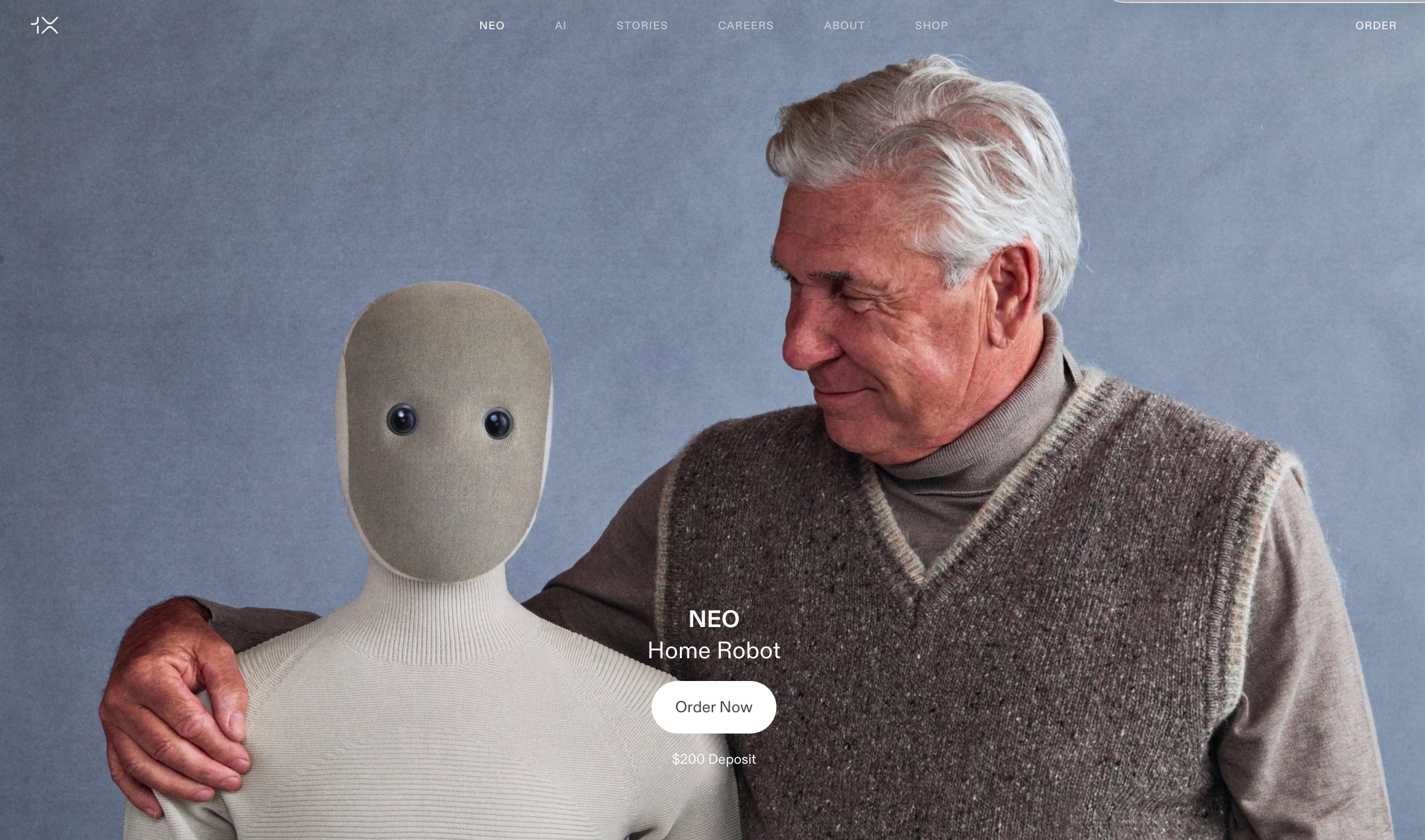
If you watch the video review by Wall Street Journal, NEO is still very basic and not autonomous. Many tasks are done by a human in the background and the robot’s “eyes” are cameras that help the human operator perform movements. Early adopters will essentially help the company, 1X Technologies, gather data for AI training and support innovators building the road toward robotic independence.
By buying Neo, company employees can see you and your home through the robot’s cameras. However, as emphasized by the CEO in the WSJ interview, each device includes several layers of privacy controls: rooms can be off-limits, and privacy concerns are presented as a small trade-off for the benefits. Especially over time, as updates are rolled out based on field data.
If you look at the December 2025 robotics exhibition in Japan, robots from various vendors still seem to have very limited capabilities. Nonetheless, the race to build a general purpose, autonomous humanoid robot is on. Tesla is building its version called Optimus with the aim of producing 10-million units annually by 2027.
Boston Dynamics is focusing on humanoid robots for manufacturing, and China’s TechnologyX AI is making waves with humanoid robots capable of astonishingly human-like movements. These are just a few of the players.
This made me wonder: is robotics the next big change we’ll introduce in healthcare, and what do we already know about its potential impact?
Robotics in healthcare is not new. For decades, hospitals have relied on machines—from surgical robots, to robots that quietly deliver medications from pharmacy to ward, to automated cabinets that manage and safeguard medication stock behind the scenes, to robots that interact with patients and keep them company.
But let’s take a closer look at humanoid robots and animal-shaped robots, which we tend to anthropomorphise (that is, attribute human characteristics, emotions, intentions, or behaviors to non-human entities such as animals, machines, or software).
In her book The new breed, anthropologist Kate Darling shares extensive research on our attitudes toward robots. As mentioned earlier, 80% of robotic vacuum cleaners have names. As long as robots aren’t too human-like—which can feel creepy—we tend to be intrigued by them. History shows that we become attached to animal-shaped robots quite quickly, especially when they look cute.
If you were born before 1990, you might still remember owning cheap and affordable Tamagotchis and Furbies, which are still available today for less than $50. More sophisticated consumers with deeper pockets could opt for more expensive robots such as Sony’s Aibo dog, which today costs around $3,100, plus a subscription for AI and cloud enhancements.
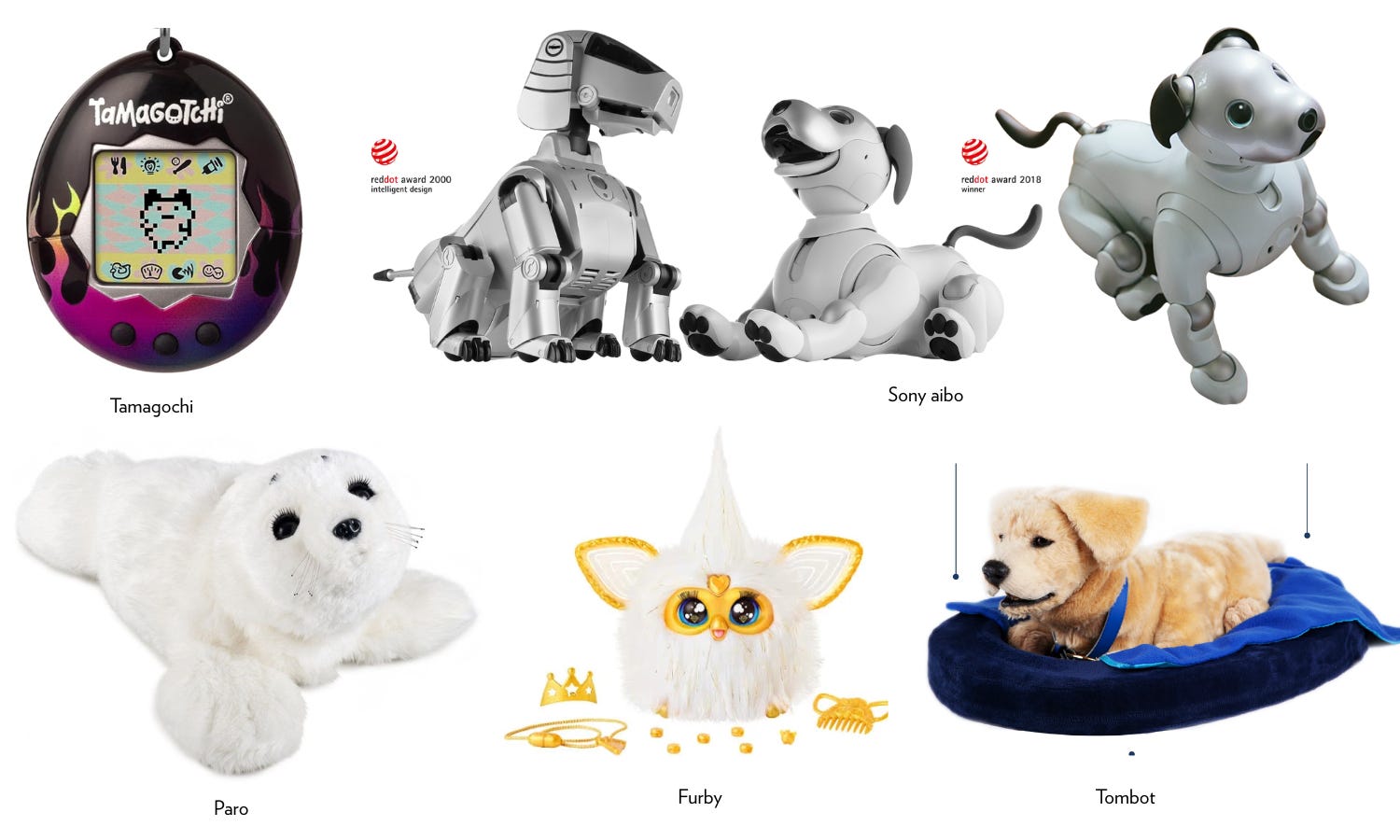
As a granddaughter with a grandmother living with dementia in a care home, I’m particularly intrigued by Paro the baby seal ($8000), Tombot dog (price unknown) and Joy for all cats and dogs ($200 USD). These animal-shaped robots are designed specifically for environments unsuitable for live animals, such as hospitals and care homes. With life-like features: purring, barking, and responding to voice or touch their therapeutic effects include psychological enrichment and joy for people with dementia, emotional and behavioral distress, PTSD, social isolation, and for patients in palliative and hospice care.
Knowing all these positive impacts, the question remains: why aren’t we seeing robots everywhere—in care homes, or supporting the understaffed caregiving workforce?
As with any technology, integration and implementation are key.
Tanja Ahlin is an anthropologist of health and technologies and author of Calling Families: Digital Technologies and the Making of Transnational Care Collectives.
She is currently researching the use of robots for people with dementia and the impact they might have on mental health.
In a recent discussion for Faces of digital health she shared her findings so far. We discussed the international use of robots, the surprising lack of adoption, why we trust robots and AI, and what this means for the future.
Let’s start with Japan, often treated as the default reference point, when it comes to robots. James Wright’s Robots Won’t Save Japan book argues that the image of Japan as a robot-saturated society is partly strategically constructed. As part on an economic plan, Japan itself has been working a lot on coming up with an image of itself as highly technologically developed. A less-discussed but crucial policy dimension of care robotics emerges in the Japanese context, where robots were not only imagined as a technological solution to population ageing, but also as a political alternative to immigration. “The debate was often framed in stark terms: do we bring immigrants or do we create robots?” says Tanja. Robotics promised a way to preserve cultural homogeneity while addressing severe workforce shortages in elder care. Yet everyday care realities proved far more complex than this binary suggested. Despite heavy investment and global visibility of care robots, the approach did not deliver the level of support needed in practice.
Inspired by promising research, particularly around therapeutic robots like PARO, Denmark introduced social robots into elderly care homes. But that did not pan out successfully. “One of my colleagues, who is an ethnographer, went to check where are these robots and how are they doing, and she discovered that they were nowhere. She really didn’t find them. In the end, she discovered that they were put into cupboards and even into toilets, they were put away. It turned out that the carers were really worried about the robots. They saw them as very expensive technology and they didn’t want them to be destroyed or damaged. So they felt they had to take care of the robots,” Tanja explains.
What this shows is that, as with any technology, introducing robots doesn’t mean they will automatically be used. When not introduced thoughtfully, they don’t replace care work, they often create new forms of care work.
The Netherlands presents a contrasting approach. Instead of large national rollouts, adoption is increasingly bottom-up and situational. Robots enter care homes through local initiatives, enthusiastic staff, or even as gifts from family members. This allows experimentation without pressure and lets care teams decide whether a robot actually fits their daily routines. As Tanja notes, usage depends heavily on workplace culture and continuity: when staff are curious and engaged, robots are integrated; when staff change and knowledge disappears, robots can become invisible again.
2025 saw a rapid proliferation of AI-assisted therapists and chatbots, alongside growing media reports highlighting the harmful consequences of using ChatGPT as a substitute for professional mental health care. In several cases, these incidents were linked to suicides, prompting multiple wrongful death and negligence lawsuits against OpenAI. The question is: what is it about robots and AI that makes it easier for us to trust them with our deepest secrets and concerns?
Tanja sees trust as something we co-create with technologies. Robots invite projection. “We project a lot onto them… this phenomena of anthropomorphization is very common.” And while robots and chatbots aren’t truly empathic, the interaction can still feel emotionally meaningful: “they’re not empathic, but we feel empathized with when we talk to chatbots.”
That perceived safety can make disclosure easier. Tanja acknowledges a more uncomfortable implication: trust in machines can be a mirror, revealing gaps in human systems (time, attention, judgment, stigma) that make people prefer non-human listeners.
Personally, I would love to have a robot that does chores instead of me. I would love to see a future where my parents can stay independent in old age, even with mobility challenges, because they have a robot that helps them live at home and call for help in emergencies.
The reality is that birth rates are declining and people are having children later in life. As a result, children are often still building their own independence when their parents already need care. While longevity and healthspan narratives are booming, societies are not getting healthier, and healthcare systems are not supporting ageing well at scale. I don’t believe relying on human labor alone will suffice.
As healthcare systems though leader Bogi Eliasen likes to emphasize: “Decision makers often think: how can we have the best healthcare system, instead of asking themselves: how can we create the healthiest population?” He believes dignity as a concept should become central in healthcare.
With AI becoming increasingly capable and sophisticated, the unanswered question is whether we’ll know how to manage AI once it turns into AGI. Will robots become terminators—or will we achieve bliss and radical abundance, as predicted and hoped for by Nobel laureate Demis Hassabis?
Tanja Ahlin bets on awareness, not panic: being conscious of “what we are doing with technologies and what the technologies are doing back to us.” She rejects both techno-utopianism and doom. Instead, she frames the future as a collective balancing act. Humans are incredibly flexible and creative, and we have survived many transformations before. We will find a way to live with technologies as well.
No posts
Comments
Nothing yet. Say the first thing.
Sign in to join the conversation.