
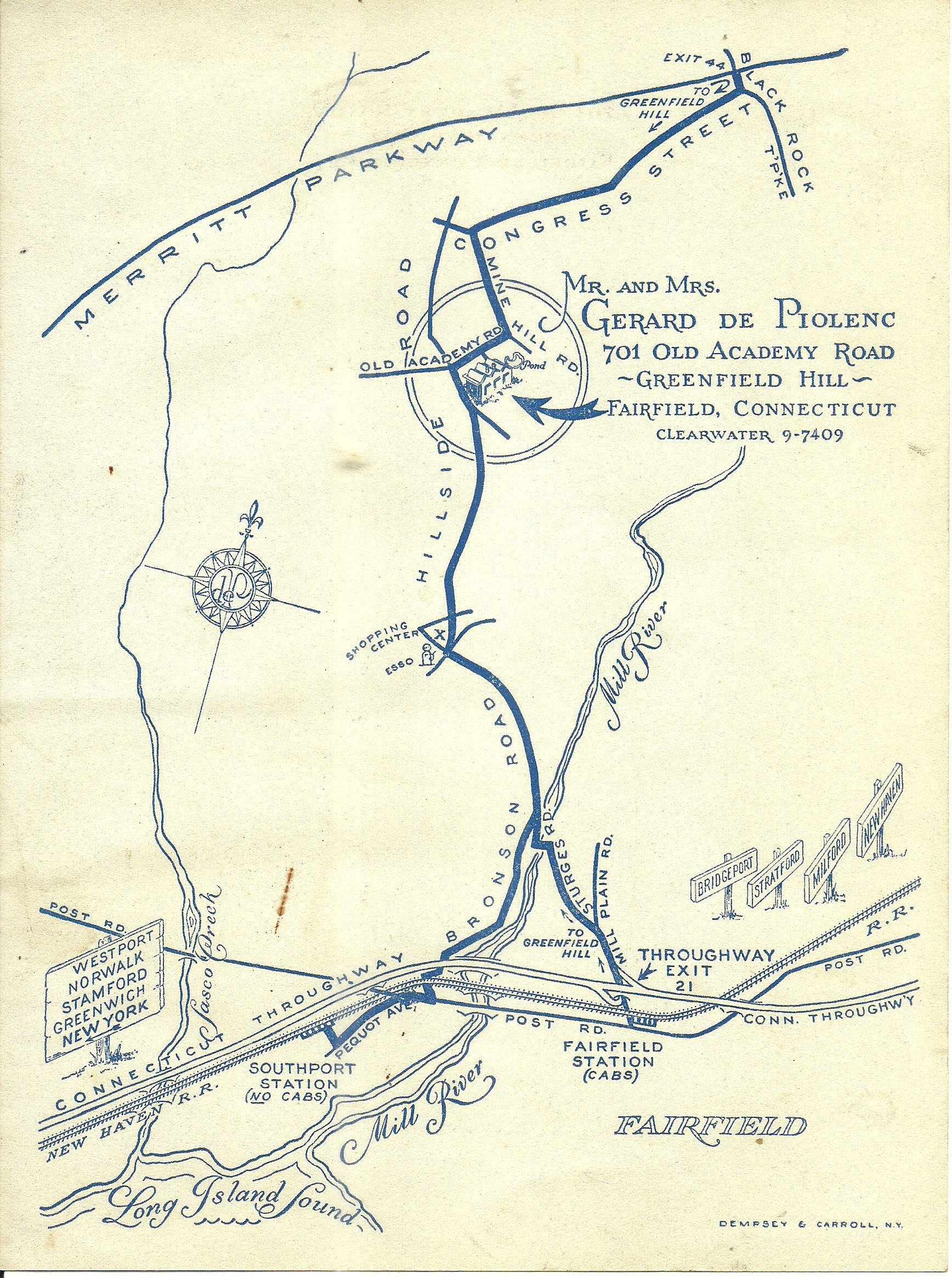
Born in the American midwest to a French-born (naturalized American) father and an American mother. Moved to the east coast when I was two years old. Moved into a house designed for us by John Johansen in 1959 or 1960. Lived there until the house had to be sold in the early 1970s.
Schooling and Education
Private schools through Grade 3, then public through Grade 6. Swiss boarding schools for the next three years, then back to the States. Phillips Academy (Andover), class of 1972. Earned academic credit by examination and by attending night classes when in the US Army. After discharge, matriculated at the University of California San Diego (Mechanical Engineering, minors in Mathematics and Linguistics). Exhausted my veteran’s educational benefits before completing the too-lengthy academic program.
Took and passed the Engineer-in-Training examination in an attempt to get engineering work without a bachelor’s degree - foiled by the requirement to have six years of documented work in the field BEFORE taking the Professional Engineer exam in any particular field.
Employment
One year as a civil engineering intern in France after graduation from PA.
Odd jobs, then enlistment in the US Army. Intelligence training and assignments in the US, followed by Counterintelligence Agent training, the Intermediate German course and assignment to Belgium and Germany, where I made good use of my native-quality French, decent German skills, and got rare exposure to the Russian language, which I had studied for two years at PA. Did some part-time translation work while in the military, following up on work that I completed for my father when he became ill.
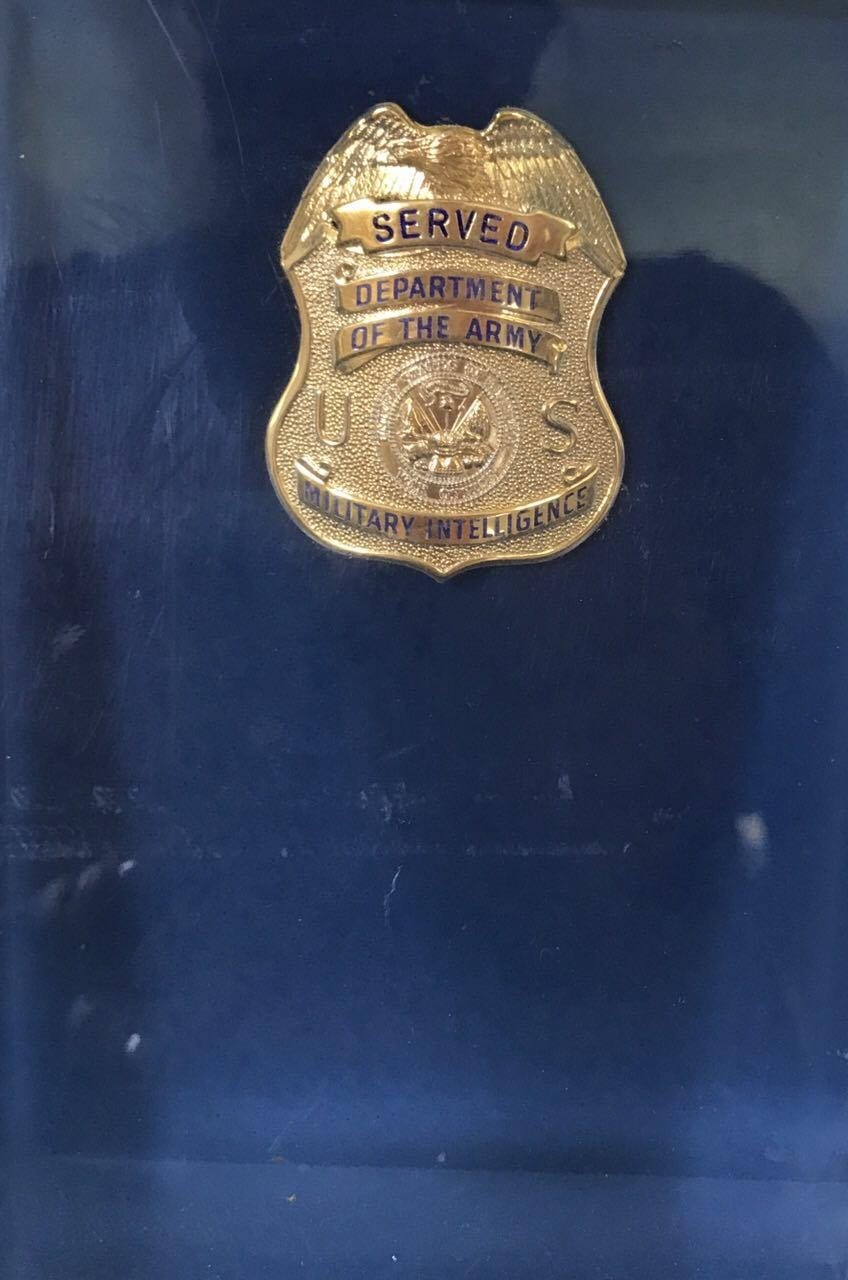
While attending UCSD after leaving the Army, did translation work for agencies on the West Coast and worked other part-time jobs. Entered the active U.S. Army Reserve, both to make extra money and to stay in touch with intelligence work. After exhausting my veteran’s benefits, began working for a DoD and DoE contractor in its security office. Later, after the interruption caused by the Gulf War, worked as a freelance field editor in the area of industrial gas turbines and co-generation.
After moving to the Philippines, I returned to translation work, which I had practiced part-time in the Army and earlier. My specialties are patents and other technical works, though in fact I’ve translated just about anything over the years.
Interests
Developed my early interest in aviation in Switzerland, where I learned to build flying models of balsa wood. Engines were expensive, so most of my flying was with gliders, which made me particularly interested in efficient flying machines in general. Took flying lessons while in the active Army and stopped just short of solo to take up another expensive hobby - skydiving. After moving to the Philippines, I got interested in ground effect machines - air cushion and wing-in-ground-effect vehicles.
Later, during my enlistment in the active Army, I read John McPhee’s The Deltoid Pumpkin Seed, which stimulated my interest in lighter than air (LTA) flight - balloons and airships - and inflatable structures. That merged with my interest in parachutes, since they are structures inflated by ram air. After leaving active duty and moving to southern California I joined the Association of Balloon and Airship Constructors and began a forty-year association with its founder, George E. Wright Jr. Later I contributed to, still later edited and even later published the Association’s quarterly journal Aerostation.
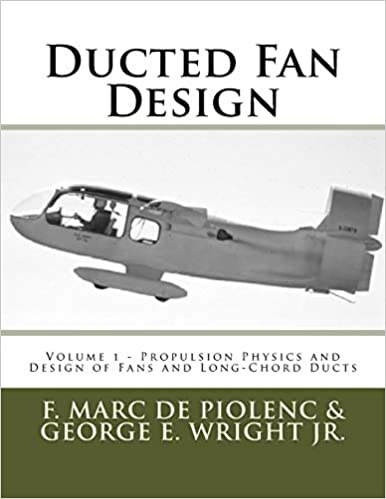
LTA became the means by which I became interested in ducted propulsors. George’s and my work Ducted Fan Design, Volume 1 first appeared in 1997. It has been revised twice since, and needs further revision to take big changes in ducted fan applications into account.
I also helped found an organization called TWITT - The Wing Is The Thing - dedicated to tailless and all-wing airplanes, and I edited its newletter until issue twenty-something. That organization, alas, is now dormant.
I became an explicit libertarian at the age of 15, when a speaker at PA introduced us to the term and defined it. I wish I could remember his name, because he changed my thinking from a vague notion that things were not as they should be to being focused accurately on what was wrong and why, and how to fix it. My initial orientation was in favor of limited government, but over the decades since I have continued to lose any belief in the ability of government to do good, and the ability of citizens to limit its power. In effect, I have become an anarchist, although that term brings up an image of a short swarthy fellow with a spherical black-powder bomb, which doesn’t fit me very well. In fact, I have become an anti-revolutionary, based on the observation that disorder always favors the emergence of an authoritarian régime. Accordingly, my emphasis for some years has been on means for liberty-minded people to avoid interaction with government and be invisible to it, to the extent possible.
I’ve been interested in firearms since childhood, and one of the few drawbacks of my move to the Philippines was having to leave my guns behind. Other exotic and intricate mechanisms also interest me: cameras, typewriters and mechanical typesetting equipment, sewing and knitting machines, unusual engine configurations. I have a camera collection and a large file of documents regarding free-piston engines, for example.
Cryptography is another interest. I discovered in the unclassified library at Fort Huachuca a typescript of a translation by American cryptographer Helen F. Gaines of General Luigi Sacco’s Manual of Cryptography. Nearly fifty years later, I published it as an alternative to the generic Aegean Park Press translation.
Family
I was divorced from my first wife, whom I had met in the Army, in the early 1980s. In 1996, I married my second (and final) wife and began organizing my affairs to move to the Philippines to live with her. I moved here permanently in 1998. I adopted her son, and we have had two daughters together.
Projects
I’ve noted that disorder leads to the creation of strong-man régimes. Accordingly, my emphasis for some years has been on means for liberty-minded people to avoid interaction with government and be invisible to it, to the extent possible.
This includes mobility while exercising the right of locomotion (i.e. without obtaining a license from government) - I recently published Personal Mobility in an age of restrictions, through Amazon.
Secure communication these days relies primarily on the encryption of digital communications and their disguise through steganography, but I rely on the greater expertise of others for that. I do retain an interest in microdots and am working on a manual about those. Spread-spectrum radio communication also interests me.
Producing useful goods that the government wishes to deny us is important, and I am working on means for producing those goods on a small scale. Therapeutic drugs and supplements are an emphasis, as I am quite sure that our numbers are to be reduced by limiting access to those while stuffing us with statins and “vaccines.” But so too are labor-saving materials like effective cleaners, and comfort items like refrigerants, all of which are being put out of our reach.
Earning a livelihood independently of the corporate goldfish bowl system is vital, and I am always on the lookout for ways that I and others can do it.
Recently I have noticed that technical reports prepared under government auspices have gradually been disappearing from public databases, and so are becoming unavailable. There doesn’t seem to be any system for this, as the topics that I am aware of are completely harmless - homing pigeons, for example. Another project, then, is trying to document the missing material and to obtain copies whenever possible, reprinting them if they appear useful.
No posts
Comments
Nothing yet. Say the first thing.
Sign in to join the conversation.