
I read a lot, roughly a book a week, but I tend to avoid anything in the self help universe. Usually they are full of platitudes and their core insights could be contained in an article. But there are a few that have genuinely changed my life, and it’s worth giving them credit:
There have been two massive paradigm shifts in my emotional and mental landscape throughout my life. The first, when I was fourteen and first went to therapy. I was still relatively high functioning, but a depressed and angry little teen listening to angsty 80s college rock too much (see below). I knew that I could feel better than I did and was interested in therapy, so my parents let me go.
Leaving my first session felt like an actual weight off my shoulders; sometimes cliches are true and CBT is a powerful drug! Therapy gave me a head start on teenage self-actualization, as I had a dedicated hour each week to pin down what I valued, what made me angry, and how to live my life in a way that maximized the first and minimized the second.
Besides the anger, which largely dissipated after therapy, I was a pretty dry and rational kid who identified as not being particularly emotional. But around the age of 19 I was rocked by a wave of emotional volatility that I had never known before. I still don’t know what to make of it, but suddenly I had a lot of new stuff kicking around my brain that I didn’t know how to deal with.
The solution came from an odd place that I’m almost embarrassed to admit: Rick Rubin on Tim Ferriss’s podcast. The music producer recommended a “meditation starter pack” of Jon Kabat-Zinn’s Wherever You Go, There You Are and Stephen Mitchell’s Tao Te Ching translation.
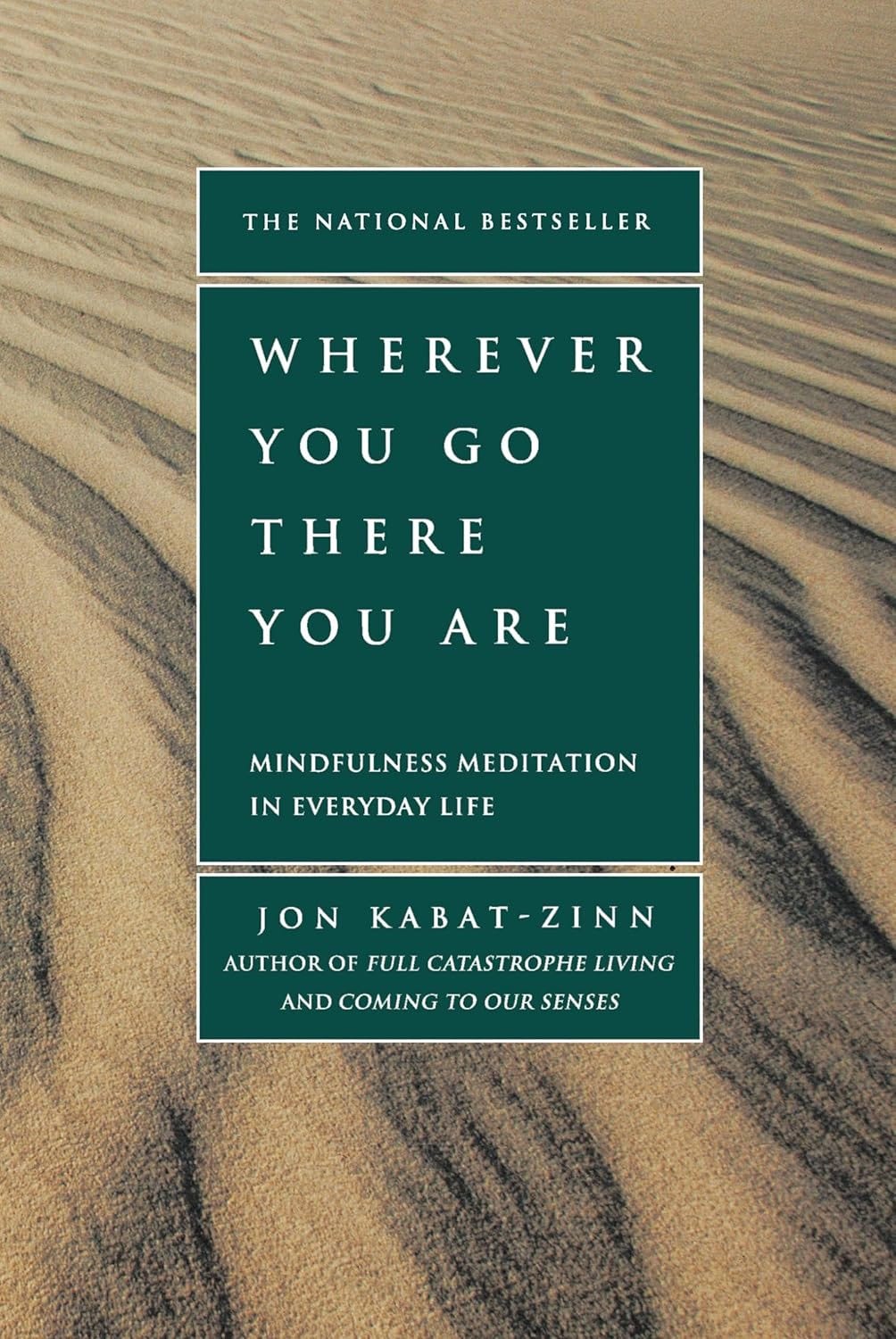
Like many people, I had heard of meditation before and given it a try. But it didn’t stick after I ran into some common obstacles. Principally, I was constantly frustrated that I “wasn’t doing it right” in the face of constant mind-wandering.
But I was desperate, Rick was there, and I craved a practice that offered more emotional equanimity.
Kabat-Zinn’s book is eminently practicable. He jumps between philosophizing and practical “Try This” tips, all in plain language that largely eschews the woo-woo universe that would have put me off. His unique background, Zen practitioner-turned-UMass-meditation-researcher, allows him to straddle these different worlds and tones effectively.
One of his very first tips, which was key for me, was to not talk about your meditation habit to anyone as you start out. A lot of the distractions for me were ultimately downstream of “being someone who meditates,” and whether my experience, my successes or failures in a given session, justified that label.
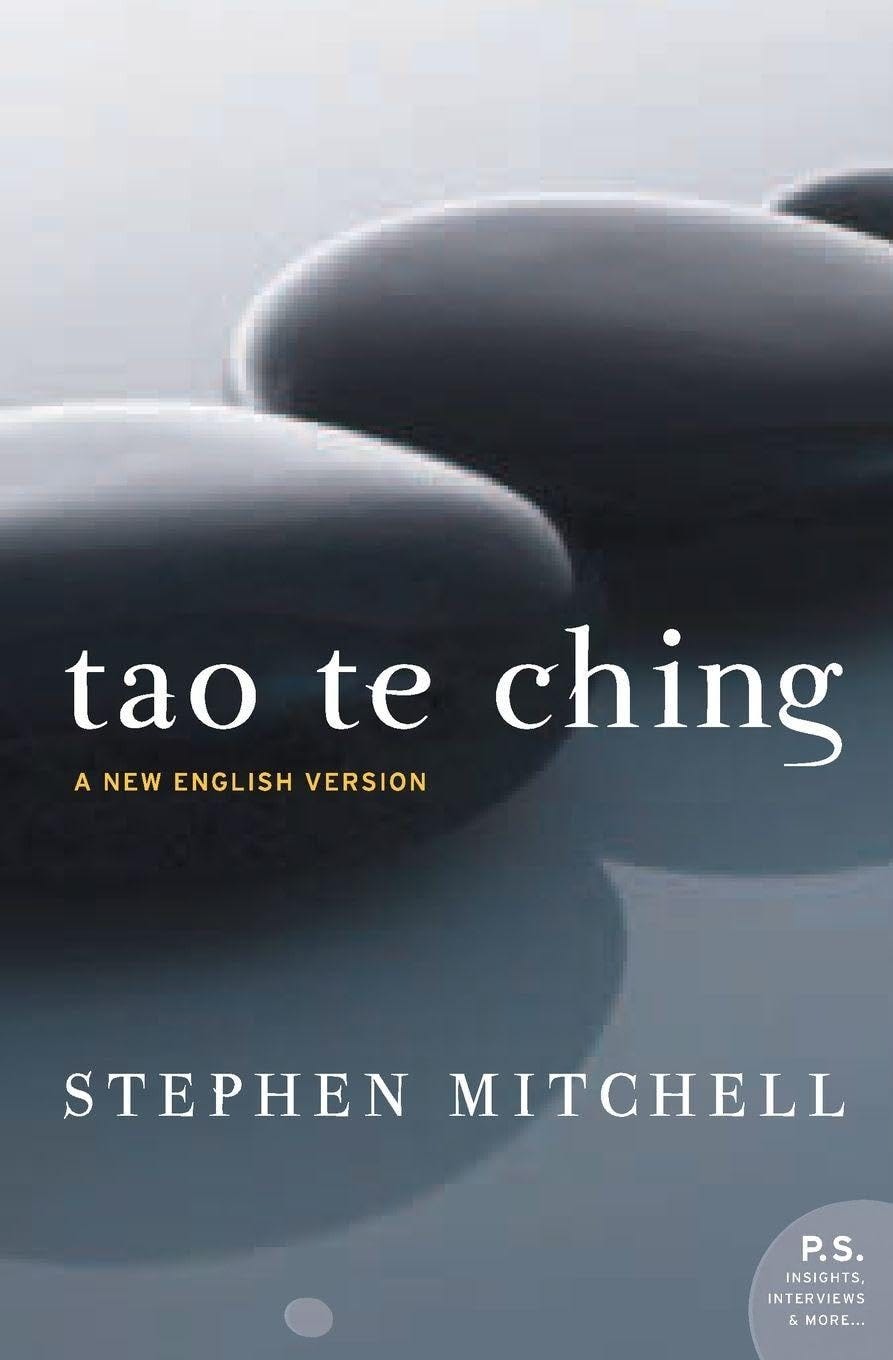
But what of the Tao? Rubin was right about the religious text; it’s a surprisingly relevant guide to processing many of the early meditation experiences and overcoming common pitfalls. The big lightbulb for me was around the way that carving out spaces for non-doing gave meaning to doing. Here’s Stephen Mitchell’s rendering of the 11th chapter (see it and other translations at this site):
We join spokes together in a wheel,
but it is the center hole
that makes the wagon move.
We shape clay into a pot,
but it is the emptiness inside
that holds whatever we want.
We hammer wood for a house,
but it is the inner space
that makes it livable.
We work with being,
but non-being is what we use.
Mitchell’s translation is on the freer end, more international-spiritualist-new-age in tone, which isn’t surprising for those who know his other work. These days I’m more partial to two other translations by Gia-Fu Feng/Jane English and Ursula Le Guin.
But Mitchell provided the accessible on-ramp that I needed. Once meditation became a private space of non-doing in my life, it all clicked. It didn’t make me into a perfect monk; Dan Harris’s book 10% Happier is a more realistic description of the benefits of meditation practice. At a volatile time, meditation did much more than 10% for me. It gave me space to observe and understand the new feelings that passed like storms through my brain.
It’s been over a decade now of meditation practice, long enough that I am comfortable breaking Kabat-Zinn’s initial rule. I’ve recommended his book (and Mitchell’s Tao) to many friends, as it’s one of the books that has most changed my life.
For a while I managed a mental health program for undocumented immigrants. It was a great job, and as the founding program manager, I had to do a little bit of everything. One of these crazy operational jobs where you’re always running around with your hair on fire. One day I’d come into the office thinking I had cleared my schedule to “work smarter” on some deeper, intractable problem. Then the fridge would break, or a therapist would call in sick, and I’d need to help call all the clients and reschedule them.
It was very hard to find poise in that kind of job, and it was also the kind of job where you usually end the week feeling like you “got nothing done” despite putting out many, many fires. It was affirming when, after I left, backfilling my job took 2-3 people.
Over time, I grew into this role and learned to prioritize all these different tasks on the fly. In the words of one colleague, I learned which of the balls I was juggling were rubber and could afford to be dropped and bounce on the floor, and which were glass and could not afford to be dropped. It’s not fun to purposefully let certain balls drop.
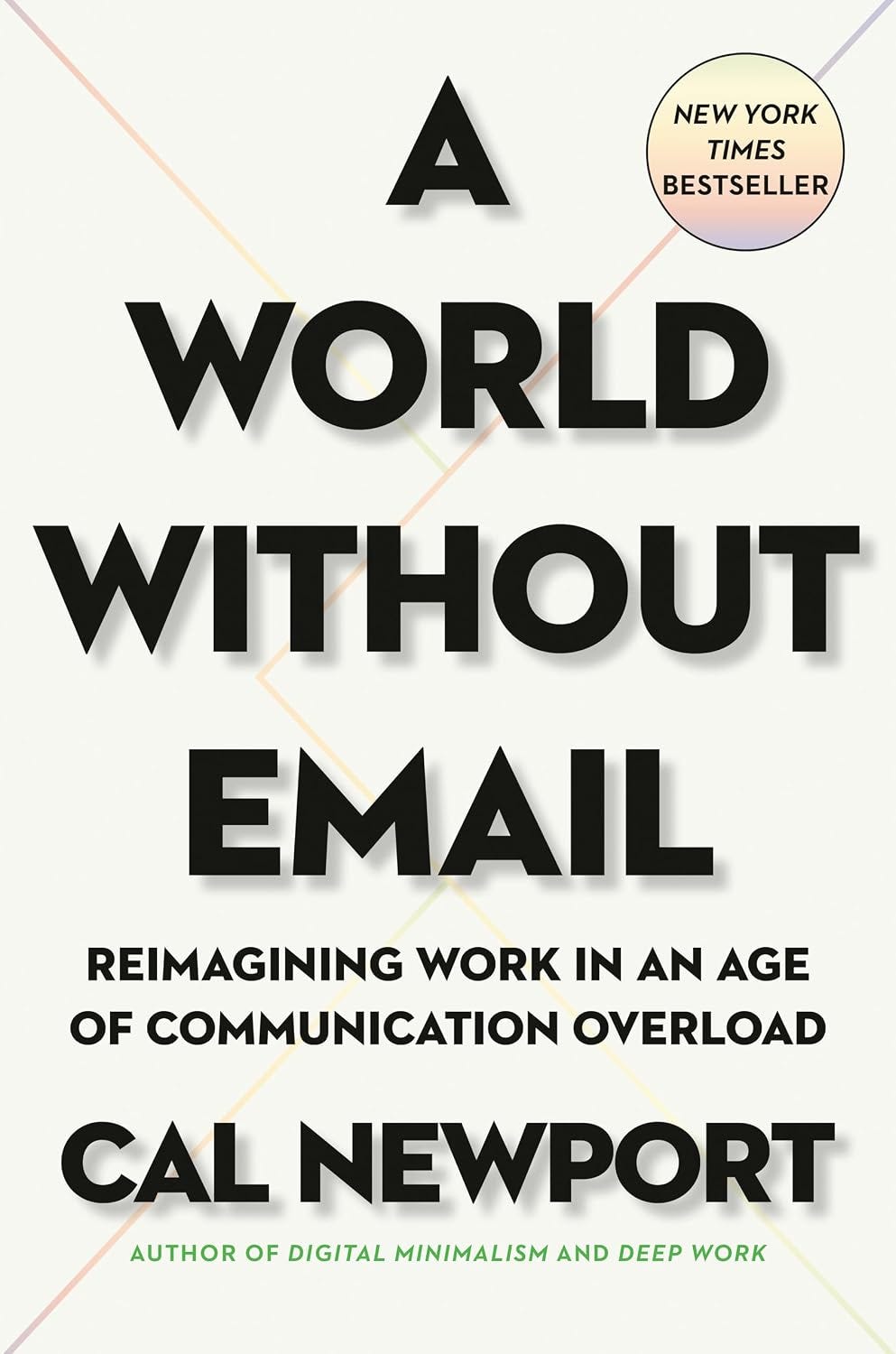
But one of the greatest supports that I wish I had read earlier in my time on that job was Cal Newport’s A World Without Email. I wrote a bit about the book here:
Many are familiar with Cal Newport’s work from his more famous Deep Work. The gist is that humans err by trying to multi-task too often and by not carving out enough space to think deeply about hard problems. The psychological studies that he cites show that there are huge cognitive costs to switching tasks all the time and that we don’t do our best thinking when we are constantly pinging between different styles and domains of work.
For what it’s worth, I think that Newport does underrate the extent to which some high-performing managers do really learn to switch context effectively and frequently. I have personally worked with people like this and learned to do it myself with time.
But one thing that he is right about is that it’s exhausting, and that’s part of why I would end every week in that job feeling like I was exhausted despite “not doing anything.”
So while some jobs still require you to switch context a lot, it’s still worth minimizing unnecessary cognitive burden. One good way to do that is to use email less.
The problem is that email is almost perfectly structured to get worse work out of you. The kind of problem you’re solving and all the context around it can switch heavily between every email and it’s easy to start addressing a task, then pause to go open another email, then return to the first email, then get interrupted by yet another new email. You might draw on five different manners of thinking across five emails in 2 minutes.
A simple switch, treating email as a discrete task where a lot of what I’m doing is sorting work into discrete buckets to work on with greater focus later, was absolutely tremendous. I’m not saying I moved 100% away from answering emails quickly, especially if something was actually urgent or required. But you soon learn that the most urgent things have a way of finding you, even if you’re not checking your inbox every 20 seconds.
Plus funneling work away from your inbox into some sort of productivity software (I use Trello, but really any of the major ones would work fine) allows you to actually see your to-do list and wrap your head around it. At the end of each week, I’d actually have a much stronger sense of what I had accomplished. This helped me end the week feeling positive, instead of frustrated by how my attention had been pulled in unexpected directions by the fires of the day.
Again, I have friends who have been frustrated by the sort of extreme way Cal Newport frames his manner of work. I still context switch a lot, and I do still (unfortunately) have an email, but I think many people would benefit much more than they think from moving at the margin more in the Cal Newport direction.
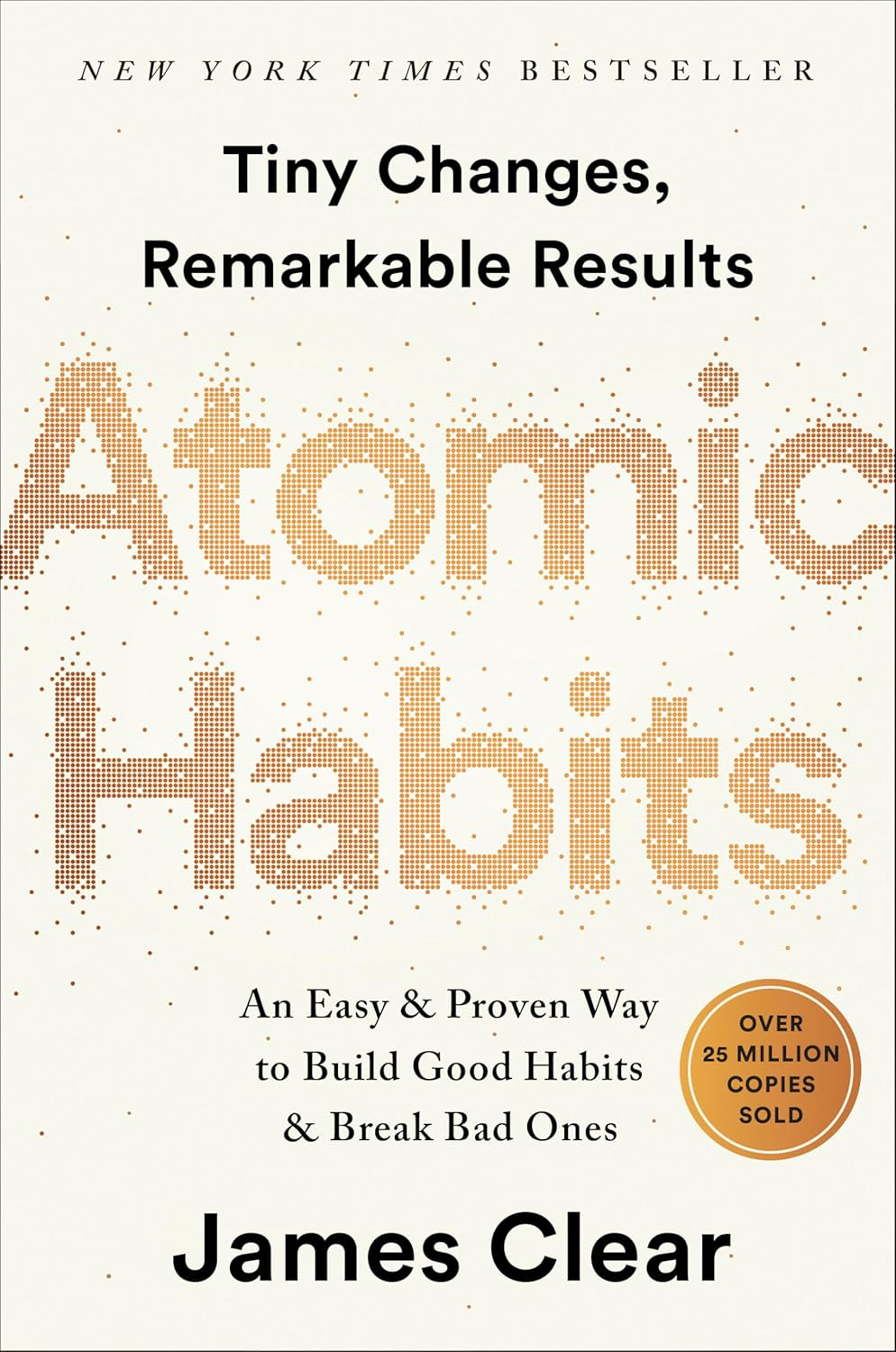
This is a commonly-recommended book for a reason. I’ll admit that I started out on the high discipline end of the spectrum, but this was full of practical tips that I think would be helpful for anybody working on discipline and habit formation.
The big part for me was the “atomic” part. At one point, Clear even suggests “downscaling your habits until they can be done in two minutes or less.” To tie into the first books, at one point during the pandemic I was struggling with consistency in my meditation practice. I started from scratch, meditating for just two minutes a day.
Every week I added one minute until I was eventually up to 30 minutes a day. Even in previous eras of 20-30 minutes daily meditation, I’d miss some weekend days, so the Atomic Habits process led to the most consistent and quality meditation practice of my life.
I also followed his advice and downloaded a habit tracker app (called, shocker, Habit) that includes my active streak. It does become a point of pride and personal identity at a certain point when you’ve got hundreds of days in a row of doing something that you know you value. It makes it that much harder to make excuses when you don’t feel like doing it. Which even came up today, as I’m writing this very sentence after a long day of work.
Where I’ve ended up with all this is that I have four daily habits that I do:
Write for at least 10 minutes.
Meditate for at least 10 minutes.
Read in Spanish for at least 10 minutes.
Stretch my neck for 1-2 minutes.
The top three I have an active streak of ~850 days, the last one was surprisingly harder to make stick (perhaps it was too atomic and thus easy to forget) and I’m only at ~580.
I’ll admit there are some exceptions. If I’m laid up with a stomach virus, I’ll let myself off the hook and still count the days as part of my streak. The same applies when I’m on vacation, but I do still fit these in on many travel days. Feel free to make fun of me and call me undisciplined, but I think they’re reasonable accommodations.
At a deeper level, this whole process of picking and tracking these daily habits has been a great way to stay tuned in to my values. As you can probably guess from that list (and from reading earlier in this post), it’s important for me to meditate and stay mindful. It’s important for me to write as a way to process what I learn and sharpen my thinking. It’s important for me to keep up my Spanish fluency, as I no longer have a job where I get to speak Spanish every day and reading every day is a good way to do that.
But the daily nature of these habits also unlocks something else: when you actually do something every day, it adds up!
I read almost all of Vargas Llosa’s Conversation in the Cathedral, a sprawling modernist epic about Peruvian dictatorship. Now, it took me more than a year, a lot of the book went over my head, and eventually I did lose steam on the book and decide that I wanted a bit more pleasure in my daily habit.
But if I didn’t just plug away at it in short increments, I would have read 0% of the book. As is, I pushed myself and definitely improved my language skills. Reading stuff above your level and swimming in the deep end is also how I improved my English reading comprehension. If it was up to me to sit down and read that book in Spanish for an hour at a time, I just never would do it.
The cumulative impact is also evident with writing. At this point, I’m coming up on two years of weekly posts of around 1000-2000 words. I made a crude “Substack Wrapped” style review earlier this year with Claude Code and found that I had published the equivalent of over 500 pages of writing on this blog.
I truly don’t think I would have accomplished that without the discipline of daily practice. So cheers to Clear and another 850 days of writing!
No posts
Comments
Nothing yet. Say the first thing.
Sign in to join the conversation.