
I first became aware of issues of upzoning and YIMBYism because I grew up in Seattle. The area became so unaffordable that it was a big reason I ended up in the Midwest.
The story, in short, is that Seattle made it illegal to build enough housing to keep up with demand, so it got too expensive. YIMBYs say: legalize housing and it’ll probably get a lot cheaper.
I continue to champion YIMBY ideas. But I’ve now found myself in a very different housing environment. I live in St. Louis, a textbook example of Rust Belt decline. People are familiar with Detroit’s story; St. Louis is probably the closest comparison in both its highs and its lows.
It was the 4th largest US city in 1900-1910, and in 1950 it was still the 8th largest. While the metro area still has around three million people, the core city has declined to under 300,000. It’s a classic example of what is called the “hollow urban core,” a common phenomenon around the Rust Belt.
The question is: do YIMBY reforms matter in a place like St. Louis? Sure, you can legalize backyard ADUs in St. Louis, but who cares if none are going to get built? Should reforms like this be a priority?
The answer, in short, is yes.
I’ll explore a recent paper and an infuriating case in St. Louis that illuminates why it remains hard to build, even in cities with lower demand for housing. But before that, some quick context on America’s different housing crises.
As Jenny Schuetz says, there are generally two housing affordability crises in the country, usually in different areas.
The first: there is a small set of “superstar cities” that are extremely expensive, but make it illegal to build dense housing. The YIMBY (Yes In My Backyard) movement is broadly right: just make it legal to build more housing in those areas and a large portion of the affordability problem would be solved.
The second housing crisis doesn’t get covered as much. Many people are just too poor to afford housing wherever they live. Maybe the monthly rent is only $200-300 (think rural Missouri), but the family still struggles to afford it. If you’re too poor to afford $200 rent, you need another solution, which is a combination of better job opportunities and housing subsidies.
Rents in a city like St. Louis are more than $300 a month, but they are still affordable in the grand scheme of things. In housing policy jargon, it is not supply constrained, it is demand constrained.
This is why I’ve been struggling over the years with the question of whether the supply-focused solutions of YIMBYism matter to cities that struggle with urban decline and low demand.
But it’s revealing that places like Detroit struggle with some of the same zoning problems and procedural burdens that cause issues in places like New York City or San Francisco, where existing residents are more ambivalent about growth.
Brian Connolly and Noah Kazis lay this out in their recent article, “Rezoning the Rust Belt.” I’ll take you through their findings. Then I’ll make those dynamics concrete with a local case study, the heartbreaking death of a near-perfect development in St. Louis.
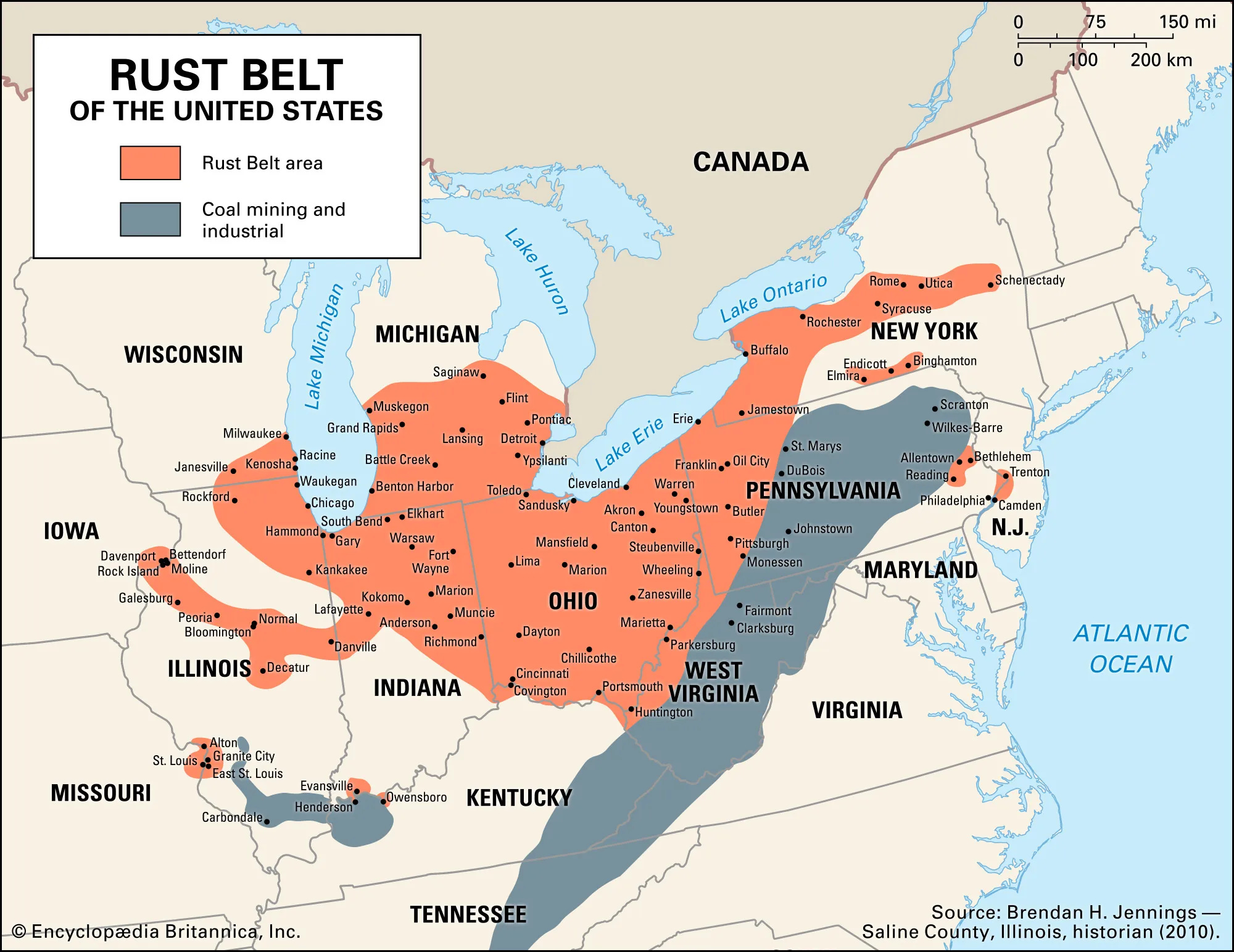
Connolly and Kazis focus on the Rust Belt, a network of largely Midwestern cities “that was long the country’s manufacturing, steelmaking, and coal-producing heartland but that underwent dramatic industrial decline that resulted in widespread unemployment, increased poverty, decay, and population loss” (according to Britannica). In particular, they spotlight Detroit.
In many of the supply-constrained metro areas, like San Francisco, the current NIMBY morass was actually a deliberate choice. The culmination of the deliberate “slow growth” movement, which I wrote about here:
In places like Detroit, the supply side issues aren’t as salient. There’s no growth backlash, largely because there isn’t enough growth to produce pain points. But where these cities struggle is in state capacity, their ability to have a smoothly functioning government.
This manifests in a few ways. First, out-of-date zoning codes and the complex workarounds they require.
St. Louis, where I live, hasn’t updated its zoning code in decades. What that means, in practice, is that often when you want to build something, it’s technically illegal and out of compliance.
Unlike in a place like San Francisco, everyone is generally amenable to things getting built anyway (see an unfortunate exception in the next section). But it does add another step to the process, which is that you need to go to the Board of Adjustment. Basically, you need someone to give you an official exception for not complying with the decades-old zoning code.
The Board of Adjustment is not actually meant to approve everything that gets built; it’s originally intended for edge cases like “should we let someone build a deck that’s a foot taller than the rules because they live on a weird-shaped hill.” It’s meant to handle a much smaller load of cases and thus quickly becomes a bottleneck, adding months of delay and costs to the building process.
The second problem is permitting. Building means navigating a mess of red tape, outdated technology, and understaffed city departments. One example from the paper: “In St. Louis, a by-right project was delayed by nine months simply because there was nobody to review the permits.”
Delays make it all more expensive, but the uncertainty is the worst part. Developers front money and carry costs (e.g., taxes, maintenance) for years before making any money via rent or a sale. A process that makes you pay all of that for 10 months, only to then veto the project, wrecks the math:
Procedural uncertainty, therefore, requires developers to either risk their own money or find financing partners that demand high returns to address this heightened risk. At best, such uncertainty increases projects’ costs and reduces their viability; at worst, prospective developers simply exit the market.
As the paper’s authors say, “in principle, Rust Belt cities want to say ‘yes,’” to development. But the complicated processes and dysfunction resemble somewhere like California, with much more resistance to development.
So why do these issues persist?
Fundamentally, it’s part of the doom loop of decline. As residents leave, you have less tax revenue. This gives you less resources and staff to solve your problems. Over time, parts of your government, like permitting or the zoning code, break and become outdated. Then you have a less functional government, unable to do the basics, and more people want to leave.
There’s also a particularly deep distrust across racial lines, rooted in decades of racist policymaking and the legacy of urban renewal.
Another tradeoff is particularly acute in Rust Belt cities. Part of St. Louis’s charm is its beautiful built environment, full of warm brick buildings and well-maintained parks. People I know who visit from cities that bulldozed much more of their history in the name of progress are often jealous. There is a case to be made for historic preservation rules, but every extra rule you add increases the cost of development in a way that makes some projects non-viable.
I have one slightly more speculative point about why there isn’t more pressure to change this. Given how much of this system depends on exceptions and help from people in the political system (Aldermen, members of the Board of Adjustment, the Mayor at times), who wants to come out and antagonize them?
Plus, the biggest developers get what they want already via direct communication with political power brokers. Meanwhile, smaller developers can get crushed by this system and there’s an “invisible graveyard” of projects that never got off the ground.
All of this gave me flashbacks to a nightmarish local case.
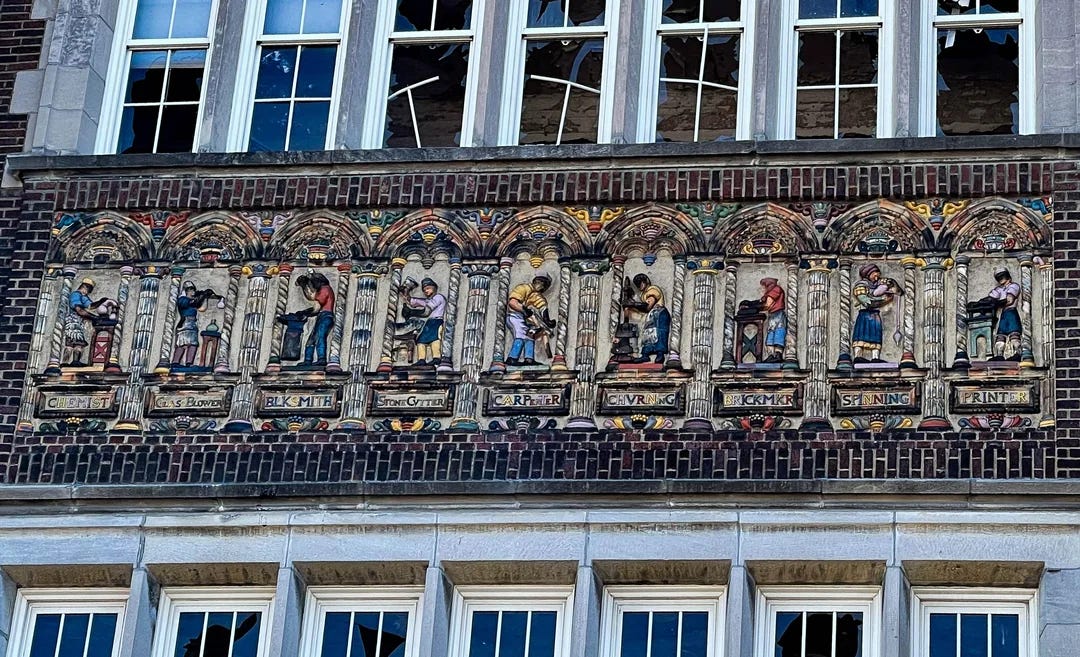
Because of population decline, St. Louis has closed some schools. Many of these are from the olden days when there was a sense that being in a beautiful building would lead to moral betterment and more learning.
St. Louis also has all sorts of people who instinctively resist both market rate development and tearing down old buildings. “What we need is more affordable housing” is a refrain heard here nearly as much as in New York City.
The Fanning School is one of these beautiful old school buildings. And, what do you know, someone wanted to redevelop it into 70% affordable housing while preserving the building! What a win!
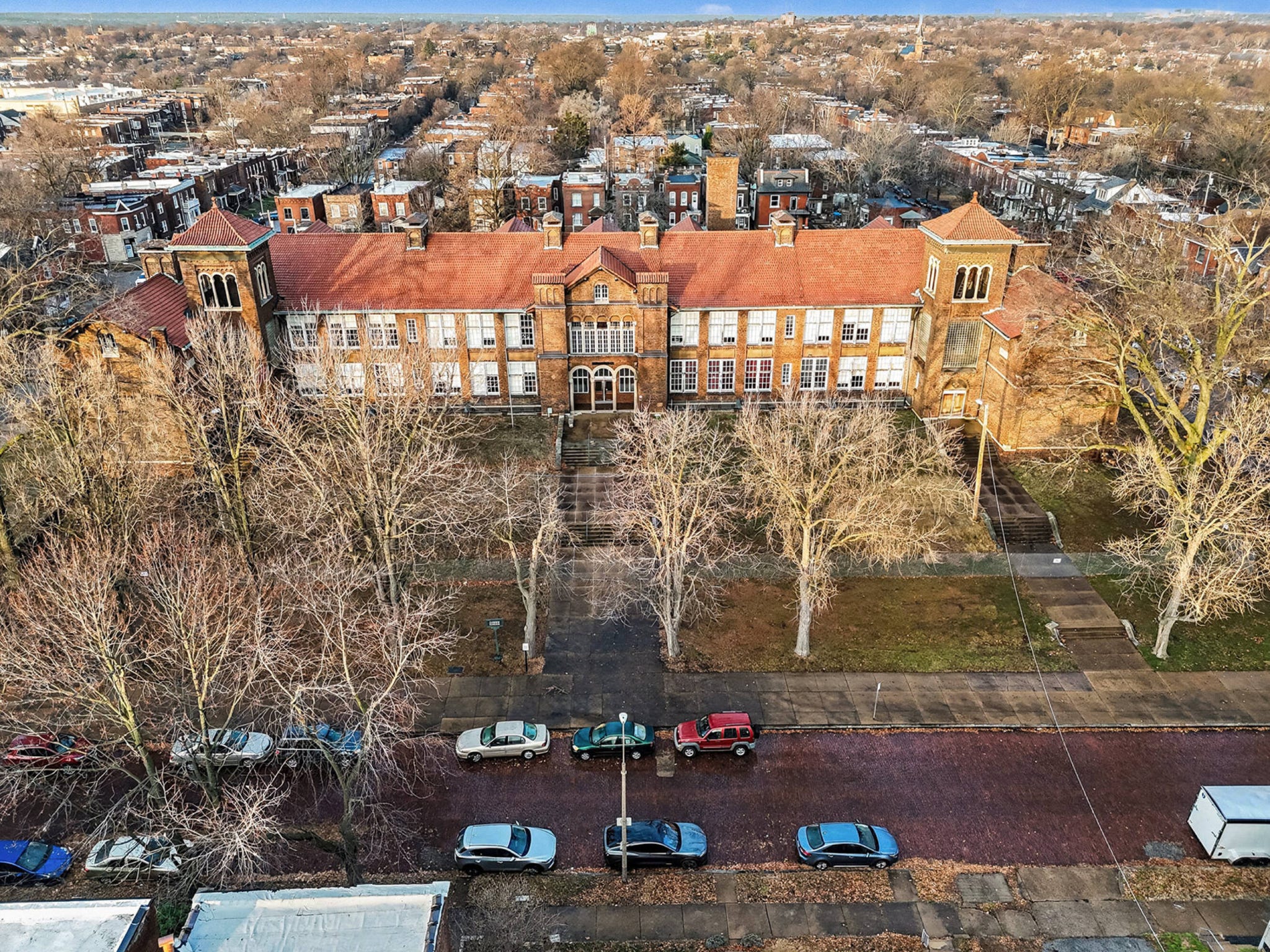
The Alderperson loved it. The developer did community engagement. Because he was building housing where there used to be a school, he needed one of those variances from the Board of Adjustment. He went through that process and was approved.
Not so fast! A handful of people sued the City, reversed the Board of Adjustment process, and forced the developer to hold even more community hearings.
The process took so long that his contract to purchase the building lapsed. The school district ghosted the developer, perhaps due to a lack of capacity and perhaps due to all the bad press coming from the project.
A friend lived across the street from this, went to all the community hearings, and was flabbergasted. Here we have an historic building, falling into disrepair. Someone wants to keep the historic building and build a lot of affordable housing. It’s two blocks from a grocery store, one block from the busiest bus line in the city.
And yet a combination of outdated zoning processes, slow administrative procedures, and a few NIMBY squeaky wheels sank the whole thing. The building continues to fall into greater disrepair, increasing the costs for anyone who might want to redevelop it in the future. My guess is that it eventually gets torn down.
The developer let me interview him shortly after this all went down. He works in multiple cities and says that while he’s had some positive experiences in St. Louis, fast-growing metro areas like Charlotte make everything much easier. Ness Sandoval, a Saint Louis University demographer sounding the alarm about St. Louis’s population decline and lack of housing growth, loves to talk about how much easier this work is in Denver and Austin.
What Fanning demonstrates is how thin the margins are in a weak market like St. Louis. For one, this is an affordable housing project rather than a market-rate one in large part because it doesn’t pencil out without tax incentives. Second, with such little upside, small frictions can have an outsized impact on a project like this.
It all shows how outdated processes can be just as pernicious as out-and-out slow-growth policy. Especially somewhere like St. Louis with such significant headwinds.
The Fanning debacle reminded me of one of the cases in Connolly and Kazis’s paper:
One sophisticated developer’s sole attempt to build mixed-income housing with ground-level retail in an outlying neighborhood—exactly what the city wants—took a year to win rezoning. “Never again,” concluded the developer: he’d stick to by-right projects downtown, or find opportunities outside the city.
This kind of situation is unacceptable. The way I’ve come to think of it is that a place like Seattle can afford to shoot itself in the foot. There’s so much economic growth that if they have a little less, everyone will live.
Places like St. Louis and Detroit simply don’t have that luxury. They are not choosing between growing slightly more or slightly less; they are choosing between death and life.
But there are reasons for hope!
We’re seeing more attention to these issues. Some of the people interviewed in Connolly and Kazis’s paper have been hard at work trying to modernize and streamline building permitting and update both our Strategic Land Use Plan (SLUP) and now our Zoning Upgrade Plan (ZOUP).
In fact, one year ago I asked the Fanning School developer what he wanted to see change. He described many of the projects that those city employees have been plugging away at.
Let’s end by giving credit to the people working, often thanklessly, in the civil service to create a city that works for its residents and can continue to grow and change.
No posts
Comments
Nothing yet. Say the first thing.
Sign in to join the conversation.