
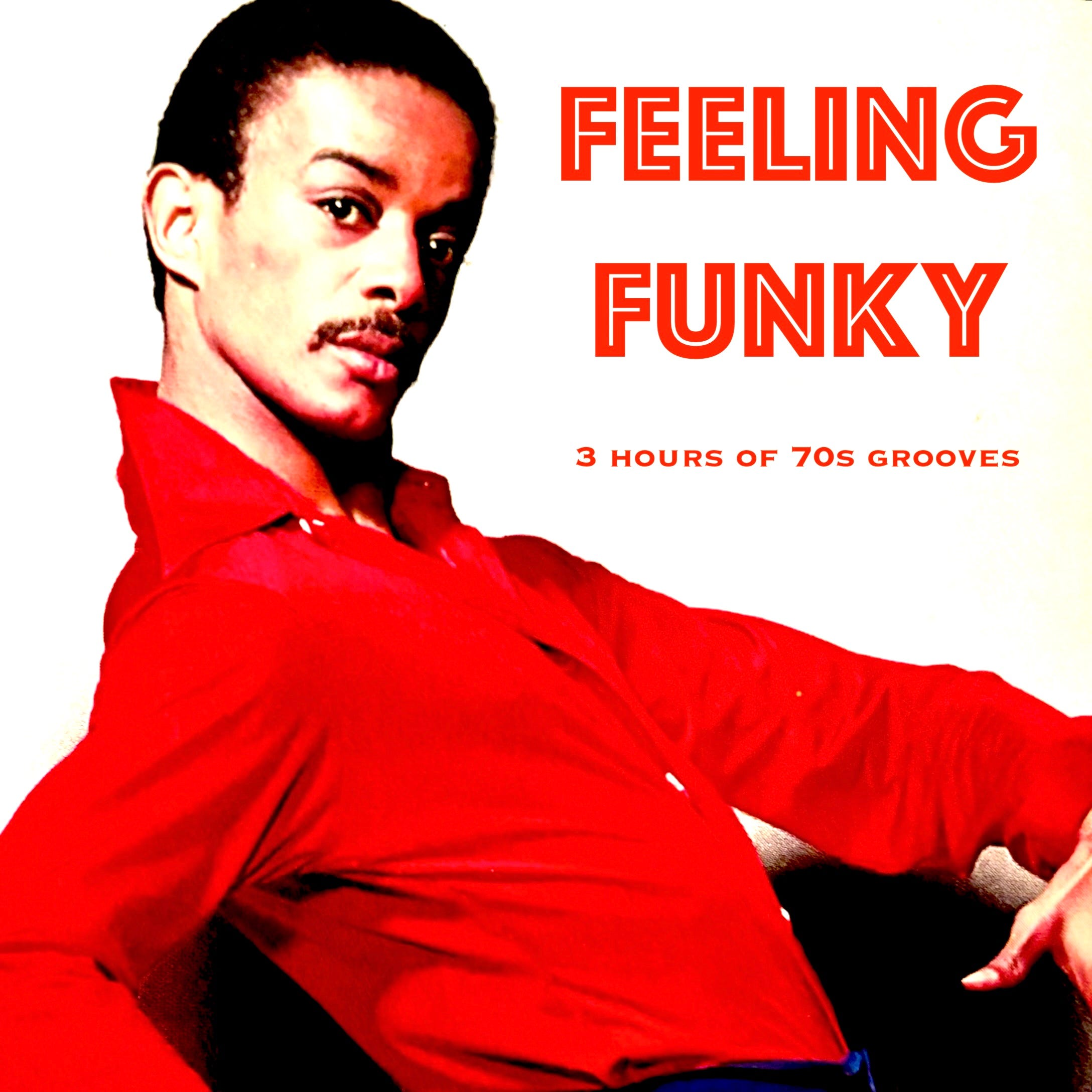
Exactly what it says! Featuring songs by Parliament, Isley Brothers, Herbie Hancock, James Brown, Isaac Hayes, Ohio Players, Stevie Wonder, Roy Ayers, Al Green, The Meters, plus a lot of fairly obscure material.
Thanks for reading Fluxblog! This post is public so please share it with someone who might enjoy it.

Madonna has spent much of the past 20 years artistically lost at sea, attempting to navigate a unique set of circumstances – trying to stay vital and relevant in the pop market in her 50s and 60s, attempting to live up to her own past successes, and competing against artists whose careers wouldn’t exist in the same way without her laying the groundwork. There’s very little precedent for what Madonna has been doing, and virtually none within the lane of pop music she pioneered.
And so it comes as a huge relief that Madonna is back on track, and figuring out how to be an elder pop icon on her own terms. It took some trial and error, but with Confessions II she’s found a way to balance out doling out the wisdom of age, looking back on what she’s lived through without cheap nostalgia, and finding fresh ways to be outrageous. And while she spent a lot of time in the wilderness trying to figure out new people to be in rather “hello fellow kids” ways, the answer to the problem was always obvious: She just had to be herself.
After all, who else has ever lived a life like Madonna? And when Madonna sings about her early career, her nostalgia is our history. “Danceteria” is an ode to the Manhattan club where she made her name, with all the lyrical emphasis placed on name-checking her friends (Martin Burgoyne, Haoui Montaug, Debi Mazar) and the various luminaries (Jean-Michel Basquiat, Keith Haring, David Byrne, The B-52’s) who frequented the space. It authentically situates her at the center of an exciting cultural moment, a convergence of some of the coolest and most creative people who’ve ever lived.
She’s giving us a little window into something very specific and exclusive and genuinely historically important. And from our perspective in the smart phone era, it’s something that feels exotic and alien. An organic community of artists and assorted stylish people living in the moment, feeling the music, only performing for one another? It’s an aspirational existence that doesn’t seem replicable today.
I think that last point is part of why she feels compelled to sing about it now. There are moments throughout Confessions II in which she’s subtly or overtly begging us all to get off our phones, go outside, to dance and be fully alive. She knows from experience how amazing it can be, and she’s not giving up hope on younger people who’ve never had a chance to experience it as she has. She’s trying to help us!
Buy it from Amazon.
Limerence is a relatively new word. It was coined by the psychologist Dorothy Tennov in 1979 to describe a state of intense obsessive infatuation, but it’s only come into common use over the past few years as it has entered the lexicon of mental health social media. Like any word or phrase that suddenly catches on, it’s very useful in communicating something broad yet specific. As in, anyone can have a crush – that’s sweet, that’s light, that can lead to something. But limerence is like an affliction, a destructive state of constant fantasizing that spikes stress and pushes you further from reality. Big difference!
The chorus of Earthgirl’s “Lovesick Lobotomy” goes “limerence, glimmering, lovesick lobotomy, cinnamon, how you taste on top of me…I’m sick, I’m sick!” The verses get deeper into a state of constant fixation, but I feel like that “how you taste on top of me” pushes the song away from a literal definition of limerence because this is obviously a song about an actual physical relationship. But who cares when the word sounds so good? It’s an incredibly singable word and it’s particularly satisfying in this wonderfully melodic vocal stack. The palette is very Charli XCX but without any of the aloofness. Even when this song gets robotic, the emotions sound highly combustible. Toss a match at this song and it erupts into a fireball.
Buy it from Amazon.
There’s no proper chorus in “Light Night Mountains All That,” but there is a hooky refrain: “You didn’t care, you didn’t care, you didn’t care.” It’s sung with increasing frustration as Julie Steiner attempts to relate the details of some sort of wilderness vision quest, but the person she’s telling is visibly bored. And like, what’s the difference between this and someone describing a dream they had? Not a lot, besides the urgent momentum of the music giving you the sense that Steiner’s character may have actually experienced something quite profound and inexplicable out in the woods. And maybe it’s terrifying?
Buy it from Bandcamp.
🧛🏻♂️ Molly Mary O’Brien has decreed that the instrumental version of Tame Impala and Jennie’s mega-hit “Dracula” is the Song of the Summer. She makes a great case for it, too!
🥤The Atlantic’s Spencer Kornhaber is the latest critic to weigh in on Lizzo flopping out, and I recommend skimming through the backstory to get to the good stuff at the end. Spencer was really cooking here:
This era of the internet is becoming stale, and the trajectory it set culture upon is reaching a terminal point. After years of explosive expansion, U.S. growth for Spotify and TikTok has shown signs of slowing, likely because of market saturation. Gatekeepers and institutional kingmakers have been so steadily undermined that they might as well not exist. The revolution has been won—the audience is in charge. And what the audience wants to do, at mass scale, is scroll.
No posts
Comments
Nothing yet. Say the first thing.
Sign in to join the conversation.