
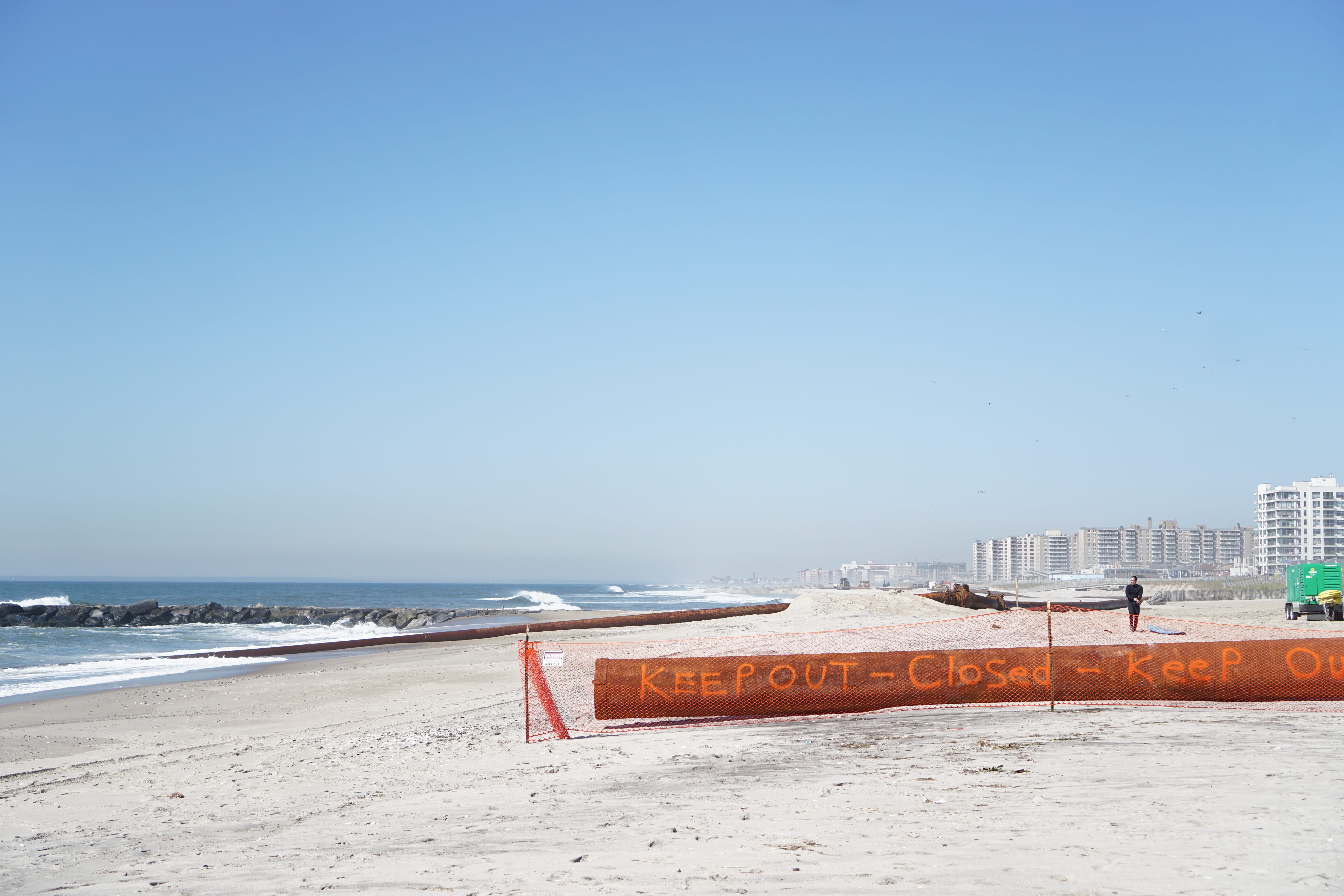
It takes a lot to keep a beach destination up and running. In much of the world and in the US, where 65 percent of American travelers planned to visit a coast this summer, the beaches we think of as a consistent part of nature are actually kept in place, replaced, constructed in the first place, and otherwise protected by human interventions, often at substantial cost borne largely by the federal government.
Take New Jersey: The 56 million travelers visiting Jersey Shore counties every year benefit from nearly $1 billion that has been spent replenishing beaches there over the past 10 years. After Hurricane Sandy, the state received $4.2 billion in grants from the U.S. Department of Housing and Urban Development for recovery and rebuilding, $1.7 billion from FEMA for infrastructure repairs, $224 million from the Federal Highway Administration to repair damaged roads, and so on. New Jersey receives funding from the Environmental Protection Agency to monitor and improve water quality at its beaches. Last year, it received a $72.5 million grant to improve its beach’s climate change resilience. The state, like others, relies on vast amounts of data from the National Oceanic and Atmospheric Administration (NOAA) to understand and mitigate emerging threats from climate change and to predict weather events.
Without government interventions, quite simply, the beaches of the Jersey Shore as we know it would no longer exist. Ditto many of our most loved vacation destinations.
In the U.S., the federal government has historically served as a reliable guardian of beaches and shorelines, but that’s changing. Cuts to several key government agencies and programs, plus radical changes to their mandates, are making it harder to understand the risks to any particular shoreline, harder to prepare to mitigate those risks, and nearly impossible to be nimble in our response when inevitable catastrophes do hit. The Trump administration’s animosity toward environmental protection and the very concept of climate change is producing circumstances in which beach communities have to fend for themselves without the resources to do so.
As the current summer travel season wraps up, let’s take a look at what might happen to the next one.
Comments
Nothing yet. Say the first thing.
Sign in to join the conversation.