
Some little girls collect dolls. Some collect stickers. I collected Nigella books.
It started with How To Be A Domestic Goddess, a book that offered a world of grown-up glamour, obscene quantities of sugar, and approximately 132 justifications to use every bowl and utensil in the kitchen, as was my five year old wont. The birthday brownies, cut into small squares, stacked on top of one another, and studded with candles, were a dependable favourite for many years. So much so that I can still recall the exact stipulated quantities of each ingredient.
From there, my collection grew. Importantly, each new addition to my collection was not in fact new, but sourced from a charity shop. That was part of the fun: nipping into the local Oxfam, hoping to procure a new-to-me title as a result of someone moving house, slimming down their own collection, or adhering to a strict one-in one-out cookbook policy; then turning to the most splattered, well-thumbed recipes as a sure sign of recommendation and my starting point for that particular title.
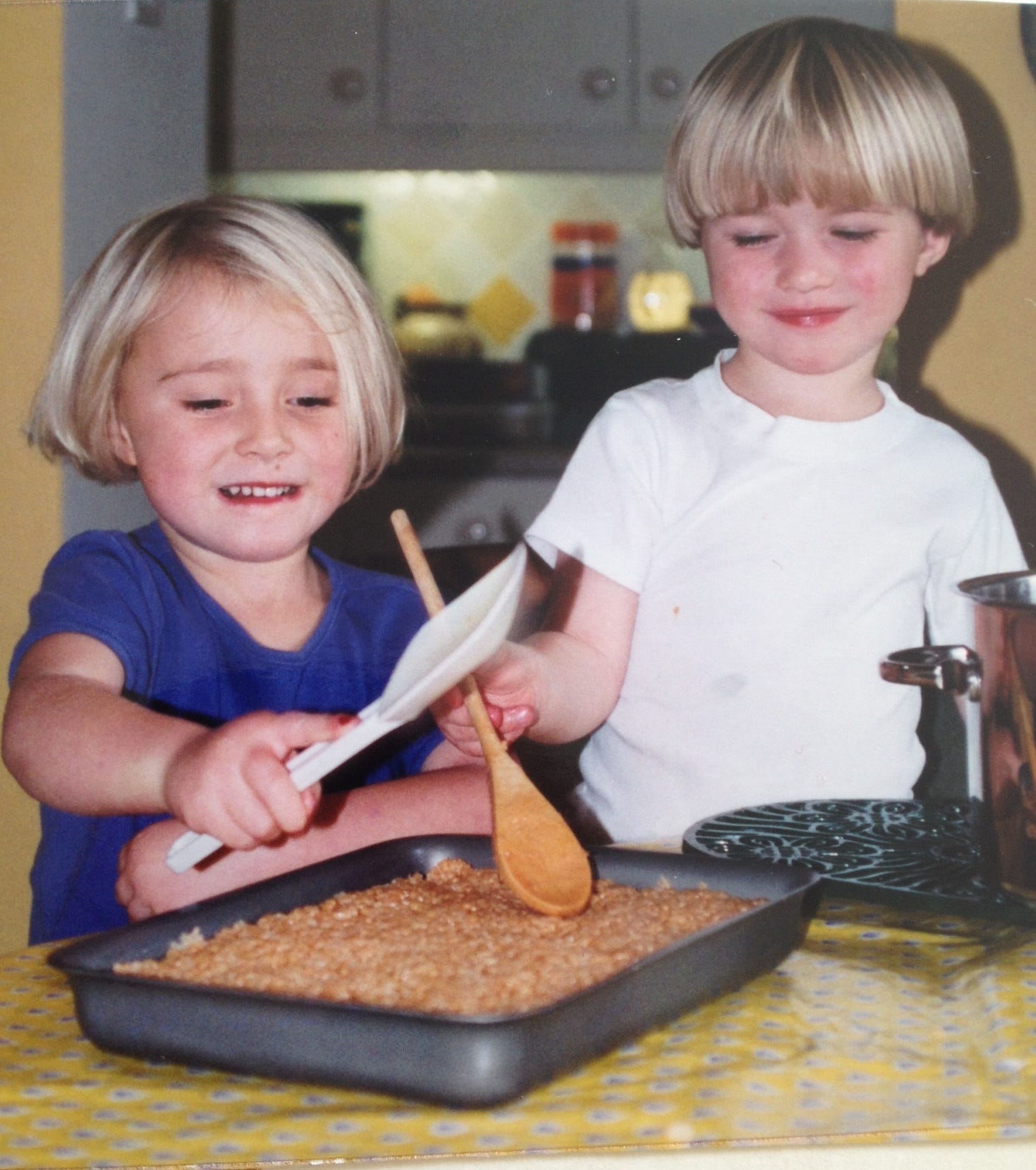
To me, the most notable Nigella books and the ones I still pull down from the shelf periodically, if not regularly, include Nigella Christmas (for the chocolate fruit cake that I carve out a dedicated day to make at least two of every year, amongst other things), Nigellissima (for a reminder that fusilli lunghi is the most whimsical of all pasta shapes and should be more widely available to buy than it is, amongst other things) and Forever Summer.
As an ardent Summer Person, I have a deep, almost visceral, affinity with the premise of Forever Summer. That being, to conjure warmth and sunshine from the kitchen, to create a feeling of “having all the wide-skied time in the world to sit back and eat warmly with friends”, and “extending that purring sense of sunny expansiveness”, as Nigella says. Oh she has a way with words.
Younger me used sticky paper tags to mark the recipes I intended to make: spaghettini al sugo crudo; redcurrant slush sorbet; zucchini fritters; caponata; and red-hot chilli syrup to drizzle over dark chocolate ice cream. All of which still appeal and encourage me into the kitchen, I may add.
(As an aside, my second hand copy is an American edition, meaning quantities are given in pounds and ounces, ice creams are made with “heavy cream”, courgette is called zucchini etc.)
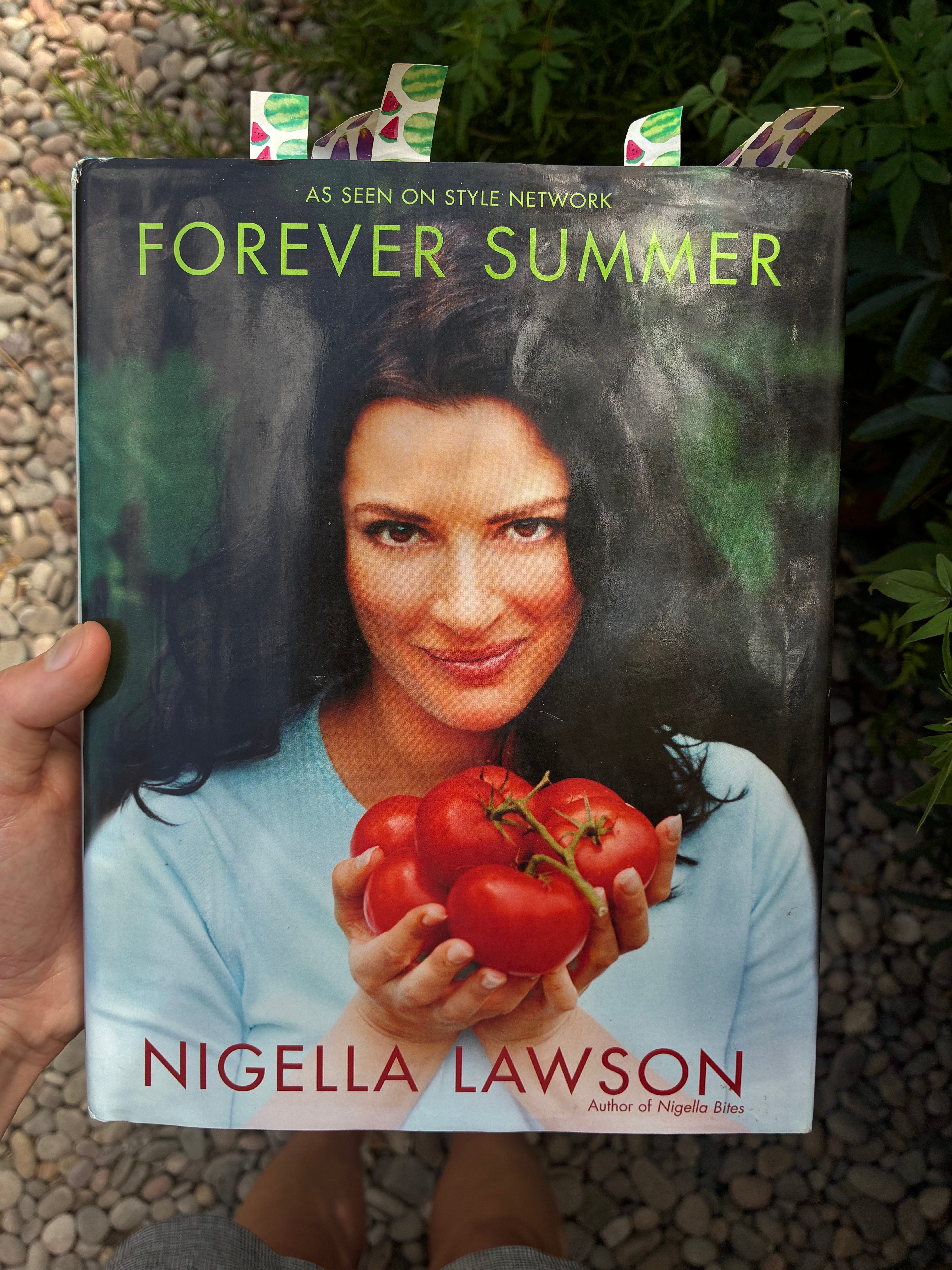
One such tagged recipe, “grilled eggplant with feta, mint and chilli”, is the inspiration for the aubergine rolls below. Nigella’s rolls are pared back: griddled aubergine wrapped around a mix of crumbled feta, chilli and mint. She suggests serving them as a starter or with drinks.
I have taken this idea and gone down a wiggly route of bolstering the herbs (fresh oregano! fresh mint! the much under-used dried mint!), tweaking the cooking method (because roasting aubergine is the only way to achieve good browning, in my opinion), and perching the rolls on a subtly spiced tomato sauce. Thus arriving at what I consider to be an ideal summer supper, requiring only a green salad of some sort, and maybe flatbreads or pitta if you like, to complete it.
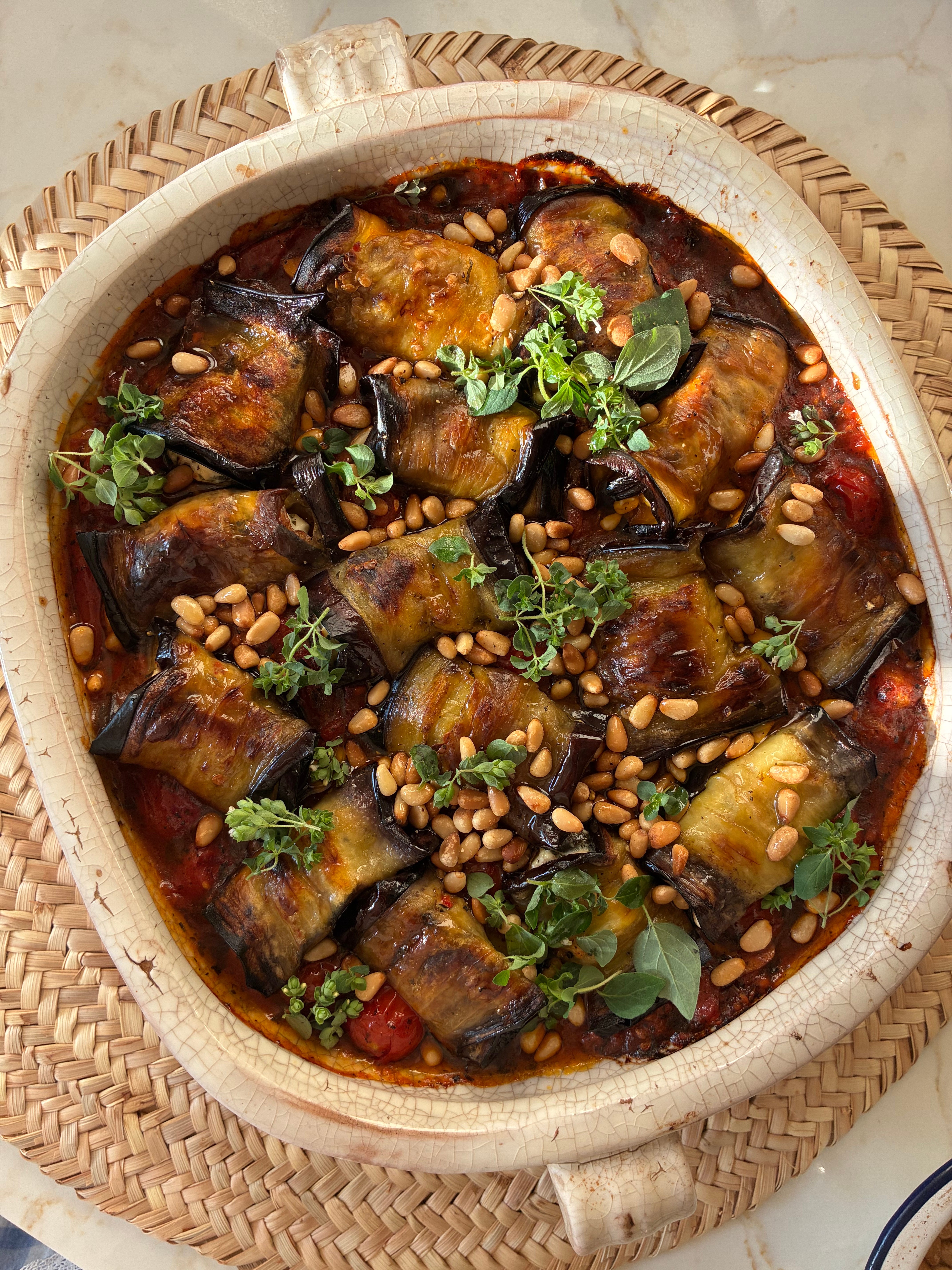
Thank you, Nigella, for the years of inspiration. May there always be space on my shelves for one more book of yours. May we extend “that purring sense of sunny expansiveness” via these aubergine rolls.
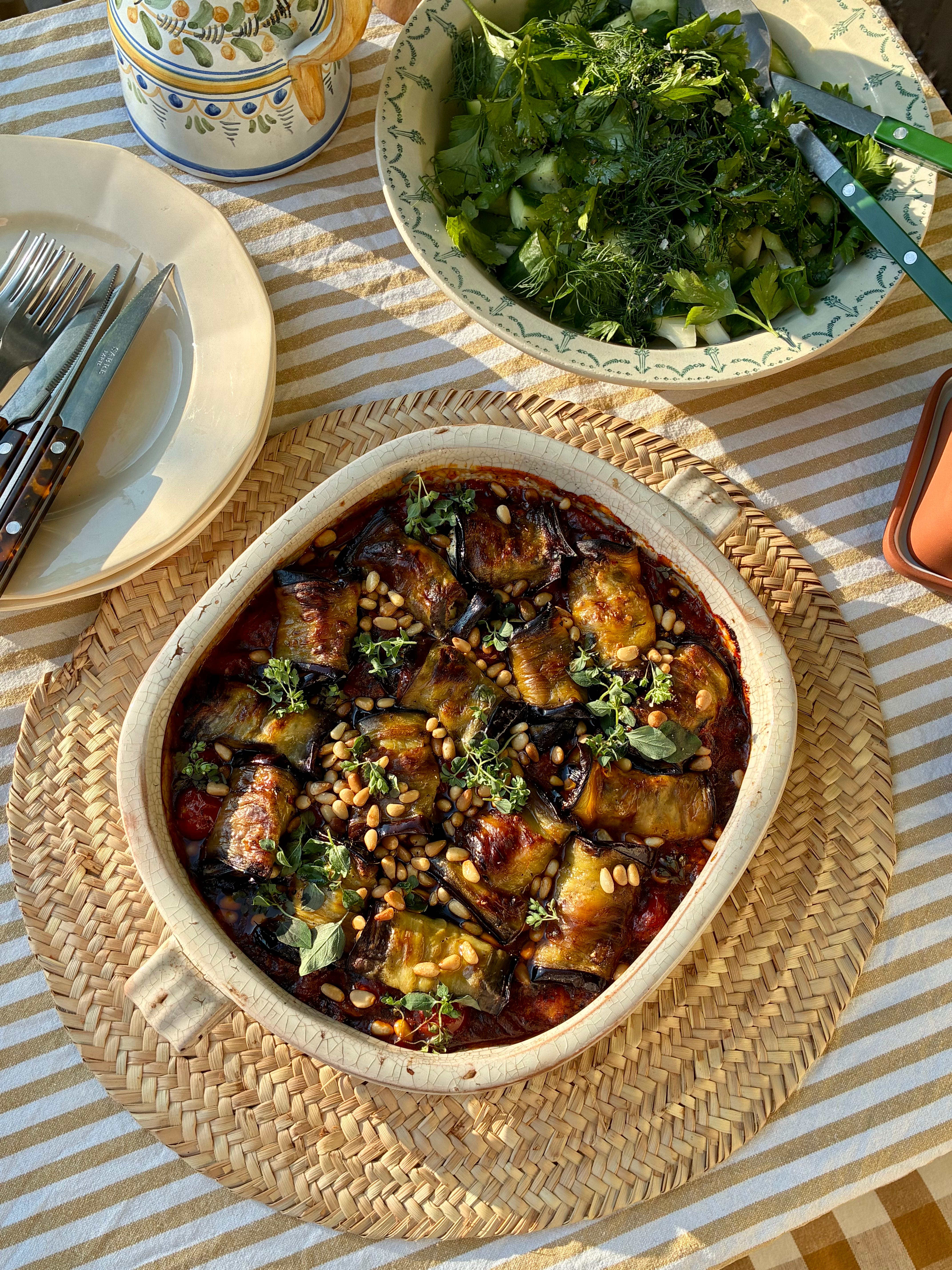
If the prospect of cooking in the heat is unappealing, or you are the type of person who likes to get ahead, you should know that each element of these rolls (the aubergine, the filling, the tomato sauce) can be made up to a few days ahead, at the beginning of the day before the mercury climes, if that suits you. The aubergine slices and filling can even be rolled, so all that’s left to do is perch them on the sauce and bake.
Comments
Nothing yet. Say the first thing.
Sign in to join the conversation.