
Yesterday, June 16, 2026 the federal government made it official .
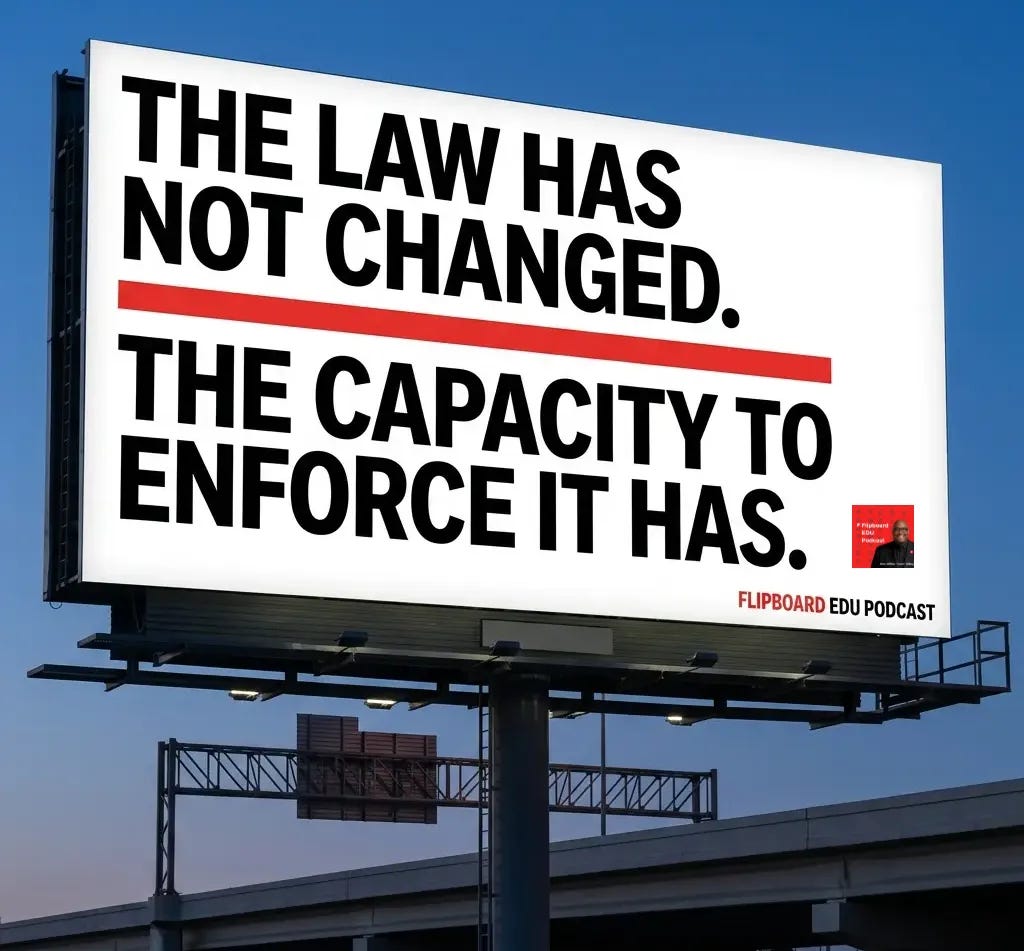
IDEA still exists. The law protecting your students with disabilities has not changed.
But the infrastructure that enforces it has been gutted.
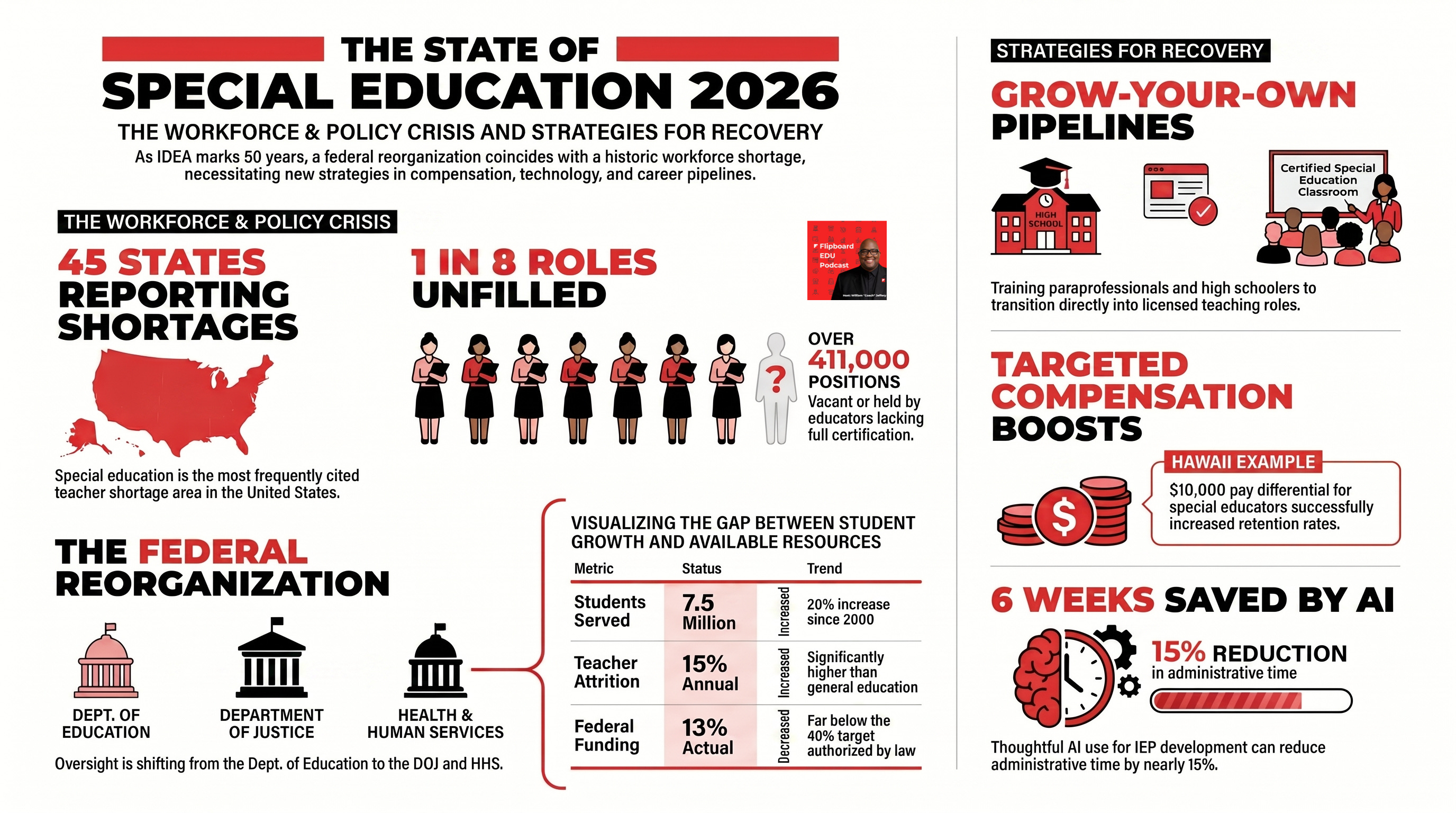
For nearly 50 years, OSEP has been the federal engine behind special education. It monitored state compliance, provided guidance on complex IEP issues, and ensured that the 7.5 million students with disabilities received the services guaranteed by law.
The Office for Civil Rights served as the final recourse for families when schools failed to meet their obligations. When a parent filed a complaint about restraint, seclusion, or denial of services, OCR investigated and held districts accountable.
That system no longer functions as designed.
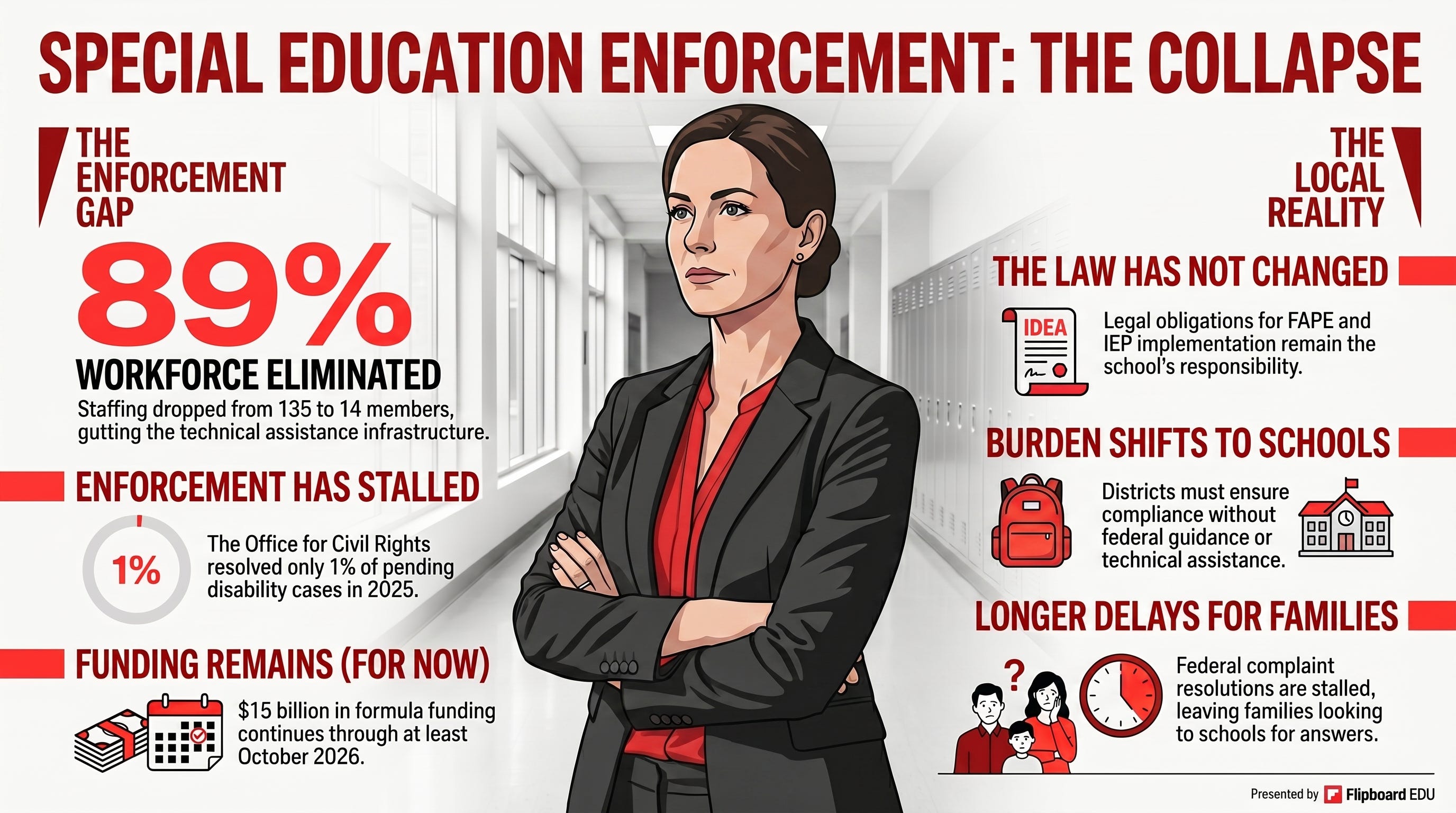
In October, 121 of the 135 staff members who ran the Office of Special Education and Rehabilitative Services were let go.
That is 89% of the workforce.
Yesterday’s announcement is not a warning about what might happen. It is the official paperwork for what already happened months ago.
The $15 billion in IDEA formula funding continues through at least October 2026.
Your district will still receive federal dollars.
But the staff who monitor compliance, investigate complaints, and provide technical assistance are gone.
Former directors from both political parties say moving OSEP out of the Department of Education violates the law. Legal challenges are active. The outcome is uncertain.
What is certain: the enforcement infrastructure your families depend on is operating at a fraction of its former capacity.
Your legal obligations remain the same. Students are still entitled to a free appropriate public education. IEPs must still be developed, implemented, and reviewed. Procedural safeguards still apply.
The difference is that when you need federal guidance, technical assistance, or intervention, the capacity to provide it has been decimated.
When families file complaints and receive no response, they will look to you for answers.
You still have legal obligations under IDEA. Your students still have rights.
But the federal support system that helps schools meet those obligations and protects those rights has been dismantled.
Schools will carry more of the burden to ensure compliance without federal oversight.
Families will face longer delays when they file complaints or seek resolution.
Violations will go unaddressed at a much higher rate than before.
States will operate with less guidance on how to interpret and implement federal requirements.
The gap between what the law promises and what students receive will grow wider in districts that were already struggling with compliance.
When school starts back, you will need to talk about what happens when the federal safety net is no longer there.
How will your district handle compliance without federal technical assistance?
What will you tell families who file complaints and hear nothing back for months?
How will you protect students when the systems designed to protect them are barely functioning?
The law has not changed. The capacity to enforce it has.
That gap is now your reality.
But here is what else is true: you are not facing this alone. Across the country, educators are navigating this same challenge. Special education teachers, district leaders, instructional coaches, and advocates are figuring out how to maintain support for students when the federal infrastructure has weakened.
This is not about dwelling on what has been lost. This is about recognizing the reality we are in and asking the right question: How can we collaborate, communicate, and educate with the best educators in the world to make sure no child is left behind?
The systems may have changed. Your commitment has not. And in the conversations ahead, that commitment will matter more than ever.
Works Cited
American Association of People with Disabilities (AAPD). Davidson, Jess. “AAPD Outraged by Unlawful Transfer of Special Education, Civil Rights Offices From Department of Education to Other Agencies.” American Association of People with Disabilities, 16 June 2026. Press Release. Washington, DC.
The Arc of the United States. Dilworth, Jackie. “The Arc Joins Lawsuit to Protect the U.S. Department of Education and the Rights of Students With Disabilities.” The Arc Blog, 25 Nov. 2025, thearc.org/blog/the-arc-joins-lawsuit-to-protect-the-u-s-department-of-education-and-the-rights-of-students-with-disabilities. Press Release / Blog Post.
Benner, Meg, and Rebecca Ullrich. “Betsy DeVos’ Threat to Children with Disabilities.” Center for American Progress, 2 Feb. 2017, www.americanprogress.org/issues/education-k-12/reports/2017/02/02/298010/betsy-devos-threat-to-children-with-disabilities/.
Boardman & Clark LLP. Hart, JoAnn M., Richard F. Verstegen, Douglas E. Witte, Michael J. Julka, James K. Ruhly, Steven C. Zach, Eileen A. Brownlee, M. Tess O’Brien-Heinzen, and Brian P. Goodman. “OSERS Releases Updated Chart of Rescinded Guidance Documents Related to IDEA and Section 504.” School Law Update, Boardman & Clark LLP, 26 Oct. 2017, Madison, WI. Legal Update Bulletin.
Disability Scoop. “Trump Administration Delays Special Ed Rule.” Disability Scoop, July 2018, www.disabilityscoop.com/2018/07/03/trump-delays-special-ed-rule/25251/.
Disability Scoop. “Trump Administration Rescinds Guidance Amid Objections From Disability Advocates.” Disability Scoop, Oct. 2017, www.disabilityscoop.com/2017/10/23/trump-rescinds-guidance-objections/24332/.
Editorial Staff / Anonymous. “Special Education Enforcement Just Collapsed. Here’s What You Need to Know.” The Collapse of Federal Special Education Enforcement, June 2026. Project Source Text.
Fagen Friedman & Fulfrost LLP (F3 Law). “Staff Shortages Can Result in Dangers to Special Educators.” F3 Law Viewpoints, 13 Dec. 2024, www.f3law.com/insights-news/viewpoints/staff-shortages-can-result-in-dangers-to-special-educators. Blog Article.
Flipboard EDU Podcast. Flipboard EDU Podcast Brand Guide 2.0. Flipboard EDU Podcast, 2026. Refined Media Brand Guide PDF.
Izak, Jon. “The Biggest Challenges in Special Education in 2026.” Reviewed by Roz Prescott. Ori Learning, Mar. 2026, www.orilearning.com/blog/biggest-challenges-special-education-2026. Web Article.
Learning Policy Institute. “An Overview of Teacher Shortages: 2025.” Learning Policy Institute Fact Sheets, 16 July 2025, learningpolicyinstitute.org/product/overview-teacher-shortages-2025-fact-sheet.
Lehigh University College of Education. “Legally Experienced Track Hot Topics.” Special Education Law Symposium & Section 504 Coordinators Institute, WordPress @ Lehigh University, 2026, wordpress.lehigh.edu/special-education-law-symposium/. Program Schedule.
Ma, Annie. “Trump moves special education and civil rights oversight out of Education Department.” PBS NewsHour, Associated Press, 16 June 2026, www.pbs.org/newshour/education/trump-moves-special-education-and-civil-rights-oversight-out-of-education-department.
Mehta, Jonaki, and Cory Turner. “Trump further guts Education Dept. by shifting oversight of special ed, civil rights.” WVTF / NPR, 16 June 2026, www.wvtf.org/news/2026-06-16/trump-further-guts-education-dept-by-shifting-oversight-of-special-ed-civil-rights. NPR Radio Segment/Web Article.
Merod, Anna. “Teacher shortages hinder special education progress. What are the solutions?” K-12 Dive, 25 Nov. 2025, www.k12dive.com/news/teacher-shortages-hinder-special-education-progress-solutions/762512/. News Article.
National Council on Disability (NCD). Federal Monitoring and Enforcement of IDEA Compliance. National Council on Disability, 7 Feb. 2018. IDEA Series report. Washington, DC. www.ncd.gov/reports/2018/federal-monitoring-and-enforcement-idea-compliance.
National Council on Disability (NCD). School Choice Series: Choice & Vouchers—Implications for Students with Disabilities. National Council on Disability, 15 Nov. 2018. Washington, DC. www.ncd.gov/publications/2018/choice-vouchers-implications-students-disabilities.
Samuels, Christina A. “New Guidelines Let Civil Rights Office Ignore Cases From Serial Complainers.” Education Week, 22 Mar. 2018, www.edweek.org/policy-politics/new-guidelines-let-civil-rights-office-ignore-cases-from-serial-complainers/2018/03. Print version appeared on 11 Apr. 2018.
U.S. Commission on Civil Rights (USCCR). The Federal Response to Teacher Shortage Impacts on Students with Disabilities. U.S. Commission on Civil Rights, 30 Sept. 2025. 2025 Statutory Enforcement Report. Washington, DC. www.usccr.gov/files/pubs/2025/federal-response-teacher-shortage-impacts-students-with-disabilities.pdf.
Wikipedia Contributors. “Individuals with Disabilities Education Act.” Wikipedia, The Free Encyclopedia, Wikimedia Foundation, 26 Mar. 2026, en.wikipedia.org/wiki/Individuals_with_Disabilities_Education_Act.
YouTube News / Broadcast. “What the special education layoffs mean for your child’s IEP and school services.” YouTube, 2025. Video Resource.
No posts
Comments
Nothing yet. Say the first thing.
Sign in to join the conversation.