
The 2026 Election Season is very much upon us! With each election cycle brings an opportunity to elevate affordable housing as a central policy issue.
The following 10 themes are designed to help housing advocates create questions for candidates running for city or county commission. Each one covers a housing issue, why it matters, and sample questions to get you started.
Swap in your own local details, as these are meant to be a starting point on what you can focus on. If your city already has a local affordable housing trust fund, ask instead how a candidate would keep it funded or how they would prioritize limited dollars. If your county already allows accessory dwelling units in all single-family areas, ask how they’d help homeowners to get them built. If your locality doesn’t have a Community Land Trust, ask if they’d support starting one.
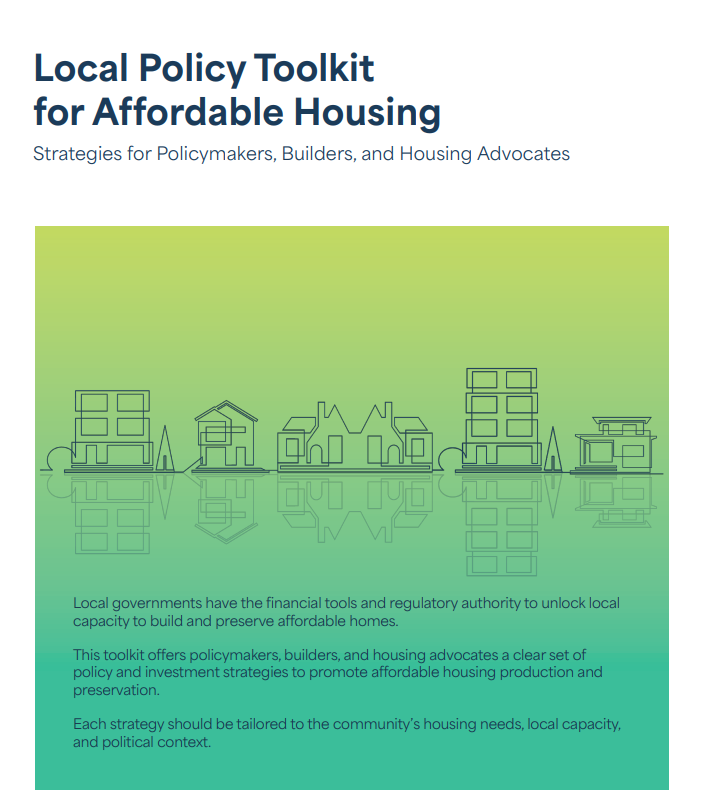
You can use these thoughts to prompt candidates to share their vision, make public commitments, and engage proactively with housing issues and advocacy groups. The questions are based on the policy solutions identified in the Florida Housing Coalition’s Local Policy Toolkit.
Quick note: There are a lot of questions you could ask a candidate for office! Housing is complicated, and us housers can devolve into wonkiness and unrelatability to regular people at a moment’s notice. When you feel like you’re about to get bogged down in the wonk when speaking with a candidate or engaging your friends and neighbors on housing issues, bring it back to basics: What kind of city do you want to live in? What kind of city do you want your kids to grow up in? Do you want your kids to be able to afford to live where you live? Do you want people to have to sit in their car for an hour each day to and from work? Do you want to be able to choose a house where you can walk or take public transit to your job or a nearby coffee shop? Do you want a city that lets in new people of all walks of life and allows long-term residents to afford to stay where their roots are deep? Local policy decisions shape a community’s built environment, and we deserve elected officials that’ll build an abundance of housing options.
I’ve bolded ten questions that I’d ask if I were speaking to a candidate for office.
(You’ll see these again below, in context)
What do you see as our community’s biggest housing needs?
What’s the first concrete step you’d take on affordable housing after taking office?
How would you make sure new housing gets built near jobs, schools, transit, and services and not just on the outer edges of town?
Where would affordable housing rank in your budget priorities compared to other capital needs such as roads, public safety, parks?
In your view, what factors should determine whether a specific parcel of public land gets used for affordable housing versus another public purpose (parks, schools, municipal facilities)?
How would you support community-based organizations, like Community Land Trusts, to steward permanently affordable homes in our community?
If elected, how would you support dedicated, ongoing funding for programs proven to reduce homelessness, such as outreach, shelter diversion, rapid rehousing, and supportive housing?
How would you help make sure affordable housing can withstand storms, flooding, and heat so people aren’t repeatedly displaced after disasters?
How would you bring together community partners to invest in affordable housing as essential infrastructure?
Public hearings tend to draw homeowners with time to attend. How would you make sure renters and people experiencing housing instability have a voice in housing decisions?
Effective policy starts with naming the problem. Try to get your candidates for office on the record about their values and what they care about when it comes to affordable housing. The goal of these questions isn’t to catch anyone in a “gotcha.” It’s to see how they think about housing.
Does the candidate reach for something specific and local, or fall back on “housing is unaffordable?” The more specific a candidate can speak to local needs, the more impressive.
What do you see as our community’s biggest housing needs?
Who in our community is most affected by the housing shortage right now?
Have you talked directly with renters, low-income homeowners, or unhoused residents while forming your housing views? What did you learn?
What local data stands out to you in your understanding of our housing situation?
Caring about an issue and prioritizing it are two different things. Affordable housing policy is HIP these days. Anyone can tell you that housing matters to them. Ask questions that get into the specifics of what a candidate’s priorities are and what they will actually commit to doing.
Asking where housing ranks as an issue, for example, compels a candidate to show their hand instead of listing “affordable housing” alongside ten other priorities that all sound cool. The “first concrete step” question shows whether the candidate has actual policy solutions in mind or just vibes. The five-year question tells you where they want the community to go and something to measure them against later.
Is affordable housing a top-three issue for your campaign, or one of many? Where does it rank for you?
What’s the first concrete step you’d take on affordable housing after taking office?
Of the housing needs you see, which would you prioritize first if elected, and why?
What would success look like on housing in our community five years from now?
Like several of the other themes, you could have your own candidate forum just on zoning and land use policies. You could be as specific as asking directly about a candidate’s position on allowing ADUs or duplexes city-wide or go broad and ask how they’d make sure more housing gets built near jobs.
Zoning and land use questions are wonky, technical, and easy to dodge with generalities. So if a candidate can speak with gusto about how lot sizes or parking minimums affect housing affordability, you’ve found yourself a housing superstar.
Would you support increasing the number of homes that can be built in existing, well-resourced neighborhoods with missing middle housing?
Would you support allowing ADUs on every residential lot in the community?
What specific barriers (such as lot size, parking minimums, discretionary reviews) would you remove or reduce to support more homes?
How would you make sure new housing gets built near jobs, schools, transit, and services and not just on the outer edges of town?
What incentives would you offer to encourage smaller-scale or diverse housing development?
A dedicated local funding stream is one of the most effective tools a community has for meeting its housing needs. A local trust fund backed by a recurring revenue source gives a community a flexible, reliable pool of dollars for housing essential workers, seniors, and residents with special needs, and it can be paired with other sources, from public land sale proceeds to CRA funds to linkage fees, depending on what your locality already has in place.
Ask candidates where they stand on funding and more importantly, where they’d direct limited dollars first. Priorities can reveal more than a yes/no on any single tool.
Do you support sustaining and fully funding a local affordable housing trust fund?
What are your priorities for how public money should be spent on affordable housing?
What funding level or dedicated revenue source(s) would you support for affordable housing programs?
Where would affordable housing rank in your budget priorities compared to other capital needs such as roads, public safety, parks?
Would you support requiring permanent affordability for any housing that receives public subsidy, rather than allowing affordability restrictions to expire after 15–30 years?
Public land is an incredibly valuable resource that can be used for public good in the form of affordable homes. These questions get at whether a candidate sees it that way, or defaults to selling it off or using it elsewhere. The land banking and long-term leasing questions in particular reveal how far they’re willing to go to keep public land working for affordability over time.
Do you support using publicly owned land for affordable homes?
In your view, what criteria should determine whether a specific parcel of public land gets used for affordable housing versus another public purpose (parks, schools, municipal facilities)?
Would you support dedicating local funds to purchase land for affordable housing, including a formal land banking program?
Do you support requiring homes built on public land to be permanently affordable?
Would you support leasing public land long-term to affordable housing developers, rather than selling it outright, so the public retains ownership?
Nonprofit builders and service providers do the on-the-ground work of keeping housing affordable long-term, but they can’t do it without support. Nonprofits matter because they often have deep community ties, a strong understanding of vulnerable populations’ needs, and the trust to deliver where government and the market fall short. Ask candidates whether they see nonprofits as real partners worth investing in.
How would you support community-based organizations, like Community Land Trusts, to steward permanently affordable homes in our community?
Would you support transferring or leasing public land directly to CLTs for permanently affordable housing?
What would you do to help build the operating capacity of local nonprofits, not just fund individual projects?
How have you engaged with local nonprofits, service providers, or legal aid groups working on housing in the past year — and what did you learn?
Homelessness is a complex, locally-driven issue, and candidates aren’t always familiar with how the response system in their community actually works — the Continuum of Care, coordinated entry, or how prevention and rehousing programs are funded and structured. Because of that, conversations with candidates can end up staying vague or avoiding specifics, not necessarily out of disagreement, but out of unfamiliarity with the system itself.
These questions are meant to move past generalities and get at whether a candidate understands, and is willing to engage with, the local response system and its partners:
How have you personally supported constituents or neighbors experiencing homelessness or housing instability?
Do you support zoning changes that allow more affordable and supportive housing to be built, including in single-family districts?
How do you feel about local ordinances that criminalize sleeping outside in public when no shelter is available? Would you support or oppose expanding them?
What’s your position on using general revenue for rapid re-housing or rental assistance programs?
If elected, how would you support dedicated, recurring funding for functions of the Housing Crisis Response System that are proven to solve homelessness, including street outreach, shelter diversion, homelessness prevention, rapid rehousing and rental assistance, permanent supportive housing, and subsidized affordable housing?
Housing isn’t affordable if it’s uninhabitable. Homes that can’t withstand storms, flooding, or heat are a temporary fix. Families lose them repeatedly, and lower-income households are usually the least able to bounce back. Ask candidates whether they connect resilience to affordability, or treat them as two separate issues, and whether they’re willing to direct dollars to the neighborhoods facing the highest risk.
How would you help make sure affordable housing can withstand storms, flooding, and heat so people aren’t repeatedly displaced after disasters?
Low- and moderate-income homeowners often can’t afford home hardening upgrades like storm-resistant windows, roof repairs, or flood-proofing. Would you support local funding or assistance programs to help cover these costs?
Rising insurance costs are squeezing Florida families. How would you work with insurers and emergency officials on local risk-reduction strategies that could help lower costs?
What would you do to encourage new homes to be built more resilient and energy-efficient, while staying accessible to low- and moderate-income homeowners and renters?
Our county has identified neighborhoods facing higher flood, storm, or heat risk. How would you prioritize resilience investments in lower-income neighborhoods so they aren’t left most exposed to future disasters?
No single office, agency, builder, funder, or person can solve Florida’s housing challenges alone. It takes cities, philanthropy, faith communities, schools, business, and a lot more moving in the same direction to make people’s lives better. Ask your candidates how they’d bring people together to tackle affordability.
How would you bring together community partners to invest in affordable housing as essential infrastructure?
What role should institutions like school districts, CRAs, or other public agencies play in your housing plan?
What role do you see philanthropy playing in solving the community’s housing issues?
Florida’s recently enacted YIGBY laws makes it easier to build affordable homes on land owned by faith-based groups. Would you support actively partnering with local congregations to identify and develop underused land for affordable housing?
Housing needs don’t stop at city or county lines. How would you coordinate with neighboring cities or counties on funding, zoning, or shared regional goals?
Community engagement is often performative and only a one-way flow of information. One of the major keys to change is a government led by individuals who understand, prioritize, and incorporate community engagement that is actually meaningful. Meaningful community engagement brings opportunities to engage to the people rather than waiting for the people to come to them, and includes steps that ensure a two-way flow of information, consideration of compensation to those who assist, and follow-up.
How would you meaningfully engage residents and those facing housing instability in housing policy decisions?
Public hearings tend to draw homeowners with time to attend. How would you make sure renters and people experiencing housing instability have a voice in housing decisions?
How would you make sure nonprofits and service providers have a seat at the table when housing policy is being shaped — not just when it’s being implemented?
How would you communicate back to residents what was done with their input, so people can see it actually mattered?
You don’t need to ask a candidate all nearly-fifty of these questions to know where they stand. (And if you did ask all these you’d probably just annoy them into being housing apathetic). Pick the ones that matter most to you and for your community. Send them to local candidate forum organizers, other local housing advocates, even ask them yourself at a town hall. Make and print out your own list of ten questions. If you’re able, publish a candidate scorecard and even endorse a candidate based on how they respond.
If you’re stuck on what to ask or unsure about local housing needs yourself, the Shimberg Center for Housing Studies’ Data Clearinghouse is a great resource to get you going. Looking through your community’s housing data can help focus on what your priorities should be.
And even though the election season is a great opportunity to elevate these questions, keep up this type of advocacy even after a candidate is elected. A clear local framework for affordable housing can keep elected officials honest and accountable to policies that support housing for all.
Comments
Nothing yet. Say the first thing.
Sign in to join the conversation.