
Viroids are almost impossibly small: loops of RNA just a few hundred genetic letters long that only infect plants. They encode no proteins, carry no protective shell, and bring none of the molecular machinery normally associated with replication. Yet once these naturally occurring microorganisms get inside a compatible plant, they can copy themselves, move between cells, spread through tissues, and alter physiology by borrowing the host’s own enzymes and transport pathways.
That paradox — minimal molecule, organism-scale effect — is what makes viroids so intriguing. They show that RNA is not merely a messenger between DNA and protein. In the right biological context, RNA sequence and structure can act as a compact program for replication, movement, and host interaction. For Flagship Labs, that raised a provocative question: Could the design principles behind viroids be used to carry a function of our choosing into a crop?
That question, plus an early proof-of-concept in an eggplant model system, formed the basis of what today is Terrana Biosciences, a company pursuing the full breadth of opportunity of RNA for agriculture.
Terrana’s insight was to separate the harmful biology of some natural viroids from the useful design principle behind them: a compact, circular RNA architecture that plants can replicate, process, and distribute. The goal is to deliver programmable, durable RNA instructions that can move through the plant throughout its lifecycle.
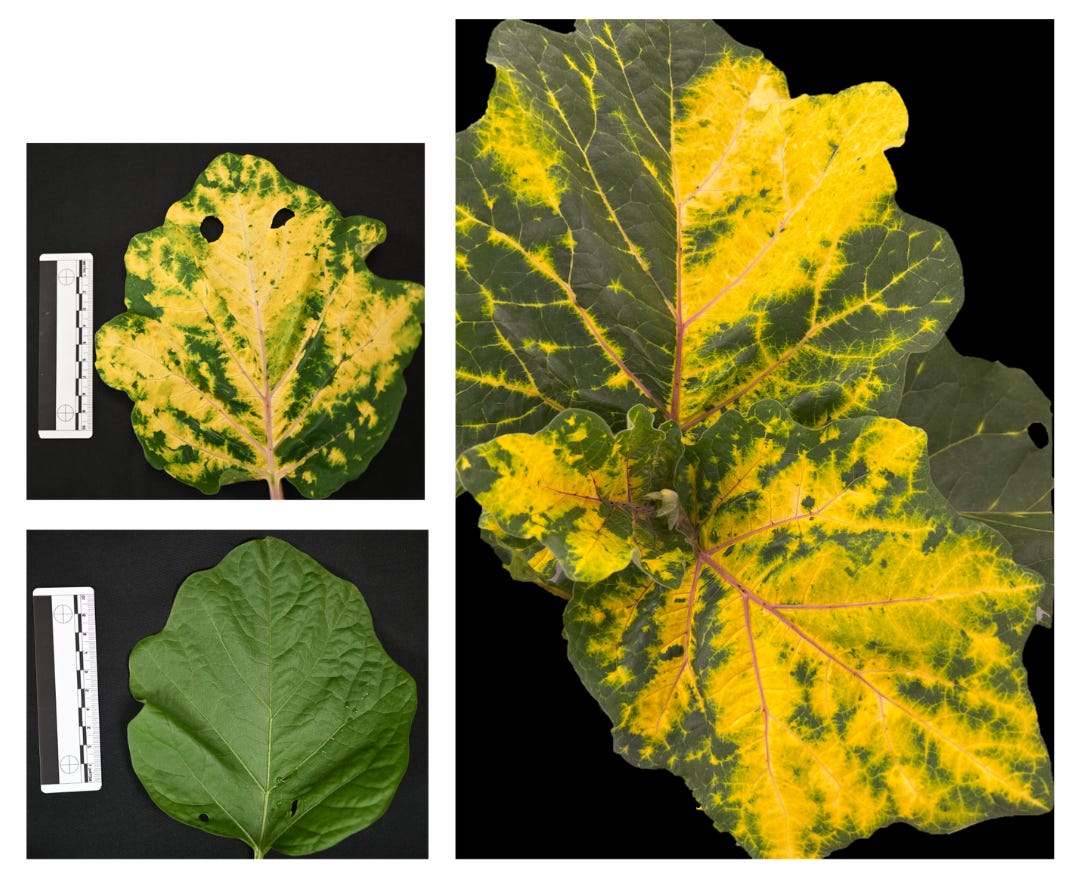
To study whether engineered circular RNAs could move throughout the plant, Terrana used eggplant, a crop related to tomatoes and potatoes that provides a useful model for tracking RNA movement through plant vasculature. In an early proof-of-concept experiment, the team applied an engineered circular RNA construct, visualized using a yellow reporter signal, to the stem of an eggplant leaf and tracked the movement of its signal over time.
Figure 1 shows the RNA signal moving through the leaf vasculature and appearing in distal tissue weeks after inoculation as evidenced by the significant yellowing of the upper leaves. That distribution is important; many crop-protection treatments remain localized or require repeated foliar coverage, while a self-amplifying RNA that can move through the plant could, in principle, provide more durable protection from a smaller starting dose.
Once the Terrana team could demonstrate that the engineered circular RNA constructs could move through plant leaves, they looked for a pest to test the crop protection activity. That target doesn’t have to be the plant itself; the RNA travels in the plant, but the instructions it carries can be written for any threat. Beetles were just the target.
The Colorado potato beetle (Leptinotarsa decemlineata) is a rampant, persistent pest in agriculture, extensively damaging potatoes, eggplants, and other crops. Similar to bacteria that become resistant to antibiotics, these beetles have become resistant to most pesticides, largely driven by prolonged and repeated exposure over decades, which has created strong selection pressure for resistant populations. The beetle is also biologically adaptable, with a high capacity to evolve resistance across multiple classes of insecticides. Consequently, dubbed “super pests,” both beetle larvae and adults feed aggressively on leaves, causing severe defoliation and yield loss.
This is where RNA treatments can give crops the necessary molecular tools to defend themselves.
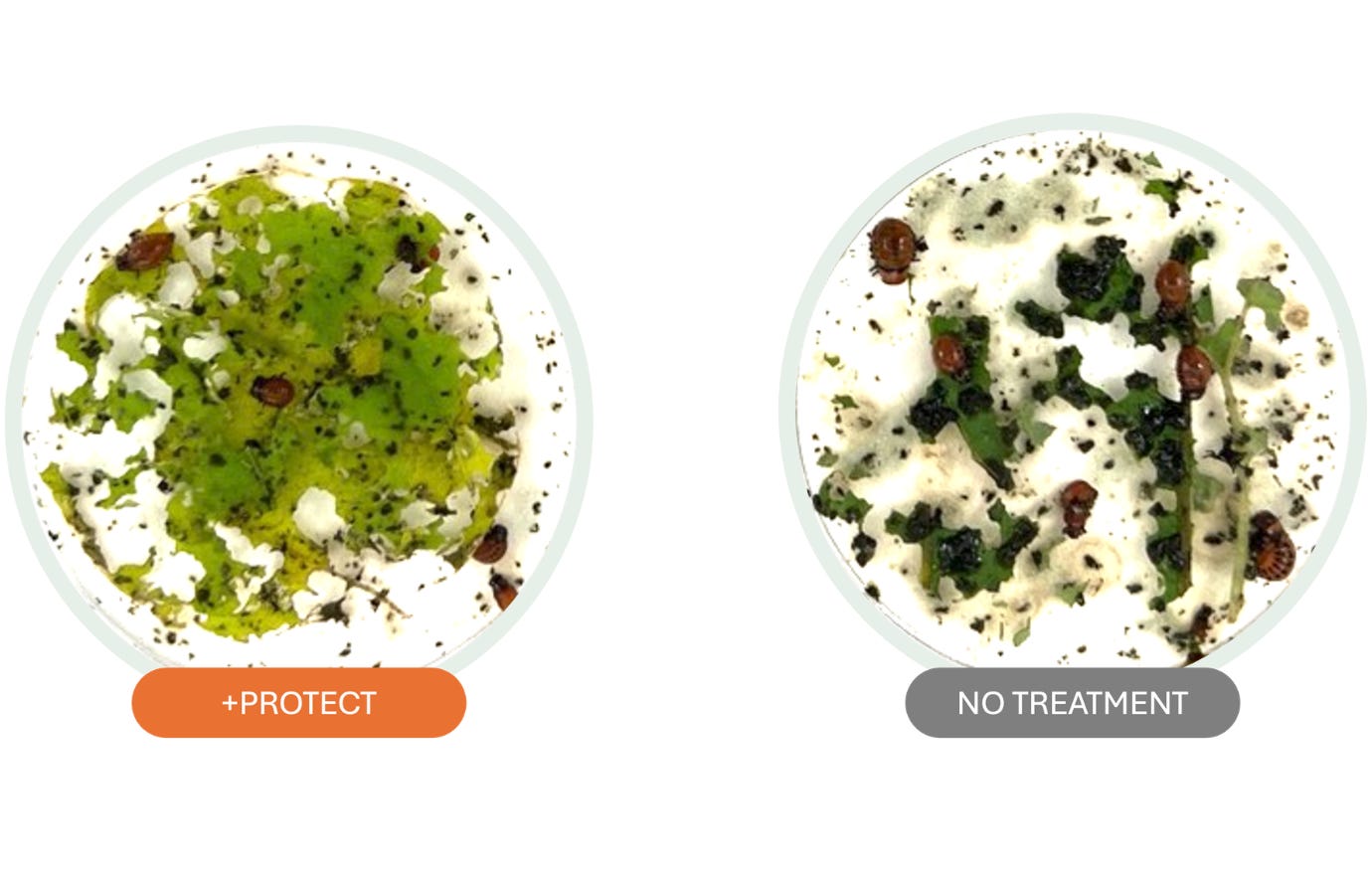
When Colorado potato beetles feed on treated leaves, they ingest engineered circular RNA molecules designed to silence a single essential gene exclusive to beetles through RNA interference. By knocking down that gene, the RNA disrupts a process the insect needs to survive, reducing feeding and ultimately causing mortality (Figure 2).
Having demonstrated that engineered RNAs could move throughout a plant and deliver insect-control instructions, the next question was whether Terrana’s RNA platform could protect plants from viral disease.
One of Terrana’s first targets is a virus that initially became a problem in tomatoes in 2020. Around this time, growers began to see rampant infections that caused the loss of up to 75% of the plants in their greenhouses. In addition, the fruit from the remaining 25% was so mottled with brown and yellow splotching that it was unmarketable even as a processing tomato. This disease, tomato brown rugose fruit virus, or ToBRFV, has swept across the globe, becoming an issue in all tomato producing regions. While breeders have made advances in deploying partially resistant or tolerant tomato varieties, those gains have often come at the expense of flavor, yield, and agronomics.
To address this threat, Terrana has taken a cue from nature. Some plants naturally defend themselves against viruses by incorporating part the virus genome into its own in a tandem repeat or a hairpin. This genetic combination gives the plant the ability to recognize the subsequent RNA as foreign and degrade it. With Terrana’s product, this same mechanism is used but entirely at the RNA level rather than the DNA level, circumventing the need for a transgenic solution.
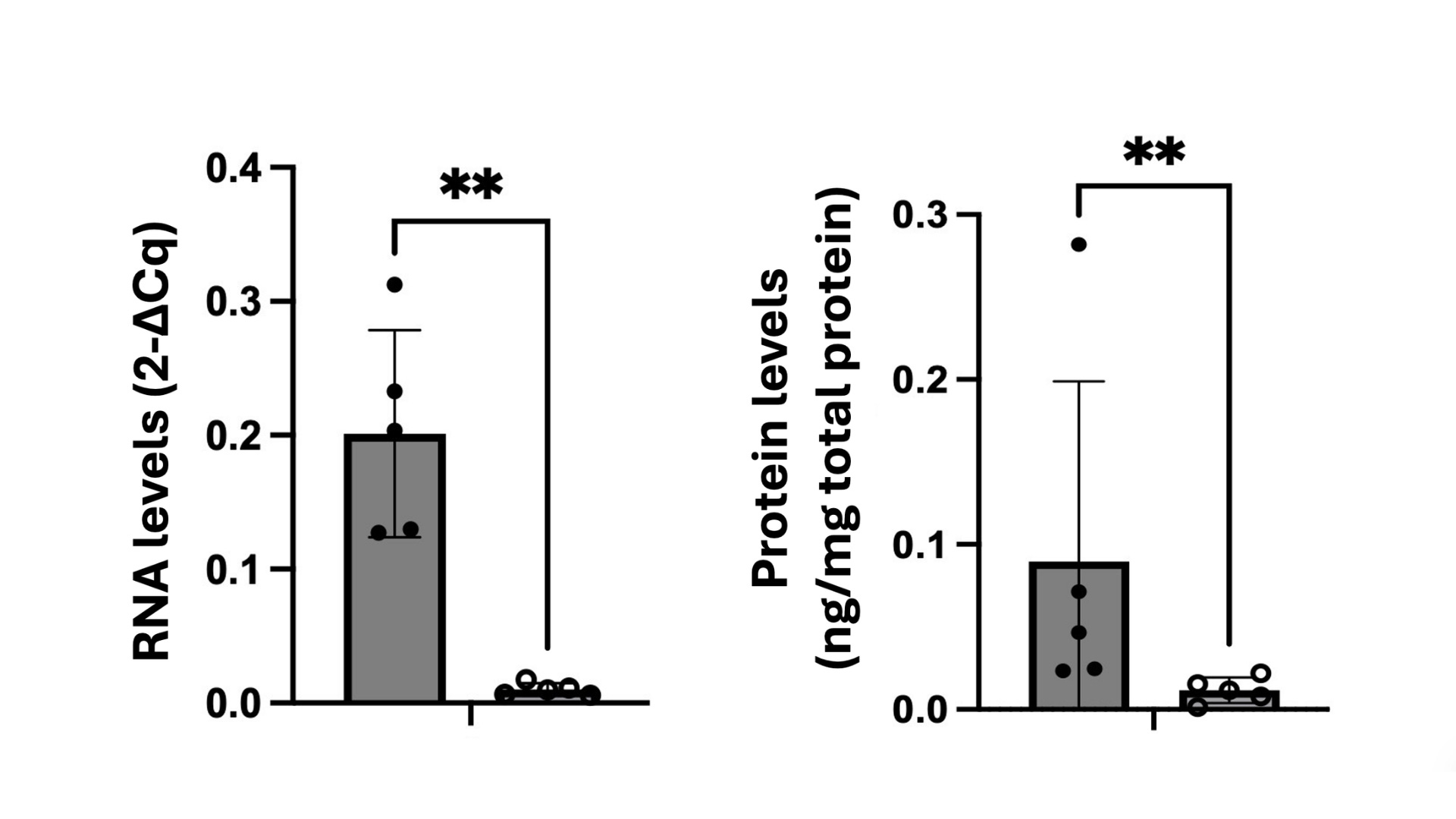
The team has successfully identified and screened RNA cargos against two key ToBRFV targets and demonstrated robust knockdown of both viral RNA and protein expression (Figure 3). These cargos are now being incorporated into Terrana’s engineered RNA platform, where they prime the plant’s own defense system to recognize ToBRFV RNA and destroy it, without permanently altering the plant’s genome.
With advances like these, the industry may have a chance to reclaim some of its tomato varieties that have been previously loved by consumers but lost to disease.
The ability to traffic throughout a plant’s vasculature and activate a plant’s own defense mechanisms are two attractive attributes of the molecules generated by Terrana’s RNA platform.
There are others that make them attractive for growers:
Engineered circular RNA makes treatments relatively easy. Farmers can deploy solutions in various ways, including spray applications, depending on crop and use case.
Because the RNA is self-amplifying, a small amount of RNA may provide durable, potentially season-long activity in treated plants.
Unlike broad-spectrum insecticides, RNA-based approaches are specific to a target pest, enabling selective control. That selectivity will still need to be demonstrated across relevant beneficial insects and field conditions.
The development time is much shorter than it is for seed genetics or new chemistries, helping agriculture more rapidly respond to migrating threats. New measures could be implemented in years rather than decades.
In addition to crop protection, this approach unlocks many other possible applications. RNA could be used to develop products that influence crop height, increase production, improve nutrition, and many other traits valuable to growers and consumers.
Ultimately, a programmable, iterative, easily deployed RNA platform offers new tools to improve the resilience of agriculture and help feed a hungry world.
Comments
Nothing yet. Say the first thing.
Sign in to join the conversation.