
Today I am budgeting for a 27-year-old social media marketer and who lives with their partner and young son.
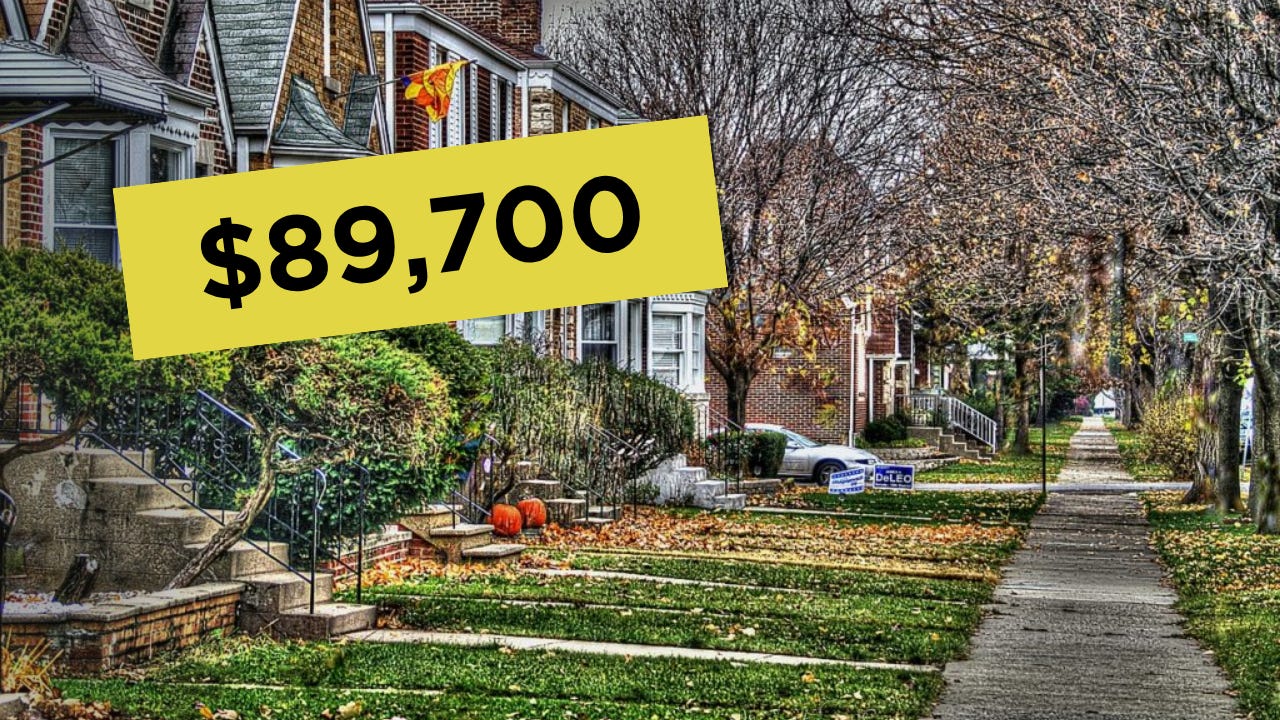
On top of a full-time marketing job ($72,000), they run their own media creation company doing blog content and product photography ($18,000) making a total of $89,700/year.
Their top financial goals are:
Pay down debt and build at least one month of expenses in savings
Reduce money stress so they can focus on growing their business
Land two new brand clients by the end of the year
They value putting their money towards housing, hobbies, savings, and their cars.
Let’s dive in!
After taxes and deductions, all of their different income streams average out to roughly $6,000/month in take-home pay.
They currently have $12,500 invested. They contribute $110/month to their 401(k), their employer matches that $110, and they are also repaying 401(k) loans which adds about $140/month back into the account.
What is a 401(k) loan?
A 401(k) loan lets you borrow from your own retirement balance, usually up to 50% of your vested balance or $50,000, whichever is less. You repay it through paycheck deductions over about five years, and the interest you pay goes back into your own account rather than to a lender.
The main downside is opportunity cost: while that money is out as a loan, it’s not invested, so it misses out on market growth. And if you leave or lose your job, the balance is typically due fast, otherwise it’s treated as a withdrawal with taxes plus a 10% penalty if you’re under 59½. Very high risk.
Their goal is to retire at 60 with an annual spend of $75,000. At their current contribution rate, they are on track to retire at 76 That is behind their goal, and that is completely okay right now.
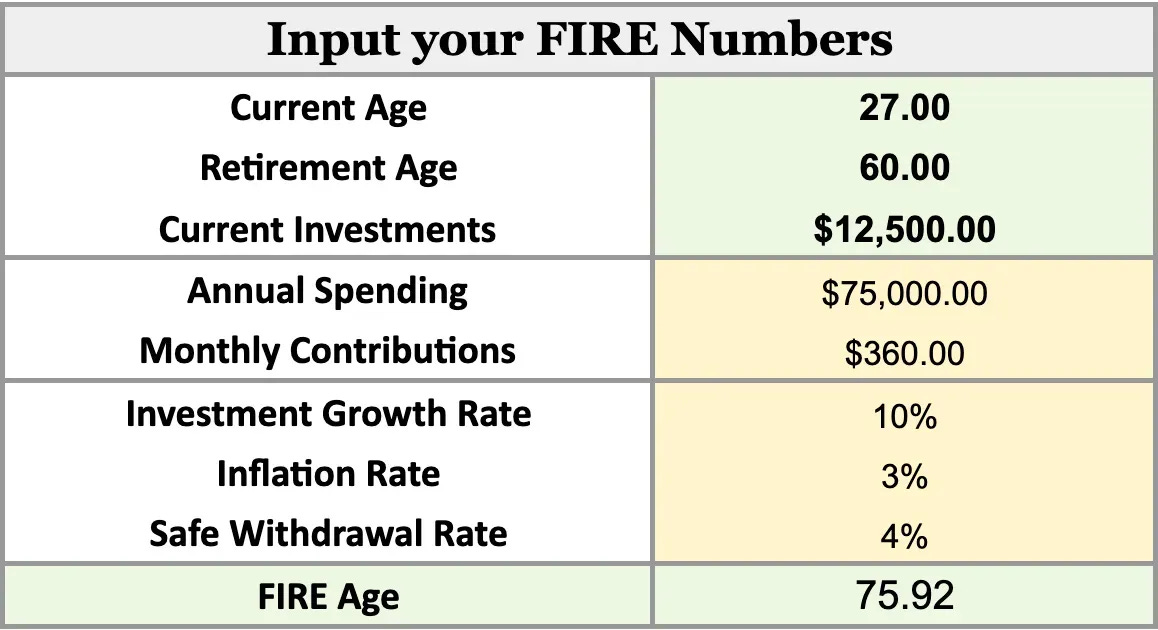
With high interest debt, their money is better spent knocking out those balances than chasing investment returns. We will not touch their current investments as they need to pay back their 401(k) loan, and getting a 401(k) match is 100% return on their money.
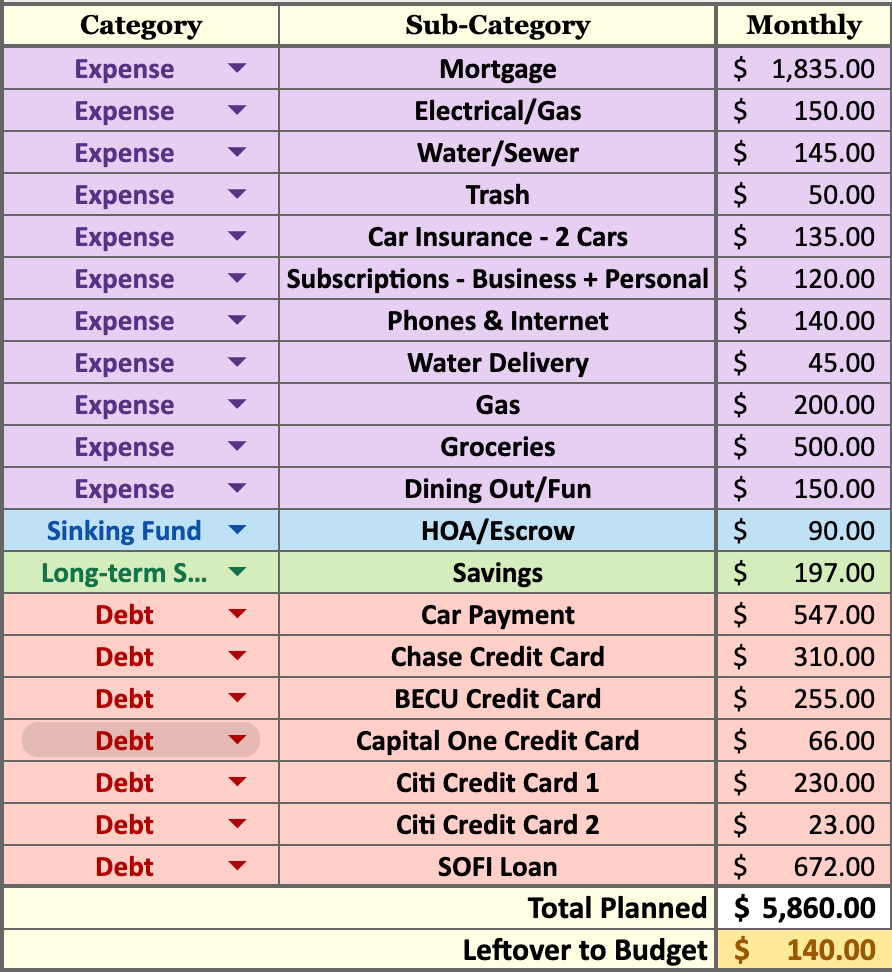
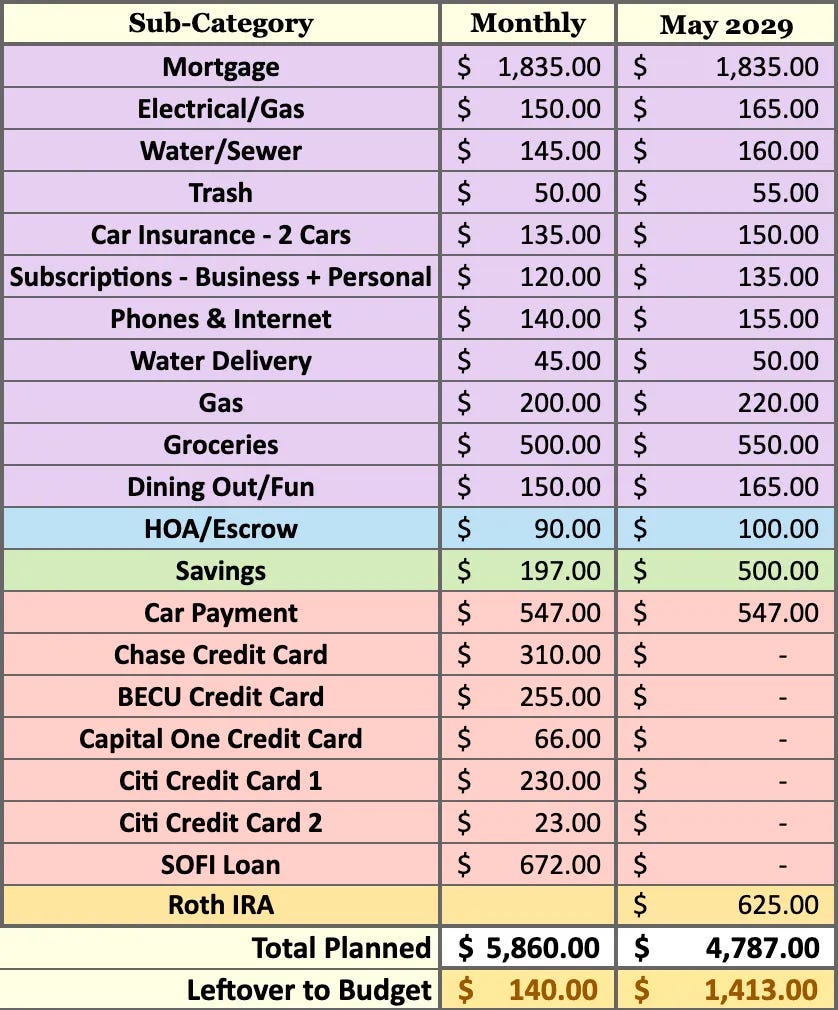
Their largest expense is their mortgage at $1,835, followed by their car at $547. Everything else is honestly pretty lean. Groceries at $500 for three people and two dogs is reasonable, the utilities are normal, and there is not much to trim. I suspect this could have contributed to some of this debt—not accounting for fun spending or unexpected expenses.
After the essentials and the debt minimums, they are running on a buffer of around $337/month.
Now for the part that’s been weighing on them, the debt:
Chase Credit Card: $8,740 at 27.74% APR ($310/month)
BECU Credit Card: $9,423 at 19.99% APR ($225/month)
Capital One Credit Card: $2,063 at 27.49% APR ($66/month)
Citi Credit Card #1: $7,700 at 23.99% APR ($230/month)
Citi Credit Card #2: $2,209 at 0.00% APR ($23/month)
SoFi Loan: $22,036 at 18.79% APR ($672/month)
That is about $52,000 in high-interest debt, separate from the mortgage ($1,835) and car ($547/month). I know seeing it all in one place can feel overwhelming, but I actually find it motivating.
We are going to make a plan to tackle them in order, and the credit score will most likely improve itself as we go.
I know the instinct is to throw every dollar at the debt immediately, but with low monthly margin, one car repair or one slow business month forces them back onto a credit card at 27% and we undo our own progress.
We are going to put $100 a month here for now, and increase as we knock out some debt.
The biggest financial lever is by far their income, specifically rebuilding and growing the business they already love.
They mentioned two local brands that are interested and just need budgeting figured out before finalizing a deal at the end of the year. That is the goal I would protect at all costs. Replacing the lost client and adding even one of those two brands could add several hundred dollars a month, and every dollar of that goes straight to their debt payoff plan.
We will assume an increase of $200 per month in business profits.
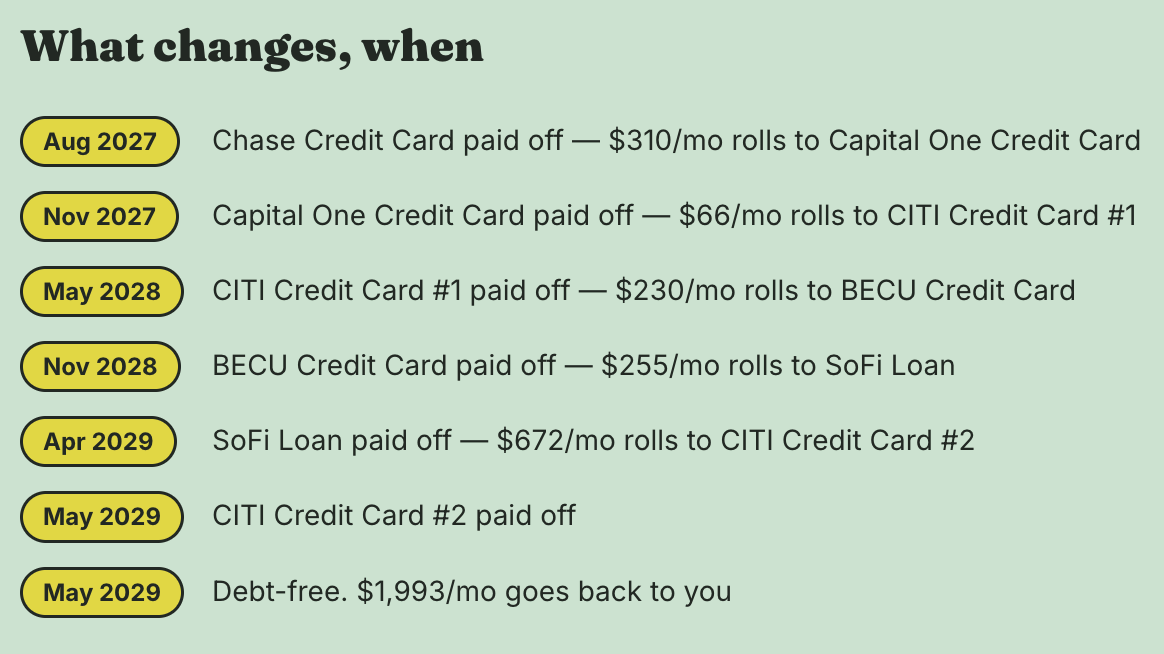
The avalanche method means paying minimums on everything and throwing every spare dollar at the highest interest rate first, because that saves the most money over time. As each debt gets paid off it also frees up more cash to pay down the next debt.
We are starting with $437 in extra payments:
In terms of their credit score, it is currently at 630 mostly because their cards are nearly maxed out (high utilization). As these balances drop, utilization drops, their score should climb on its own.
As they free up cash flow they will have more flexibility in their budget to put towards their emergency fund, or even temporarily reduce debt payments in order to cover an expense out of pocket. This may push back their debt-free date, but it’s better than adding to the debt! They also have a lot of flexibility to increase income, which could get them back on track.
They came in feeling ashamed and stressed, but they shouldn’t! In less than 3 years (with discipline of course) they can knock out all of their high interest debt, max out their Roth IRA, and still have over $1400 left over! I even added cost of living adjustments to their expenses and ramped up their Emergency Fund.
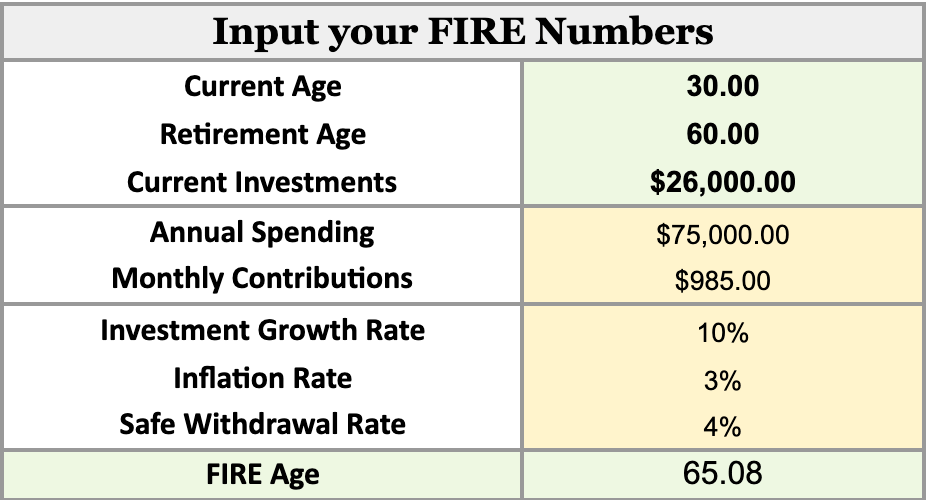
Here’s what their retirement looks like once they start maxing out their Roth IRA. 65!
And here’s what it would look like if they use alllll of that extra money to invest (an extra $1400). Retirement at 55!!! (just an estimate of course, but WOW!)
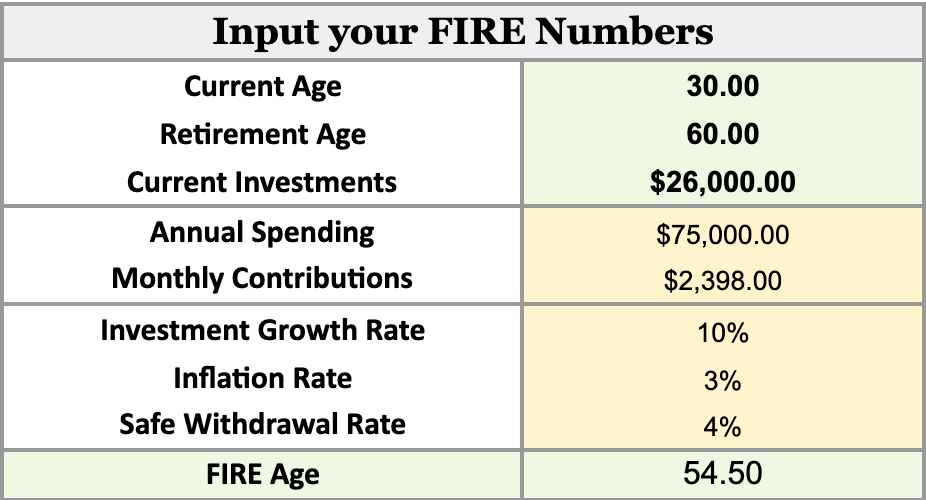
The debt is an emergency (and should be treated as such) but they need to realize that after a few years of discipline to knock it out, early retirement could be waiting for them!!! If that isn’t motivating, I don’t know what is.
Friendly neighborhood disclaimer: I am not a licensed financial professional and this is not financial advice. These are the changes I would personally make based on assumptions and the limited data I have received. Please do your own research and work with a professional for your unique situation.
Comments
Nothing yet. Say the first thing.
Sign in to join the conversation.