
Today I’m budgeting for a 27-year-old Marketing Coordinator and her husband, a Mental Health Administrator, living together in Minneapolis. They own their home and bring in a combined $117,000/year.
This one really resonates because it looks like so many households I know. Dual income, a mortgage, multiple car payments, student loans, and retirement that feels out of reach.

Their top financial goals are:
Figure out how to get in a better spot with retirement
Create a fully funded emergency fund
Pay off husband’s car, laptop, and potentially healthcare debt
They value putting their money towards health and wellness and savings.
Let’s dive in!
After taxes and payroll deductions, they bring home a combined $6,827/month. The median household income in Minneapolis is $80,000, so they are far above average.
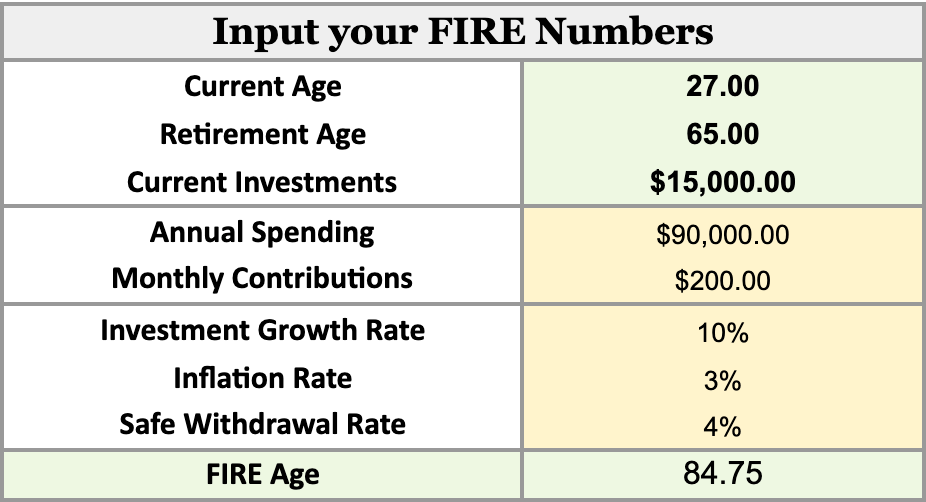
Together they have $15,000 saved toward retirement, contributing about $200/month combined. At their current contribution rate, they are on track to retire around age 85. With their goal to retire by 65, we need to make some changes.
Their largest expense is housing. The mortgage comes in at $1,947/month (assuming this includes escrow), plus an HOA of $362/month, utilities around $300/month. All in, housing is running around $2,600/month, or about 38% of take-home pay.
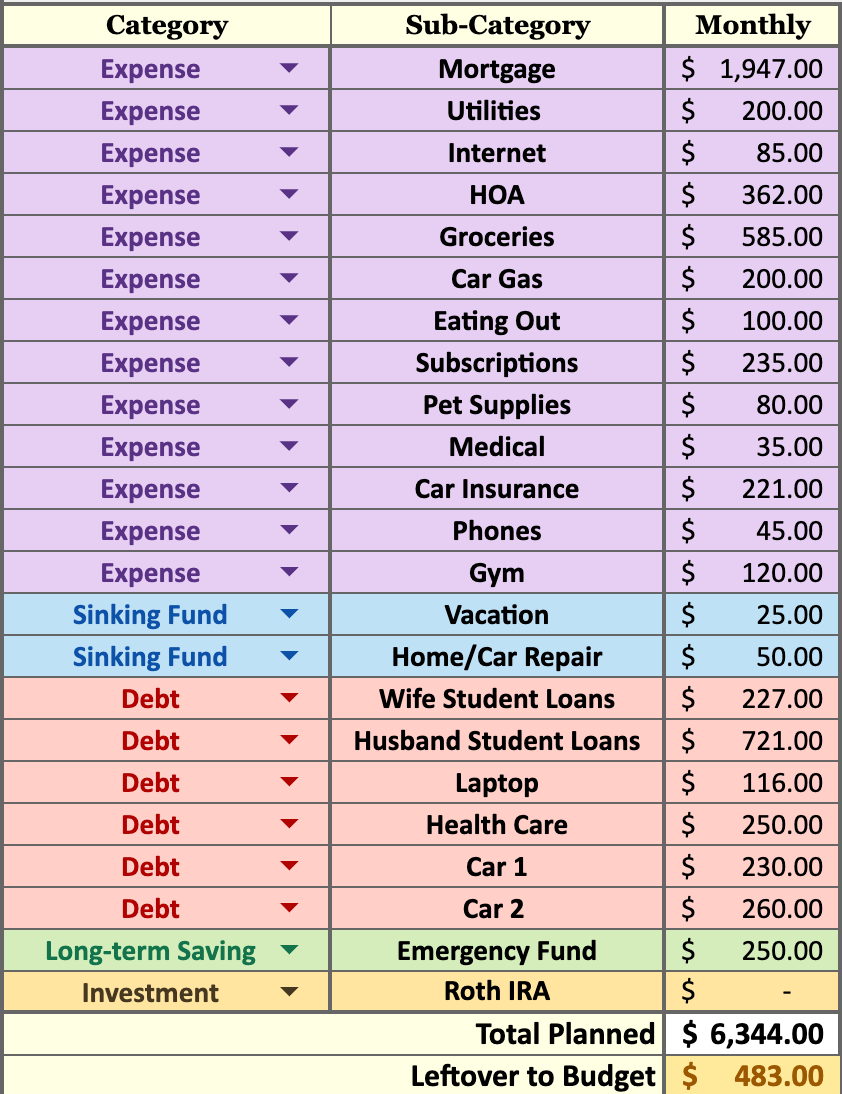
Their current debt breakdown is:
Her student loans: $12,281 at 4.45% APR ($227/month)
His student loans: $55,000 at 6.5% APR ($721/month)
Car 1 - Her Car: $10,893 at 7.8% APR ($230/month)
Car 2 - His Car: $1,560 at 6% APR ($260/month)
Laptop: $1,057 at 0% interest until August ($116.50/month)
Healthcare: $3,938 at 0% interest ($250/month)
There is a lot going on here. Luckily they have $483/month in surplus that we can put to work.
They currently have $1,650 in their emergency fund. This is way too low for a household with a mortgage, two cars, a pet, and multiple debt payments. One surprise, a furnace repair, a vet bill, a car breakdown, and they’re right back into more debt.
A fully funded emergency fund for them is roughly 3 months of expenses, or about $15,000. With $235/month in subscriptions and $120/month on the gym, there is likely $200/month that could be trimmed with a quick audit. Cancel anything unused, cut whatever feels less essential, and redirect extra money here. At $500/month toward the emergency fund they are fully funded in a little over 2 years (and can continue saving towards 6 months).
To align with their goals, it’s time to get strategic about debt. Here’s the order I’d recommend:
The Laptop
The 0% promo ends in August. At $1,057 remaining, this needs to be paid off before that deadline or interest will likely kick in retroactively. We will put their entire surplus here and pay this off by August.
Car 2 - His Car
The husband’s car only has $1,560 left. We can knock this out and use that entire payment towards another debt. This will be gone by October.
Car 1 - Her Car
At 7.8% interest this is considered high interest debt. This will be paid off by August 2027.
Each payoff frees up a monthly payment that rolls into the next target. The snowball builds fast once it starts.
I would continue with minimum payments on the medical debt since this is 0% and will be paid off relatively soon on its own.
As for the remaining student loan payments, I recommend sticking with the minimum on Hers (4.45% interest) and consider refinancing His (6.5% interest).
He could potentially lower both his interest rate and his monthly payment to free up even more money towards debt payments/investing/emergency fund.
I have a guide on Student Loan Refinancing below:
If they follow my debt payoff plan they will free up significant cash flow for investing.
In just a little over a year they can start investing $900/month into their Roth IRA’s, bringing their estimated retirement to their goal of 65!!
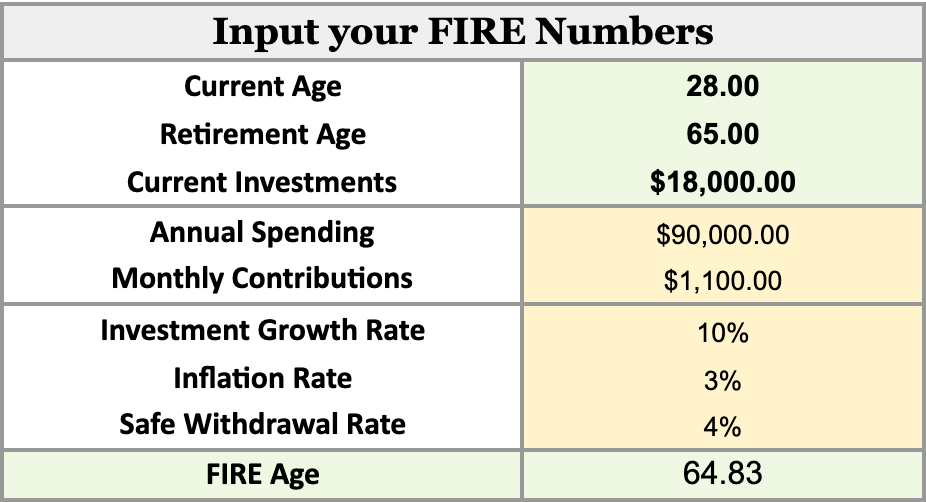
And even better, their healthcare debt will be gone just a couple months after (in October 2027) which frees up an additional $250/month.
I recommend that they both log into their employer accounts, confirm contribution rates, and check for any employer match. This could also significantly impact their retirement age!
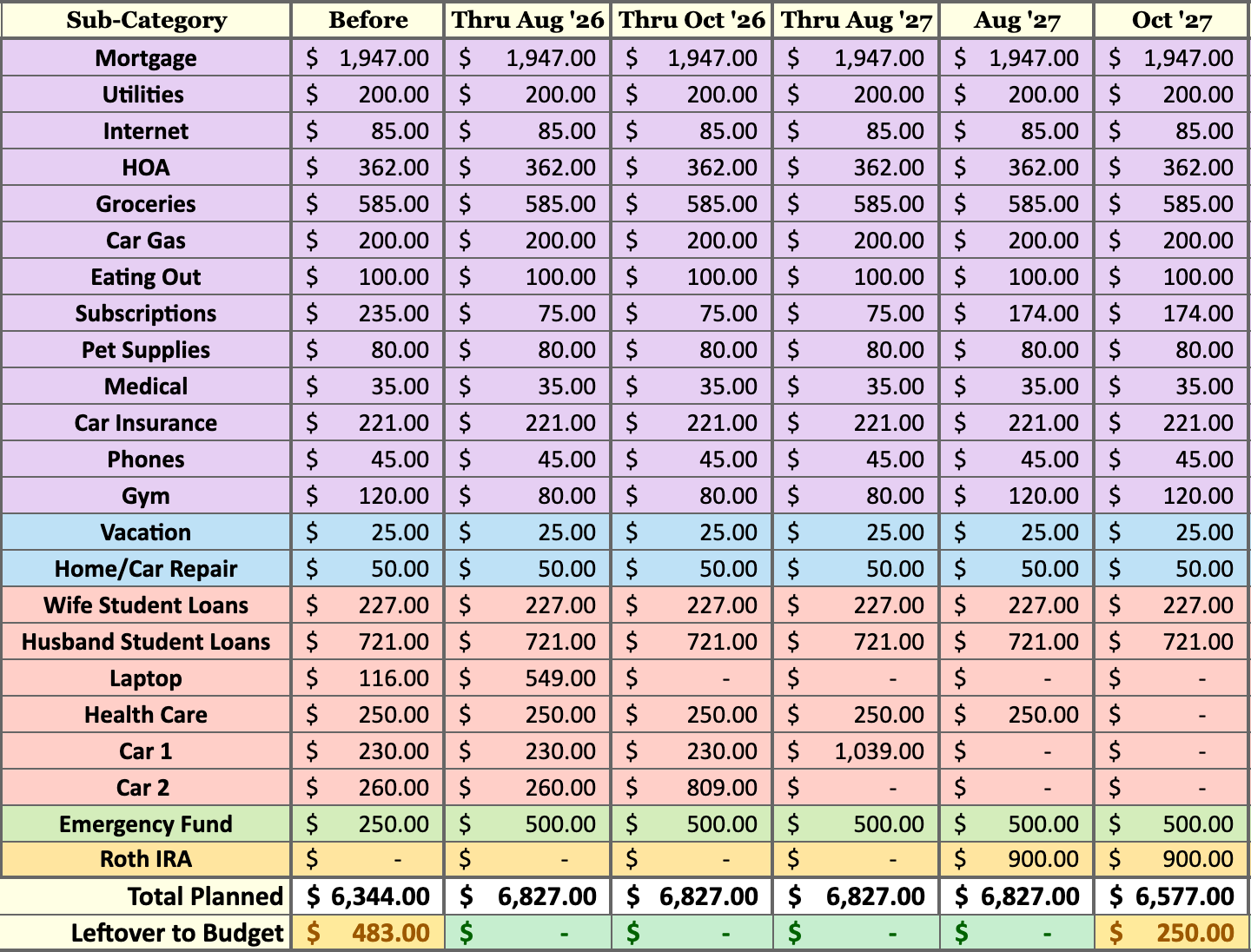
I want to show how their budget changes over time.
Through August 2026 I recommend putting all of their excess towards the laptop.
Through October 2026 I recommend putting that excess towards Car 2 (the husbands car).
Then over about the next year until August 2027 I recommend putting all excess towards Car 1 (her car).
After Car 1 is paid off, we can redirect our funds to the Roth IRA and even increase the gym and subscription spending.
Finally after October 2027 that Healthcare debt will be gone and free up an additional $250. They can put this towards fun, their emergency fund, anything!
I know they feel behind, but they have a great income and an amazing opportunity to catch up quickly as long as they commit to debt payoff over the next year!
Friendly neighborhood disclaimer: I am not a licensed financial professional and this is not financial advice. These are the changes I would personally make based on assumptions and the limited data I have received. Please do your own research and work with a professional for your unique situation.
Comments
Nothing yet. Say the first thing.
Sign in to join the conversation.