
The most powerful man on Earth spent his nights writing notes to himself.
They weren’t meant for publication. They weren’t meant for anyone. Marcus Aurelius, emperor of Rome from A.D. 161 to 180, was writing reminders — the things he kept forgetting, the arguments he kept having to win against himself. He wanted clarity. He wanted a private philosophical guide. Twelve short books, written during the worst years of his life.
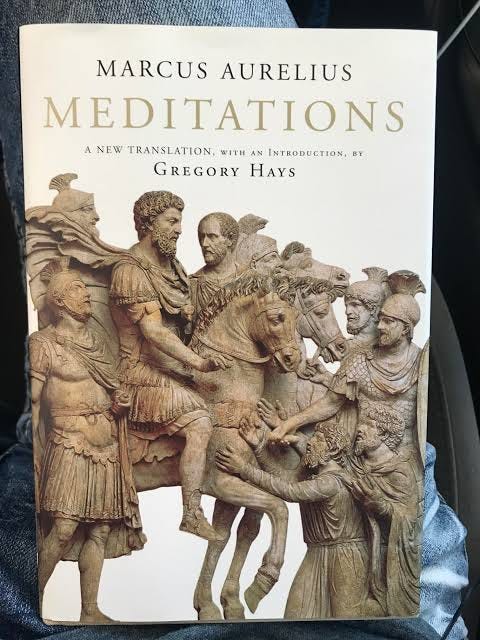
They survived nineteen centuries anyway.
That accident of history is part of why Meditations reads the way it does. There’s no audience to perform for, no thesis to defend, no reputation to protect. It’s a man talking himself down, over and over, in the dark. Which is exactly why it still works.
Born Marcus Annius Verus on April 26, A.D. 121, Marcus came to power during the age of the Imperial Cult, when Roman emperors were regarded as divinely sanctioned rulers with essentially unlimited wealth and authority. He was, by the standards of the job, extremely good at it — a capable soldier who won nearly every campaign he led, and a careful, conscientious administrator.
His private life was a catastrophe.
His wife Faustina died early. His children died one by one. By the end of his life only a single son remained: Commodus, who inherited the throne and spent his short reign dismantling everything his father had built.
Marcus knew he couldn’t control any of it. He wrote it down anyway. And what he wrote wasn’t bitter — it was patient, humble, and relentlessly practical.
Marcus began his mornings with a strange exercise. He would remind himself of the people he was about to encounter that day: the ungrateful, the arrogant, the busybodies, the dishonest, the jealous, the irritable.
It reads as pessimism. It isn’t. He was removing the element of surprise — because surprise is what converts a rude remark into a ruined afternoon. If you have already accounted for difficult people, difficult people cost you nothing.
Underneath the exercise sits the load-bearing idea of the entire book: you have no control over what other people do or how they behave. You control your own conduct and your own response. That’s the whole territory. Marcus governed an empire while insisting this small interior country was the only one worth defending.
So when someone lashes out at you — out of jealousy, out of malice, out of nothing at all — the instruction is to become the guardian of your own mind and choose the interpretation that serves you. Only you determine the impact other people have on you. The insult is not the injury. The story you tell yourself about the insult is the injury.
He pushes further than most modern readers are prepared to go. People behave badly, he argues, because they’re ignorant of right and wrong — and we should forgive them even when they hurt us. Not because they’ve earned it. Because carrying the resentment costs you far more than it costs them.
He’s realistic about the limits, too. The world is full of things you’ll disagree with. Standing up for your values matters; trying to correct everything that offends them will simply exhaust you.
We complain about traffic, slow Wi-Fi, bad service, the weather, and life in general. It feels good. It changes nothing.
Marcus offers a filter so simple it’s almost irritating. When something goes wrong, ask one question: can I do anything about this?
If yes — then go do it, and stop narrating. If no — then complaining is rent you’re paying on a problem you don’t even own. Either you deal with what comes your way or you don’t. Venting is the third option that looks like action and isn’t.
What makes this credible rather than preachy is that Marcus applied it to a duty he openly disliked. He hated holding court — the sly courtiers, the flimsy arguments, the small talk. He showed up anyway, every time, on the reasoning that dealing with those people was simply part of what he’d been given to do.
The Stoics called this Amor Fati — love of fate. Not tolerance of what happens. Not grim endurance. Actual affection for it: treating every experience, including the losses, as raw material you can use.
Comments
Nothing yet. Say the first thing.
Sign in to join the conversation.