
I spent way too much time with this book.
Not because it’s difficult — Notes from a Small Island is one of the most easily read books Bill Bryson ever wrote, which is exactly the trap. It’s funny. It’s affectionate. It goes down like a decent cup of tea. And most people finish it thinking they’ve read a charming travel memoir about a grumpy American wandering around Britain complaining about trains.
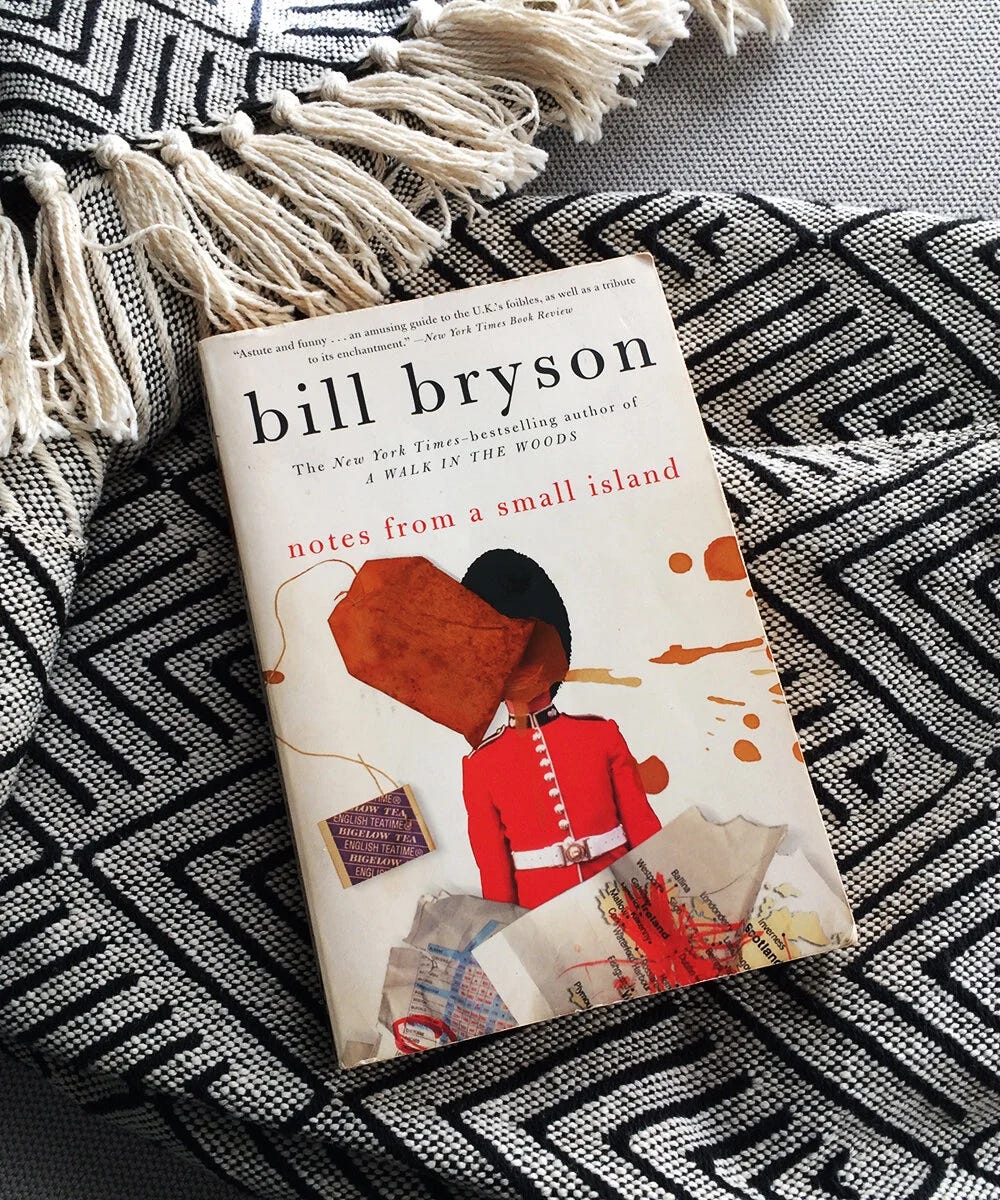
That’s what I thought too, the first time.
Then I read it again, slower, and realised Bryson had smuggled something much less comfortable inside the jokes. This isn’t a book about Britain. Britain is the case study. The actual subject is a problem almost everyone reading this has right now and doesn’t know it.
Here’s the setup he gives you in the opening pages.
In 1973, a young American arrived at Dover on a foggy night with nowhere to sleep. He got turned away from a guesthouse and ended up shivering on a hard bench in a seafront shelter, so cold he stuffed spare clothes wherever they’d fit — including, memorably, his boxer shorts. By rights it should have been a wretched night.
Twenty-odd years later he had a British wife, British children, a career built there, and a stone house in the Yorkshire Dales older than the country he was born in. And he’d decided to move the whole family back to America.
Before he went, he wanted one last journey around the country that had somehow become home. Not a victory lap. Something stranger than that — he wanted to re-enter Britain the way he’d first entered it, from the sea, so he went to Calais and stood on a beach squinting at the White Cliffs of Dover before catching the early ferry.
Then he walked and rode from one end of the island to the other, with no real plan, only a feeling.
And what he found on that trip is the thing I keep coming back to.
Bryson opens with an observation so ordinary you’ll almost skim past it.
You know the streets where you live. You know which shop sells the decent bread, which corner floods when it rains, which bus gets you home before the kettle’s gone cold.
And because you know those streets that well, you have stopped seeing them.
Most people read that as a gentle nudge toward gratitude. Notice the little things! Be present! That reading is comfortable, which is how you know it’s wrong.
What Bryson is actually describing is a perceptual mechanism, not a moral failing — and the mechanism is why willpower doesn’t fix it. You can’t decide to notice your own street. You’ve already tried. You walked down it this morning and thought about email.
The reason it doesn’t work is that
Comments
Nothing yet. Say the first thing.
Sign in to join the conversation.