
Welcome to Five Books For, a newsletter for people who love great stories. I’m so happy you’re here.
This month, I wanted to share some of my favourite classics in translation. For me, these books offer a particular kind of doorway into a different time and place, as well as into another culture. They ask you to step outside your own language, your own assumptions, and to trust that meaning can travel - that human experience, in all its specificity, can still feel recognisable across (sometimes huge) passages of distance and time.
Most classics are by their nature older books, shaped by societies that no longer exist in quite the same form, yet they remain vivid and engaging regardless. These are stories which show us how people thought, loved, believed, and struggled, in very specific times and places - and in doing so, they sharpen our sense of the present. It can feel a little like having a conversation across time, a glimpse into something that isn’t accessible through the drier facts of history. I think it’s one of the reasons that art (including literature) is so important.
This month’s selection moves across continents and centuries - from ancient epic to Soviet satire, from Turkish melancholy to Chinese myth. What connects them isn’t just their status as classics, but their distinctiveness: each offers a fully realised world, and a voice that still carries, clearly and compellingly, across time and language. As ever, I hope you find something great to read here.
This month over at Global Comment, I watched a rather strange adaptation of Beowulf. It’s safe to say I prefer the Seamus Heaney translation to the movie but I’d love to hear your thoughts - is it just me? For this month’s edition of Late To The Movies, I learned about the shift in acting technique that exploded onto the stage after World War II, with a mesmermising Marlon Brando in A Streetcar Named Desire and On The Waterfront, and a moving story of servicemen returning home from the war in The Best Years Of Our Lives.
Okay, onto this month’s recommendations!
Translated by Julia Lovell
“Monkey explained that he didn’t want to cloud-somersault first, as he was afraid his kilt would ride up and Guanyin would see his bottom.”
So what’s it about? This is one of China’s great classical novels, drawing on centuries of folklore and religious tradition, and following the irrepressible Monkey King - a trickster figure born from stone - as he joins a Buddhist monk on a perilous pilgrimage to retrieve some sacred scriptures. Along the way, they battle demons, outwit spirits, and navigate a landscape where the sacred and the absurd constantly collide.
Beneath the episodic adventures lies a rich tapestry of religious and philosophical ideas, drawing on Buddhism, Taoism, and folklore. The story wrestles with ideas of discipline and chaos, enlightenment and ego, with Monkey himself embodying the tension between wild freedom and the need for restraint.
What’s great about it? Forget about the idea of classics being serious and boring - Monkey King is gloriously, unapologetically fun. Monkey is a chaotic delight - rebellious, vain, brilliant, and often completely out of control. The constant shape-shifting, magical battles, and surreal encounters make it feel almost like a mythological road trip with no regard for realism. The book’s magic is gleefully excessive - immortality peaches, shape-shifting, hairs that turn into armies - all filtered through a hero who treats the cosmos less with awe than with mischievous opportunism. It sometimes reminded me of an animated movie, or a videogame - and it was written centuries ago (and the written form, from the 16th century, is in fact a codification of much older stories from hundreds of years before that).
At the same time, it has surprising depth. There’s a spiritual journey beneath the antics, and a sly humour that punctures authority at every turn. It’s the kind of book you can read for pure adventure, then realise later that it’s been asking much bigger questions all along.
Give it a try if: you love books that make you laugh; you love books which have a spiritual subtext; you love books which are fun; you want to read a whole different type of epic journey; you want to read one of the foundational classics of Chinese literature; you love magical realism or fantasy novels.
Translated by Maureen Freely and Alexander Dawe
“Just as warm sunlight can, by passing through a lens, turn to fire, so too can love. It's wrong to see it as something that swoops in from the outside. It’s because it arises from the feelings we carry inside us that it strikes with such violence, at the moment we least expect.”
So what’s it about? Set between Ankara and 1920s Berlin, the novel follows the story of quiet, withdrawn Raif Efendi, whose seemingly uneventful life hides a deeply buried past. Through a discovered notebook, we are drawn into his younger years in Weimar Germany, where he encounters young artist Maria Puder - the enigmatic “Madonna in a fur coat” of the title - and forms a connection that quietly alters him, and the rest of his life thereafter.
At its heart, the novel is about emotional vulnerability and the risks of being truly seen. It explores loneliness, the fragility of intimacy, and the ways in which a single relationship can shape an entire life. There is also a subtle critique of masculinity and social expectation - Raif’s sensitivity sits uneasily within the roles available to him, both in Germany and back home in Turkey.
What’s great about it? This is one of those novels that starts a little slowly, but is worth the wait. This isn’t a cheerful book but its emotional precision is extraordinary - small gestures, silences, and misunderstandings carry enormous weight, and it has an overall feeling of melancholy which suffuses the whole text in a remarkable way, without ever descending into insufferability. Maria, in particular, feels startlingly modern: self-possessed, contradictory, resistant to being reduced to a romantic ideal, and resoundingly imperfect. I’d describe this as a very thoughtful novel: the characters are thinking deeply about things, in the way that young people finding themselves often do, and it’s a poignant reminder of that feeling of searching for philosophical truth, which often gets overshadowed by daily life as you get older and more self-confident.
Give it a try if: you love thoughtful books; you’re interested in philosophy; you love love stories, no matter how sad they might be; you’ve ever wondered how differently your life might have been if just one small thing had changed; you’re interested in Weimar Germany.
Translated by Michael Glenny
“His head felt uncomfortable and somehow too hot. He took off his hat and gave a squeak of horror – he was holding a velvet beret with a bedraggled cock’s feather. The barman crossed himself. At that moment the beret gave a miaou and changed into a black kitten. It jumped on to Andrei Fokich’s head and dug its claws into his bald patch. Letting out a shriek of despair, the wretched man hurled himself downstairs as the kitten jumped off his head and flashed back to No. 50.”
So what’s it about? Set in Stalinist Moscow, the novel begins with the arrival of a mysterious foreigner - who may or may not be the Devil - and rapidly spirals into a surreal, multi-layered narrative involving a persecuted writer (the Master), his devoted lover Margarita, and a parallel retelling of the trial of Pontius Pilate.
It is a novel about power, censorship, and the nature of truth, but also about love, art, and moral courage. Reality constantly slips - the absurd becomes normal, the supernatural mundane - creating a world where official narratives are exposed as fragile, even ridiculous constructs.
What’s great about it? This novel is wildly inventive. Walking, talking cats, chaotic magic shows, bureaucrats undone by their own greed - the satire is sharp, but also deeply playful. Few novels manage to be this funny and this serious at the same time.
There’s also something genuinely moving at its core. Margarita in particular is remarkable: she refuses to betray her inner truth in a world built on fear and pretence. She sees clearly, loves fiercely, and acts with courage even when confronted by the grotesque and supernatural. What sets her apart is not just her passion, but her moral clarity: she always chooses compassion over self-interest, and in doing so becomes the novel’s quiet, unshakeable centre of integrity. She’s one of my favourite female characters from any book I’ve read.
The love between the Master and Margarita provides an emotional anchor amid the madness, and the book’s belief in artistic integrity - however fragile - gives it lasting resonance. It’s strange, bold, and completely unlike anything else I’ve read.
Give it a try if: you love books that are utterly, delightfully bonkers; you’re looking for something totally different to read; you love books which skewer contemporary society; you love love stories; you like reading books which ask big moral questions in a clever way; you love satire.
Translated by Emily Wilson
Text within this block will maintain its original spacing when published
“Tell me about a complicated man.
Muse, tell me how he wandered and was lost
when he had wrecked the holy town of Troy,
and where he went, and who he met, the pain
he suffered in the storms at sea, and how
he worked to save his life and bring his men
back home. He failed to keep them safe; poor fools,
they ate the Sun God’s cattle, and the god
kept them from home. Now goddess, child of Zeus,
tell the old story for our modern times.
Find the beginning”
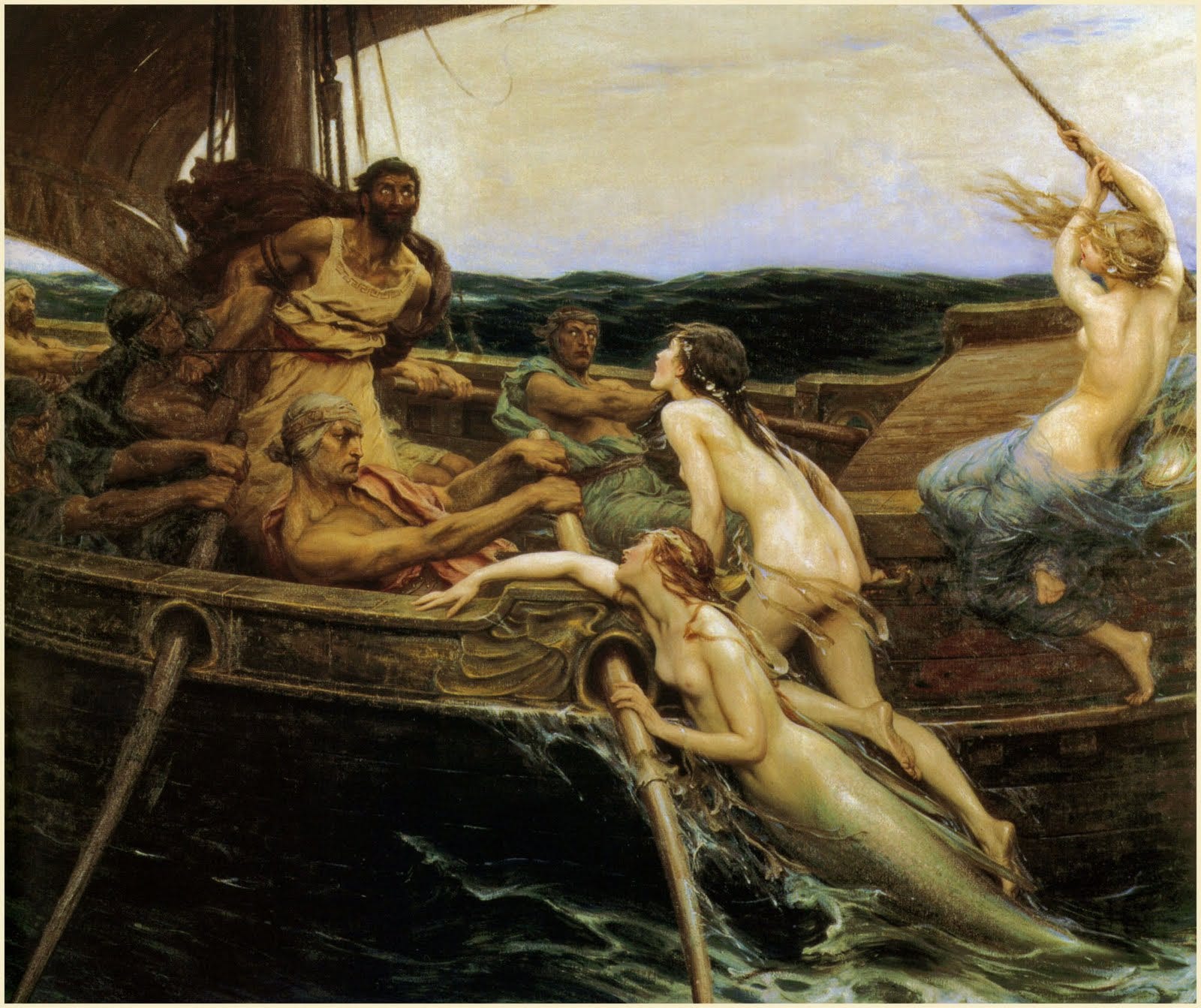
So what’s it about? Homer’s classical epic follows Odysseus as he struggles to return home after the Trojan War, facing monsters, gods, temptations, and his own limitations along the way. Meanwhile, back in Ithaca, his wife Penelope and son Telemachus contend with a house overrun by suitors who assume that Odysseus will never return and that Penelope will therefore need a new husband. However, the poem is about far more than a physical journey. It explores identity, storytelling, loyalty, and the nature of home. It also raises complex questions about heroism - Odysseus is cunning and resourceful, but also flawed, deceptive, and at times deeply troubling, which resonates with many of the questions we’re grappling with today.
What’s great about it? Emily Wilson’s translation (the first complete English translation by a woman, I believe) makes this ancient text feel startlingly immediate. Her language, rendered in iambic pentameter, is clear, brisk, and unsentimental, cutting through the idea that epics must be dense or inaccessible. It reads like a gripping story, and the audiobook, narrated by Clare Danes, is a real pleasure to listen to. Other modern translations often lean into what we think of as older language, with forms that are often taken from 19th century English but actually bear no relation to how the poem would have sounded to contemporary audiences in Ancient Greece. She also doesn’t shy away from some of the moral questions involved in translation; she’s not afraid to leave in the more brutal aspects without softening them to make them fit a more modern idea of what a hero should be.
What emerges is a sharper, sometimes darker version of the tale - one that doesn’t smooth over its violence or moral ambiguity. It’s an excellent entry point if you’ve ever felt intimidated by Homer, and a refreshing reinterpretation if you haven’t.
Give it a try if: you love ancient Greek myths; you want to experience Homer’s epic in a new way; you love poetry of any sort; you love Shakespeare; you prefer audiobooks.
Translated by Louise and Aylmer Maude
“…he was struck for the first time by the endless variety of men’s minds, which prevents a truth from ever presenting itself identically to two persons.”
So what’s it about? Set during the Napoleonic Wars, this book (it’s perhaps too sprawling in structure to be described as a novel, exactly) follows a vast cast of characters - including Pierre Bezukhov, Prince Andrei, and Natasha Rostova - as their personal lives unfold against the backdrop of historical upheaval and Napoleon’s doomed invasion of Russia. Battles, salons, marriages, and crises of faith all interweave into a vast living, breathing portrait of Russian society.
War and Peace is a meditation on history, free will, and the search for meaning. Tolstoy uses the book to question the idea that great individuals shape events, instead emphasising the complexity of forces - social, psychological, and accidental - that drive human life.
What’s great about it? Yes, it’s long. But it’s also surprisingly and pleasantly readable - full of vivid scenes, sharp observations, and characters who feel astonishingly real. Natasha’s youthful energy, Pierre’s searching introspection, Andrei’s disillusionment - they all linger long after you’ve turned the last page.
What makes it truly special is its scope. Few books manage to feel both intimate and immense at the same time. It captures the texture of ordinary life alongside the sweep of history, reminding us - quietly but insistently - that the two are inseparable.
There are some sections which I found hard going - Tolstoy’s philosophical diatribes on the nature of history, primarily, but those are balanced by a real narrative drive regarding the main characters and how their lives will turn out. There are some parts which are easily as gripping as a thriller, and other slower, more thoughtful chapters too. I’ve heard it said that reading War and Peace is more like reading many books than just one, or words to that effect, and I definitely found that to be true.
Give it a try if: you love epic stories which capture both the ordinary and the extraordinary; you love a book which you can read slowly; you love philosophical books; you love books with great characters who stay with you long afterwards; you love books you can return to and reread.
NB: I read War and Peace with Simon Haisell’s group readalong and it made a big difference to my experience of it. It was wonderful to have a space where people shared their reflections as we progressed and it added depth and interest to what is a very long read. He is running the group again this year and it’s never too late to join:
I hope you found something good to read here. As ever, I’d love to hear if you’ve read and loved (or even hated) any of the books here, and which ones you’d add to the list. You can reply directly to this email or leave a comment by clicking the button below.
In the meantime, I wish you happy reading,
Kate
I want to take a moment to express my sincere gratitude to each and every one of you who supports this newsletter - whether through a paid subscription, or by reading, sharing, or simply liking the posts. Every share and like helps more people discover the newsletter, and I truly love it when new subscribers come on board through a recommendation. It means a lot to me that you feel it’s worth sharing.
If you’re not already subscribed, you can sign up using the button below to receive these newsletters directly in your inbox. It’s free, but if you’d like to support FBF with a paid subscription, that’s wonderful.
Comments
Nothing yet. Say the first thing.
Sign in to join the conversation.