
Welcome to Five Books For, a newsletter for people who love great stories. I’m so happy you’re here.
Things are still hectic here so I am putting the fun stuff edition of the newsletter on hold for a while until I have more time to dedicate to it. In the meantime, we’ll still have the regular FBF newsletter (like this one!) and I might share a few extra links here and there as little extras if I find something interesting.
Here in Spain summer feels like it has lasted forever this year - here we are at the end of October and I’m still drinking iced coffee, and the dragonflies are everywhere - usually we see them in the summer so it’s very strange to still be seeing so many of them now. It means that thoughts of Halloween are even further away for me than usual, although we have had some heavy rain and a very dramatic thunderstorm this week, which has helped me feel a bit more autumnal.
If you’ve been here for a while you already know that I’m a big fan of seasonal (and indeed locational) reading, but I try to vary the October recommendations each year so that I’m sharing a wide range of books with you instead of too many things in the same vein.
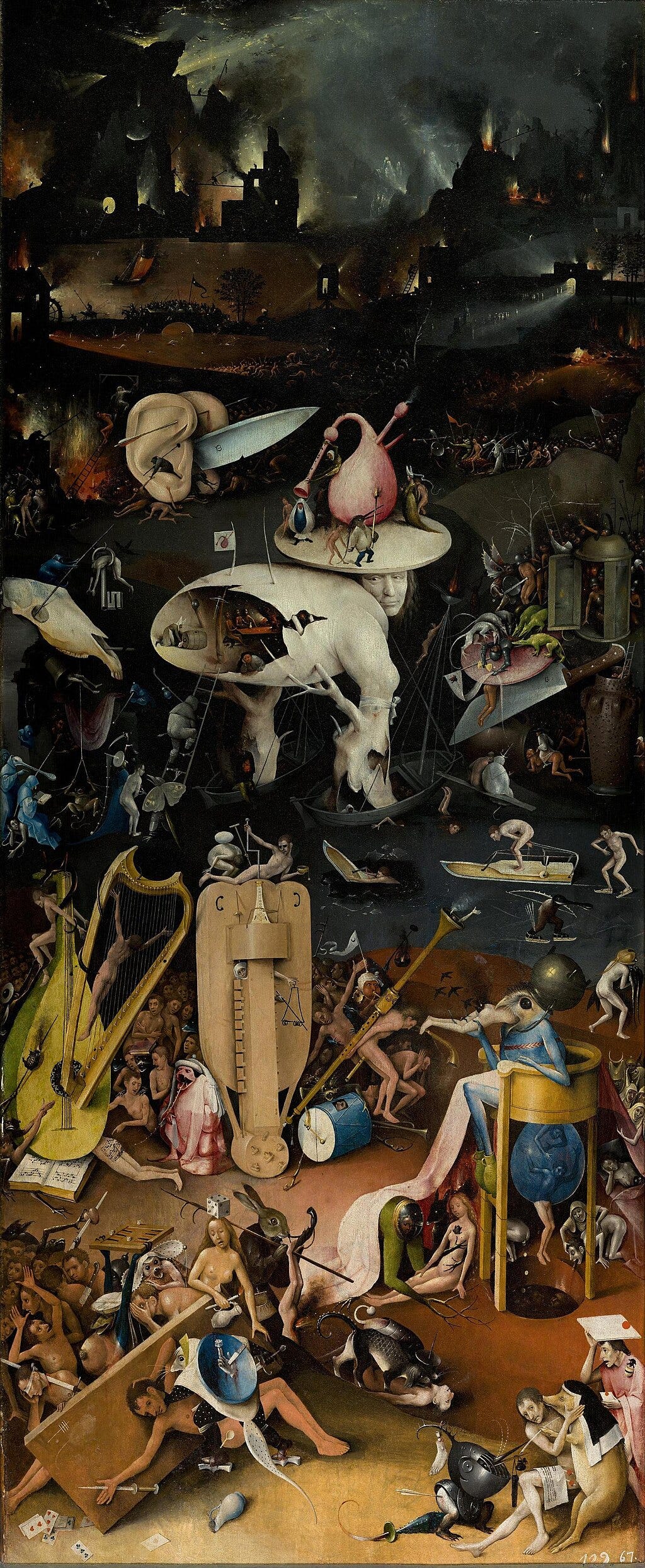
This year, I thought it would be interesting to move away from typical supernatural horror and look at some books which make you feel unsettled - so, not typical Halloween stories at all, even though they often achieve the same aim of provoking a strong reaction, in the same way that a horror story might. It takes great skill to write this kind of book; one of the recommendations below made me so tense reading that I had to keep putting it down and taking a break because I just couldn’t bear the tension. All of them stayed with me long after I’d read them, and while they’re all quite different from each other, they are all absolutely brilliant reads which I hope you’ll enjoy. I’d love to hear from you if you’ve read any of them and see what you thought, and whether you found them as suspenseful as I did!
Over at Global Comment you can catch up on my most recent Great Adaptations and Late To The Movies columns.
At Great Adaptations, on the theme of unsettling reads, I take a look at Stephen King’s Carrie: a brilliant read and a very unsettling film.
At Late To The Movies, there are two new columns up: one on German Expressionism and one on the dawn of Hollywood’s Golden Age. It was fascinating watching the films for these - I loved learning more about German Expressionism and getting to watch some utterly brilliant options from the 1930s.
Bonus: on the topic of German Expressionism, Kelcey Ervick, one of my favourite writer-artists, just sent this wonderful newsletter.
Okay, onto this month’s recommendations!
“My life really started when I gave up trying to fit in, when I settled into myself, like an alligator sinking into a swamp.”
So what’s it about? Death of a Bookseller is a darkly comic, unsettling novel set in a small branch of a high-street bookshop in East London. It centres on two women who work there: Roach, a morbid, lonely bookseller with a fascination for true crime, and Laura, her bright, bookish, seemingly well-adjusted colleague.
Roach is in her late twenties, socially awkward and isolated, her flat filled with mould and the paraphernalia of her true-crime obsession: podcasts, memorabilia, and the biographies of the serial killers she half-worships. She sees in Laura a kindred spirit when she discovers that Laura once had a connection to a real-life murder - a traumatic event from her past that she rarely speaks of. For Roach, this revelation is thrilling. She believes it makes them bonded somehow, united by their proximity to death.
Laura, however, wants nothing to do with it. She’s polite but firm, repulsed by Roach’s ghoulish fascination and the way she seems to fetishise violence. Yet Roach’s interest in Laura grows into something obsessive. She begins to follow Laura online, collect details about her life, and blur the line between curiosity and intrusion. But how far is Roach willing to go, and can Laura hold things together long enough to work out what’s going on?
What’s great about it? This is the type of book I’d normally read in one sitting, but it was such a tense read that I simply couldn’t - I had to keep putting it down and looking at pictures of puppies to break the tension. It is absolutely brilliant.
Perhaps the most striking thing about the book is its voice. Slater writes with wicked intelligence and a distinctly deadpan voice. Roach’s narration, in particular, is funny, grotesque, and oddly sympathetic, even when she’s at her most appalling: she’s the kind of character you desperately want to look away from, but can’t. The book’s humour is pitch-black, laced with cultural references and weary cynicism, but never glib.
The psychological tension is superbly handled. There’s no neat villain-or-victim divide; both Roach and Laura are complex, flawed, and often unreliable.
The book is a sharp take on true-crime culture: Slater understands the way we consume horror under the guise of empathy. Through Roach, she asks whether society’s obsessive interest in murder victims is just another form of voyeurism - and whether even ‘respectable’ true-crime fans are complicit in turning real suffering into entertainment. It’s a sharp commentary on social media ethics, fandom, and the illusion of moral superiority.
The setting is also a triumph. The bookshop feels claustrophobic and vividly real: full of fluorescent lights, tedious customers, stacks of pastel-coloured paperbacks, and the brittle camaraderie of underpaid staff. The detail is so precise it’s almost tactile. The everyday drudgery of retail becomes the backdrop for obsession, resentment, and power games, making the disturbance the reader feels both domestic and believable.
What starts as a workplace story about two very different women becomes an unnerving portrait of obsession, loneliness, and the ethics of consuming other people’s pain as entertainment.
Emotionally, what makes it powerful is that it’s not just about crime or death, but about loneliness and the hunger for meaning. Both Roach and Laura are haunted by isolation and grief, and their mutual fixation becomes a kind of distorted intimacy. That’s where the book’s real sting lies: it shows how, in the absence of genuine connection, people will cling to the darkest possible substitutes.
The ending, which I won’t spoil, is both chilling and thought-provoking. It doesn’t tie things up neatly; instead, it leaves you unsettled, questioning your own complicity in the very voyeurism the novel critiques.
Give it a try if: you love books that make you squirm; you love books that keep you on the edge of your seat; you love books which are also a commentary on modern culture; you like stories with sharp psychological insight; you love books set in London; you like true crime.
“Imagine spending four days dying from 6DM and saving all your hate up for one final message only to have it ruined by bad grammar.”
So what’s it about? Set in London in December 2023, Last One at the Party opens as a deadly virus known as 6DM – short for ‘Six Days Maximum’ – tears through the population. It’s brutally efficient: anyone who catches it dies within six days. The world collapses in record time: cities burn, the infrastructure of everyday life falls apart, and the few survivors face a desolate, dangerous landscape filled with decaying corpses, empty houses, and the eerie silence of extinction.
At the centre of this chaos is an unnamed woman who appears to be the last living person on Earth. Before the outbreak, she was ordinary to the point of invisibility – a woman who spent her life trying to fit in, to say and do the right things, to avoid standing out. Now, stripped of all expectation and social structure, she’s forced to confront who she really is when there’s no one left to witness her choices. Her only companion is a golden retriever she names Lucky, and together they embark on a journey across a ruined Britain in search of food, safety, and the faint possibility of finding another survivor.
Though it’s set in a post-apocalyptic world, Last One at the Party is as much an introspective character study as it is a survival story. The woman’s journey becomes one of self-discovery, grief, and reckoning – a darkly funny and brutally honest exploration of what it means to live when everything else has gone. Through her reflections on the past and her struggle to adapt to solitude, the novel asks what remains of identity and purpose when civilisation, relationships, and routine have vanished.
Clift balances horror and humour deftly, creating a story that’s both bleak and oddly life-affirming. The result is a sharp, emotional, and deeply human novel about loss, loneliness, and the strange absurdity of being the last one left to witness the end of the world.
What’s great about it? One of the great strengths of Last One at the Party lies in its narrator’s voice. She’s not a stereotypical apocalypse heroine - she’s not a steely survivor, and she has no grand plan for rebuilding humanity. She’s flawed, impulsive, often frightened, and deeply human. That vulnerability gives the book its heart. She reacts not as a hero but as an ordinary person would when faced with extraordinary horror. It’s refreshing, raw, and often very funny in its honesty. The absurdity of it all – the strange, comical moments that survive even in an apocalypse – provides balance against the bleakness. It keeps the story from tipping into despair and highlights the surreal comedy that often lurks inside tragedy.
Clift writes with a vivid sense of place. London’s deserted streets, abandoned cars, and eerily silent suburbs are rendered with cinematic precision. The imagery of the world collapsing feels immediate, but what lingers most is the quiet that follows – the stillness of a life stripped to its essentials. The contrast between the bustling city the narrator once knew and the wasteland it’s become gives the novel its haunting atmosphere.
The emotional arc is another highlight. The narrator begins as someone defined by compromise and insecurity, shaped by a lifetime of trying to please others. As the world disappears, so does her need to conform. Her evolution – from a woman paralysed by loneliness and guilt to someone who begins, however clumsily, to live for herself – is compelling. It’s not heroic in the conventional sense, but it’s deeply moving.
What also sets it apart is its originality within a crowded genre. Pandemic and apocalypse novels are hardly rare, but Last One at the Party focuses less on logistics and more on emotional survival. The virus, while terrifying, is almost background to the main question: who are we when there’s no one left to see us? The thing that stayed with me the most about this book wasn’t just the horrors of the premise but also the bigger questions the book is asking.
Ultimately, what’s great about Last One at the Party is how it makes the end of the world feel oddly personal. It’s about apocalypse, yes, but more importantly about the loneliness and liberation that come when there’s no one left to perform for. It’s brutal, funny, sad, and strangely life-affirming – a story not about how to save humanity, but how to rediscover what it means to be human.
Give it a try if: you love books with messy, imperfect female characters; you loved watching Fleabag; you like speculative fiction with emotional insight; you like books which take a big premise and explore it at a human scale; you love stories which ask thoughtful questions.
“Good girls smell like burnt tangerines for those with bad intentions - fragrant but bitter, it is a repellant. Bad girls like me smell like ripe apples, ready for picking, juicy and tart. No one will miss them at all.”
So what’s it about? You Let Me In is an eerie, genre-blurring novel that moves between gothic horror, dark fairy tale, and psychological suspense. It tells the story of Cassandra Tipp, a bestselling romance novelist who has always been shrouded in scandal. She’s known as an eccentric recluse, a woman whispered about for her strange behaviour and her connection to two violent deaths in her family’s past: her husband’s murder and her father and brother’s apparent murder-suicide. After years of silence, Cassandra vanishes, leaving behind a single manuscript addressed to her niece and nephew. The book itself is that manuscript - a sort of final confession.
In her note, Cassandra tells her heirs that they must read the entire document before they can claim their inheritance. What follows is a first-person narrative in which she recounts the story of her life: a childhood marked by abuse, trauma, and the constant presence of an otherworldly being called Pepper-Man. Whether Pepper-Man is a fae creature, a spirit, a delusion, or something more sinister is never made clear. He claims to love Cassandra, to protect her, to give her gifts - but his attention is suffocating, controlling, and deeply disturbing.
Cassandra insists that the fantastical events she describes - encounters with the faerie world, the rituals, the blood offerings - are all true. Yet the tone of her account keeps readers off balance. It could just as easily be the fractured testimony of a traumatised woman trying to make sense of the violence she’s endured. The book walks a razor-thin line between supernatural horror and psychological realism, forcing you to question whether Cassandra is a victim of otherworldly forces or the architect of her own terrible acts.
As the narrative unfolds, we learn more about the family tragedy that made Cassandra infamous, and about how her ‘relationship’ with Pepper-Man has shaped every stage of her life. There’s beauty as well as horror in her telling - a lyrical, dreamlike quality that makes the story feel both magical and monstrous. The ambiguity is deliberate: Bruce never confirms whether the supernatural is real, allowing readers to interpret Cassandra as either haunted by faeries or by her own mind.
What’s great about it? The most striking thing about the book is its atmosphere. Bruce writes in a lyrical, hypnotic voice that pulls you into Cassandra’s mind until you can no longer tell where reality ends and delusion begins. The tone is calm and intimate, even when describing terrible things. That contrast - gentle prose against horrific implication - makes the book profoundly disquieting. There’s no screaming horror here, only a quiet dread that seeps under your skin.
Cassandra herself is an extraordinary character. She’s intelligent, beguiling, manipulative, tragic, and possibly insane. You never quite trust her, yet you can’t stop listening. Through her eyes, the world becomes strange and feral: forests shimmer with menace, the fae world is seductive but cruel, and human relationships seem pale by comparison. What’s brilliant is that Bruce never forces the reader to decide whether Cassandra’s version of events is literal or metaphorical. The story works equally well as a supernatural haunting and as the fragmented memory of an abuse survivor trying to rewrite her pain as myth. That ambiguity is the book’s greatest strength.
The writing style is elegant and deliberate. Bruce draws on the rhythms of folklore: circular, incantatory, laced with imagery of woods, blood, and desire. The book is short but dense with mood and suggestion. It feels almost like a gothic confessional or a lost fairy story, and it has the same sort of darkness we see in the traditional fairy tales.
Thematically, the novel explores power, control, and storytelling. Cassandra’s “confession” is also a performance, an attempt to reclaim her story on her own terms. By the end, it’s unclear whether she’s offering truth or revenge. That makes the book not just a gothic tale but also a meditation on how women’s voices are doubted, twisted, or reclaimed in the face of violence.
Give it a try if: you love books which refuse to give easy answers; you love books which are richly imagined; you love books with memorable characters; you love books which explore difficult topics with sensitivity and imagination.
“These are thoughts I never let leave my lips. These are thoughts most mothers don’t have.”
So what’s it about? The Push is a psychological drama that explores the dark side of motherhood, inheritance, and trauma. The novel is written as an intimate, confessional letter from Blythe Connor to her estranged husband, Fox, in which she tries to explain what happened to their family - and why she believes their daughter, Violet, is not like other children.
Blythe comes from a long line of women marked by mental illness and neglect. Her mother and grandmother both failed in different ways to provide love or stability, leaving Blythe determined to break the cycle when she has a child of her own. But when Violet is born, Blythe struggles to bond with her. The baby’s behaviour unsettles her - there’s a sense of something calculating, even cruel, in her daughter’s eyes - though Fox dismisses her fears as paranoia.
As Violet grows older, the cracks in the family deepen. When their second child, Sam, is born, Blythe finally experiences the easy, instinctive love she’d longed for. But tragedy strikes, and Blythe’s fragile sense of reality collapses. Was she right all along about Violet? Or is she reliving the ghosts of her own mother’s failures?
Tautly written and emotionally unflinching, The Push examines the tension between nature and nurture, the legacy of trauma, and the silent pressure to be a ‘good mother.’ It’s both a domestic thriller and a psychological study, and it’s unsettling because it explores the taboo of mother-child relationship breakdown.
What’s great about it? One of the book’s biggest achievements is its emotional intensity. Audrain writes with an intimacy that pulls readers directly into Blythe’s mind. You feel her anxieties, self-doubt, and mounting dread as if you were inside her consciousness. This closeness makes the story almost claustrophobic in the best way: you can’t put it down because you’re living her fear and uncertainty alongside her.
The novel also excels in its exploration of motherhood and trauma. It doesn’t shy away from the fact that some women struggle to bond with their children, nor from the complicated legacy of familial dysfunction. Blythe’s fears about Violet are unnerving precisely because they feel plausible: Audrain portrays a mother who is both loving and deeply flawed, trying to navigate the impossible expectations placed on women. This moral and emotional ambiguity is part of the book’s power.
The pacing and suspense are other highlights. Though the story is intimate and psychological, it reads with the tension of a thriller. There are hints that something terrible may happen, but the narrative keeps the reader guessing: is Blythe reliable, or is she haunted by her own trauma? The slow build to the climax is gripping, and it makes the finale hit with real emotional force.
The prose is spare yet lyrical, blending raw emotion with moments of reflection and sharp observation. She uses small domestic details - the rhythm of feeding a baby, the silence of a house, a child’s unexpected glance - to create tension and evoke dread. These details make the horror feel grounded in reality, which heightens the psychological impact.
The novel resonates because it asks difficult, universal questions. What makes a mother? How much of who we are is shaped by genetics versus upbringing? And what happens when we can’t control the narrative of our own lives - or our children’s?
Give it a try if: you love books which explore the depths of psychology; you love books about motherhood or women; you love thrillers which make you think.
“The cops would call them perpetrators. Their lawyers would call them clients. Politicians would call them scum. Criminologists would call them sociopaths. Sociologists would call them misunderstood. The 110th MP would call them dead men walking.”
So what’s it about? Make Me is the twenty‑third book in the Jack Reacher series, although, like all the Reacher novels, it can be read as a standalone. The novel opens with Reacher arriving in the small town of Mother’s Rest, curious about its strange name. Reacher soon discovers that Mother’s Rest hides secrets far darker than its sleepy appearance suggest when his attention is drawn to a case involving a missing private investigator. His disappearance is tied to the town’s dark underbelly, and, as ever, Reacher’s curiosity and sense of justice compel him to look deeper.
As Reacher investigates, he uncovers a criminal network operating in the town, but what are they doing? The answers will be darker and more disturbing than he can imagine.
What’s great about it? I feel like I’m constantly recommending Reacher novels (I mean, they’re all so good, so…), but this one is slightly different. It’s darker than Child’s usual novels and it also starts off more slowly, beginning with an investigation that slowly ramps up the tension.
The setting is also a little different: in some ways Mother’s Rest reminded me of a horror movie, in the way that everything looks fine on the surface but you can sense that something is off. It’s a very effective way of building narrative tension, especially in a book that’s paced more slowly than the rest of the series.
Like all Reacher books, the confrontation and delivery of justice is hugely satisfying, but what stands out here is Reacher’s investigative brain, which gets a particularly good outing here.
Give it a try if: you love thrillers; you don’t mind books which have a darker core; you love books where justice is delivered; you love the Reacher series; you love great heroes; you love mystery stories.
I hope you found something good to read here. As ever, I’d love to hear if you’ve read and loved (or even hated) any of the books here, and which ones you’d add to the list. You can reply directly to this email or leave a comment by clicking the button below.
In the meantime, I wish you happy reading,
Kate
I want to take a moment to express my sincere gratitude to each and every one of you who supports this newsletter - whether through a paid subscription, or by reading, sharing, or simply liking the posts. Every share and like helps more people discover the newsletter, and I truly love it when new subscribers come on board through a recommendation. It means a lot to me that you feel it’s worth sharing.
If you’re not already subscribed, you can sign up using the button below to receive these newsletters directly in your inbox. It’s free, but if you’d like to support FBF with a paid subscription, that’s wonderful.
Alternatively, if you’re unable to commit to a monthly payment at the moment but would like to leave a tip, you can click below to send a one-off payment of any amount. Your support means a great deal to me, and I’m incredibly grateful for everything you do to help keep this community thriving.
Comments
Nothing yet. Say the first thing.
Sign in to join the conversation.