
On a hot and humid summer afternoon in Memphis, Tennessee, a legend is lost, on this day in music.
The Daily Elvis
1977: In the early afternoon, fiancée Ginger Alden discovers an unresponsive Elvis Presley in the master bedroom at Graceland. At 3:30pm CDT in Memphis Baptist Hospital, The King is pronounced dead.
Word had spread about Elvis’s hospitalization, and at 4:00pm CDT, hospital spokesman Maurice Elliott imparted the tragic news of his death to a small crowd of reporters that had gathered outside the hospital. It was immediately picked-up by the AP and UPI wire services, and the news of the loss of Elvis was near-instantaneously global.
The King had been working relentlessly in the years up to his death, even through exhaustion and health problems. The stress of his concert and recording schedule, as well as the pressures of fame, along with a number of prescription drugs for his ailments, caused him to suffer cardiac arrhythmia so severe, it resulted in a heart attack.
Within hours of the announcement, an estimated 50,000 admirers had made their way to the gates of Graceland. On August 17th, a public viewing of Elvis’s body was held at the mansion, with mourners, numbered over 80,000, lining up for hours to get a glimpse of The King in repose.
The effect of the passing of Elvis became its own phenomenon. He had millions and millions of admirers, all of whom felt a deep sadness in his loss. He was a cultural icon, and even those who weren't ardent fans had favourite Elvis songs and enjoyed his music. Most importantly, Elvis was a kind and generous man, and a father who valued family. It was a most profound loss for those closest to him.
Upon learning of the news, radio stations across the United States and internationally, immediately abandoned their programs in favour of an all-Elvis format with news updates and tributes to The King. TV networks and local stations around the country broke-in to their regular afternoon programming to announce the tragedy, led by Memphis station WHBQ-TV. Audiences were shocked and saddened.
At record stores, long-time fans and casual listeners alike quickly bought-out all the Elvis albums, singles, 8-tracks, and cassettes. RCA Victor ran out of its inventory. Vinyl record manufacturing plants worldwide shifted immediately to pressing nothing but Elvis LP’s 24/7 to meet the demand.
The passing of The King was front page on every newspaper, be it local, regional, or national, with printing plants running millions of extra copies. All were sold out as fast as they could be produced.
President Jimmy Carter issued an official statement from the White House, stating that Elvis had permanently impacted the essence of American pop culture and that his loss, “…deprives our country of a part of itself…”
Elvis had been a huge influence on a generation of singer-songwriters and performers, including icons like John Lennon and Bob Dylan, who was so distraught he could barely speak for a week. Frank Sinatra was very public in his love for Elvis and the sadness he felt over the loss of his friend.
One broadcaster stood out from the rest, not for its excellent coverage, but for its lack of coverage. Legendary CBS anchorman Walter Cronkite had been away on vacation at the time, leaving senior producers to cover his managing-editor duties. Deciding that a celebrity death was not a lead story, they instructed alternate anchor Roger Mudd to lead with a political story about the treaty for the Panama Canal. Elvis was mentioned deep in the broadcast.
Ratings analysis later showed that CBS lost nearly its entire audience within seconds of the canal report as viewers changed the channel to other broadcasters. In an attempt to cover for the error in judgment, CBS ran a detailed documentary special on The King three days later. Cronkite would also address the situation upon his return to the desk. The experience prompted CBS to alter its approach to reporting on cultural events.
I remember hearing the news on the radio. I was at the dépanneur buying a Freezie with my friends. Though I had no knowledge of the phenomenon that was The King, I had his first album at home and I loved it. I could tell that his death had a major impact on the culture, though I also didn’t use words like “culture” when I was nine years old.
The legend of The King lives on to this day, 49 years since his passing. This very blog of course includes an Elvis vignette every day, but there are thousands of websites wholly dedicated to Elvis tribute and memorabilia.
In closing, allow me to re-define an old French tradition. In this pronouncement, the second part does not refer to the new king, but to the lasting legacy of the one true King:
Le roi est mort! Vive le roi!
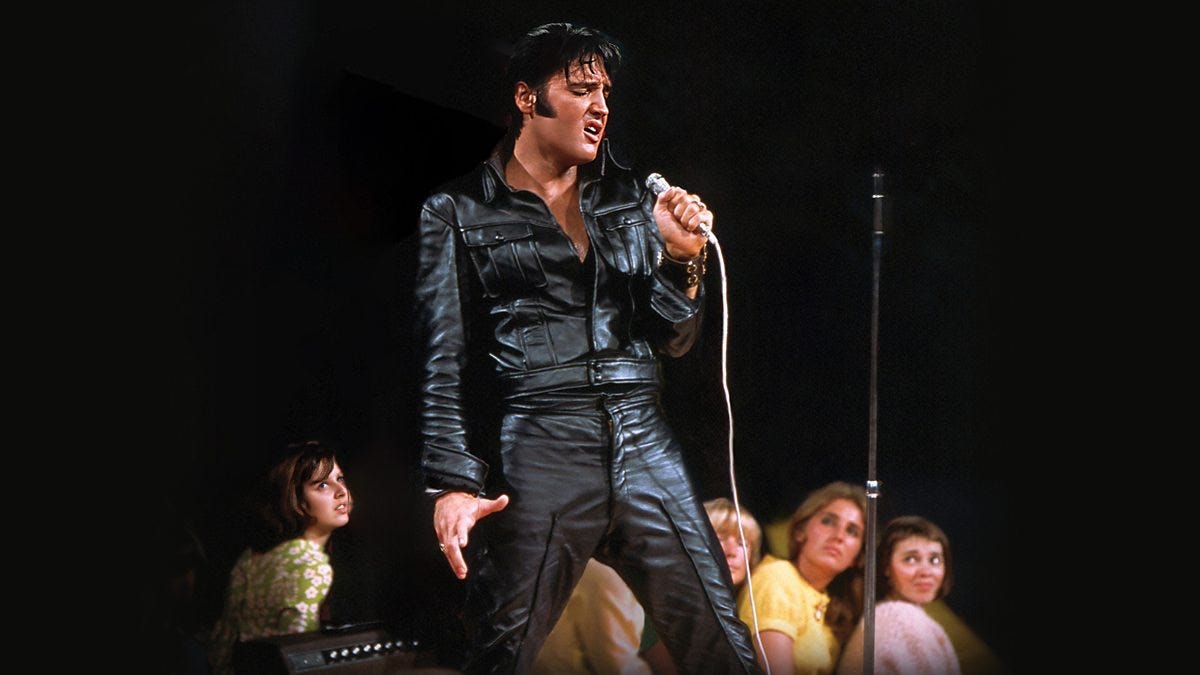
An absolutely iconic photograph of Elvis, performing during his famous ‘68 Comeback Special. Just look at the adoration in the eyes of those women.
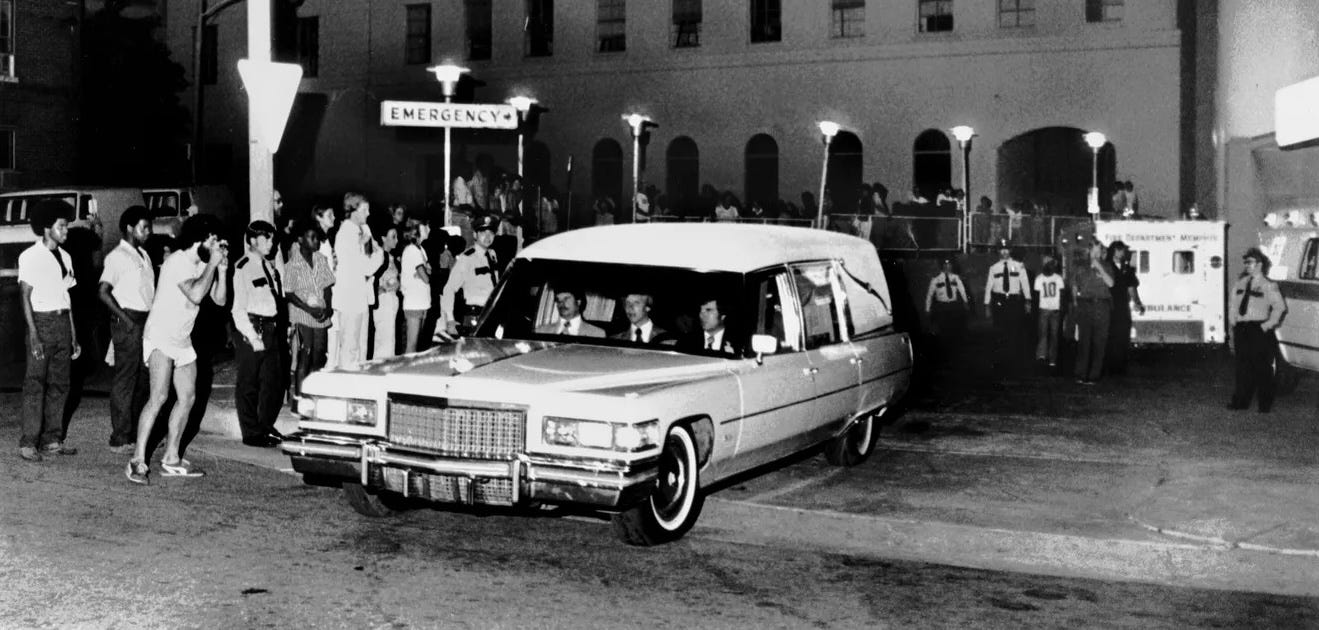
A hearse leaves Memphis Baptist Hospital on the night of August 16, 1977, carrying the body of Elvis Aaron Presley, The King of Rock and Roll.
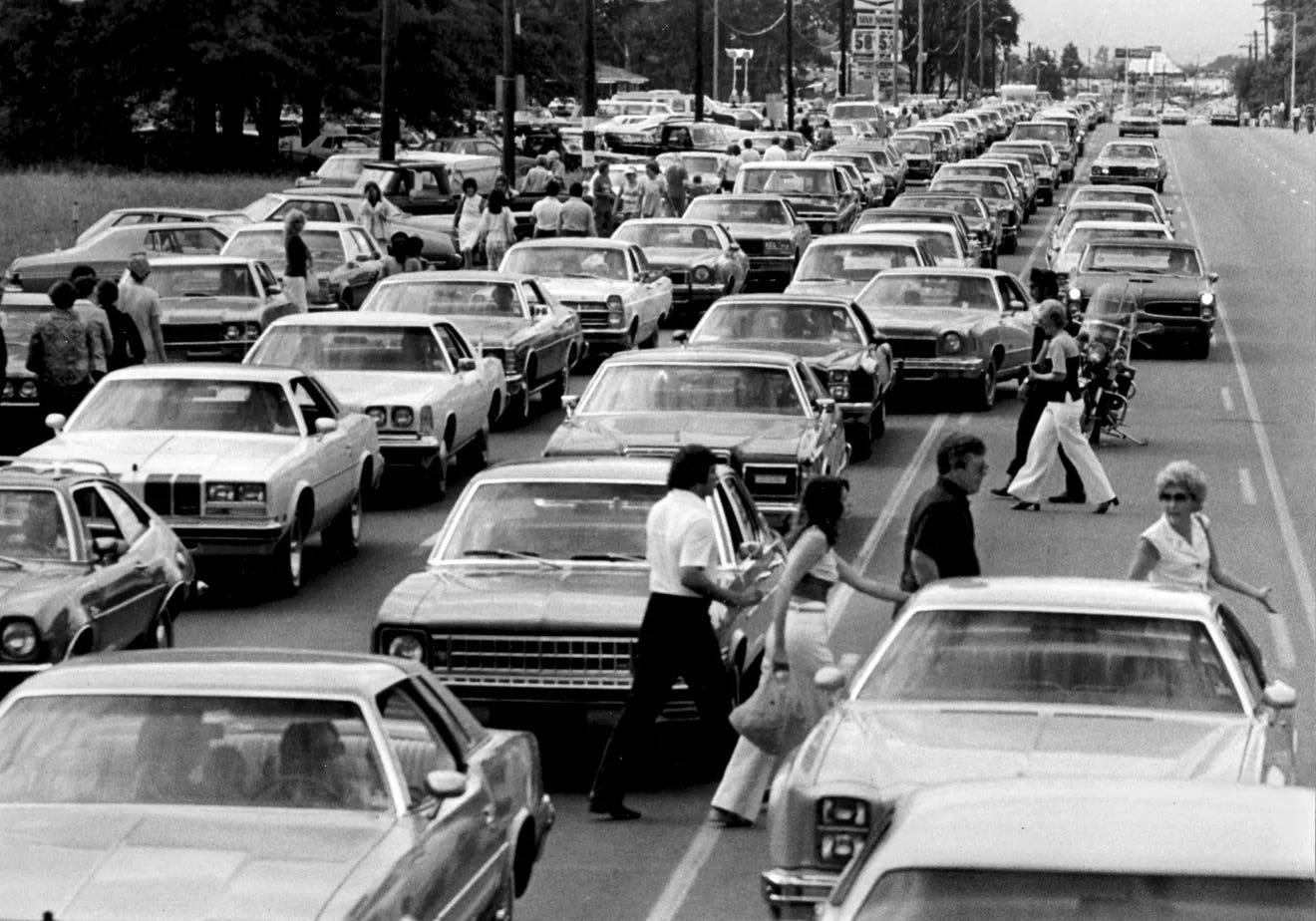
Traffic comes to standstill in Memphis, Tennessee as mourners make their way to Graceland, August 16, 1977.
No posts
Comments
Nothing yet. Say the first thing.
Sign in to join the conversation.