
It’s 2026, and in the span of a single week, both Pitchfork and Resident Advisor have published circulated extensive guides to electroclash, a genre that peaked literally 25 years ago. (A quick correction: It was kindly pointed out to me that the RA list was first published in March, but the feature was given a second go-round this week on the site’s front page and Instagram account. Apologies for the error.) Blame lazy journalism if you like—and that’s certainly a not-insignificant part of the problem—but these outlets are also responding to a culture that’s utterly in thrall to nostalgia. Exhausted with the seemingly unending horrors of the present, not to mention the formulaic plasticity that has come to define both the mainstream and the “underground” alike, people are looking backwards, longing for a time when things felt more “real” and the world felt a little less horrible.
A lot of those feelings are imaginary, of course. It’s not like injustices and atrocities weren’t happening in the ’90s—they just weren’t being beamed directly into our hands by monolithic tech platforms whose business model depends on the cultivation of mass dopamine addiction. Even in the independent music realm, things didn’t feel “better” back in the day because the industry was being run by benevolent overlords; it’s more that those overlords decided that many scenes and sounds existing outside the mainstream were simply too insignificant to bother with.
Recognizing that, however, would spoil the illusion—and the relief that an overly idealized past provides. The infinite scroll offers free escapism, 24 hours a day, and while it’s also hollowed out traditional media, eviscerated our attention spans and flattened decades of history into an intentionally triggering, context-deficient slurry, we continue to greedily drink that slurry down. When media outlets—or, increasingly, content creators—post retro clips of Björk or David Bowie interviews or grainy footage massive outdoor raves in the ’90s, we smile and tell ourselves that they’re unearthing and sharing lost nuggets of wisdom and brilliance, when what they’re really doing is just smashing a big red “sentimentality” button, knowing that’s one of the only things that our dulled senses will actually respond to.
Looking at the past can be useful, and in certain contexts, is absolutely necessary. (Hell, I do it all the time here at First Floor—does anyone write about 2010s post-dubstep and bass music as much as I do?) But what’s frustrating is how much our collective backward gaze has come at the expense of not just talking about the present, but engaging with its challenges in any sort of substantive way. The music press has largely given up on that, which is why the “news” sections—yes, the scare quotes are intentional—of most major outlets look more like repositories for warmed-over industry press releases than bastions of actual reporting.
Perhaps that’s why there’s been almost no coverage of the PPWR, a new set of environmental regulations in the EU that, as currently written, could paralyze small and independent sellers of not just music, but products of any kind. The media is happy to regurgitate industry narratives about the resurgence of vinyl, and just a few months ago, the press was loudly amplifying the voices of trend forecasters who proclaimed that consumers were longing for the return of physical media. Yet when something happens that could legitimately foul up platforms like Bandcamp, Discogs and even Etsy, they’ve gone silent. Why? Because they didn’t get a press release about it? Because they might have to do some actual research? Because the resulting story won’t generate as many likes on Instagram? It’s maddening.
If you’re someone who does care about a story like that, perhaps you saw the PPWR-focused article that First Floor published earlier this week. (Given the particularly newsworthy nature of the subject matter, I even published it without a paywall.) It’s generated something of a stir online, at least by First Floor standards, so if you haven’t had a chance to give it a read already, you can find a link below.
Beyond that, you’ll also find the rest of today’s First Floor digest. And no, it doesn’t include links to either of those aforementioned electroclash guides, but it does include a round-up of what’s been happening in electronic music during the past week. In other words, it’s focused on the present, with an assortment of news items and suggested reading links, along with a healthy batch of new music recommendations—including a special guest recommendation from UK polymath and Wisdom Teeth co-founder K-LONE.
Let’s get started.
Every week, First Floor publishes a long-form piece that’s initially made available in full to paid subscribers only. This week’s piece, however, went live without a paywall, and if you haven’t read it already, it offers a detailed look at the PPWR, a new set of EU regulations that are designed to reduce packaging waste, but could end up making online mailorder financially and logistically impossible for all but the biggest sellers.
A New EU Regulation Could Inadvertently Crush the Bandcamp Ecosystem
·
Aug 18

Just last week, the European Union officially enacted the Packaging and Packaging Waste Regulation (a.k.a. PPWR), and while most people have probably never heard of this environmentally minded regulatory framework, it inadvertently threatens to make the selling of physical goods on Bandcamp, Discogs or, frankly, any other direct-to-consumer platform a f…
A round-up of the most interesting electronic music news from the past week, plus links to interviews, articles and other things I think are worth sharing.
Following in the footsteps of companies like Bandcamp, Deezer and even Spotify, Beatport has publicly signaled its intention to do something about the explosion of AI-generated music on its platform. In an announcement last week, the online retailer said that as part of an expanded partnership with Beatdapp—a “music fraud detection specialist” that claims it can identify the “digital watermark” of AI—it would be “introducing new technology designed to identify AI-generated music across its catalogue.” Beatport has apparently also updated its content guidelines so that “fully or majority AI-generated tracks will not be permitted on the platform,” with the caveat that “music created with AI assistance will still be accepted, provided the finished track remains majority human-made.”
Electronic music has been awash in new books during the past few years, and while that’s great news for anyone with an appetite for reading something more in-depth than an Instagram caption, these titles do come with one major drawback—while they often talk about all sorts of incredible artists and songs, it’s on the reader to then go and track down the actual music. With that in mind, Darren Hemmings—a UK music marketer who also pens the excellent, industry-focused Network Notes newsletter—has created a new online tool called Soundtrack the Page. A self-described “pet project,” it’s essentially a hub where Hemmings has posted a series of companion guides that not only list every song mentioned in a book, but also provide easy YouTube listening links. Though he’s still building out the catalog, he’s already posted guides for seminal books like Matthew Colin’s Altered State, Simon Reynolds’ Energy Flash, David Toop’s Ocean of Sound, Dan Sicko’s Techno Rebels, Tim Lawrence’s Love Saves the Day and several other key titles.
My first book is out now. It’s called First Floor Vol. 1: Reflections on Electronic Music Culture, and you can order it from my publisher Velocity Press. However, if you’re outside of the UK, I recommend that you either inquire at your favorite local bookshop or try one of the online sales links that have been compiled here.
A round-up of noteworthy new and upcoming releases announced during the past week.
At some point, Ploy’s pivot into house music will stop feeling novel, right? After all, that pivot—which the UK producer discussed at length in a 2025 First Floor interview—began several years ago, and it’s now set to continue with a new EP that’s set for release on Dekmantel. Entitled Glizzy, it’s billed as “straight-up, no-frills house music that oozes quality by doing the simple things well,” and though the record won’t be available in full until September 11, its title track has already been shared.
Carrier—another artist that First Floor interviewed last year—has a new EP called Thresholds on the way. Announcing the record via an Instagram post, the UK-born, Belgium-based artist hasn’t yet shared much in the way of details (or any of the actual music), but the official release date is September 4, and some vinyl copies will apparently become available via Boomkat at some point today.
More than three years have passed since the death of Ryuichi Sakamoto, but around the time that the legendary Japanese composer was putting together his final solo album, 12, he was also exchanging musical ideas with his longtime collaborator Alva Noto. Those exchanges have now been compiled onto a new full-length, 12 Conversations, which the Noton label will be issuing on September 18. In the meantime, LP cut “Conversation 3” has been shared.
One of experimental music’s most prolific figures, more eaze will soon be returning to Thrill Jockey with a new album, her second of 2026. The upcoming valley and structure is said to be less pop oriented than the sentence structure in the country LP that dropped back in March, and is in fact described as an exercise in repetition and minimalism that “stretches simple ideas to their logical extremes through small bits of connective tissue.” Ahead of the record’s October 9 release date, the song “what’s wrong with the structure?” has already been made available.
As part of his “ongoing inquiry into the relationship between sound and text,” ambient / experimental artist Lamin Fofana has completed a new album, Corps Perdu, which takes inspiration from a 1950 poetry collection by Afro-Martinican writer and politician Aimé Césaire. The LP is also Fofana’s debut on the Shelter Press label, and before it officially lands on October 16, opening track “To Become Liquid” has already been shared.
Earlier this year, L-Vis 1990—who was interviewed by First Floor back in 2024—began posting a series of somewhat apocalyptic messages online, all of which A) condemned the platforms and systems that define our everyday lives, B) called for resistance and C) ended with the phrase, “THE PARTY IS OVER.” He’s now released an album under that banner, one set in a “scorched” future world where AI has become sentient. Each of the record’s eight tracks—which he actually calls “sonic warnings”—imagines “the sound of machines at work in a landscape where culture has outlived its creators,” and The Party Is Over also includes a “reconstruction kit” with “92 audio fragments, digital artifacts and tools for reconstruction.” The whole thing is out now, and is available exclusively via independent online sales platform Subvert.fm.
Although water sounds have long been a staple of electronic music, they’re usually relegated to the background, providing ambiance while artists work their magic with synths, drum machines or whatever other instruments they’re using. On the new Synthetic Water Music compilation, however, water sounds are given a starring role, as the mappa label has assembled a collection of 51 water-related tracks from artists like perila, Visible Cloaks, Pauline Anna Strom, HMOT, Adam Badí Donoval, Adela Mede, Jules Reidy, Memotone and many, many others. The digital version is out now, and a double cassette will follow on September 10.
First Floor is in many ways a one-person operation, but each week, the newsletter cedes the spotlight to an artist, writer or other figure from the music world, inviting them to recommend a piece of music.
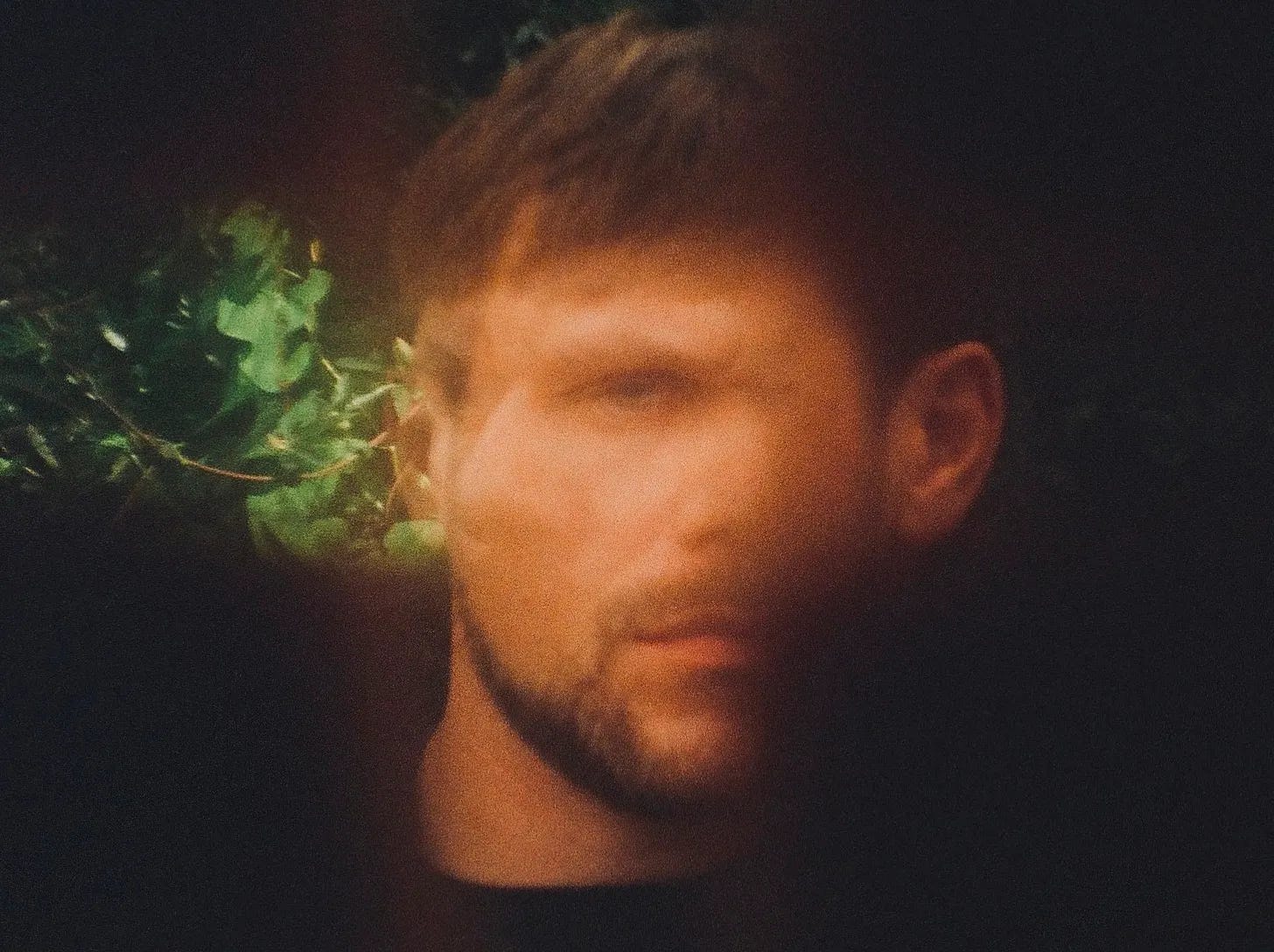
This week’s recommendation comes from K-LONE, who over the course of the past decade has quietly established himself as one of the UK’s brightest electronic talents. Though he’s often saddled with the “bass music” tag, his work long ago transcended genre boundaries, to a point where a K-LONE record might reasonably dip into various strains of house, techno, garage, minimal, ambient, IDM or something else entirely. If there’s one current that runs through all of K-LONE’s music, it’s his clear affinity for light and color, which lends his productions a certain effervescence, regardless of the tempo or drum patterns he’s employing at any given moment… [READ MORE ABOUT K-LONE + CHECK OUT HIS GUEST RECOMMENDATION]
The following is a summary of First Floor’s favorite new releases that came out during the past week or so. The blurbs below are only brief excerpts of the full write-ups; to read the complete recommendation (and hear the actual music) for an individual release, click the “Listen to the Music + Read the Full Write-Up” link, or you can also just head over to this convenient Buy Music Club list if you prefer to listen to all of the selections in one place.
… Drifting along the hazy throughlines between hip-hop, dub, and trip-hop, Cold Light pull from a list of influences that could likely fill an entire notepad. The blueprint of formative UK boundary-pushers such as Tricky, Kode9 and The Spaceape can be felt, as can that of conscious hip-hop outposts like anticon and Definitive Jux, but the aquatic glow of modern dub techno echoes through Cold Light’s sound just as prevalently. [LISTEN TO THE MUSIC + READ THE FULL WRITE-UP]
… A sense of wandering courses through the electronics, with each track moving like a fiery mythical creature that’s slithering through an icy, mist-soaked and totally uncharted rainforest. All the while, digital syncopated bleeps dance alongside shockwaves of electrifying synths; ever-mutating gabber-footwork rhythms bounce off infectious, warehouse-ready sirens, as antique-sounding acoustics gently cascade through the chaos. [LISTEN TO THE MUSIC + READ THE FULL WRITE-UP]
… It’s probably closing number “Translation (Moving Relics)” that best embodies the spirit of TELL; built atop static-encrusted beats that squelch like boots trodding through a muddy field, it also finds room for disembodied diva refrains, jittery new age melodies and trap-style snare rolls. Like the album itself, it’s all over the place and, at times, a bit of a mess, but it’s also a testament to the notion that under the right circumstances, a little chaos can lead to moments of real brilliance. [LISTEN TO THE MUSIC + READ THE FULL WRITE-UP]
… Considering that the Colombian producer is part of the TraTraTrax braintrust, his curatorial chops come as no surprise, but Curation 03 does take a confident step away from the so-called “Latin club” sphere with which he’s often affiliated. Though Verraco will likely never stop waving the flag for talented artists from Latin America and the Global South, his tastes transcend his identity, and he’s long made clear that he’s just as well versed in house, techno and the hardcore continuum as his European and North American peers. [LISTEN TO THE MUSIC + READ THE FULL WRITE-UP]
… Funnily enough, that level of quality can mostly be attributed to—you guessed it—curation. Not in the sense that The Third Room picked the songs on offer (they didn’t), but because they enlisted a compelling cross section of modern techno artists to do the picking for them. GiGi FM is one of those artists, and on Curation 06, her selections reflect a taste for heady, hypnotic and somewhat tracky sounds. [LISTEN TO THE MUSIC + READ THE FULL WRITE-UP]
That brings us to the end of today’s First Floor digest. Thank you so much for reading the newsletter, and remember, you can find all of this week’s recommended releases on this handy Buy Music Club list. (If you like them, please buy them.)
Until next time,
Shawn
First Floor is published and overseen by Shawn Reynaldo, a freelance writer, editor, presenter and project manager. Find him on LinkedIn and Instagram—and make sure to follow First Floor on Instagram as well—or you can just drop Shawn an email to get in touch about projects, collaborations or other potential opportunities.
Comments
Nothing yet. Say the first thing.
Sign in to join the conversation.