
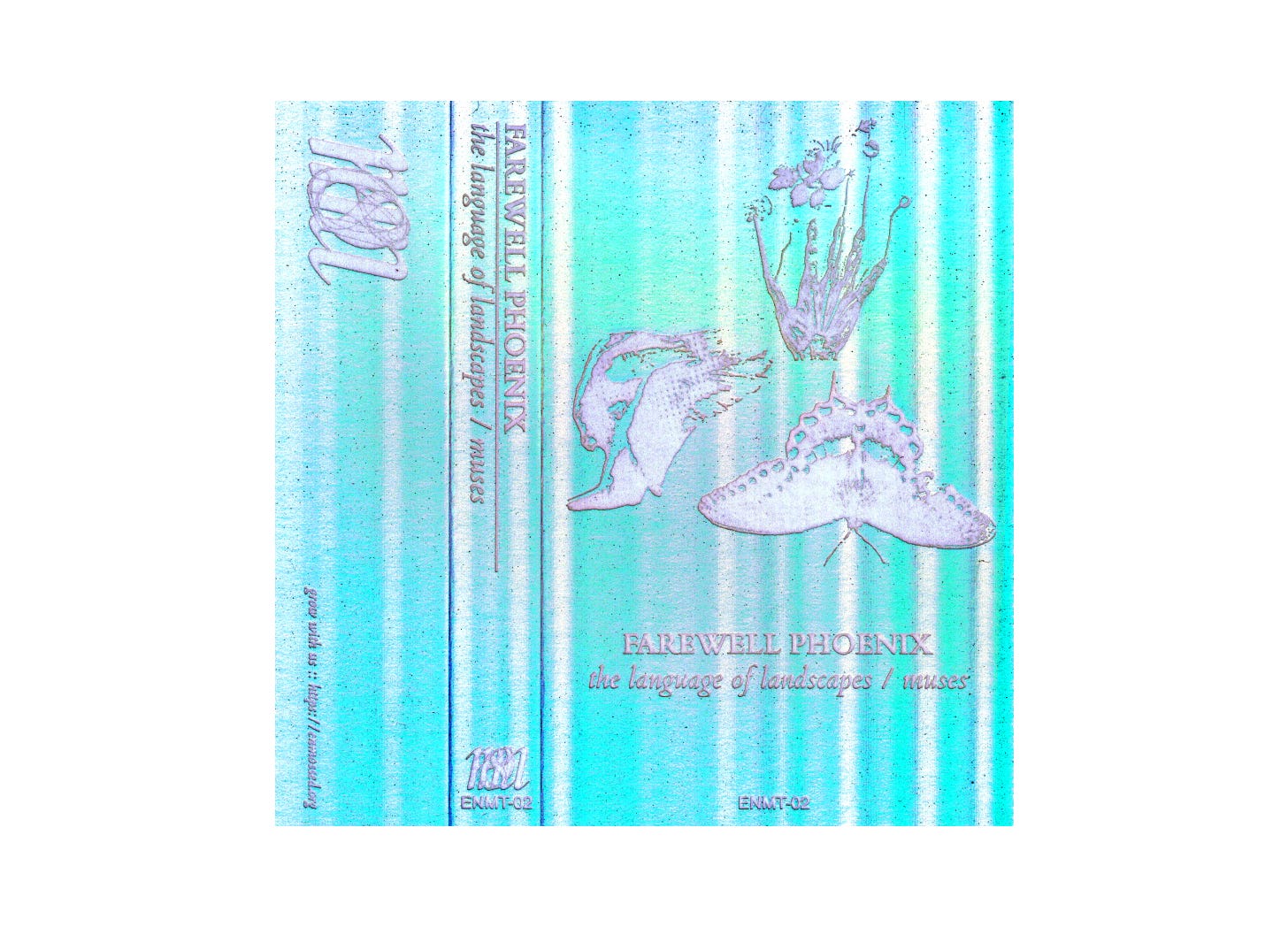
The enmossed label tends to drop releases in bunches, and while those releases often exist in similar soundworlds, they don’t usually share similar themes. This week, however, the acclaimed ambient / experimental outpost has offered up two separate releases that directly address the devastation wrought by Hurricane Helene in 2024. But considering that enmossed itself is based in North Carolina (i.e. the state that was hit hardest by the storm), this thematic doubling up isn’t quite so surprising, and it also helps explain why both after the deluge—the latest album from label head Glyn Maier that First Floor recommended just a few days ago—and the language of landscapes / muses are visibly streaked with sadness.
The latter release comes from Farewell Phoenix (a.k.a. Lynn Fister), an experimental musician and sound artist who was literally displaced by Helene and forced to relocate. In the process of settling into her new home, she would capture field recordings from her immediate surroundings, and also started playing the small harp, often processing its plucked tones via modular synthesis. All of those sounds eventually became the foundation of language of landscapes / muses, a minimal and meditative effort in which Fister laments what she’s lost, but also luxuriates in the pastoral calm of her rural environs.
That calm is certainly enhanced by the squawks, chirps, bubbling creeks, rustling breezes and other nature sounds that litter the record; some recordings of cicadas—provided by friend and fellow experimental musician Christopher Fleeger—even find their way into the mix. (Also important: a virtually ever-present glaze of soft static, which gives the album a warmly tactile quality.) Yet it’s Farewell Phoenix’s voice that proves to be the record’s most affecting ingredient, piercing the otherwise idyllic atmosphere with beautifully haunted melodies and a palpable depth of emotion. Between the tenor of her singing and penchant for multitracking, some comparisons to Enya are all but inevitable, but rather than looking to “sail away,” Fister remains tethered to the ground, allowing her joys and sorrows alike to soak into the soil.
In simpler terms, language of landscapes / muses is an exercise in quiet catharsis, and on the standout “the summoning,” her melancholy, almost drone-like vocalizations sound like they’re communing with some sort of ancient life force. The slow-brewing “to kill a snake” also unfolds like a kind of witchy incantation, but “clouds, other planes” charts a more hopeful course, combining the devotional heft of a a cathedral choir with the untamed majesty of the forest. For all the loss she’s experienced, Fister still finds plenty of wonder in the world, and she’s filtered that wonder into this powerfully tranquil listen.
Comments
Nothing yet. Say the first thing.
Sign in to join the conversation.