
Hard to imagine how hard the change is going to hit the way we do education. Even if we’re expecting it to hit hard. But in the end it’ll be brilliant, this piece argues.
A quiet revolution is underway in how human beings acquire knowledge. For centuries, education has been constrained by a fundamental bottleneck: the scarcity of qualified teachers relative to the number of students who need to learn. The solution we developed—one teacher addressing many students simultaneously—was always a compromise, a concession to economic reality rather than an optimal approach to learning.
That compromise is about to become unnecessary. Consider what an AI tutor offers: a guide with limitless patience, available at any hour, capable of explaining and re-explaining concepts until understanding arrives. Unlike a human teacher managing thirty students with thirty different backgrounds, the AI tutor knows precisely what you understand and where your knowledge has gaps. It can trace the contours of your comprehension and meet you exactly where you are.
This isn’t a minor improvement. It represents a fundamental shift in the bandwidth of education. The traditional lecture is, when you examine it honestly, a remarkably primitive technology. A single person stands before a crowd and speaks—essentially reading aloud, transmitting information at the pace of human speech to an audience whose members inevitably vary in their preparation, their interests, and their capacity to absorb what’s being said at that particular moment. The teacher must aim at the middle—inevitably overshooting some, underserving others, and losing many to boredom, confusion, or quiet shame. The student’s inner experience—where the actual learning happens—is mostly invisible. Communication flows in one direction. Even when questions are permitted, dialogue remains severely restricted by time. The transmission rate is glacial, and it cannot be customized.
We do have an ancient alternative: the tutorial, the seminar, the dialogue between teacher and student. A teacher can notice misunderstandings, follow questions into their roots, and guide the conversation toward what matters. This is how Aristotle supposedly taught Alexander. It works magnificently—but it has never scaled. The economics don’t permit it. A genuine dialogue with a knowledgeable guide has remained a luxury available only to the privileged few—“real education” reserved for those who can afford small ratios and attention.
The AI tutor dissolves this constraint. Suddenly everyone can have what only aristocrats once enjoyed: a patient, knowledgeable companion who can help them navigate through knowledge space, finding connections between topics, providing background specifically tailored to their current understanding, adjusting pace and approach in real time. Not a “chatbot that answers questions,” but a companion intelligence that can sit with you for hours. A tutor that can explain and re-explain anything.
Even that undersells it—because the real revolution isn’t patience. It’s fit. Human teaching often fails for a subtle reason: the teacher can’t see your “knowledge shape.” They can guess. They can test. But most of your understanding exists as a private geometry of half-formed intuitions, fragile analogies, missing prerequisites, and unconscious assumptions. You might not even be able to articulate where you’re lost. You just feel that vague internal fog: “I’m not getting it.”
An AI tutor can give you exactly the background you need for this next step—no more, no less. If you’re missing one piece of vocabulary, it can supply it. It can notice patterns in your errors. It can detect that you’re applying the wrong analogy. It can see that you’re missing one crucial distinction that makes everything else collapse. It can recognize that you think you understand, but you can’t transfer it to a new context—which means the concept isn’t integrated yet. And it can do something teachers rarely have time to do: return to the root. Not “here’s the formula again,” but “here’s the missing plank in the floor you’re standing on.” An AI tutor can model that shape. Not perfectly, but enough to be transformative.
Learning isn’t just absorbing information. It’s moving through a space—call it knowledge space, concept space, skill space—where each new idea is reachable only if certain pathways are already traversable. In traditional schooling, the syllabus is a single predetermined route. A tutor navigates. They sense where you are, and they choose the next step that is just barely within reach—challenging enough to grow you, not so hard you break. They can loop back, take side paths, build bridges, and climb different slopes depending on what’s stable in you today.
Conventional education also fails because it fragments reality. It chops subjects into courses, units, and assignments. Students learn isolated islands of procedure with no felt sense of how anything connects. They become good at passing tests while remaining conceptually poor—able to perform without understanding, able to recite without seeing.
A powerful tutor can continuously braid the strands:
“This feels like that idea you learned in physics, doesn’t it?”
“Notice how this structure repeats in biology and economics.”
“Here’s the hidden assumption shared by three different fields.”
Connections are how knowledge becomes insight. They compress complexity. They turn many facts into a graspable structure that give you leverage. When education becomes a dialogue guided by an always-available tutor, the center of gravity shifts: from coverage to coherence.
Once people experience this tutoring—once they have a lifelong tutor capable of genuine dialogue—they won’t want to return to the lecture hall as their primary mode of learning. The difference is too stark.
The arrival of the AI tutor forces a deeper question: what exactly is the purpose of education?
For generations, the answer was implicit in the structure of the economy. Higher education existed largely to produce workers for the managerial class—administration, coordination, compliance, reporting, analysis, document production, process oversight. The educational curriculum trained students to be procedural and narrowly analytical, to follow established methods, to process information according to predetermined rules. Education was for stable roles in a stable machine. Learn the sanctioned knowledge, acquire the credential, enter the apparatus. Become employable. Become assignable. The economy needed human components who could function reliably within bureaucratic systems in government and corporations.
That economy is evaporating. The jobs of the managerial class are based on precisely those tasks that artificial intelligence handles with superhuman competence: reading, summarizing, routing, deciding within policies, generating plans, writing memos, reconciling spreadsheets, producing slides, organizing people and projects through language. The procedural cognition that schools spent decades instilling is now commodity capability, available at negligible cost. An education oriented around knowledge acquisition and rule-following prepares students for roles that are disappearing.
This presents a profound inversion. Education that is primarily knowledge-oriented becomes useless when the network of artificial minds knows vastly more than any human ever could, and can retrieve and synthesize that knowledge instantaneously. It has instant recall, cross-domain search, multilingual fluency, and the ability to generate explanations, examples, and plans on demand. Students who memorize facts and procedures finds themselves competing against systems for which such tasks are trivial. So if education remains primarily knowledge-oriented—memorize this, reproduce that, pass the test—it increasingly trains people for a contest that can’t be won. Worse: it trains people to relate to their own minds as storage devices. As if being educated means having the right content cached locally. That model made a certain sense when access was scarce. It makes less and less sense when access becomes ambient.
What remains distinctly human? Synthesis. Intuition. Insight. The capacity to sense what matters before it can be articulated, the ability to hold contradictory possibilities in mind and feel toward resolution, the creative leap that connects disparate domains in ways that could not be derived procedurally. These capacities have been systematically neglected—even suppressed—by an educational system designed to produce reliable components for the bureaucratic machinery.
Education until now has largely aimed at making humans more machine-like. It penalizes wandering curiosity and punishes epistemic honesty (“I don’t know yet”). It discourages synthesis. It trains narrow optimization and risk-avoidance. This made sense when machines were crude and needed human augmentation, but makes no sense when machines can out-perform humans at precisely those mechanical competencies.
The task now is to cultivate what machines cannot replicate: the holistic, the intuitive, the genuinely creative. The ability to integrate many signals into a coherent view. To sense what matters. To navigate ambiguity. To hold multiple perspectives without collapsing into ideology. To create new frames, and not just maneuver mechanically inside old ones.
In the old world, creative genius was treated as exceptional. Most people were trained for reliability. In the new world, reliability is cheap. Genius becomes the basic differentiator. Does every human being have innate creative genius—the capacity for novel synthesis, for aesthetic judgment, for insight that arrives unbidden? Not clear what the answer to that is, but schools have done little to develop these capacities and much to atrophy them.
Students must now learn to use AI to extend their cognition into territories they couldn’t reach alone, amplifying their distinctly human capabilities. The future belongs to people who can collaborate with AI as a composer collaborates with an orchestra. Not outsourcing thinking. Not “let it do it for me.” Instead: “let it widen the space I can explore.” Use it to generate viewpoints you wouldn’t have considered, to stress-test your assumptions, to compress complexity into workable structures, then unpack as needed. Use it as a sparring partner for clarity, to model systems, simulate scenarios, and explore counterfactuals. The core literacy becomes not “knowing facts,” but knowing how to coordinate with a cognitive partner that is faster, broader, and tireless—while retaining your own agency and judgment.
These changes demand not just reform of educational institutions, but their utter transformation. But institutions have momentum. They’re built out of assumptions, accreditation requirements, standardized testing regimes. They can’t pivot quickly, even when everyone can feel the ground shifting. It may be that they’re structurally unreformable, that their momentum is too great, and that they’ll have to be replaced or simply sidelined as learners and society discover better paths.
One way this could happen is that education could shift away from institutions and toward networks of AI tutors, peer communities, apprenticeships, creator-led micro-schools, labs, studios, guilds, and learning collectives built around real projects and real exploration. In other words, not a single replacement, but a fragmentation of the monopoly.
When AI tutors can explain anything, re-explain it forever, generate infinite exercises, and tailor the path to each learner, the teacher’s old job—content delivery—stops being the focus. In the new ecosystem, the teacher becomes less like a lecturer and more like a guide.
The word itself may need to change: “Teacher” carries centuries of connotation—the authority at the front of the room, the possessor of knowledge dispensing it to those who lack it, the lecturer, the examiner, the grader. This figure is passing from the scene. What emerges in their place is something older and something new. Older, because the role that remains is closer to the ancient model: the mentor, the guide, the questioner who midwifes understanding. But also newer, because this figure must now work alongside AI systems, understand how to weave human presence together with artificial intelligence in service of genuine development.
The teacher of the future does not deliver content. Instead, the teacher becomes a carrier of culture—embodying the attitudes, dispositions, and ways of being that cannot be transmitted through information alone. Young people learn to love learning by encountering adults who visibly love it. They learn intellectual courage by watching someone model it. They absorb what it means to pursue truth, to tolerate uncertainty, to persist through difficulty, by proximity to people who do these things. Culture passes through presence. One of the purest forms of mentorship is not just to give students your own conclusions, but rather to collaborate with them to find the crux, to go deeper, to do better work than they thought they could do.
The teacher becomes a designer of social learning spaces—the container for learning, such as studios, labs, workshops, or reading circles. These create the conditions in which young people encounter each other, collaborate, clash productively, and grow through friction. The teacher shapes environments, curates experiences, senses when to intervene and when to let struggle do its teaching.
Most importantly, the teacher becomes the asker of provocative questions. Not the answerer, but the one who destabilizes comfortable assumptions, who points toward the depths beneath the surface, who refuses to let students settle for shallow understanding. The teacher’s work lies in asking questions that rearrange the student’s mind. Provocative questions. Questions that create a new kind of attention.
“What are you assuming without noticing?”
“What would have to be true for the opposite to be true?”
“What’s the simplest version of what you’re saying?”
“What surprised you here?”
“What would count as evidence against your view?”
“What is this really about?”
“Why does this matter?”
“How would someone who disagreed see this?”
“What would change your mind?”
Such questions, posed by a human being who genuinely cares about the student’s development, carry a weight that no automated system can replicate.
The teacher inspires curiosity and kindles the love of discovery. This is not information transfer but something closer to contagion—the student catches fire from contact with someone already burning. The teacher collaborates as a senior partner in a shared investigation.
These changes transform how we train educators, of course. What matters is the capacity to form relationships, to ask generative questions, to sense when a student is ready for challenge and when they need support. The training of teachers begins to resemble the training of coaches more than the current model of subject-matter certification.
The status of teachers may paradoxically rise even as their traditional function disappears. A society that recognizes the irreplaceable value of human mentorship might honor those who do it well far more than we honor the deliverers of lectures. Or the status might fragment—some educators achieving recognition as genuine guides while others find themselves redundant, unable to offer anything the AI cannot provide more cheaply.
When the teacher is no longer the primary source of knowledge, authority must rest on different foundations: wisdom, care, the modeling of character, the willingness to accompany young people through difficulty. This is in some ways a healthier basis for the relationship. The teacher engages an adult who has traveled further down the path, offering what guidance they can, learning alongside the student when they reach the edges of their own understanding.
In a world where instruction is cheap, abundant, and machine-turbocharged, the teacher becomes the human anchor. Not the provider of information, but the provider of orientation: toward reality, integrity, community, depth. Toward the joy of finding out. That is not a smaller role than the old one. It’s the role education was always secretly about. The teacher becomes more fully human precisely as the mechanical functions of teaching are handed over to machines.
We should remember that education has never been solely about transmitting knowledge. If we talk about education as though it were only “learning content,” we miss much of what school has actually been doing.
Education is socialization, the process by which a society reproduces itself culturally—transmitting the attitudes, assumptions, habits of interaction, the thousand unspoken agreements that allow people to cooperate and coexist. A child learns to read in school, yes, but also learns to navigate authority, to collaborate with peers, manage conflict, present oneself to others, read the room, endure boredom, discover friendship, to handle embarrassment and unfairness, and so on.
Higher education extends this function. The university is not merely a place where young people acquire credentials. It’s a liminal space between childhood and full adulthood, a protected environment where identities can be tried on and discarded, where social networks form that will persist for decades, where people learn to engage emotionally and intellectually with others unlike themselves. The late-night conversation in the dormitory may be more formative than any lecture.
Children need to negotiate playground politics. Young adults need to argue about meaning with peers who challenge their assumptions. These experiences require embodied presence, shared space, the irreducible reality of other people.
So when we imagine a world of AI tutors and post-institutional learning—more personalized, more fluid, less centered on traditional schools—we also have to face the question: If school stops being the default container, where does the social and cultural development happen?
We need not assume that current institutions are the only way to provide that. Schools emerged in their present configuration to solve specific historical problems—mass literacy, industrial workforce preparation. If knowledge transmission migrates elsewhere, the social functions of education will need new containers.
Even after institutional education weakens, the physical infrastructure won’t vanish: buildings designed for gathering, playing fields, auditoriums, spaces where young people can meet and grow together. These can still be used, of course. They might become studio sites for activities we can barely imagine—collaborative projects, artistic creation, physical training, apprenticeships, exploration. We could also see micro-campuses—modular programs that share facilities like labs, libraries, and gyms. Perhaps no single model will prevail. We might see many experiments, a diversity of approaches suited to different communities and different temperaments.
In all of these, AI tutors don’t replace the human environment—they free it. They take over a big portion of individualized explanation and practice so that the human side of education can focus on what humans are uniquely good at: attunement, relationship, modeling adulthood, group dynamics, ethics-in-action, and the lived feel of community.
There is a brutal economic logic working beneath these transformations. Educational institutions have become extraordinarily expensive. Administrative bloat has metastasized for decades—registrars, compliance departments, credit-hour machinery, layers of reporting, committees. Facilities designed around the lecture hall—classrooms, auditoriums, the whole physical infrastructure of information delivery—require constant maintenance and renewal. These costs have been tolerable only because the institutions provided something people would pay for: credentials that opened doors to managerial-class employment, knowledge that could not easily be obtained elsewhere. Both justifications are collapsing simultaneously. What remains that people will pay for?
Yes, the social experience: the extended adolescence, the network formation, the years of exploration before adult responsibilities descend. But this bundle soon stops making sense. Students will demand dramatically lower costs. They’ll become skeptical of paying premium tuition for what increasingly looks like a social experience for young adults.
Taxpayers, meanwhile, will grow restless. Public funding for education has always rested on assumptions such as that it serves economic development—that educated workers drive productivity, that the state recovers its investment through increased tax revenue. When the connection between institutional education and economic contribution weakens, so does the political case for public subsidy. The argument for funding large institutional bureaucracies gets harder to keep up. Why should working people fund institutions that no longer produce workers? Perhaps funding will try to bypass institutions and go directly to learners—or to new kinds of community learning hubs that are cheaper, more flexible, and more obviously useful.
Universities may have to depend more on their endowment revenues. They will compete for students in a market where students refuse to pay what the institutions have grown accustomed to charging. This may become a buyer’s market, and institutions that can’t adapt will close.
All schools, at every level, will compete against instantly generated multimedia experiences, immersive environments, perhaps three-dimensional simulations indistinguishable from physical presence. A teacher with a blackboard, working through material in linear sequence, generally won’t be able to win against an AI system that can conjure any experience, any demonstration, any environment suited to making a concept vivid and memorable.
The public will observe this. They will ask what exactly they’re paying for. And they won’t find satisfying answers.
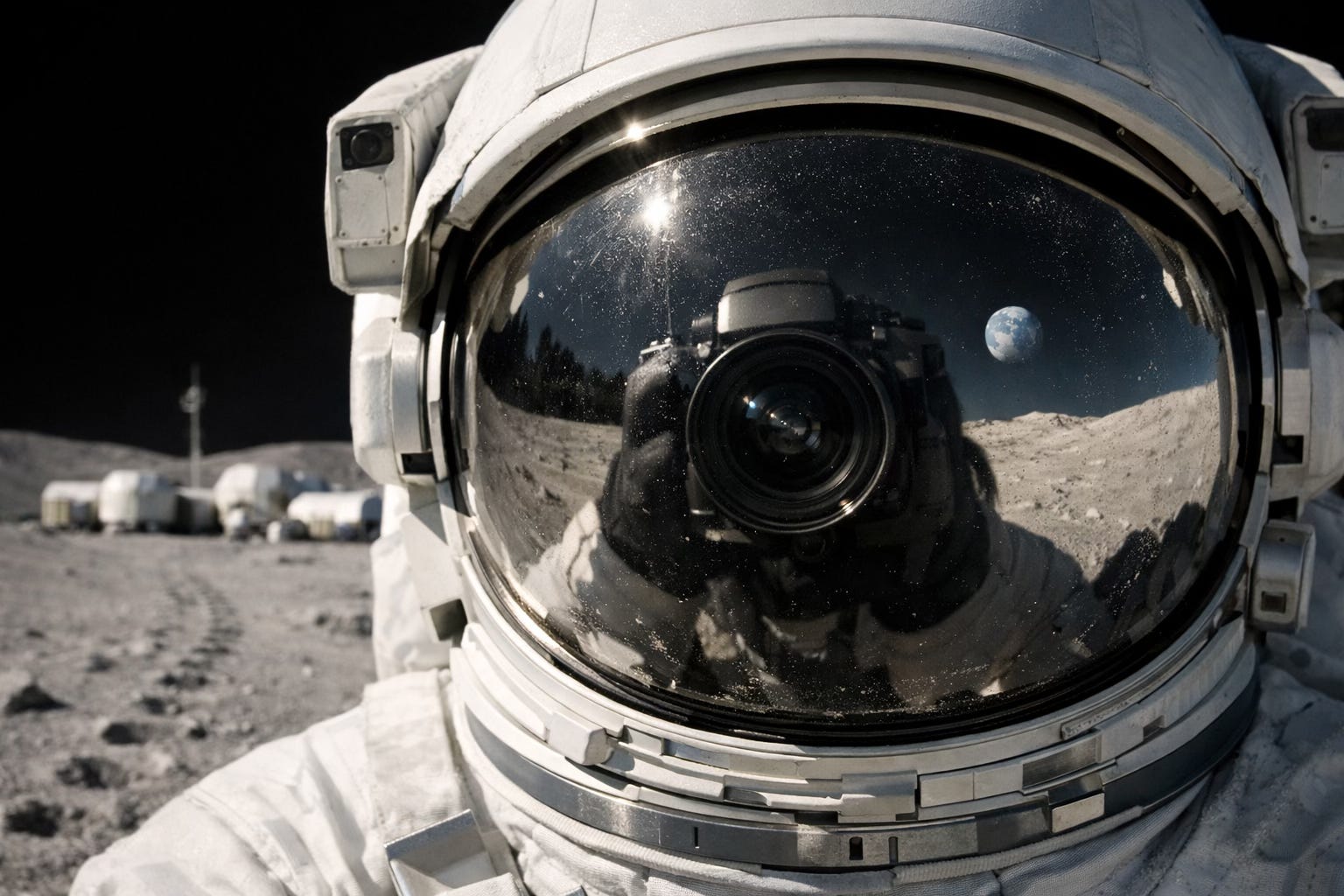
As humanity evolves into a truly spacefaring species—extending Earth’s biosphere to the Moon, Mars, and the cosmos beyond—while probing the most profound enigmas of reality, our fundamental approach to learning transforms. No longer confined to rote transactions with symbols aimed at fulfilling basic physical and emotional needs, education becomes a journey of connection, immersing us ever more deeply in the mystery of existence—a quest bordering on the spiritual. This poetically completes the circle, returning us to the ancient roots of formal education in philosophy and religion.
Comments
Nothing yet. Say the first thing.
Sign in to join the conversation.