
It is entirely typical of Diana that when I sent her an email checking a few points for this post she responded with what is basically a perfectly formed feature which is so good and so illuminating I’ve reproduced it in full below.
But first a bit of scene setting and a few thoughts of my own on why she’s one of the greats. (Sounds like you’re on the same page as she was your overwhelming choice for the next writer in the series in my recent poll).
I have all her cookbooks, barring the Gastropub books which weren’t based on her own recipes. That means I haven’t felt the slightest bit inclined to give any away.
Why on earth would you when they’re a source of continual inspiration though leafing through them again for this feature I realise I don’t go back to them as often as I should.
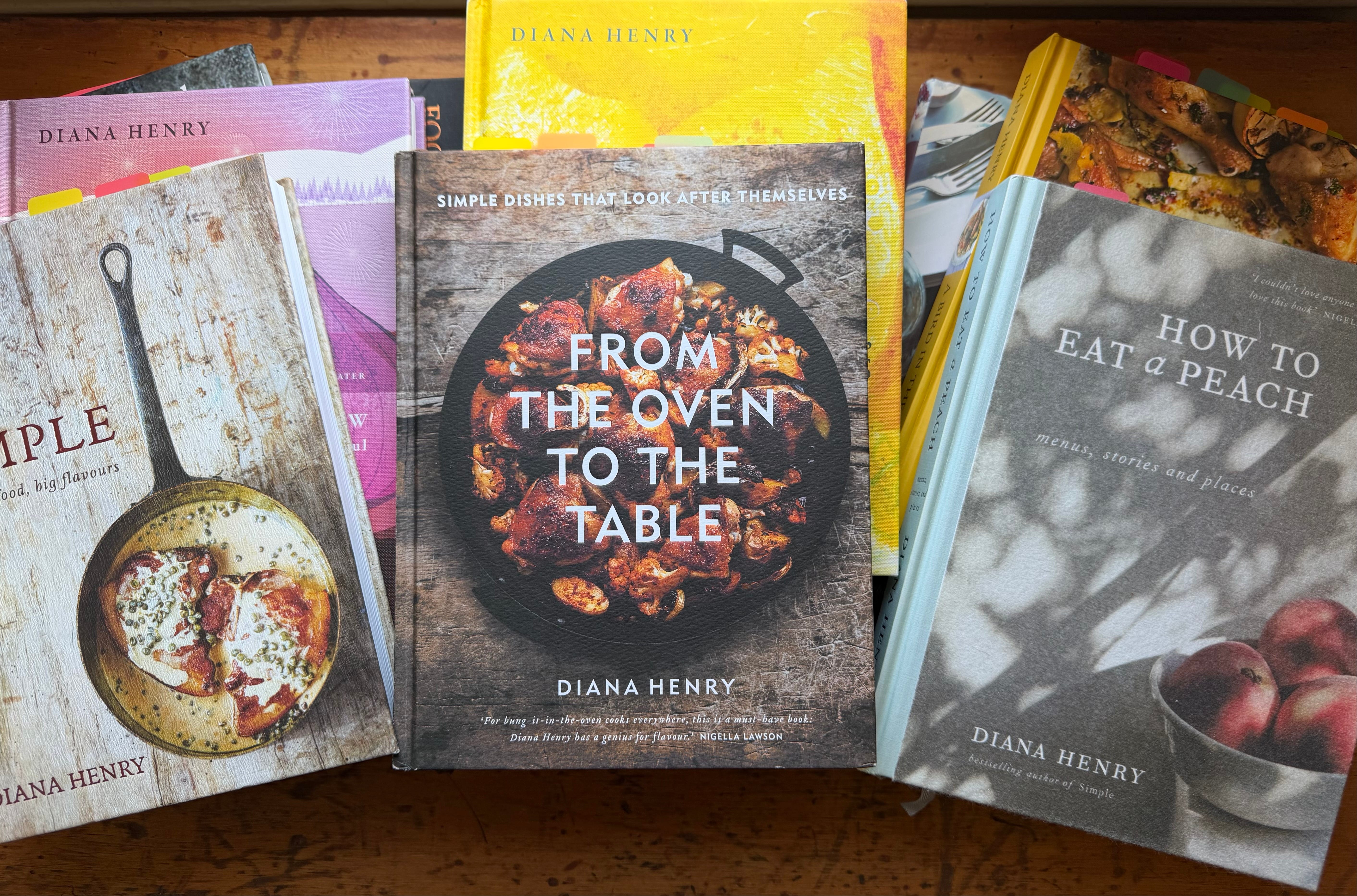
Formerly a TV producer, Diana started writing back in 2002 with Crazy Water, Pickled Lemons (republished in 2024) a book about Mediterrean and middle-eastern food she describes as food she found ‘enchanting from a grey place’. The ‘grey place’ being her home country of Northern Ireland.
That still impresses with how far ahead of the curve it was featuring ingredients like harissa, sour cherries and pistachios long before they became ubiquitous.
There’s a similar lyrical quality to the writing in in Salt Sugar Smoke which is all about preserving, Roast Figs, Sugar Snow (revised in 2023) which focusses on cold weather eating and perhaps my favourite and most discursive of her books How to Eat a Peach which is full of memories and menus. (Do re-read the very useful chapter ‘Too Hot to Cook’.)
However it’s the eminently practical books of shorter recipes that I - and I imagine you - cook from most, especially Simple and From the Oven to The Table which contains a one pan dish of chicken with feta cheese, dill, lemon and harissa yoghurt I make endlessly on repeat.
Even the names of the dishes lure you in. Lamb chops with walnut, chilli and honey salsa verde, sherry & orange caramelized fennel with goat’s cheese, ruby grapefruit and Campari granita. How could you not want to make those?
What is so impressive about Diana is that she can turn her hand to anything. Sweet or savoury (she admits to a sweet tooth). Meat-based/plant-based. Middle-eastern/Asian. Hot/cold/icy. Drinks! There are some great drinks in her books. I love the sound of the guignolet (cherry wine) from Food from Plenty.
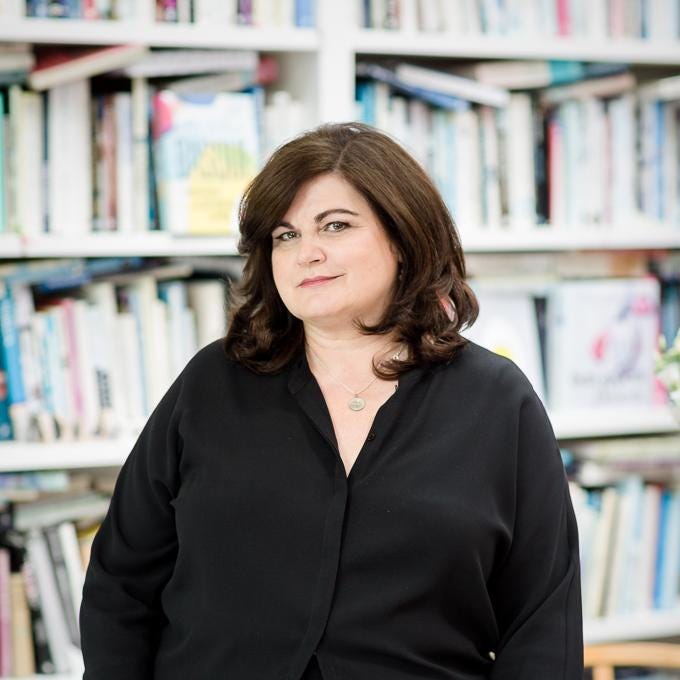
As my fellow Substacker Mark Diacono, who runs cookery writing courses with her, says. “Most cookery writers are either brilliant writers or brilliant with recipes you really want to make. What Diana has a gift for is making recipes that are unique without being outlandish. There’ll be a little ingredient there or a little combination there. There’s one for aubergine and dates* that is so bloomin’ simple that you think how the hell did I not come up with that!”
*the cumin-roast aubergines, chickpeas, walnuts and dates from Simple.
I picked a couple of recipes I hadn’t tried from Simple to make this week which perfectly illustrate how skilfully she combines ingredients.
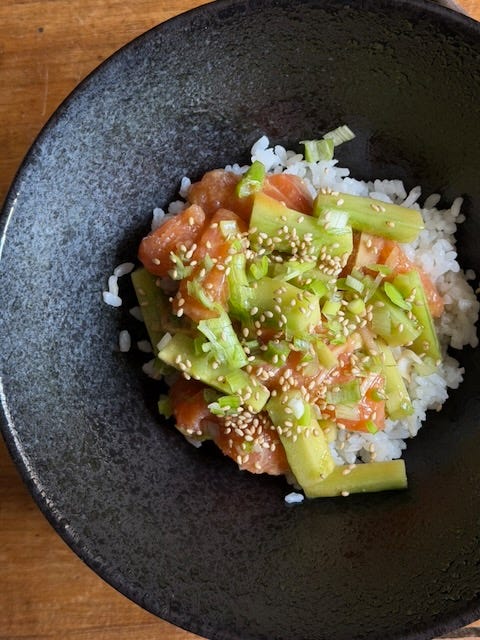
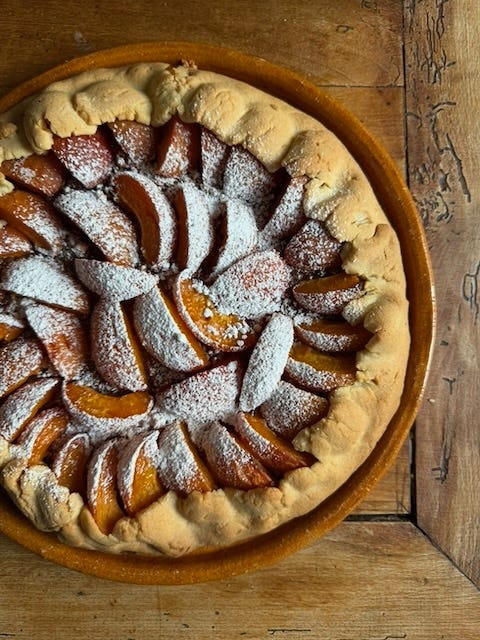
An Asian inspired dish of salmon & cucumber with miso dressing (p124) that made the perfect quick lunch and the apricot and amaretti crostata on p300 which I was so keen to make I neglected her instruction to use ‘neither over-ripe nor very under-ripe’ apricots as my local greengrocer only had the latter. As a result it took 20 minutes longer than the timing in the recipe but it looked and tasted great. The pastry is wonderfully crisp and the combination of apricots and amaretti inspired.
Anyway, over to Diana (with a few extra comments from me).
How many recipes do you write a week?
I currently write for The Telegraph and also Good Food. If you have a weekly column it is 3 every week but I do more than that because I am always writing a book*. Some weeks - when we are doing a Xmas special, for example - it can be many more. The period leading up to Xmas is always tough. And not everything works the first time, of course.
*Currently the long awaited North, a book about the food of Northern Europe, which will hopefully be published towards the end of next year. FB
I made 6 litres of trifle - various trifles - a couple of years ago. I lost the will to live! Something drives you on, though. Not just the dish but the drive to make something work, to crack it.
Does anyone help you with the recipe development - I know most big name cookery writers have a team. I’ve always assumed you don’t
I have never had anyone. They’re my ideas and I get on with it. It feels that the right place to be is at the coal face. Somebody helps when I am completely swamped (Sue Quinn, actually) because I totally trust her but it is only once in a while. I doubt she would want to become my recipe tester every day. She is a great writer, cook and journalist in her own right*.
*with a Substack Pen & Spoon.
How do you think your food has evolved since ‘Crazy Water’?
I think that book still stands. I wrote about the kind of food and ingredients that seemed quite magical. A lot of the thinking was done before I even left school so it easily translated to the page. Since then it has come to encompass more ingredients and the food of different countries. If you looked inside my larder you would see that the section of south-east Asian ingredients is huge! Travelling to Vietnam made a big difference. I am probably still most comfortable with Mediterranean and Middle Eastern dishes though.
Favourite book? (Yours rather than other writers)
It’s either Crazy Water - as it was my first - or How to Eat a Peach. I had wanted to write HTEP for years. I am very proud of the writing in there, especially what you might describe as travel writing. I love trying to capture the essence of a place.
Also the slightly fuzzy peach-like jacket is inspired. The most tactile book I own FB
Favourite ingredients - or perhaps you’re subject to serial enthusiasms?
I am all too aware that feta, capers and anchovies constantly sneak into my recipes. I love saltiness and how it plays off sweet ingredients. I am quite often dealing with that flavour combination - salty and sweet.
I would never be without lemon, though - it is the king of pulling elements together and filling in the ‘hole’ which you sometimes find in dishes. Lemon is indispensable
(I think that sweet-sour or sucré-salé combination is Diana’s trademark. You encounter it in so many of her dishes FB)
Give me an update on the number of cookery books you own (4k I read somewhere?)
I still have 4k - probably more - but my sons are putting up a good argument to reduce them. I used to be able to remember where I had seen a particular recipe. The more books you have the harder that becomes. When you get into the area of buying a book again because you can’t remember where it is, that is not good!
It’s always the unillustrated and scholarly books that I can’t track down. I have had to buy Alan Davidson’s North Atlantic Seafood three times. At the minute I could only tell you where one of them is!
I hesitate to get rid of books because they are my life. When I came out of the hospital after a punishing stay in the ICU (when Diana was admitted with Covid), I just wanted to sit and look at the shelves when I got home. I was totally alone and happy in the kitchen.
Happy in the kitchen sums up your life perfectly, D! Maybe the title of your next book? FB
Update 23/7: Diana was so touched by all your lovely comments she asked me to add this:
Thank you to everyone who left comments on Fiona’s post. You have really no idea what happens to what you produce – writing or recipes – when it goes out into the world. It’s lovely that so many commented so positively! I can see that a lot of you would like to smash the Tele paywall! 😂
I’m definitely left wanting to cook more of Diana’s recipes especially from Food from Plenty which, as the name suggests, features recipes made with ingredients that are in season and plentiful and with leftovers. Or, as Diana puts it, ‘300 recipes, none of them extravagant.’
But what about you? What are your favourite Diana Henry books and recipes? The ones you keep going back to or maybe one you’ve made recently for the first time.
If this post tempts you to go back to a Diana Henry cookbook or maybe buy one you haven’t got, though I’ve noticed they rarely crop up in second hand bookshops, perhaps you would give it a ❤️
This post - along with the other posts in the well loved cookery writer series - is free ‘cos I want to share the love for the writers I admire. So do feel free to share it.
And if you’d like my personal restaurant, travel and moneysaving wine tips as well as regular cookbook giveaways you can subscribe for as little as £5.
Comments
Nothing yet. Say the first thing.
Sign in to join the conversation.