
This article is part of Fintech Leaders, a newsletter with 90,000+ builders, entrepreneurs, investors, regulators, and students of financial services. I invite you to share and sign up. If you enjoy this conversation, please consider leaving a review on Apple, Spotify, or Youtube.
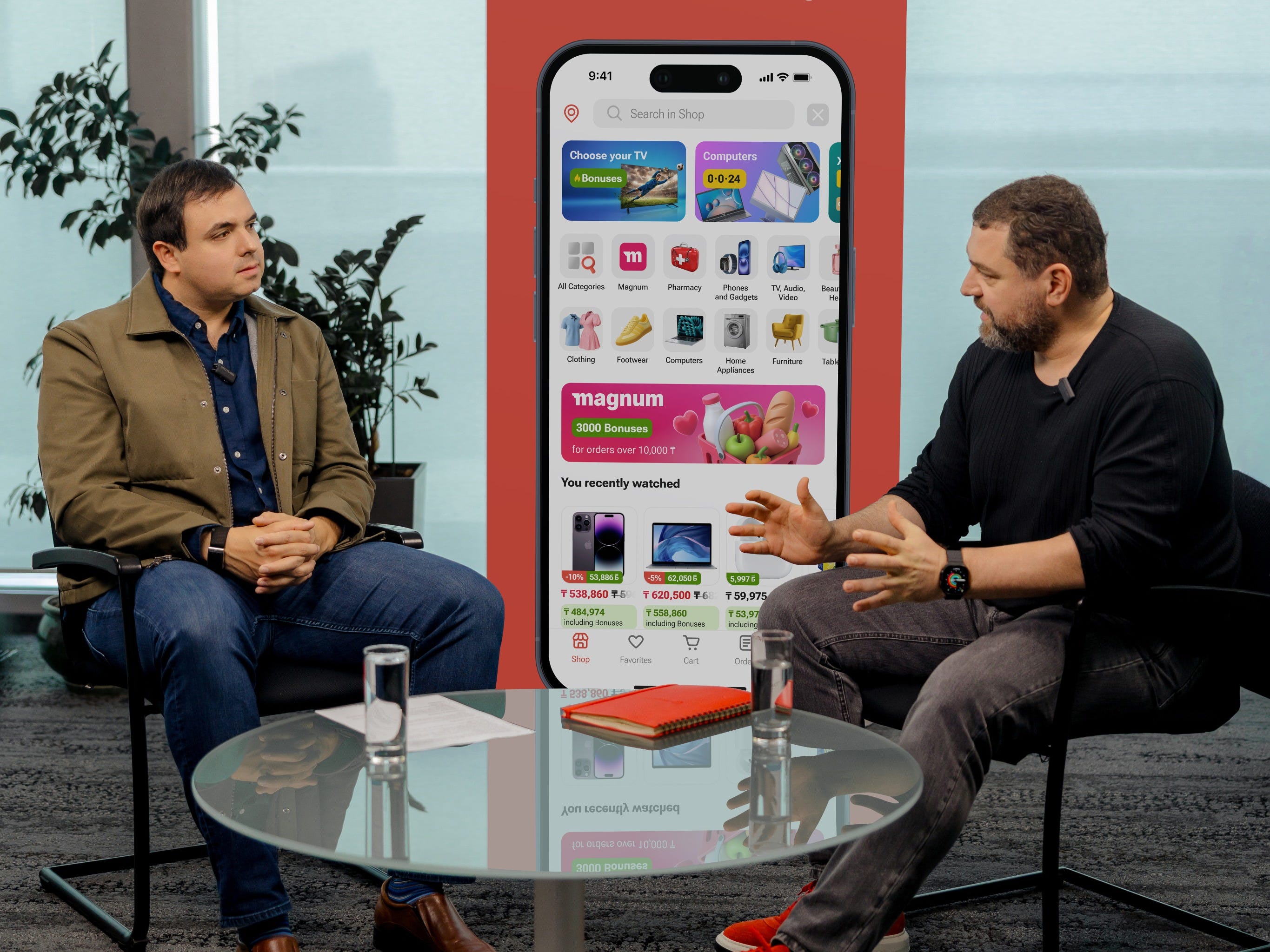
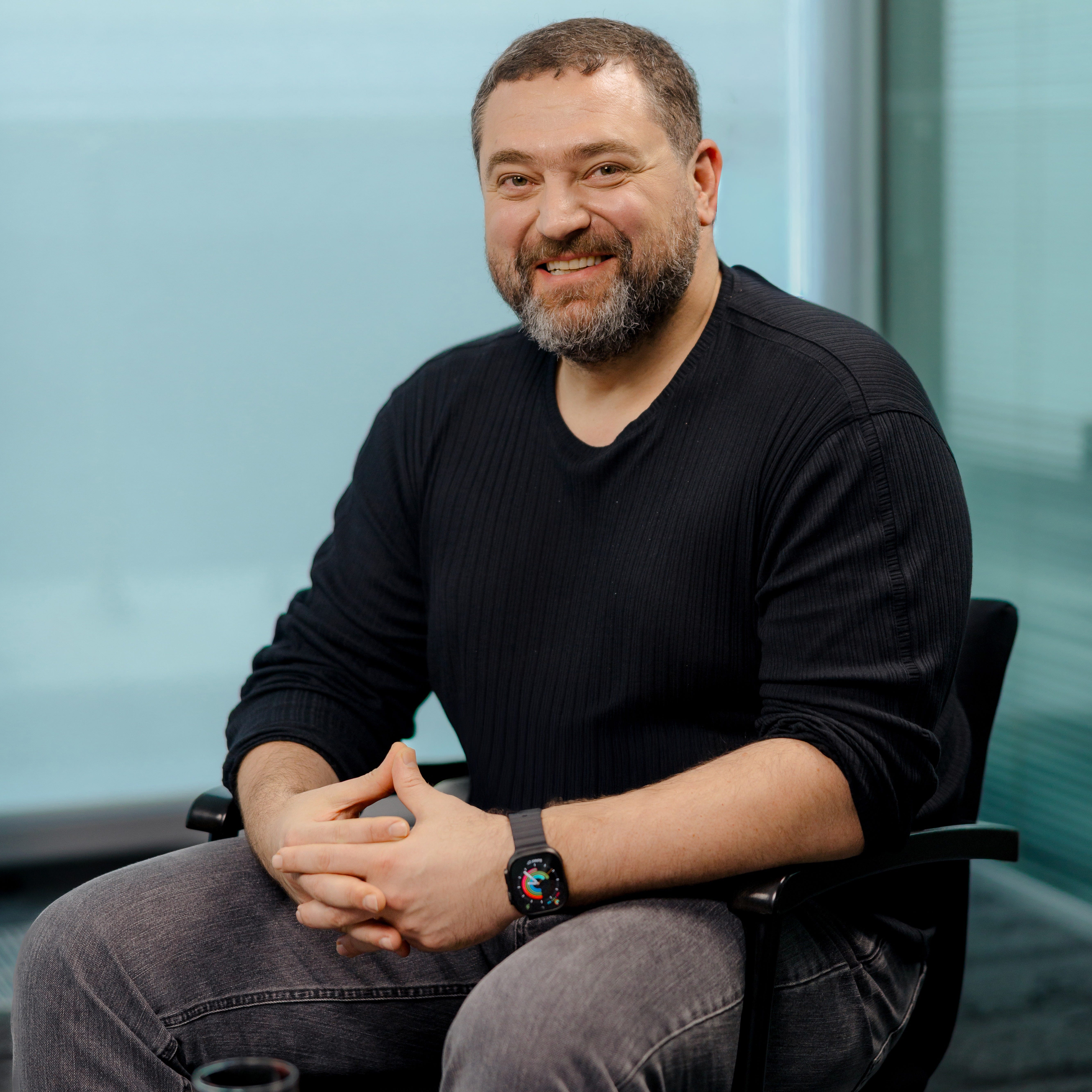
I sat down with Mikhail Lomtadze, CEO and Co-Founder of Kaspi, in his office in Almaty, Kazakhstan. This is our second conversation in two years. I previously hosted him in New York at Nasdaq for his first-ever English-language podcast, and since then Kaspi has grown and evolved so much that this time I decided to fly to Kazakhstan.
Kaspi is a remarkable case study in company transformation. What started as a traditional bank is now one of the world’s most defining super apps, at a scale that is hard to appreciate from the outside: $2.3 billion in revenue and $539 million in net income last quarter alone. It is also hard to explain how dominant and loved Kaspi is in its home market. In a country of 20 million people, more than 15 million use the app every day, it handles two thirds of Kazakhstan’s e-commerce, and it has played a real role in digitizing and improving people’s lives.
The company’s newest chapters include two important milestones. In January 2025, Kaspi announced their acquisition of Hepsiburada, one of Türkiye’s leading e-commerce platforms, opening up a market of 90 million people. And in June 2026 they launched Kasper, their consumer-facing AI assistant, marking a new era and a new goal: to become not just the everyday super app, but the everyday AI assistant for their customers.
After spending nearly a week in Kazakhstan trying to live like a local, I was blown away. The country is underrated and the quality of life in the cities is very high. There is also a real entrepreneurial community brewing, including Higgsfield AI, the AI video startup that became the country’s latest AI mega-unicorn.
Those days in Almaty also reminded me why I love working with technology companies that genuinely try to make the world a better place. We usually argue about whether tech improves people’s lives in the abstract, but Kazakhstan lets you see the answer up close. There is no doubt in my mind that Kaspi has played a role in improving people’s lives in the country. Most of the friction that fills an ordinary day, like paying for things, moving money, buying what you need, dealing with the government, has been engineered away, and you feel it within hours of landing.
The effects compound well beyond consumers. Kaspi handed hundreds of thousands of small businesses a storefront, a payment rail, and access to customers they could never have reached alone. I walked into a gym in Almaty and the owner volunteered, without me asking, that Kaspi brings him clients. Mikhail later told me his team recently had a shouting match in the office about how to lower the fees merchants pay (which is the opposite of the argument happening inside most marketplaces). A company this strong also raises the floor for everyone else, because competitors and local businesses have no choice but to get better. And it becomes a genuine ally to the government, digitizing payments and bringing public services online, something many countries spend a decade attempting and still get wrong.
We discussed why almost nobody in the company carries a financial target, how a 10,000-person organization stays a collection of startups, what the first year inside Türkiye has actually taught them, why he thinks investors are underestimating their ability to execute, and why Kaspi’s final destination is the everyday AI assistant rather than the everyday super app. I hope you enjoy this conversation as much as I did.


Kaspi has spent nearly two decades building the most comprehensive consumer application in the world outside of China. Kazakhstanis use it to buy anything, pay for anything, book travel, order groceries, access government services, borrow, and save. You can get a lot done in the app: from buying food, clothing, and electronics to paying in a store, opening a savings account, holding digital documents, even getting married. The average consumer transacts 80 times a month inside a single app.
That scale is now the launchpad for something else. Mikhail frames the ambition in one sentence: Kaspi wants to become the everyday AI assistant for consumers. He calls that the final destination, and Kasper is step one.
The strategic logic rests on a claim about interfaces. Today, using a mobile app means looking at a screen, reading, processing, then acting: push a button, scroll, read again, act again. Lomtadze points to an iron law of that pattern, the more actions a consumer takes and the more they scroll, the lower the conversion into the product you are trying to sell. AI collapses that loop, and removing the round trips is what improves conversion.
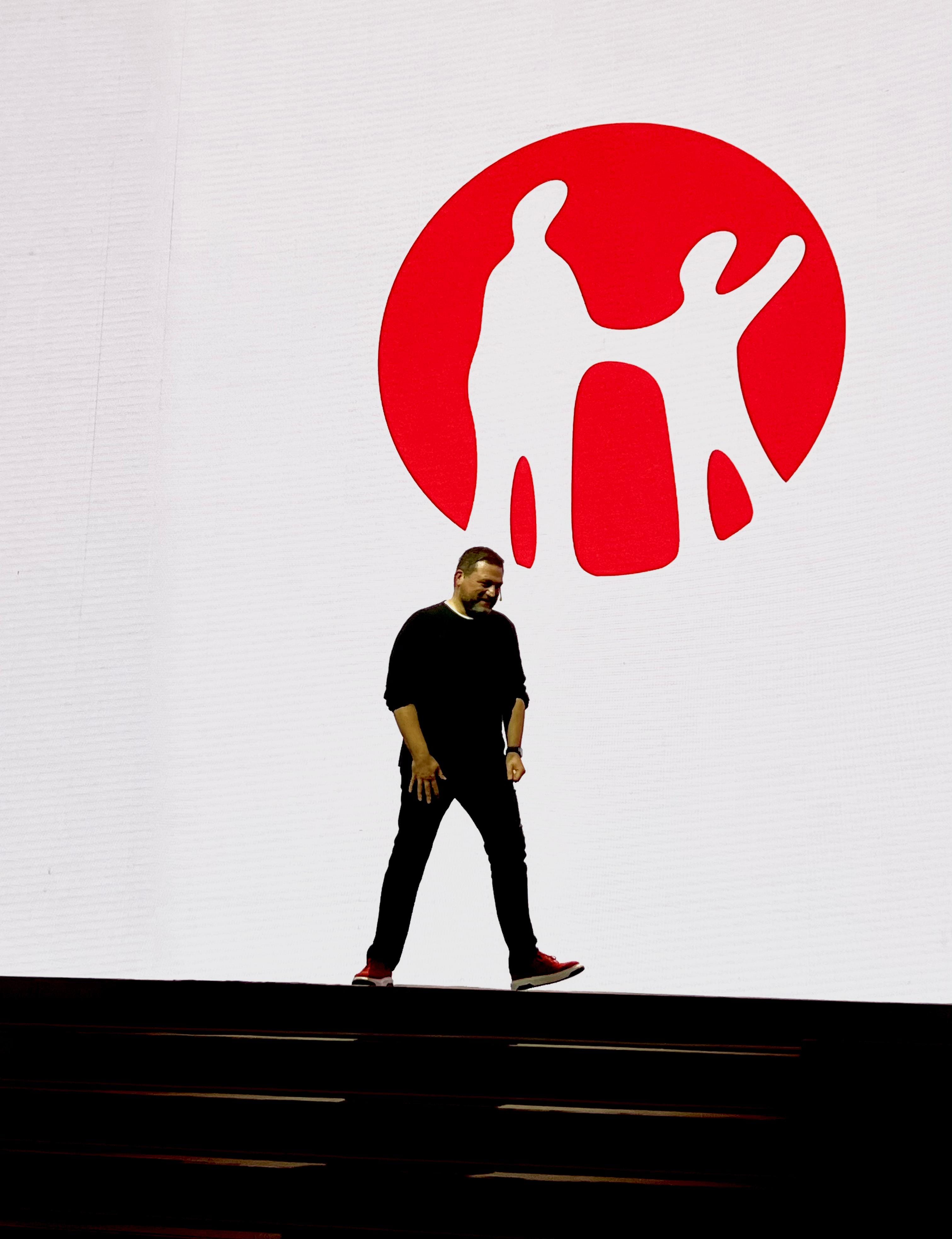
Making that work requires the assistant to be right, not merely conversational. This is where Kaspi holds a structural edge over model providers and startups alike. The consumer is already inside an application containing all the services and the payment infrastructure, which produces exceptionally clean data. Mikhail calls the goal extreme personalization: the assistant knows you well enough that when you ask for something, it can return the right outcome with very high accuracy.
There is also a counterintuitive advantage in being smaller than the hyperscalers. Rolling out a consumer AI capability across a market of 20 million people, testing it, and making it work is far easier than attempting the same across hundreds of millions of users, where a company can spend enormous sums without moving the needle. Lomtadze thinks Kaspi has a strong chance at building the first genuinely useful consumer-facing everyday AI assistant.
I was in the room in Almaty when Mikhail unveiled Kasper on July 1, 2026. What impressed me most was that they ran a fully verifiable live demo on stage, in front of everyone, and the product worked seamlessly.
Kasper took nine months to build, the same timeline as past Kaspi products including e-commerce, travel, and the super app before it. Faster AI software development has not compressed that clock, because software was never the bottleneck.
The product itself is deliberately narrow. Kasper consults and helps you until the moment you reach the shopping cart. It compares items, surfaces reviews, summarizes long descriptions, explains the differences between products, and translates technical specifications into plain language. Once you add to cart, the traditional e-commerce experience takes over. Kaspi could have built the full agent. The technology exists and the models are trained, and they could have answered every question in the shopping journey: what to buy, who to buy from, how to ship, how to pay. Instead the team asked what the absolute minimum was that would still create magic for the consumer.
The bar for that minimum was that they had to be 99.9% confident it would deliver, which is exactly the confidence I watched hold up on stage. Coverage can be added later, and shipping options, payment methods, and seller selection can each be layered in over the following quarters. Trust cannot be added retroactively. Kaspi treats Kasper as a person rather than a feature, and Mikhail is clear that shopping is only his first role. In time the assistant could plan a vacation, act as a financial consultant, or help design an apartment someone just bought. Each new role arrives only once the previous one has earned it.
Kaspi’s central belief is simple: the consumer does the hiring, and the consumer can walk. In a market where people open the app 80 times a month, every interaction is a small re-election, and one bad experience is enough to lose someone. Lomtadze describes the company as paranoically focused on customer quality and happiness. This north star determines what gets measured, what gets built, and what gets killed.
That belief explains a management choice that surprises most analysts. The majority of employees at Kaspi do not carry financial targets. They carry customer satisfaction metrics, net promoter score, call volumes, response speed. Only the top 15 - 20 people engage seriously with the financial picture.
Mikhail explains the design by working backwards. Picture the company as a box that has to produce a result. In Kaspi’s case that output is genuinely happy consumers, and everything inside the box, people, resources, systems, data, IT, exists to produce them. The happy consumer is the one paying everybody, employees and shareholders alike. Once you accept that, the metric guiding daily decisions should be consumer happiness rather than an internal financial goal. If the consumer does not like a product, you kill it. If service is not fast enough, you speed it up, and you never think in terms of your own internal limitations.
Launching something that cannibalizes your own advertising revenue is a decision most companies never make, because the first question in the room is always what happens to the existing line. Lomtadze points directly at Google, which he believes missed the initial AI spike for exactly this reason (but is now catching up). Kaspi’s position was simpler: if a product is incredibly useful and the team would use it themselves, they double down and disrupt themselves from within. None of this means the company ignores financials. Lomtadze reviews them, prices products deliberately, and refuses to overspend. The distinction is that financials are never the headline discussion and never guide the decision.

The same instinct governs how Mikhail wants everyone at Kaspi to spend their time. Life is short, so the point is not working less but concentrating effort where it creates the most value, which sometimes means giving a disproportionate share of attention to a new launch. Kaspi can afford that because it runs on two centers of gravity:
Innovation, where products are built.
Operations, where existing customers are served.
Because operations run like a Swiss watch, the product side is free to take swings. He calls the operational standard a never-ending perfection engine, and in a business where consumers buy groceries every week, one bad week is enough to lose them.
Kaspi’s move into Türkiye, first with Hepsiburada and now with the Rabobank acquisition, is the biggest strategic move in the company’s history, and the numbers are substantial: a market of roughly 80 to 90 million people, 18 million monthly users on the application, converting to roughly 3 to 3.5 million actual buyers on the e-commerce platform.
One of the most interesting aspects of this expansion is how deliberately Kaspi has refused to move fast. Lomtadze describes the first year as preparation rather than expansion. The team has focused on delivery speed, app navigation, search, personalization, and organizing data so it is readily available. The super app playbook has not started yet.
The reason is the philosophy above, applied to a market where Kaspi has not earned the love yet. Before layering new services onto an existing customer base, Mikhail insists those customers must be thrilled, not averagely satisfied, and he is explicit about the bar: net promoter scores of 80 or 90 (in a world where most companies reach 40 or 50 and consider that a strong result). Consumers adopt your next product only if they love the current one. Absent that, you launch, some churn, you spend on marketing to win them back, and the economics of a multi-product strategy collapse. It is the same mechanism that produced Kaspi’s entire range of services in Kazakhstan, where nobody could have imagined a company rooted in financial products ending up where it is now.

Learning has flowed in both directions. Türkiye has an unusually deep small business and manufacturing base, and most items sold on Hepsiburada are produced domestically, particularly clothing, textiles, and home goods, by merchants who are experienced operators selling what they make. Some of what Kaspi built in Kazakhstan turned out to apply directly in Türkiye, and some of what the Turkish teams had built applied back home. That pushed the company to a different altitude, and it now builds global products: global advertising, global marketing, global risk management, and shared data capabilities combining what was developed in each market.
With bank license approval secured for the Turkish acquisition, financial products can now follow. On whether Türkiye alone delivers the stated goal of 100 million users, from roughly 25 million today, Lomtadze’s answer is that Türkiye is the platform rather than the destination. It supplies manufacturing and products; Kazakhstan supplies technology. There are two manufacturing centers in that part of the world, China and Türkiye, and Türkiye sits close to Europe with logistics that are affordable on both quality and speed. The countries around it become natural markets later, once Turkish customers and merchants have been converted into what he calls triple happy.
Kaspi employs roughly 10,000 people, with 3,000 to 4,000 in data science, engineering, product, design, and UX. The team is homegrown, and the core group of around 300 has an average tenure of 10 to 15 years. Ask Mikhail about organizational structure and he does not like the concept. For him, structure is a barrier. He thinks in terms of tasks and the meetings needed to deliver a result, and he personally interacts with up to 100 people every month. It is not just his direct reports or the people at the top of the house either. Many of those interactions are with people he has never met before.
Two concepts borrowed from Apple hold it together. The first is the directly responsible individual: every product has one person and one team with full responsibility, which makes each product a startup inside the company. If something is wrong, it is that person’s fault, and if it performs, that is their prize. The second is the absence of layers. Anyone can talk to anyone about anything.
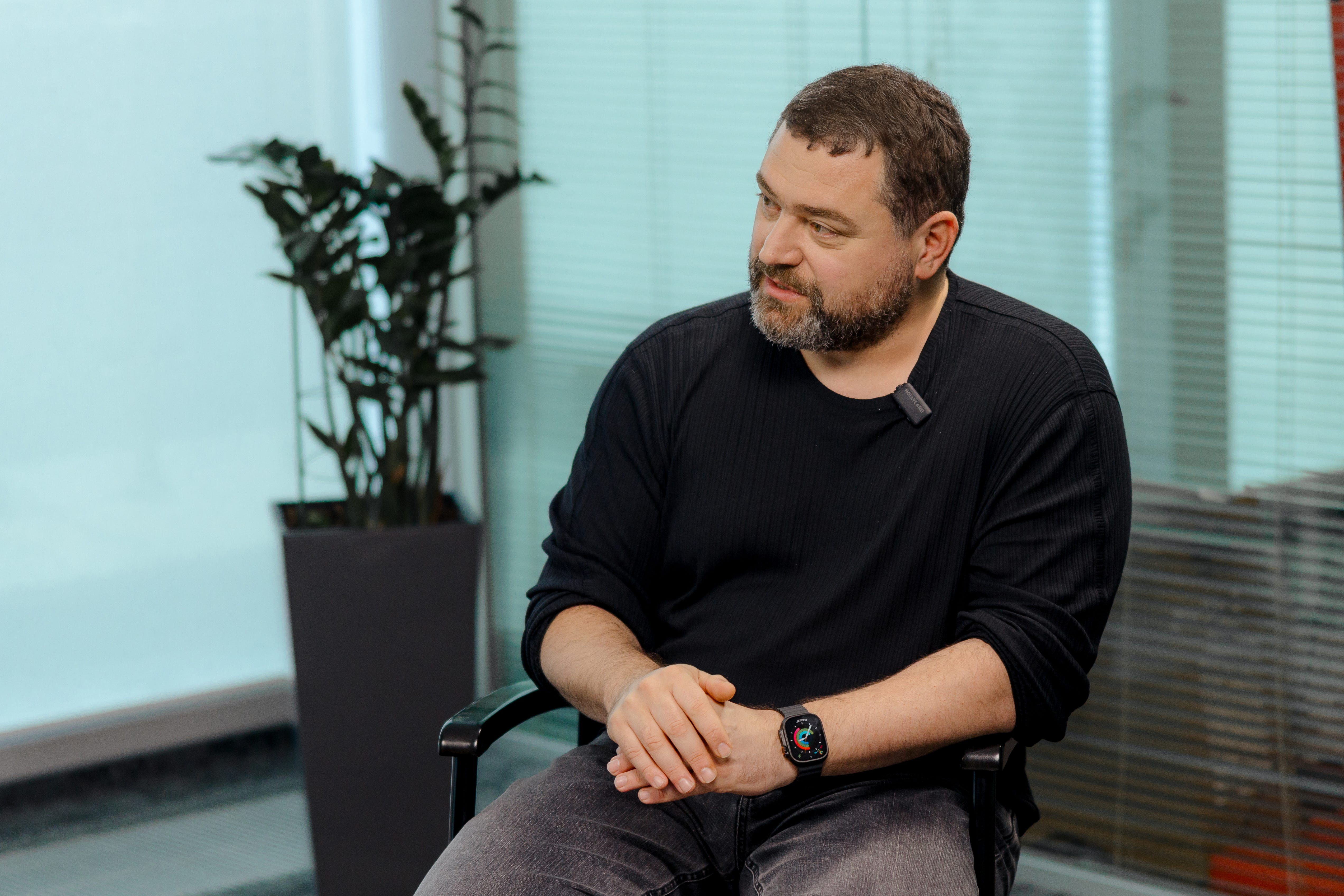
The output is a compounding cycle. Kaspi works in quarterly releases, killing most ideas and advancing only a couple to a three-page description in plain language. The arithmetic is what makes it powerful. One team produces four ideas a year. In a company with fifty products, fifty teams produce fifty ideas in the same window. Competing with that rate is extremely difficult, and they never rush a release because a competitor shipped something. They simply do not care. That engine is now being exported, with two product centers in Almaty and Istanbul building for both markets.
It’s also notable that Kaspi has grown organically for 20 years with no outside investment, which explains its step-by-step temperament. The horizon Lomtadze manages against is five to ten years and 100 million users across multiple markets.
He learns the same way he builds, narrowly and on purpose. Mikhail idealizes no one (apart from his parents) and studies particular cases instead: Steve Jobs for simplification and the directly responsible individual model, Elon Musk for making the difficult to imagine feel discussable. He picks books the same way, for a specific task. Ask about money and his approach to financial success, and the answer is disarmingly short. He has no approach, and says he is happiest sitting in the office with his team, drawing and ideating new products, and traveling as little as possible.


Mikhail Lomtadze: Developing Kasper also took around nine months. Every big product when we launch, and by big I mean e-commerce, travel, developing the super app, usually takes around nine months. We have been using AI as a technology internally, but the future, especially for us, is whoever can crack and develop the consumer-facing functionality. Internally it is always about productivity, you can do more with fewer people or more with the same people. With consumer-facing interfaces, that is where the huge potential is. We have developed the everyday super app. Our consumers make 80 transactions a month with us. You can buy anything, pay for anything, book your travel, use government services, order groceries, all in a single mobile application. So the target we are setting for ourselves is, can we become the everyday AI assistant, from the everyday super app. That is our final destination. Right now we are developing the first step, taking the specific use case where we can deliver the most value and build trust, the shopping experience with Kasper. Then we will scale him into other everyday tasks.
Mikhail Lomtadze: We are an extremely lean company already, so nobody can expect Kaspi to make these fancy announcements that suddenly we are laying off 10% of our workforce, because we are already lean today. We are extremely efficient with a very flat organizational structure. There is not much we can optimize. When you think in five or ten years, the most important thing is not how efficiently you are organized. We are already efficient, and we will become more efficient. The question is who will build the trust with consumers so that consumer-facing applications deliver value, simplify actions, and help people make better decisions. Whoever is developing AI consumer-facing capabilities, it is almost like a human. It is easy to hire and easy to fire, so consumers will fire. That is how we discuss it internally. If Kasper does not deliver on the promise and the quality of the advice is not high, consumers will fire very quickly. You just go back to the traditional way of searching or buying items on our marketplace. This is why we believe it is the most challenging capability, and also where we have the most competitive advantage, in our people and talent, but also the data and compute capabilities we have. Being in a smaller market is also an advantage. Rolling out this capability in a 20 million person market, testing it and making it work, is much easier than if you have hundreds of millions of consumers, where you will not move the needle but you will spend a lot.
Mikhail Lomtadze: Let’s think in terms of human interaction with the application. At the moment, we look at the screen, we read something, we process the information, and then we make an action with the screen. We push a button or we scroll, read again, act again. What we also know is that the more you interact with the screen and the more buttons you push, the final conversion into the product you are trying to sell reduces. More actions, more scrolling, more reading reduces conversion rates. The assistant and the AI technology enable us to skip that interaction with the screen, and it goes only one way. It dramatically reduces the number of actions you have to do to reach the outcome, and that increases the conversion rate. This sounds simple, but it is really complicated to make sure that what you see on the screen is exactly what you need. That is where our comparative advantage in data comes in, and our ability to make sure our prediction is highly accurate. Because the consumer is already in a mobile application which has all the services inside and the payment infrastructure, our quality of data is really good. We just need extreme personalization, to the extent that when you ask your assistant to do something, he understands what you want, he knows you, and he starts offering you the outcomes, solutions, decisions and products with very high accuracy.
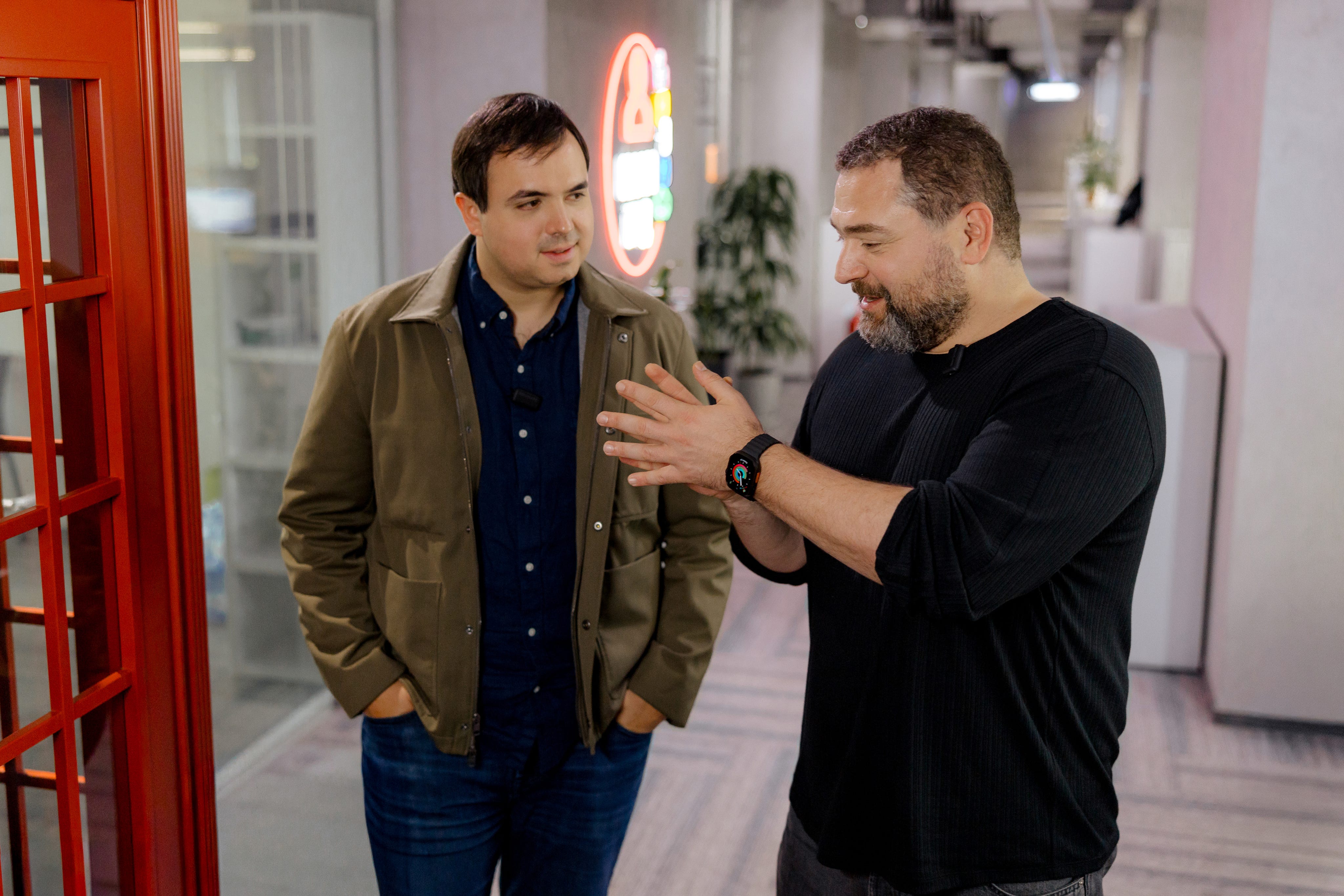
Mikhail Lomtadze: I would not be the only one. There is always overinvestment. I am not going to win the Nobel Prize with that statement. Hype means people are betting on different companies. It is a game of numbers. I bet on 100 companies and I hope at least one out of 10 or 20 will be successful. So definitely hype, definitely overinvestment, and I am highly confident that most of the companies, because it is hype, will be unsuccessful and go bust. But there is no doubt from our side that the technology itself is really remarkable. We do not even know how things will develop in five or ten years, but we truly believe this technology will change the way we interact with devices. We are a consumer company, and that is why consumer-facing products are extremely important for us. The whole way consumers receive information and make decisions will change. And because you do not need to interact that much with the devices, it will also bring a new wave of AI-powered consumer devices in five or ten years.
Mikhail Lomtadze: We can take the example of Kasper. When we were thinking about where to launch this technology, because it has very broad application, the inclination of every smart person is to try to solve everything. We could have launched the shopping assistant like many other companies have done. We could help you with search, with selection, with selecting the items, the seller, the shipping methods. The consumer is always asking, what to buy, from whom to buy, how to deliver, how to pay. You can respond to every question during the shopping journey, and we could do it. The technology is there, the data capabilities and the models are trained. But what we said is, what is the absolute minimum we can launch? And when we say absolute minimum, that means the absolute minimum that will create magic for the consumers. Consumers get immediate value, but at the same time we take this small step, highly accurate, to build the trust, and we were, let’s say, 99.9% confident we could deliver value on that specific narrow piece. So Kasper now consults and helps the consumer until the moment you go to the shopping cart. He compares the items, gives you the reviews, summarizes the description, gives you differences, explains technical terms in simple language. Then, as you push to the shopping cart, the traditional e-commerce experience starts. We deliberately took such a simple step, because we can expand in three months. Every successful product we launch starts from extreme simplification and adds features over the course of consumers using it. And you never know, maybe in three months consumers will tell us something different and want something different from us. So it is better to start simple and then listen to your consumers.
Mikhail Lomtadze: If you work backwards, and you think the company is, let’s imagine, a box which needs to produce some result, in our case that box has to produce really happy consumers. That is the final result we are looking for, and everything inside, people, resources, systems, data, IT, is supposed to work in order to produce happy consumers. You can achieve this constant search for innovation and improvement if you always think in terms of the consumer and you do not think in terms of your company. If the consumer does not like a product, you kill it. If the consumer is not getting service fast enough, you speed it up, and you never think in terms of your own internal limitations. Take the AI assistant we are developing. In most other companies people will say, what is going to happen with our advertising revenue? Why did Google miss the whole thing? They are catching up now, and I think they are developing really good tools, but they missed the initial spike. We basically said that if we believe this product is incredibly useful and we would use it ourselves, we have to double down and continue developing it. We need to disrupt ourselves from within. Of course we are not stupid, we track financial metrics. But having the consumer guiding us on what to do is much more powerful. Most of the units in the company care about the consumers and the net promoter score, the number of calls, the speed of our response. Those are the metrics which help define whether the consumer is happy, and that is our biggest asset. The financial side is never a headline discussion. Maybe the top 15 or 20 people are involved. We take it responsibly, we do not want to overspend, we want to price products appropriately. But that is not something which guides our decision-making.
Mikhail Lomtadze: Life is short. You want to make sure the time you spend, you spend on the important things which bring the most value. It does not mean working less. Most of us work really hard and we continue working and being excited about the things we do. It is about how you continue working hard while concentrating on the things which bring the most value. Sometimes with things like Kasper, or when we were launching the payment business or the super app, every major service we launch, we start allocating a disproportionate amount of time to those new initiatives. The way the company is organized allows us to do it, because we have two centers of gravitation. Number one is where the innovations happen, the products, led by the product development team. Then there are the operations, where we serve our existing customers with existing products. Our operations team is extremely strong. Consumer metrics are the most important metrics for them. You make a consumer happy only if repetitive interactions with you provide the desired outcome at very high quality, and you can lose your consumers if suddenly every repetitive interaction becomes bad quality. That is an everyday mobile application, 80 transactions a month, in a supermarket business which is now probably the biggest grocery business in the country. Consumers are buying every week. If you screw up the purchase in one of the weeks, it is really tough to bring them back. It is like a never-ending perfection engine. The operational guys delivering so much value with our existing products allow us, on the other hand, to be a little bit crazy and experimental with innovative ideas like Kasper. When I say experimenting, I do not mean wasting money. We never wasted money and resources, and our time is precious. The operations running like a Swiss watch allow our product teams to run the innovative side of things.
Mikhail Lomtadze: I do not think in terms of organizational structure. Of course you need to have a structure, you need job descriptions and things like that. But I always think in terms of the tasks that need to be performed and the meetings we need to have to deliver the final result. So I do not think in terms of direct reports. I just interact with anyone that is important to complete the task, anyone that is important to reach the target. From that perspective, maybe the better measurement would be the number of people I interact with during the month, not the direct reports. It would probably be up to 100 people. Those are the meetings about the product development we have, the business results we have achieved with the people who run the businesses, the product we want to launch. I would say two thirds of the meetings are around the products, and one third is around business performance, and now it is also split between two countries, Kazakhstan and Türkiye. There are a lot of new people coming into these discussions, probably about 10 or 20% would be new every month. With operational discussions you do not need to meet people every month, you would meet them once in two months or once in a quarter. My focus is primarily in the direction of where the products are going and how we are going to improve them, what is our next product, what is our next feature on the product.
Mikhail Lomtadze: A couple of concepts we like. Directly responsible individuals, which means if you have a product or a service, there needs to be one person who has full responsibility for it, and then a team that has full responsibility for it. It is almost like startups across the products. You are the consumer, and I am the person developing the product for you, and I have the authority to respond to any question you might have. There are no layers of organization. You cannot say that if something is wrong with my product it is that team’s mistake. And if the product is performing extremely well, that is my prize also. Then there are no layers. Whoever needs to talk to whoever can interact with whoever about anything in the company. We basically try to minimize structural barriers. Any structure is a barrier. Of course you have to do job descriptions, that is part of the normal course of business. But conceptually, I hate this structure in boxes. Process is like a river, it has to flow. We rarely do things where we suddenly need to rush and launch something because we are paranoid that somebody else launched. We do not care, so we do not do that. We do product development with releases. Every three months we sit down and say, here is what we have done in terms of the product three months before, these are the next ideas for another three months. We kill most of the ideas. We keep only a couple which make sense, and then we run the process described in simple language, three pages, frequently asked questions, how we are improving the life of our consumer, our partner, and the merchant. If you have one team, one idea every three months is four ideas during a year. But when you have 50 products and 50 teams, and 50 products come up with at least one incredible idea, that is 50 ideas already. To compete with this speed of innovation is really tough for anyone. But that took us a long time. Our guys have been here 10, 15, 20 years in the company.
Mikhail Lomtadze: It is really exciting. We have said we have this inspiration of having a 100 million user business, and at the moment we have about 25 million if we combine Türkiye and Kazakhstan. Türkiye is a big market, around 80 to 90 million people. We have the company and the brand which is respected and strong. We have 18 million users coming to the mobile application monthly, converting into roughly 3 to 3.5 million actual buyers on the e-commerce platform. Our focus really has been mostly to prepare ourselves and the company towards adding more services in the future. Our intention is to do what we have done with our Kaspi super app strategy. However, to implement that strategy, it is fundamentally important and cannot be compromised that your existing customers have to be super happy. I am not saying on average happy. I am not saying happy like any other competitor. I mean just thrilled, net promoter score of 80 or 90, because most companies have 40 or 50 and that is already a very good number. If you want to innovate at the speed we do, you need incredibly excited and happy customers using your existing products, because they will use your next product only if they are happy with your existing products. If your customers are averagely happy, you give them a product, some of them use it, some of them churn, you invest into marketing to bring them back, and it costs you much more money. Nobody could imagine Kaspi being primarily in financial products and ending up where we are now. The main reason we have achieved it is because we are always paranoically focused on customer quality and happiness. So in Türkiye we want to increase the speed of delivery, increase the user experience so the mobile application is easier to navigate, improve search, improve personalization, organize the data so it is readily available. The company is growing around 20 to 25% order growth depending on the month, and we are one of the fastest-growing retail companies in Türkiye. But we have not even started innovating yet. We have just been approved for the bank license for the bank acquisition, which will enable us to launch financial products.
Mikhail Lomtadze: Kaspi Taxi would be a nice name to have in our portfolio. But at the same time, we are also thinking, is there anything where we can add value? Can we do something differently that will create disproportionate excitement for consumers? Food delivery and taxi are interesting markets and interesting businesses, but there are also a lot of players in that market and they do things very similarly. If we were on a bigger market, we would not do a taxi, we would go straight into driverless taxi. That is the jump we would consider. At this stage, I think we would be thinking more about what other services can be part of our AI assistant Kasper, and that would be our priority, rather than going into other verticals by ourselves. Our most important priority now is the front end of the consumer experience with AI, and when we crack this, that will deliver huge value and scalability. Maybe our AI assistant will then go and ask taxi companies to join and help to book the taxi. So whoever wins the front end of the consumer experience with AI will be the one who creates the most value for the consumer and for the company itself.
Mikhail Lomtadze: When the customers say thank you, it is like honey on our heart. It is something which inspires us to continue innovating and doing great things. If we are in a restaurant and they understand there is somebody from Kaspi, people usually come over and tell you thank you. I think that is the biggest reward we get. On the business side of things, we have two core stakeholders in our ecosystem, consumers and merchants, and one of the layers of our business is that we actually connect them. We are a tech company. Apart from our grocery business, we do not actually own the services which consumers are using, and apart from financial services, where we provide our own money and savings accounts. Our merchants are the ones which need to develop their business, and by developing their business they also deliver more services to our consumers. If they both grow, this is how our company grows. We had a huge argument the other day in our office with the team. You know what the fight was about? The fight was about how we can continue developing our services, but the fees which merchants are paying to us are less. The fight was in the opposite direction. We were pretty much screaming at each other, like, how can we do it better, how can we do it more efficiently from our side, how can we drive the costs of the merchants and the fees they are paying down, so that they can continue growing and become more profitable. I do not know how many e-commerce marketplaces have people fighting about how we can make our merchants more profitable rather than how we can make ourselves more profitable. Constantly increasing the fees and increasing the prices are some of the most painful decisions that we have to take.

Mikhail Lomtadze: Tencent, as far as I am concerned, is the pioneer of the super app business model. They have been the first ones and the biggest ones in a truly super app, which means a single mobile application with a lot of services integrated into it. That is the example which we followed and learned from. In general, we are paranoical learners. That is another thing which I think helps us keep going. It is a great testament to our business model that they decided to invest. From their side, this is a group which is doing investments in many other companies as well, so we just hope we will be able to learn more. Apart from interacting with Tencent as one of the key investors, maybe we can also work around and learn about some of the specific business lines they have on their side, because there are definitely things we can learn. I still believe we will launch our Kasper AI assistant more successfully than they will. So maybe there is something they can learn from us. But it is a great company, and we would love to interact with them closely and learn from their experiences as well.
Mikhail Lomtadze: It is a reflection of the fact that nobody expected a company like this to be born from Kazakhstan, and nobody would realize that a company like this, and of this size, can be built in a 20 million person market. Those were the challenges which were reflected in our stock price as a single market company. The stock has different limitations and factors that influence it. We are focused on operations, so we believe that if we continue executing like we have historically done, and when we are successful with our consumer-facing AI capabilities, and we are successful in showing and replicating this business model in Türkiye, the stock will follow. We will continue explaining our business, but what we need to be focused on is the performance, just showing that we can bring this business model to another bigger market. Then I think there will be people that will believe that is possible. And correct, that is what I think too, they are underestimating our capabilities to execute. I have been running this company for 20 years with no external funding, so of course I am used to it. Investors do not realize this company got where it is now without external investment. It grew organically, and because it grew organically, we always take it step by step. We are always planning. We want to be a 100 million user company, multiple markets, and we have ten years, five years, those are the horizons we are talking about. So whoever wants to buy and flip, that is fine, that is the market. But we have a ten-year plan in our heads, and we will just put our heads down and execute.
Mikhail Lomtadze: I have no approach. I think I would be a very happy person if I were sitting in the office interacting with our team and drawing the products, and traveling less. David Ferguson, my colleague, is helping with investor relations, but I still have to interact with investors. I would be much happier if I work with my team and think about how to make consumers happy, and do not spend my time on anything else, really.
This interview has been edited and condensed for clarity.


The views and opinions expressed in this newsletter are those of the hosts and guests and do not necessarily reflect the official policy or position of any affiliated organization or employer. This content is for informational and educational purposes only and should not be construed as professional financial, legal, or tax advice. Always consult a qualified professional before making any financial decisions.
Want more podcast episodes? Join me and follow Fintech Leaders today on Apple, Spotify, Youtube or your favorite podcast app for weekly conversations with today’s global leaders that will dominate the 21st century in fintech, business, and beyond.
Don’t forget to subscribe so you don’t miss big conversations and insights with the giants of Fintech.
Comments
Nothing yet. Say the first thing.
Sign in to join the conversation.