
Good morning! I had promised that FLP would close its doors for the summer break—and that is still practically the case, as we are currently grappling with how to kill time during these endlessly long days. However, considering the breaking news arriving from London and New York, I have more than enough material to publish a “special edition” for these early summer nights, complete with a crossword section.
So, welcome to a new episode of Front Line, where we will attempt to understand exactly what is happening backstage on the Together Together Tour now that it has officially made landfall in London.
To ensure you stay updated on the continuous melodramas of corporate pop, I highly recommend clicking the magnificent pink button you see below—which happens to be the exact shade of my exposed skin during the hottest hours of the day.


This summer season is completely overcrowded with news: between Trump’s relentless, torrential declarations and Americans suddenly discovering via the World Cup that soccer is the only thing holding the geopolitical relations of half the globe together, the climate is already pretty heated.
Amidst one delusion and another, images from Wembley would occasionally drift onto my timeline: a packed-to-the-gills stadium, the usual choreography from the fandom in the Rear GA—forced to self-generate entertainment because the main stage was miles away—but above all, what made me wrinkle my nose was the abrupt upgrade to Styles’ on-stage look. He went from the corporate suits of the Dutch leg to what looked like a “Teams meeting” uniform: ultra-short jogging shorts and anthropomorphic—or rather, genderless—t-shirts worn during the initial London dates. On top of that, I noticed the return of the famous “pecs”, which have made a calculated reappearance under a wisely tight-fitting t-shirt.

Pop Crave@PopCrave
Harry Styles shares photo from night four of his historic 12 show-run at Wembley Stadium.

4:47 PM · Jun 20, 2026 · 186K Views
112 Replies · 490 Reposts · 10.9K Likes
Something smells fishy here, I thought, and it smells bad. Something is shifting behind the scenes; something happened. The fans immediately assumed this shift was the direct result of complaints across social networks from the more demanding factions of the fandom regarding a certain “flatness” and lack of variety in the wardrobe.
I am truly sorry for the Harries who are still convinced that Jeff Azoff takes action because he views them as cognitively evolved individuals—rather than a mere line item on an Excel spreadsheet tracking the revenues of his asset—but the reasons for this sudden shift have absolutely nothing to do with the “customer care” invoked by the most confused fandom in history. But we will circle back to this point.
Within the same week, two other events occurred that piece together perfectly within this ongoing disaster. Let us pause on them for a moment before getting to the absolute crux of this entire theatrical display.
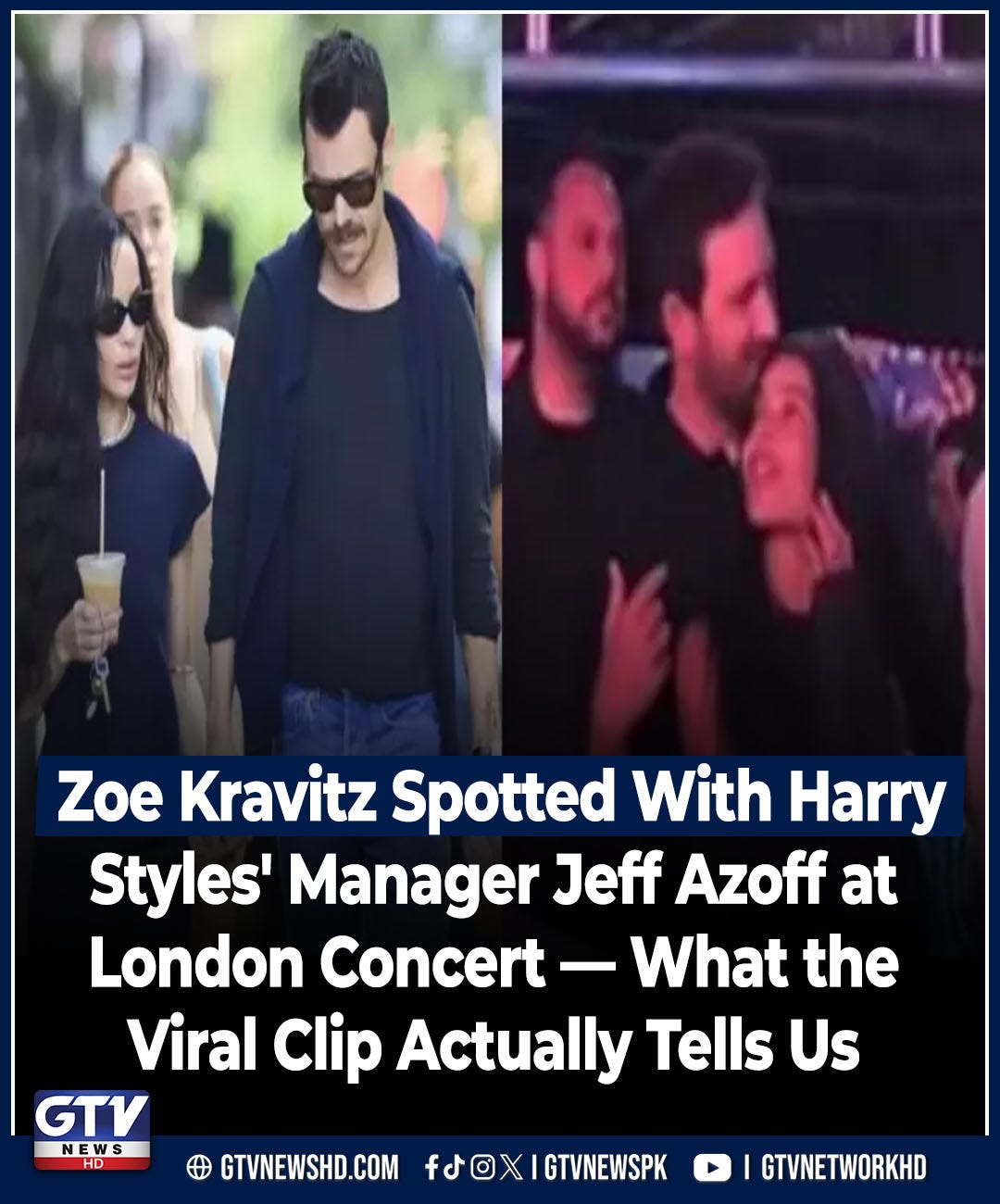
What exactly happened during the second night at Wembley? If you search PageSix or TMZ, you will find absolutely nothing. In fact, the reality that the heavyweights of American gossip are completely ignoring the incident is perhaps the biggest story of all.
TMZ and PageSix essentially function as corporate bulletin boards for elite American mega-managers. Irving and Jeff Azoff control access to a monstrous slice of the pop and live entertainment market via Live Nation. If you publish something that irritates the Azoffs, you lose your exclusives, your press credentials, and the orchestrated leaks coordinated for the next decade. The Daily Mail, however—where the news was first broken—operates under the logic of British tabloids: an embargo from an American manager holds far less sway over a London newsroom starved for domestic clicks, especially when you have a top-tier pop star playing a home game.
Let us read the account directly from the press, neatly summarized by MSN:
Much like the tour’s opening night in Amsterdam, Harry Styles’ fiancee and actress Zoë Kravitz also attended the London show alongside Harry’s manager, Jeff Azoff, and other members of his close inner circle and management team. While the duo was spotted enjoying and vibing along with the songs, they were also spotted leaning towards each other and sharing what the internet has now dubbed a ‘romantic’ moment. This came out quite surprisingly for the fans, as the ‘moment’ did not seem very ‘friendly’ but immediately started triggering infidelity allegations on the social media platforms. Fans spotted Zoë dancing, laughing, and whispering to music executive Jeff Azoff in the VIP box. As a matter of fact, Zoë is currently engaged to Harry Styles, and Jeff is also married to Glenne Christiaanse, a prominent music industry executive who works in talent relations and artist services for Apple Music.
Having the manager land smack in the middle of a cheating scandal with the artist’s rented fiancé is pure, unadulterated gold for deconstructing the arrogance of the entourage. When the puppeteer trips over his own strings and tumbles onto the stage alongside his own marionettes, the narrative collapses under its own weight in real-time.

liv@snoopycinema
@goldenhrrry idk, I only saw this on my tml 😭 the harries are worse than the larries

6:15 PM · Jun 14, 2026 · 270 Views
1 Reply · 2 Likes
As we have already extensively documented, every single public relationship Styles has engaged in with prominent figures of the exclusively North American entertainment industry—from Taylor Swift onward—is transactional in nature.
The “relationship” with Zoë Kravitz is, in short, yet another systematically engineered PR stunt designed to launch specific products into the market (in this instance, her two films, his album, and the tour), which will hit its expiration date the exact moment the curtain falls on their respective projects.
In this context, what we witnessed was a complete breakdown of hierarchy on the set. The manager, whose entire job description is to remain in the shadows oiling the gears of public attention around the artist, finds himself flirting—or allowing himself to be perceived as flirting—with the asset contracted for his client. It is a fatal lapse in attention that exposes the artificial, almost corporate nature of the internal dynamics inside the VIP box. They forgot that in a 90,000-capacity stadium, the panopticon of mobile phone cameras is never turned off, not even in the restricted area.
The reaction of the fans (“allegations of infidelity”) is Azoff’s perfect nemesis. He has spent years engineering fan speculation to manufacture engagement around Styles (the pauses, the cryptic messages, the staged dramas), and now that same paranoid, hyper-analytical machine has turned on him. The stans are applying the same level of toxic scrutiny to Jeff Azoff that he himself encouraged to sell his client’s records and tickets.
Speaking of toxic parasocial relationships engineered between an artist and their audience, look no further than a familiar, highly evaluated acquaintance of this fandom who recently used that exact concept as an excuse to engage in cheap, third-rate victimhood: Olivia Wilde.

Pop Base@PopBase
Olivia Wilde talks about people being “f—ing p*ssed” about her 10-year age gap with Harry Styles: “I think that it also had a lot to do with the kind of parasocial relationship people had with/have with him, which is a burden that is very weighty and not something I envy and he
2:51 PM · Jun 17, 2026 · 5.66M Views
259 Replies · 274 Reposts · 15.2K Likes
Wilde’s venting session during a recent interview to plug her new film is a masterpiece of cognitive dissonance that deserves to be brought to your distracted attention.
Presenting her “parasocial relationship” with the fans as some sort of natural disaster she passively endured for the sake of true love is an absolute insult to the readers’ intelligence. That relationship was the literal epicenter of a two-year cross-marketing campaign that successfully anchored two films, an album, a cosmetic line, a world tour, and a headlining performance at Coachella.
With this unfortunate outburst, Wilde is desperately attempting a post-scandal rebranding to salvage her career as an indie, politically engaged director. To do so, she takes the path of least resistance: playing the designated victim of a pop star’s hyper-visible orbit.
This, despite the reality that even the rocks remember how the “couple” made their public debut at none other than Jeff Azoff’s wedding (proving he is entirely omnipresent, much like he was during the earlier stunt with Kendall Jenner). To make matters worse, that debut occurred exactly four days after the release of the Treat People With Kindness music video—a classic case of corporate news-stacking.
It is the supreme tactical maneuver of the entertainment industry: unleash the monsters you yourself created, and then self-righteously distance yourself from them the second they outlive their commercial utility.
Furthermore, if you were truly struggling under the suffocating pressure of the fandom, and if your goal was genuinely to flee the parasocial monster to cultivate a “spontaneous” love story, you wouldn’t pack your bags and move into the house of your boyfriend’s manager. Moving in with Jeff Azoff proves this wasn’t a standard domestic arrangement; it was a corporate cohabitation inside the literal headquarters of Full Stop Management, where Azoff could monitor his two “lovebirds” in real-time.
Olivia Wilde is playing the part of the intellectual persecuted by mean teenage girls to trick the world into forgetting that the single most notable role of her recent career was that of a contractually obligated co-star in a PR stunt managed by Full Stop.
The recent Wembley incident involving Zoë Kravitz ties directly back to Wilde’s operational trajectory. If Jeff Azoff’s residence is the site where these relational assets are contractually signed and managed, the VIP box in London is where the codes finally became completely entangled.
Management has grown so profoundly arrogant that they have forgotten the fundamental golden rule of the industry: you never break the fourth wall in front of a sold-out stadium.

PrincessJennaBananaHammock@QueerPrincess98
And the damage control continues! And in the middle of the day on Oxford Street in a city full of fans. HEY ZOE...WE KNOW YOU'RE FUCKING JEFFERY AZOFF...MAKING AN ASS OF HARRY IN PUBLIC ISN'T GOING TO CHANGE YOUR SLOPPY SUBSTANCE FUELED INDISCRETIONS.
3:26 PM · Jun 18, 2026 · 5.44K Views
2 Replies · 6 Reposts · 132 Likes
Watching the manager and the contracted girlfriend engage in behavior that even casual fans decode as “ambiguous” shatters the optical illusion of the stunt. It proves that the entourage now treats the audience as a passive, unthinking mass incapable of connecting the dots.
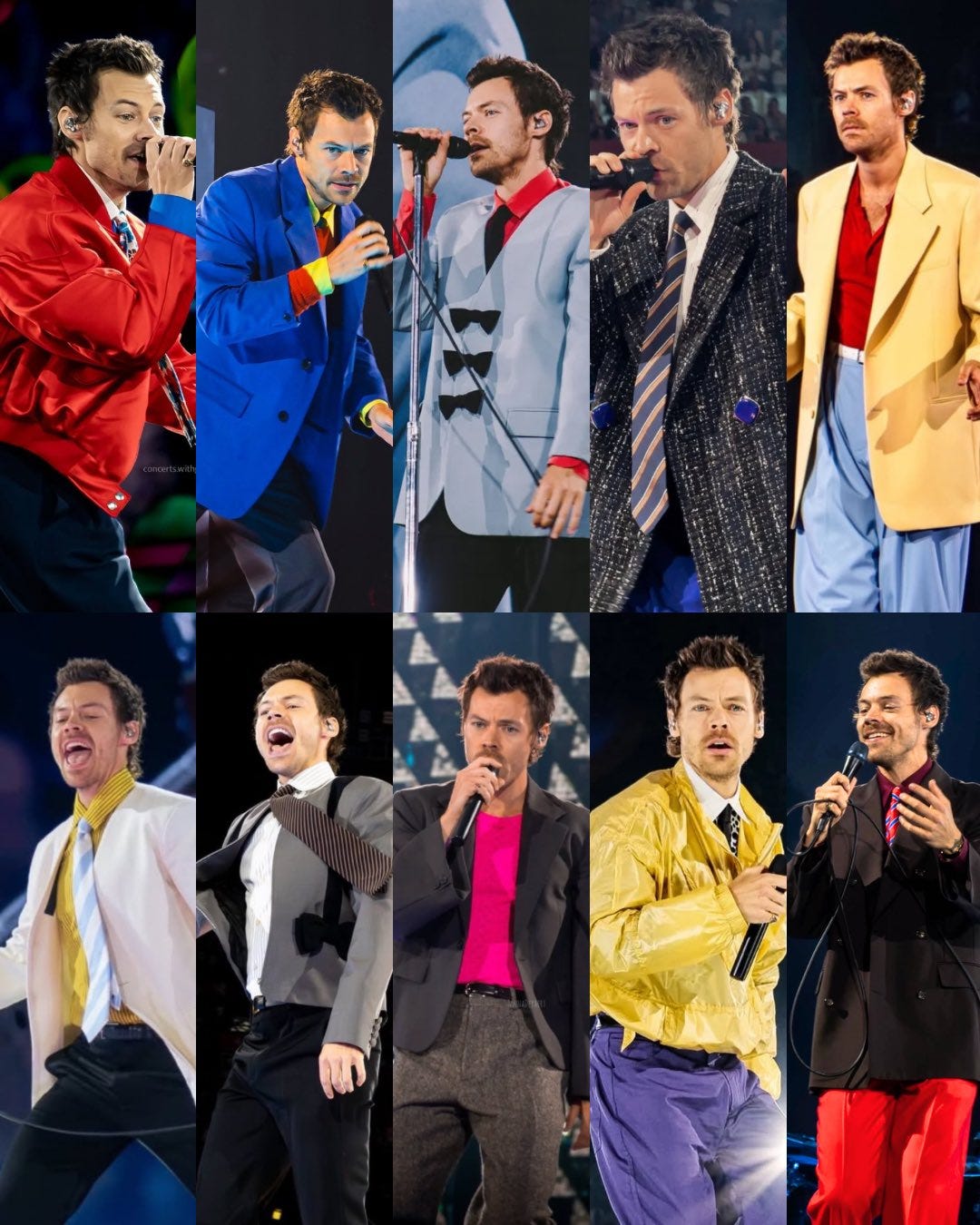
If abandoning the tailored, David Bowie-inspired suits debuted in Amsterdam to hastily retreat into generic shorts and genderless t-shirts isn’t an artistic concession to the fandom, then what is it? Simple: it’s an active, real-time A/B Test. Or, to use software terminology, an emergency rollback—a hard reset to factory settings.
The executives at Live Nation and Full Stop Management looked at the incoming data, cross-referenced it with the abysmal reviews from the tour’s opening leg, noted the visible wear-and-tear of a 32-year-old artist looking increasingly awkward drowning in clothing designed for mature adults, and smashed the panic button. But above all, what caused the senior Azoff and Michael Rapino to fall out of their executive chairs were the terrifying resale metrics flooding the secondary ticket market for Madison Square Garden.
A recent analytical report by KDAF, anchored entirely on tracking data provided by SeatPick, grounds our cultural critique in indisputable economic reality. We aren’t dealing with standard internet forum speculation here; we are witnessing a cold market correction responding to a visible drop in product quality.
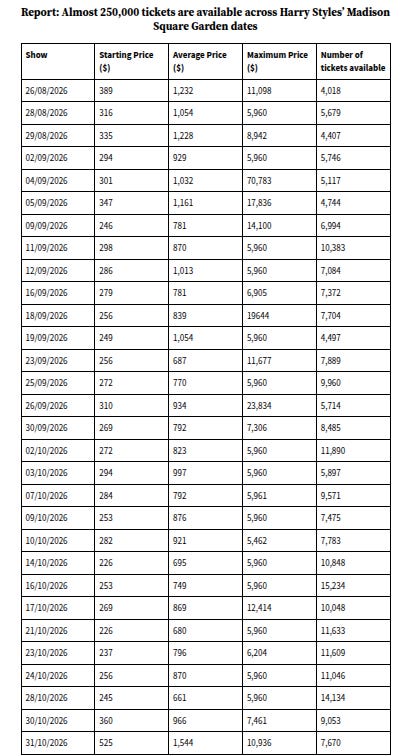
Having 249,684 tickets sitting on the secondary market just two months ahead of the shows, with a staggering average of 8,323 unsold tickets per individual night, constitutes an unmitigated disaster for an artist of this tier.
The wildly volatile price spread—with ticket listings plummeting below $230 for the October dates, while highly speculative single tickets sit listed at an absurd, hallucinatory $70,783 for the September 4th show—paints a picture of a completely distorted, highly speculative internal market that is actively imploding under its own weight.
The SeatPick analysis points to a direct correlation between this sudden box-office flop and a massive collapse in consumer confidence. It follows weeks of fierce online backlash from core fans targeting poor audio quality, repetitive wardrobe choices, and a lazy, paint-by-numbers stage design.
Let’s do some basic back-of-the-napkin math here, because the metrics reported in the data are genuinely alarming. The standard concert capacity for Madison Square Garden sits roughly between 19,000 and 20,000 seats. The data shows nearly a quarter of a million tickets sitting in resale limbo, with sharp peaks of over 14,000 secondary listings for individual dates (such as October 16th or October 28th).
If you have 14,000 tickets up for resale in a venue that only holds 20,000 people, it means up to 70% of the arena is currently sitting in the hands of brokers, scalpers, or desperate fans trying to cut their losses. This definitively exposes the grand “Sold Out” narrative blasted across corporate PR channels as a complete fiction.

Remember the triumphant announcement claiming over 11 million verified “ticket requests” for the MSG residency? This massive discrepancy between the numbers loudly broadcasted by management and the reality on SeatPick means only one thing: those tickets were never purchased by the actual public. They were scooped up in bulk by bots, secondary ticketing agencies, and scalpers affiliated with Ticketmaster itself—the exact practice of corporate self-scalping I exposed in Take the Money and Run and Caught Stealing. Except this time, the “pump and dump” strategy failed miserably.
Market hype has plummeted below zero, reviews of the European leg have been brutal (as the analytical report explicitly notes regarding the stages and wardrobe), and now the scalpers are left holding the bag.
American fans, who inhabit the same economic universe as their European counterparts—meaning they face identical financial strains and systemic cost-of-living crises—proved to be far shrewder than the two graying wolves sitting in their respective corporate boardrooms. They pulled off a maneuver that management had fundamentally failed to anticipate: economic arbitrage.
When a transatlantic flight to Europe combined with an admission ticket to the Johan Cruyff Arena costs significantly less than a single premium seat at MSG purchased on the secondary market, Azoff’s domestic monopoly is completely bypassed. It is a passive boycott dictated by pure financial logic. For the Machinery, this is the ultimate nightmare scenario: it drains the corporate coffers right inside their own backyard.
And this brings us to the true masterstroke of recent days: the sudden wardrobe alteration at Wembley Stadium. There is absolutely nothing accidental about a radical styling overhaul executed mid-way through a European tour leg. This is pure, unadulterated crisis management in real-time.
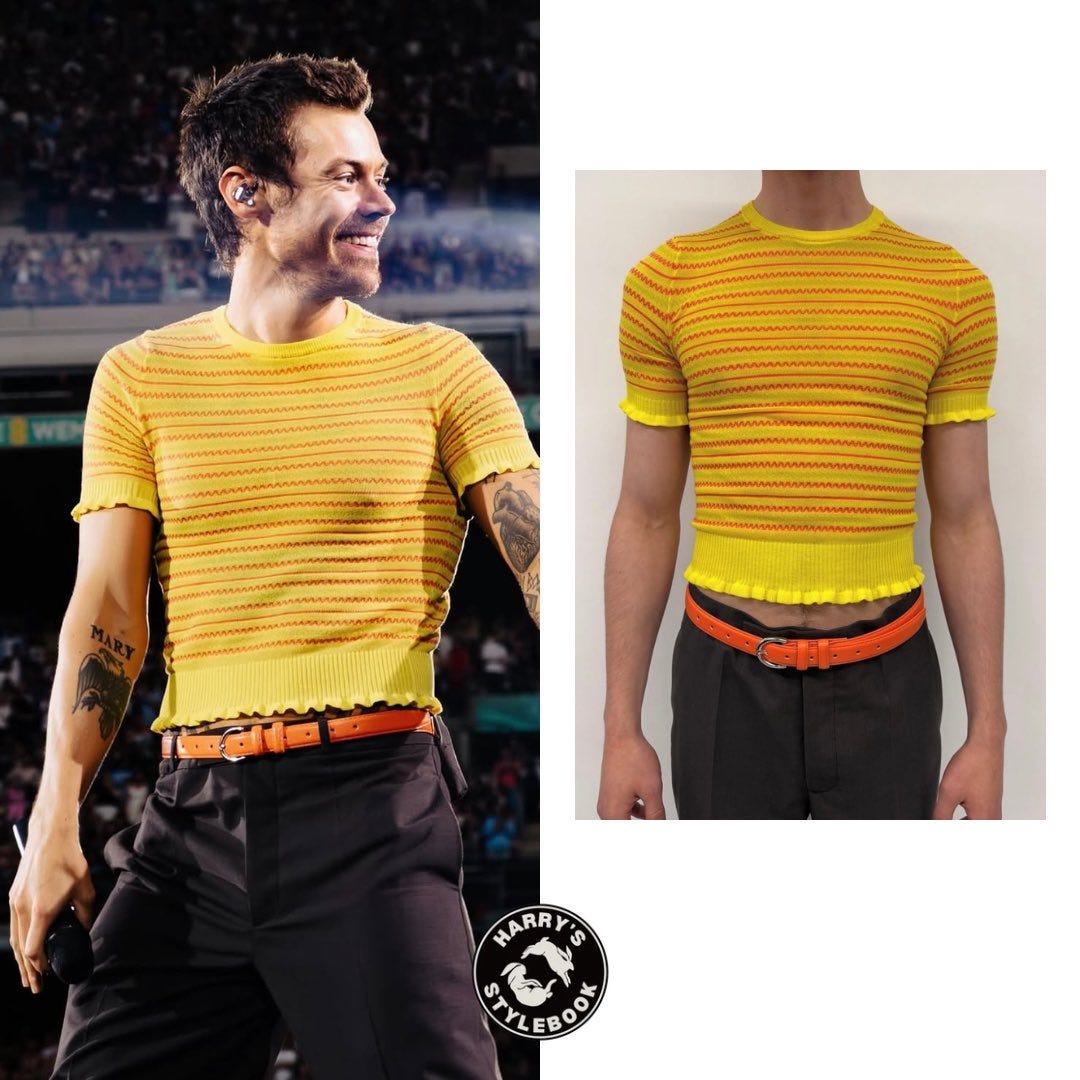
The sophisticated, highly theatrical 1980s-inspired wardrobe was originally engineered to validate his status as a “mature rockstar”. It was a deliberate aesthetic calculated to appease critics and capture a more adult, mainstream demographic. The flaw in that blueprint? That specific demographic might appreciate a sharply tailored suit, but they are entirely unwilling to get fleeced on SeatPick for a ticket.
The gym shorts, the intentionally wrinkled t-shirts, and the carefully curated “genderless” aura represent a desperate retreat back to the core business model. They serve to instantly re-trigger the TikTok and Twitter algorithms. Feeding the stans an image of an accessible, clumsy, comforting boy serves one solitary purpose: to generate thousands of viral micro-clips that will awaken the FOMO (Fear Of Missing Out) of American fans. They desperately need the parasocial bubble to hit a boiling point in order to clear out the massive logjam of unsold ticket inventory in New York.
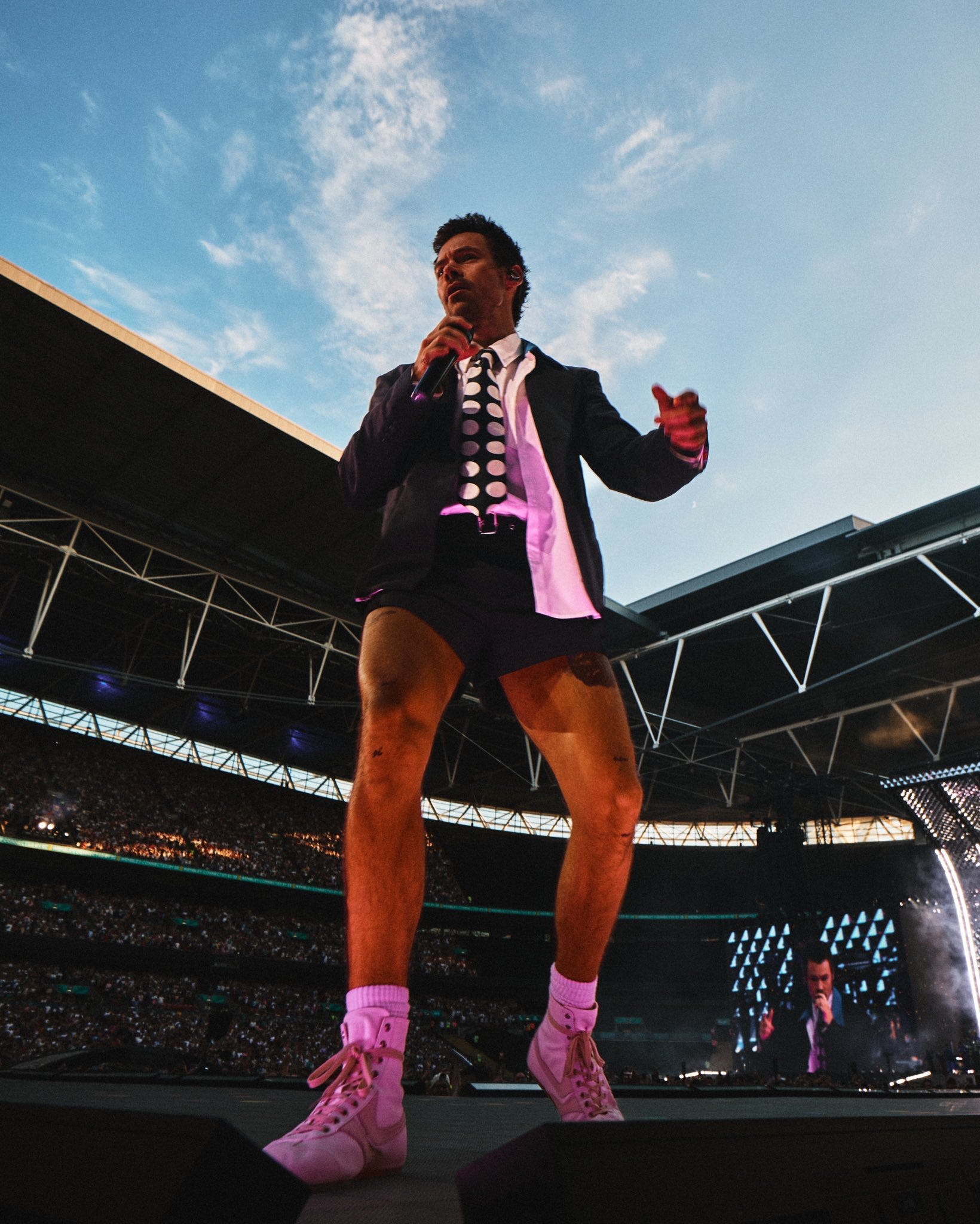
In short, they realized that the sophisticated rockstar ambition wasn’t converting into box-office presales. Consequently, they smashed the emergency override button to call the core fandom back to arms—the specific demographic that thrives on soft aesthetics and raw emotional projection.
This is the definitive proof (as if any more were required) that Styles possesses zero control over his own artistic direction.
A “real” singer-songwriter conceptualizes a visual era tied to their album and carries it through to its logical conclusion, for better or worse, because it forms a core part of their creative manifesto (think of The Weeknd’s bandaged face, Lady Gaga, or Radiohead). Conversely, an “asset” micro-managed by a global corporation switches clothes by the third date of a tour leg the moment the Los Angeles marketing department spots red lines on the presale analytics charts.
The three pieces of data we have laid out on the table—Wilde’s historical revisionism, Azoff’s public slip-up in the Wembley VIP box, and the catastrophic logistical collapse of the MSG ticketing framework—are three distinct symptoms of the same systemic disease: the overheating and saturation of the Machine.
The entertainment industry pushed the boundary too far. They expected the public to quietly swallow yet another poorly managed PR stunt in the VIP section, they expected them to digest Wilde’s strategic victimhood, and, at the same moment, they inflated ticket prices while delivering a qualitatively inferior live product. The direct mathematical result of that corporate arrogance?
A quarter of a million tickets left abandoned to rot on secondary listing boards across Madison Square Garden.

FLP is an independent publication dedicated to demystifying the music industry by revealing the intricate, often ruthless interplay between finance, art, and politics.
Our goal is to shed light on the inner workings of the ‘Machine’, empowering consumers of cultural products to make fully informed choices and reject corporate manipulation.
All articles are freely accessible. In a market that monetizes division and ignorance, I believe that undeniable facts and deep-dive knowledge have the power to unite divergent viewpoints.
True independence, however, relies entirely on its readers. If you appreciate this deep-dive journalism and wish to support the ongoing research behind FLP, a voluntary donation is greatly appreciated.
Comments
Nothing yet. Say the first thing.
Sign in to join the conversation.