

Greetings friends!
There are many ways to stand out, and the self-help industry is happy to package and sell them to us: life coaches, morning routines, productivity apps, cold plunges, mindfulness retreats. While some of these fads have value, most are answers to a question we didn’t know we had.
The three approaches I share here are different. You don’t have to buy anything, download a new app, or transplant your personality. You just need to decide to try them out. People who consistently practice all three habits tend to outperform people who don’t.
My discussion is simple because the ideas are simple. None of these is a secret. But they work, and that’s the thing to remember as you consider them.
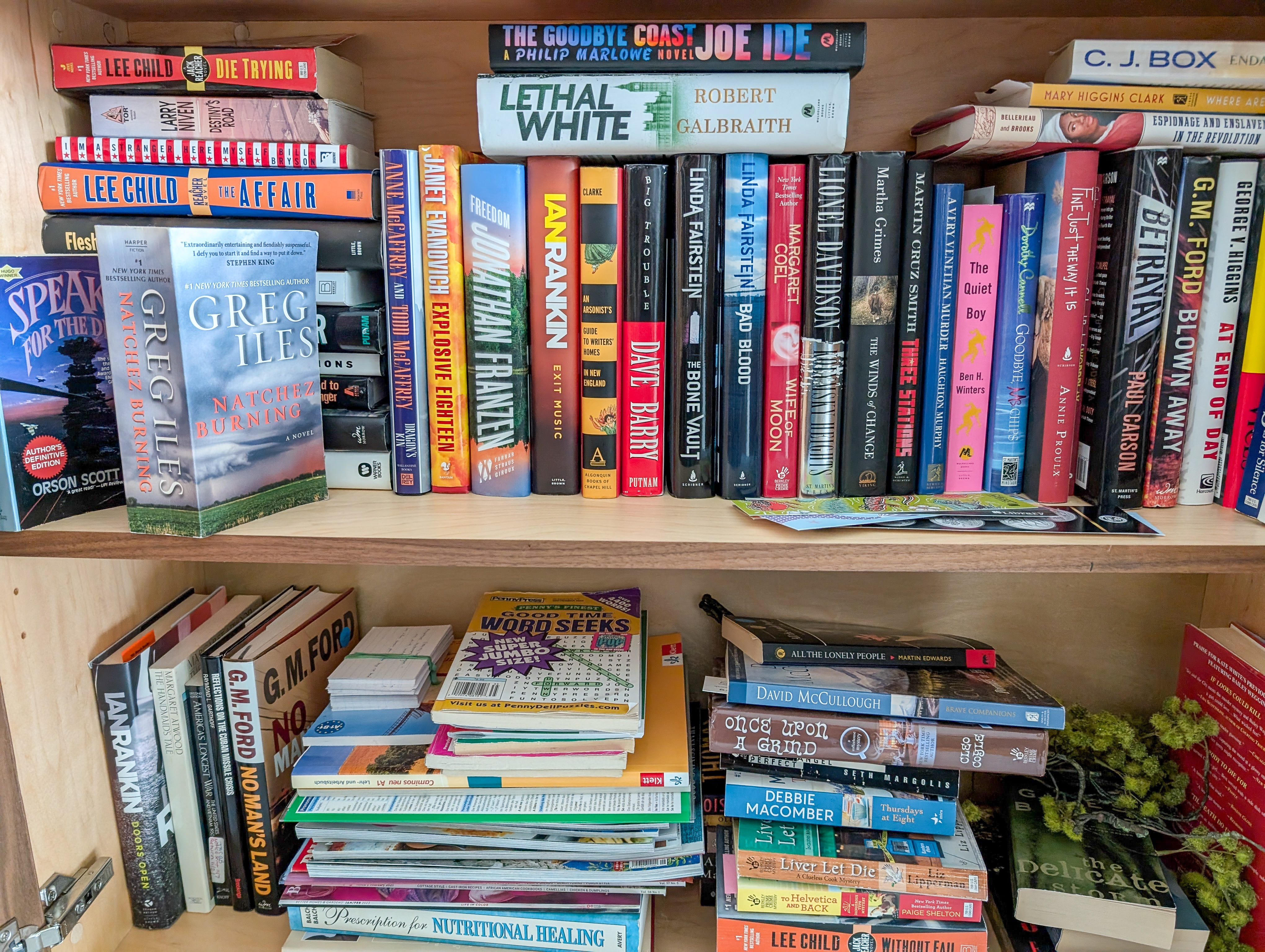
Don’t make this hard on yourself. Read for just thirty minutes. Anything that qualifies as genuine reading. A newspaper, a magazine, a newsletter, a novel, a nonfiction book, a long-form article, a Substack post. The format is almost irrelevant.
What matters is the act: active engagement with written ideas, as opposed to passive scrolling through a social media feed.1
I personally read several hours a day, across all these formats. For most people, that’s a bit much. Setting too high a goal makes it much more likely we’ll give up in frustration. Thirty minutes is enough, so long as we’re consistent.
Why does this matter? Two reasons.
First, reading activates the brain in ways that passive consumption does not. When we read, we construct mental models, track arguments, and engage our imagination. These are cognitive skills, and like physical skills, they degrade without regular use. Regular readers stay sharper for longer.
Second, we expose ourselves to new ideas when we read daily. Most will be forgettable, but a fraction will be useful. Some will arrive at exactly the right moment to change how we see a problem. Over a lifetime, the compounding effect of this exposure is considerable.
Tom Corley spent five years studying self-made millionaires and found that 88% reported spending at least thirty minutes every day on reading and self-education. It wasn’t that success gave them time to read. Reading was a habit they maintained on the way to success.
We don’t need to aspire to Warren Buffett’s six hours of daily reading to benefit from the practice. We just need to start reading a bit and keep at it.
Early in my legal career, I made a move that many colleagues considered unwise. I left private practice to take an in-house legal role for which I had little experience. The job was a genuine stretch. I knew I’d be sorely challenged, and I suspect my new employer did, too.
The following years were an intense period of growth and learning. I made mistakes I wouldn’t have made in a more comfortable environment. I also added capabilities I wouldn’t have developed any other way. Looking back, jumping into a big, uncertain challenge was one of the best decisions of my professional life.
Years later, I embraced a different kind of challenge: committing to running regularly as a way to maintain a fitness habit over the long term. I had no business signing up for my first marathon, but I embraced the challenge in part because it was so daunting.
We discover what we’re capable of only by testing the boundaries of what we think we can do. If we’re not a bit uncomfortable, it isn’t really a challenge.
Carol Dweck’s research on what she calls the growth mindset shows this consistently: people who approach difficulty as an opportunity to develop, rather than as a threat to their current self-image, achieve more over time and bounce back better from setbacks.2
It helps to think of this in terms of how we think about ourselves (i.e., our identities). Before I took the in-house job, and before I signed up for my first marathon, I told myself that I was the kind of person who embraces hard things. It made choosing adversity feel consistent with who I was.
We don’t have to begin with a major life change. Small challenges build the same muscle. If we tell ourselves we can not only handle challenges but we thrive on them, we’ll find ourselves able to handle more.
This next suggestion is not what you find on the average productivity blog.
I do not support the always-on, hustle-culture approach to work. The idea that relentless, maximum-intensity effort is the path to distinction is, in my observation, mostly wrong. People who operate at maximum intensity all the time burn out. Their judgment degrades (at least lawyers). Their relationships suffer. And they often accomplish less than people who work more strategically.
What I’m advocating for is more nuanced: the capacity to work very hard for defined, intense periods when circumstances require it. And then to ease off for periods of recovery.
Viewed through this lens, work-life balance is a misleading concept. It promises a comfortable equilibrium between effort and rest that is neither achievable in practice nor, I would argue, desirable as a goal. What high performers actually do is work at variable intensities. Bring your genuine intensity to the table when the stakes demand it. Get genuine rest when they don’t.
A second vital dimension to this is working hard on the right things.
Raw effort applied to the wrong priorities is wasteful. Before committing to an intensive push on any project or problem, the best performers spend quality time thinking. What actually needs to get done here? What will move the needle? What would we stop doing if we could only do three things?3
The discipline to prioritize before jumping in is harder than it sounds. It requires us to sit with uncertainty and resist merely working take the place of being effective. It is intense effort applied to carefully chosen priorities that makes people stand out.
My favorite thing about all three practices is that they compound. We gradually accumulate knowledge through our reading. We develop our skills with every challenge we master. We pile up results when we aim our efforts strategically.
If you follow these three practices, you won’t see a dramatic transformation overnight. But if you apply them consistently over your career, you’ll experience worthy outcomes
The self-help aisle might tempt us with more exciting options. I suggest these three will serve us better.
Be well.
People who help themselves go far. People who also help others go even farther. Here’s an easy way to help others.
Reading and scrolling social media are pretty different things. Scrolling is designed to be frictionless and to require as little of us as possible. Reading, even casual reading, requires following an argument, holding context in mind, and finishing what we started. These are different cognitive experiences, with different effects on our brains.
Dweck, C.S. (2006). Mindset: The New Psychology of Success. Random House. The growth mindset is not a magic phrase we repeat to ourselves in the mirror. It is a set of habits of mind that we can develop through deliberate practice over time.
In my experience managing junior lawyers, the ones who never learned to prioritize were often hard workers. The problem was that they were ineffective. It’s like running on a treadmill: we run and we run, but end up not much further than where we started.
Comments
Nothing yet. Say the first thing.
Sign in to join the conversation.