
Greetings friends!
Early in my career, I noticed a pattern among my high-earning colleagues. As their incomes and savings grew, financial advisors appeared like mushrooms sprouting overnight after a rain. Because the advisors had credentials and came armed with reassuring charts, many of my colleagues happily handed over their portfolios. These advisors were, after all, the experts.
What I noticed over time was that this “expertise” mostly enriched the advisors. I came to have a special disdain for the assets under management (AUM) model.
The AUM model is where an advisor takes up to 1% of your assets annually, regardless of what the advisor does or how your investments perform. This is a machine constructed to reliably transfer wealth from clients to their advisors.
As the client, you may make money, and the advisor is happy when you do. But it’s not necessary to keep the machine working. The client assumes the advisor is earning their fee; the advisor assumes the client isn’t doing the math.
I did the math. And what I found committed me to a different path. Over the years, I educated myself in basic investment principles, invested in low-cost index funds, and mostly left my portfolio alone.
The result over a full career is that I’ve outperformed approximately 95% of all investors.1 It wasn’t because of superior intelligence or access to special information, but simply asking clear questions and being unwilling to pay for supposed value that advisors couldn’t prove they were providing.
That is what the Skeptic does for us. And because we each encounter many such pitfalls, I believe we all need one in our lives.
Let me be precise, because the word skeptic carries baggage. I am not describing a cynic, i.e., someone who assumes everything is corrupt and everyone is lying. I am not describing a contrarian, who disagrees reflexively because it makes them feel interesting. And I am not describing the person who, when you share a new idea, responds with a sigh and a list of reasons it won’t work.
A genuine Skeptic has a different quality entirely. Their defining trait is that they demand evidence before they form a belief.
They are comfortable sitting with uncertainty rather than rushing to fill it with something convenient.
They ask questions that appear obvious but turn out not to be.
They have a calibrated radar for motivated reasoning, which is the thinking we do when we want something to be true and work backward from there (AKA wishful thinking).
The Skeptic’s core question, in almost any situation, is: “What is this person’s incentive, and is it aligned with mine?”
It is not a cynical question. It is a structural one. And once you make it a habit to ask this question, you start seeing the world with greater clarity.
I use the financial advisor example because it is both common and ordinary. No one is misleading us, and no one is committing fraud (not usually).
The advisors are doing exactly what their incentive structure encourages them to do: gather clients, collect fees, and continue gathering assets. The clients who don’t ask the right questions pay for a service whose value they haven’t sufficiently questioned.
This dynamic appears everywhere. Marketers have spent decades studying which emotional levers make us click “Buy” before our rational minds have time to engage. Financial products produce guaranteed fees and only speculative returns. Subscription services make it much easier to keep paying than to cancel.
None of this requires malice, although when we see how the machine works, we certainly feel ill-served. Rather, it only requires that incentives be misaligned, which they reliably are.2
The Skeptic’s value is greatest in mitigating three categories of error:
The expensive ongoing mistake. My colleagues who stayed with their high-fee advisors didn’t lose money in one dramatic event. They paid a slow, invisible tax on their savings for decades. The Skeptic helps us notice these arrangements before they compound.
The belief formed from bad information. We carry around maps of the world drawn from incomplete data, shaped by self-interested sources, that are rarely systematically updated. The Skeptic is the friend who, when we repeat something confidently, asks where we heard it and why we believe the source. This is not an attack; it’s quality control on your worldview.
The decision made in the throes of enthusiasm. Enthusiasm is wonderful and often necessary, but it reliably degrades our ability to notice inconvenient facts. The Skeptic provides the friction that slows us down long enough to think twice, which is often all we need.
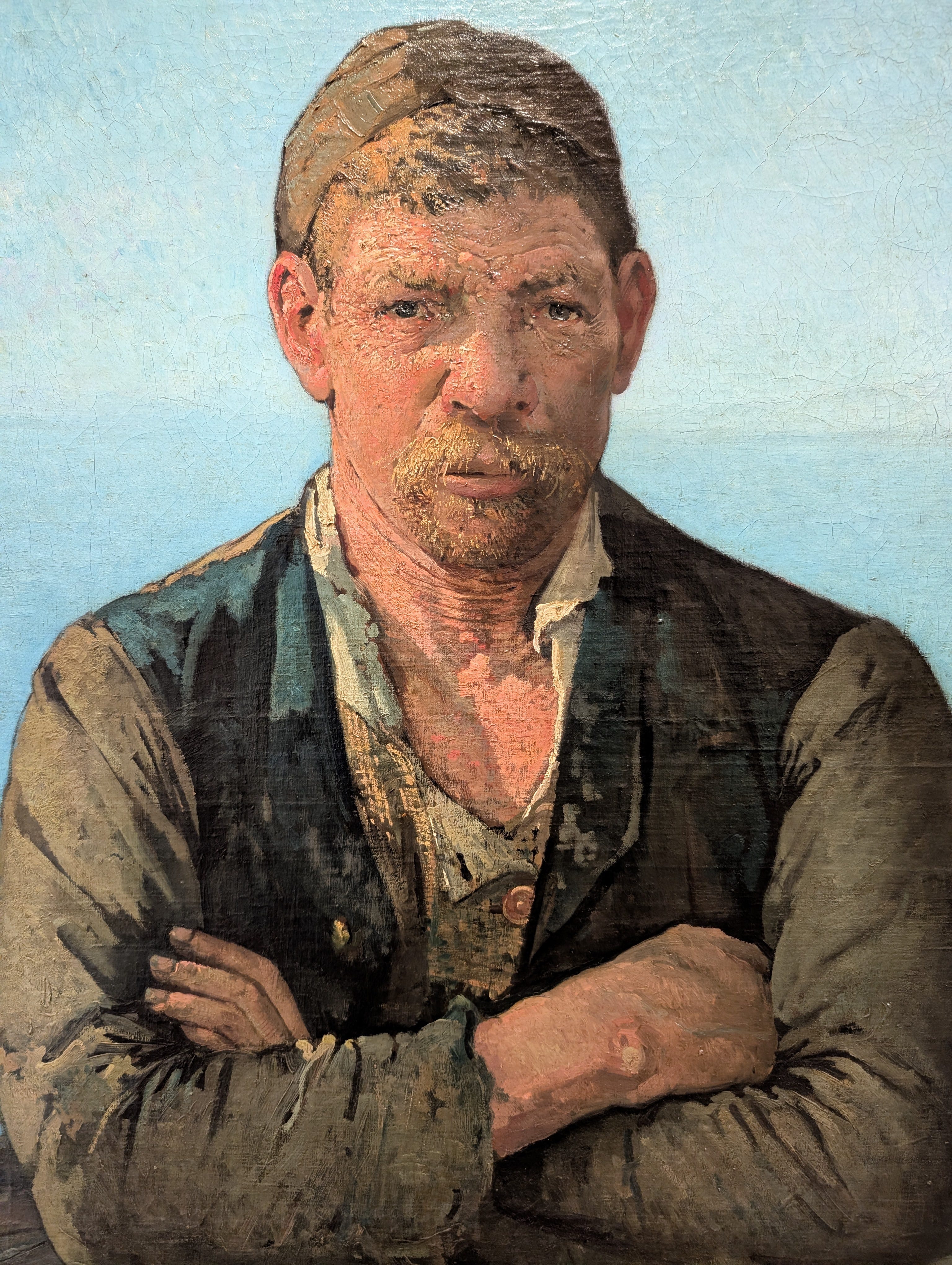
Here’s the test: watch how a putative Skeptic behaves when their own ideas are challenged.
If they apply the same rigor to themselves, that is, they update their views when evidence changes and acknowledge it openly, you’ve found the genuine article.3 If their skepticism flows only toward ideas they already dislike, what you have is an advocate in skeptic’s clothing, which is considerably less useful.
The genuine Skeptic is curious. They ask probing questions, not to win an argument, but to understand the point better. They are not trying to puncture our enthusiasm; they are trying to make sure our enthusiasm is warranted. This distinction matters.
A Skeptic’s pushback is a service. We shall receive it as one.
Here’s what I’ve found useful as a practical frame: whenever someone is asking us to believe something, agree to something, or spend money on something, ask who gains and whether they could gain at our expense. In other words, take a moment to explore the incentives. This won’t cover every situation, but it covers a remarkable percentage of them.
It’s also worth noting that being a good Skeptic doesn’t require a Skeptic friend, strictly speaking. We can internalize the habit. But having someone in our lives who naturally asks the hard questions we don’t think to ask accelerates the process considerably.
I often find myself playing the role of the Skeptic. It comes naturally to me, and because I’ve found it so useful, I have cultivated my skeptical senses. You’ve surely noticed the theme in my articles. Here is a fine example, if you’re interested: I’m Giving Up on Experts, But Not Expertise.
My lifelong investment performance came partly from my own questioning and partly from conversations with skeptical people who raised flags when I was about to do something less than fully rational.
Conversations with Skeptics are often uncomfortable in the moment. Looking back, I can say they are among the most valuable ones I have had.
Be well.
PS — This was the first installment of the Five Friends series, The Skeptic. The series started with the Introduction, which is worth reading if you missed it. The coming installments are The Optimist, The Unconditionalist, The Pragmatist, and The Realist.
After spotting and reading about fine ideas, you can be a true friend to your friends by sharing those ideas.
My point is not that the world is populated by villains. Most of what I’m describing is simply the predictable consequence of misaligned incentives operating normally. A gym that charges annual fees profits from our not attending. A pharmaceutical company profits from our lifelong prescription. A financial advisor profits from the size of our portfolio, not the quality of our returns.
For me, a hallmark of good judgment is a person’s willingness to update their beliefs in response to evidence. This kind of judgment is, alas, uncommon.
Comments
Nothing yet. Say the first thing.
Sign in to join the conversation.