
If you’ve ever cracked open a chub of Braunschweiger, spread it thick on rye, and topped it with a slab of sharp cheddar and a few rings of raw onion, you know the quiet magic of this pinkish, smoky liver sausage. It’s not fancy. It’s not Instagram-worthy in the trendy charcuterie sense. But for many of us raised in the Midwest—or with German-American roots—it tastes like home, nostalgia, and a little bit of defiance against kale smoothies and avocado toast.
Braunschweiger isn’t just food; it’s cultural inheritance. Named after the German city of Braunschweig (Brunswick in English), the term has evolved wildly depending on where you are. In Germany, “Braunschweiger” often refers to a type of raw, smoked mettwurst—a spreadable pork sausage heavy on garlic and spices, more akin to a fresh sausage than anything liver-forward. Under German food law, it’s distinctly not the liver-heavy version most Americans know. In Austria, it can lean toward a parboiled sausage with beef and pork.
But cross the Atlantic, and especially in the American Midwest, Braunschweiger became something else entirely: a smooth, fully cooked liver sausage (or liverwurst) that’s typically made with pork liver (at least 30% by USDA rules), pork shoulder or trim, bacon or fat for richness, and seasonings like onion, salt, pepper, and sometimes a touch of nutmeg or allspice. The key American twist? It’s often smoked after cooking, giving it that distinctive smoky depth and firmer texture than plain liverwurst, which tends to be softer and more liver-dominant.
German immigrants brought the concept in the 19th and early 20th centuries, adapting recipes from home to use abundant local pork and offal. Brands like Usinger’s (Milwaukee), Jones Dairy Farm (Wisconsin), and Koegel’s (Michigan) turned it into a regional icon. It became the sandwich filler of factory workers, farmers, and dads who appreciated its nutrient density—packed with iron, vitamin A, B vitamins, and protein—without the fuss of fresh meat. In places like Milwaukee, Pittsburgh, or rural Minnesota, it’s still a deli counter staple, often eaten cold on rye with mustard, ketchup, pickles, or simply on crackers.
The texture is creamy yet sliceable, the flavor rich and savory with just enough smokiness to cut through the liver’s intensity. It’s milder than straight pâté, more approachable than blood sausage, and infinitely versatile.
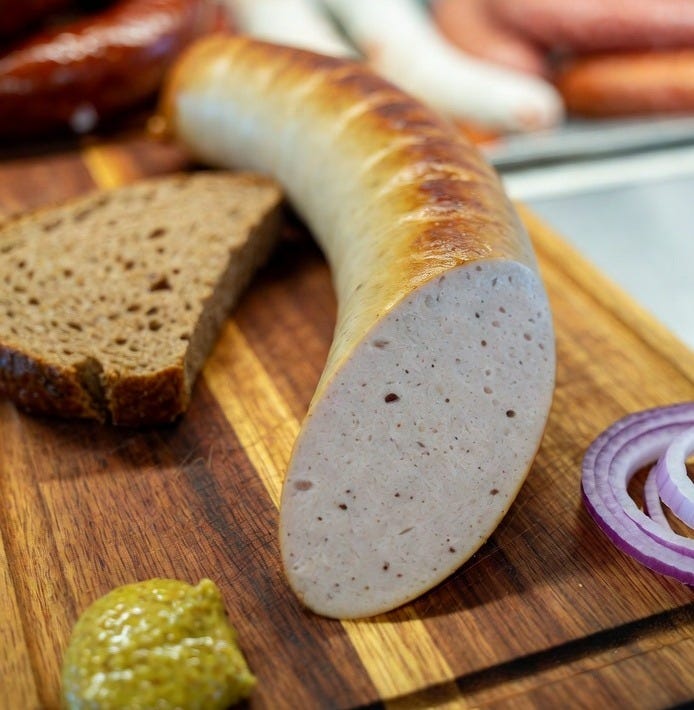
Classic Midwest Stack: Thick slices on dark rye or pumpernickel, slathered with yellow mustard or horseradish, topped with raw onion rings and Swiss cheese. Grill it for a melty twist.
Appetizer Mode: Spread on Ritz crackers or baguette rounds, maybe with a dollop of cream cheese and a pickle slice. For parties, shape it into a “Braunschweiger ball” coated in chopped olives or nuts.
Charcuterie Upgrade: Serve a mound of it alongside mustards, jams, fresh veggies, and crackers—its bold flavor stands up to bold accompaniments like fig jam or spicy mustard.
In an era of plant-based everything and “clean” eating, Braunschweiger feels almost rebellious. It’s nose-to-tail eating before it was cool again—using liver, the most nutrient-dense part of the animal, in a delicious, accessible way. It’s comfort food with history: a reminder of immigrant ingenuity, Midwestern practicality, and the joy of simple, hearty flavors.
So next time you’re at the grocery store and spot that familiar plastic-wrapped tube in the deli case, grab it. Spread it generously. Take a bite. And remember: some of the best things in life aren’t complicated—they’re just honest, smoky, and a little bit old-school.
What about you? Is Braunschweiger a childhood staple, a guilty pleasure, or something you’re just discovering? Drop a comment—I’d love to hear your stories, recipes, or debates (liverwurst vs. Braunschweiger, anyone?).
(And yes, if you’re feeling ambitious, homemade versions are possible—brown the liver, grind with pork fat and spices, stuff and smoke—but that’s a weekend project for another post.) 😄

Comments
Nothing yet. Say the first thing.
Sign in to join the conversation.