
Apartment hunting is universally terrible. It doesn't matter whether you're in Atlanta, New York, London, Tel Aviv or Haifa. Every city has overpriced apartments, bad listing photos, questionable landlords, and the unfortunate realization that someone took your dream apartment while you were still typing, "Hi! Is this still available?"
I know there’s a lot of romanticism about what happens when you move abroad, but let me assure you, dear reader: moving abroad won’t solve your housing problems. Actually, in my experience, it might be worse. Particularly when you’re learning the market and the rules.
My husband and I started looking for a new apartment off and on since I found out I was pregnant. Our third-floor walk-up served us pretty well for nearly two years, but with a nearly four-month-old and two corgis, we have a newfound appreciation for elevators after carrying a stroller, groceries, and a sleeping baby up way too many stairs. We also had a few practical considerations. Like many Israelis over the past year, we knew that we needed a shelter in our building. Honestly, I didn't think that we were asking for much, but it seemed like our preferences meant that we were on the pickier side amongst the Haifa rental market.
Scrolling Facebook Marketplace replaced my morning newspaper. I joined what felt like every apartment group in Haifa where listings appeared and disappeared so quickly that I started to suspect that these apartments weren't actually available so much as briefly loaned to the interwebs before disappearing back into the black hole where all the good apartments live.
Apartment hunting is really just an exercise in adjusting your expectations. The apartment you thought you wanted leads to the apartment that has enough electrical outlets and doesn't require extensive cardio conditioning to reach the front door.
Then, the fun really started when we started talking to landlords.
"Do you have guarantors?"
"No."
"Parents in Israel?"
"No."
"A friend in high tech?"
"No."
Usually at that point, there was a very long pause in the conversation, followed by a “Nuuuuu.”
Sending our frustration, “You need protektzia,” said one coworker.
Protektzia is one of those Hebrew words that doesn't really translate easily into English. At its core, I understand that it means “connections.” It means you know a guy who knows a guy. For apartments, it’s more or less when you’re introduced to a potential landlord instead of applying.
As a new immigrant, it feels a little like I was playing the apartment hunting game with one arm tied behind my back. It seemed like everyone else already understood the rules. They knew Yossi’s aunt’s cousin, who knows about all of the good places before they hit Yad2 or Facebook Marketplace.
One apartment checked almost every box. The price was reasonable, the location was excellent, and it even had a ground floor, private garden for the dogs. It was looking promising until the landlord explained that he wanted thousands and thousands of shekels for the guarantee, which was far more than I expected and way more than legally allowed according to fair rental laws.
"Woah, that’s a lot. What is it for?" I asked.
"When you don't pay."
I waited for him to laugh. He didn't so I laughed at him and hung up, ending the conversation as quickly as it started.
“Well, that was awkward,” I thought.
Then, I thought about every rent check I’d written over the last twenty years. Every apartment I’d taken good care of. Every month that I subsisted on ramen and frozen veggies so I could make my rent payment. I’d spent two decades being an excellent tenant before owning my own home, only to discover that crossing an ocean had dialed my grow up credibility back to zero.
So, back to the drawing board we went. I refreshed Facebook Marketplace with the determination of a Swiftie trying to buy Eras tickets.
We toured apartments that looked nothing like their photos, and we adjusted our expectations again. Then, the way so many things seem to happen in Israel, someone knew someone.
A friend of a friend was moving out of their apartment early and needed someone to take over their lease. With my husband at work, Baby ש and I went to see it that afternoon.
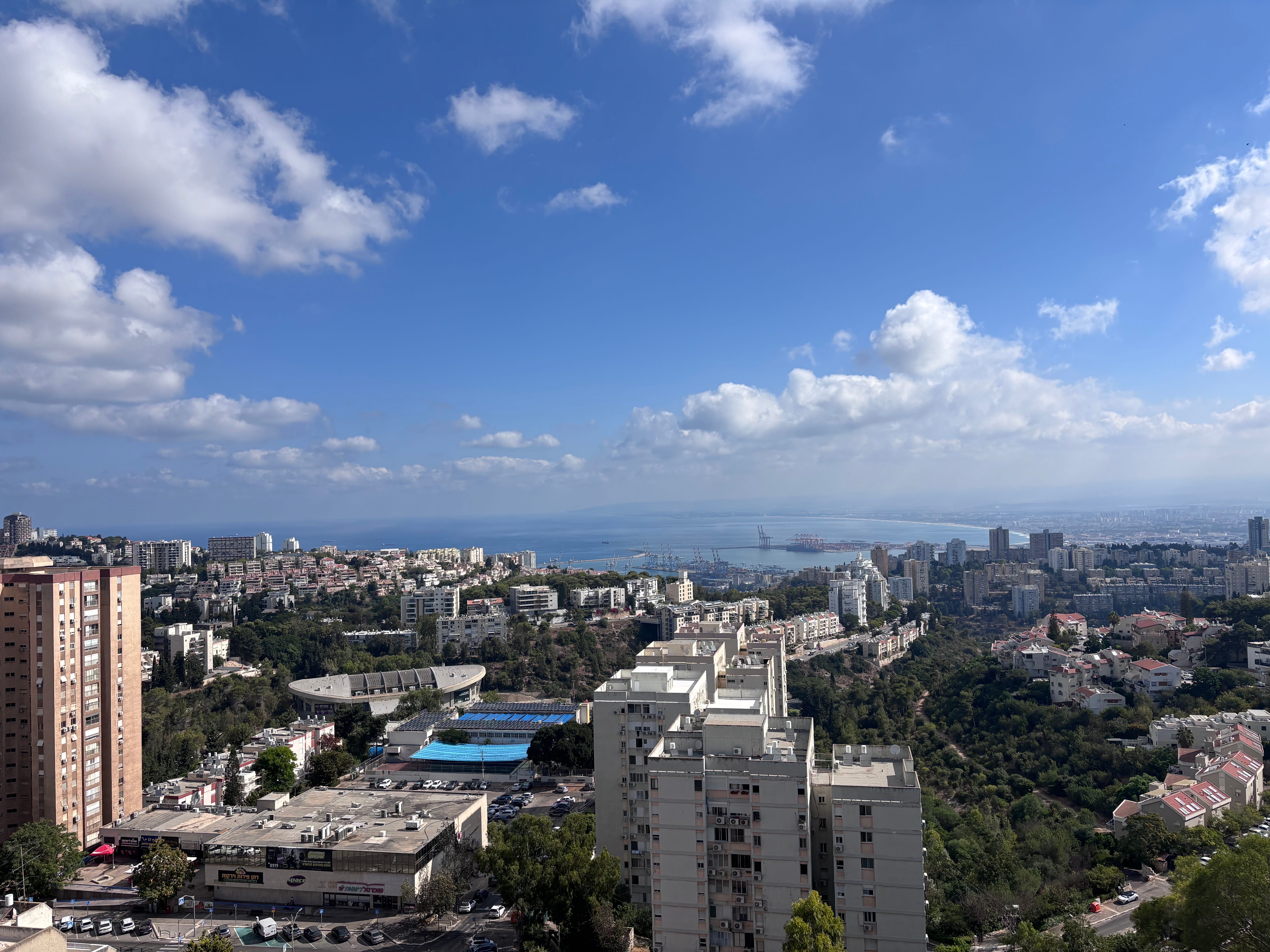
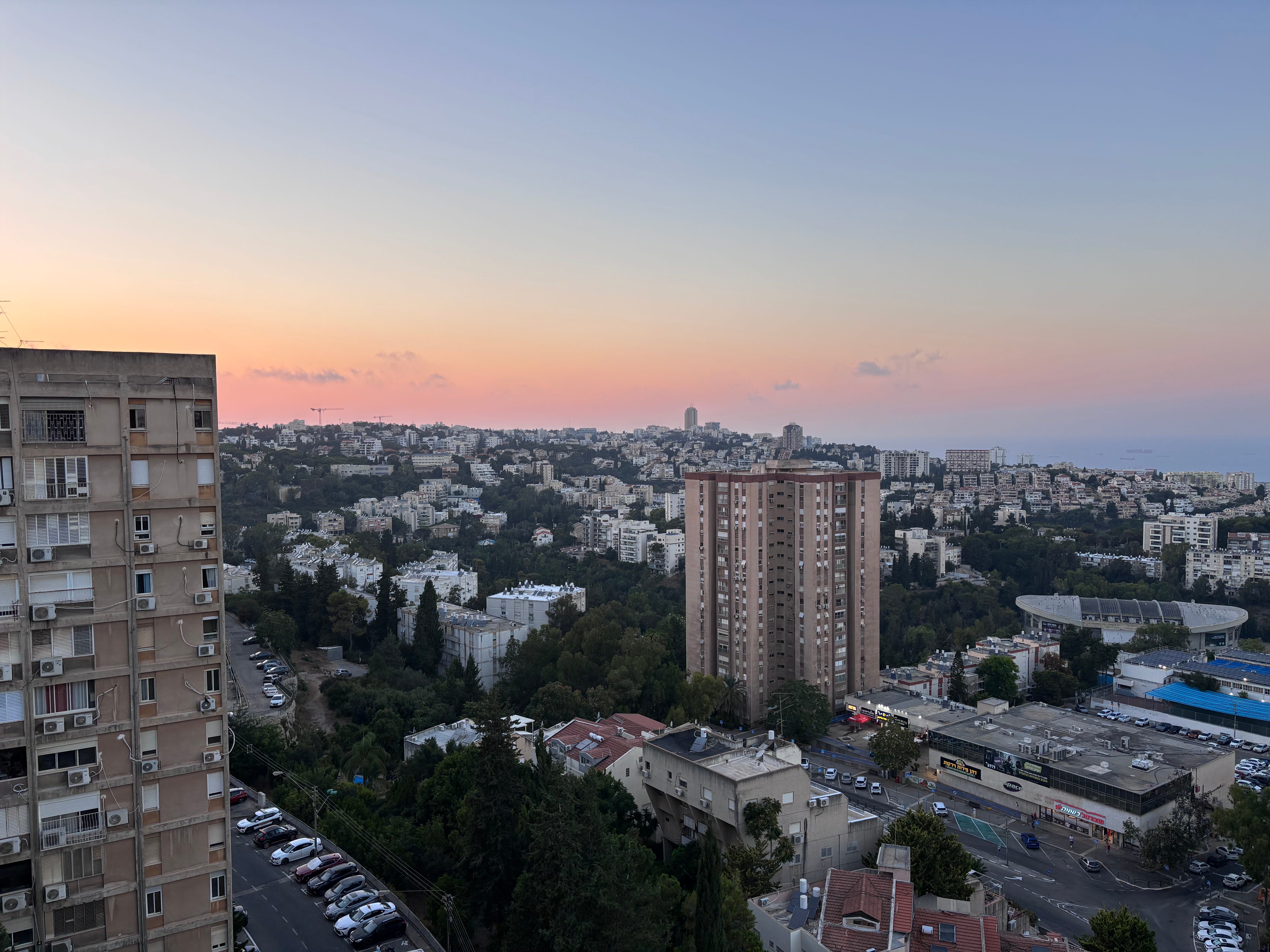
The apartment overlooks Haifa Bay on one side and the forest on the other, with an elevator and two large, building-wide shelters, as well as a secure room on each floor. Plus, the living room was spacious enough that I could picture our son taking his first steps across the room.
For the first time in weeks, I allowed myself to be excited. Then I remembered: we still didn't have guarantors.
The owner is an older woman whose husband had purchased the apartment in retirement and rented it out in the years since. He passed away recently, and she is now taking an active role in the investment property.
Before we signed the lease, she wanted to meet with us. On a sunny Shabbat afternoon, over coffee and cheesecake, she asked us why we'd moved to Israel and why we were interested in the apartment. We told her the truth—we'd originally come to Israel for IVF. With Baby ש in my arms, I told her that we had no family in Israel because our family of two had immigrated to become a family of three. We told her that we planned to raise our son here, and we needed to find our forever home. We wanted to find a long-term lease where we could build our forever home.
She listened quietly before she smiled. "Wonderful," she said. "Let's sign the lease."
Start to finish, everything took less than twenty minutes.
She didn’t ask us for an impossible guarantee, just a reasonable security deposit. She gave us a once over, listened to us, and decided that we seemed like the kind of people she’d happily rent to.
For months, I'd been told that finding an apartment in Israel was all about protektzia. In the end, I suppose they were right. A friend of a friend led us to the apartment, but what got us the lease was a woman who decided that our story mattered more than our ability to handover a massive security deposit.
Now every morning, I drink my coffee while gazing out over the Haifa Bay while the baby lies on his play mat, blissfully unaware of how hard we worked to get here.
One day, these views will be ordinary to him.
He won't know about the unanswered messages, the huge guarantees, or the landlords who assumed the worst about us just because we were immigrants.
He'll just know that this is home.
And maybe that's what building a life somewhere really means. The first generation spends years trying to belong, and if you're lucky, the next one never has to think about it.
Thanks for reading! This post is public so feel free to share it.
Comments
Nothing yet. Say the first thing.
Sign in to join the conversation.