
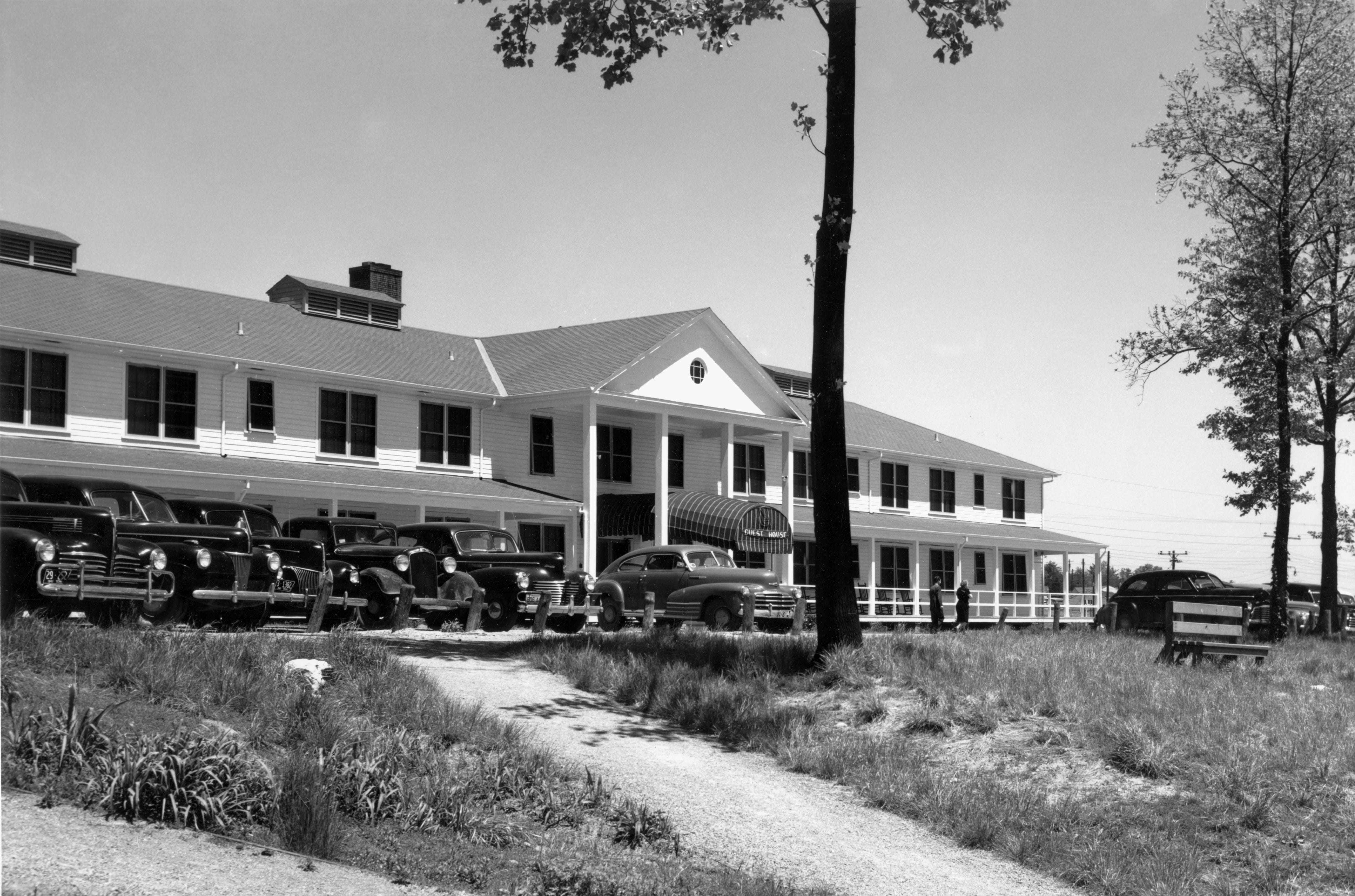
In Oak Ridge, Tennessee, a quiet grey building with white columns and rocking chairs lining its porch sits among the wooded hills of the American South. The guesthouse provides assisted living and memory care for older adults. Eighty years ago, it hosted a very different kind of guest. There is little about the Alexander Guest House today that suggests it once stood at the heart of one of the most consequential scientific projects in history.
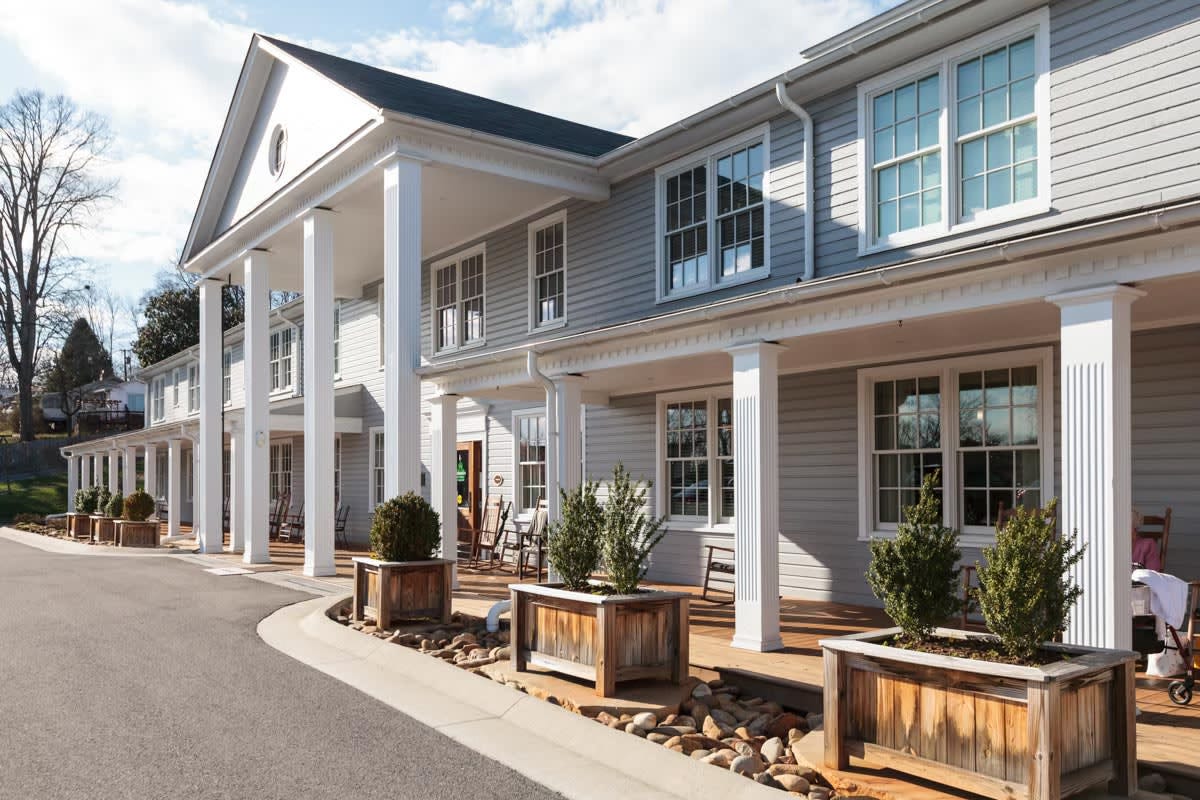
Built in 1943, the Guest House served as the only hotel in Oak Ridge, the secret city the United States constructed as part of the Manhattan Project. Scientists, military officials, and government figures passed through its doors, among them physicist Enrico Fermi, General Leslie Groves, and the father of the atomic bomb, J. Robert Oppenheimer. Outside, an entire city was being built around a single problem: uranium enrichment.
Oak Ridge had been chosen as a central site for the historic endeavor, transforming the surrounding Tennessee countryside into a vast industrial complex. Tens of thousands of workers arrived, enormous enrichment facilities appeared, and a settlement that had barely existed became one of the most critical places in the emerging atomic age.

Yet, as Oppenheimer succeeded, decades passed, and as the Cold War ended, the fierce urgency faded. Believing the nuclear fuel supply was permanently secured by global markets, the United States allowed much of its domestic enrichment infrastructure to wither away, unknowingly planting the seeds of a modern vulnerability. This oversight became glaringly clear when looking at the broader picture of energy independence.
Just down the road from the Alexander Guest House, where Oppenheimer once conceived the science behind Fat Man and Little Boy, physicists are reimagining that science today.
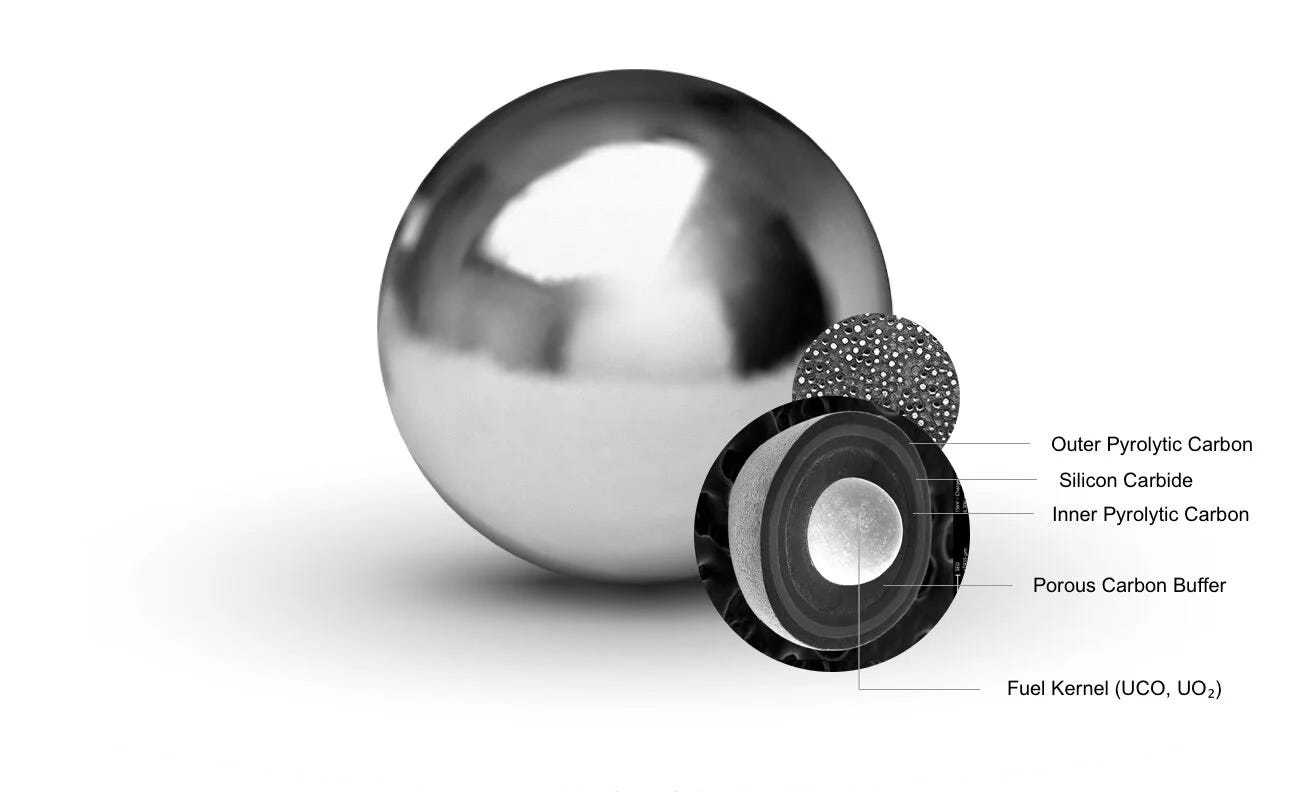
At the Oak Ridge National Laboratory, TRISO-X, a subsidiary of X-energy, is currently building the TX-1 fuel fabrication facility. In February 2026, the Nuclear Regulatory Commission (NRC) granted the company a 40-year license to receive uranium and process it into TRISO fuel for advanced reactors, marking the first new U.S. nuclear-fuel fabrication facility licensed by the NRC in over 50 years. Tri-structural isotropic (TRISO) fuel is known for exceptional safety; each poppyseed-sized particle uses multiple carbon and ceramic layers to trap radioactive material, making it physically impossible to melt down in a reactor and highly resistant to extreme heat.
It is encouraging to see how quickly parts of America’s nuclear industry are beginning to move again. The United States remains extraordinarily capable in nuclear science, engineering, and advanced reactor technology, possessing an unmatched combination of national laboratories, private capital, and technical expertise. However, an important detail is buried in the NRC license granted to TRISO-X: the facility is licensed to specifically take high-assay low-enriched uranium (HALEU) for the fabrication of TRISO fuel.
The reason is that advanced Generation IV reactors, such as X-energy's, need uranium enriched between 10% and 19.75%. Conventional low-enriched uranium sits below 5%. HALEU bridges that gap, sitting between 5% and 20%. This higher concentration allows reactor designers to build smaller cores, extract more energy, and in some cases operate for up to eight years before refueling. This is precisely why advanced designs like small modular reactors (SMRs) can maintain a smaller physical footprint while generating substantial amounts of energy. Just 750 grams or three tablespoons of HALEU can meet an average American’s electricity needs for life.
It sounds like a near-limitless promise. Yet this remarkable density brings us straight to the bottleneck. Producing HALEU at scale has proven notoriously difficult. Natural uranium contains less than 1% uranium-235. To increase that concentration, uranium is converted into a gas and fed through centrifuges spinning at immense speeds. Each centrifuge separates only a tiny amount, requiring hundreds to be connected in cascades to incrementally enrich the material. This eventually demands thousands of centrifuges working continuously to supply a full fleet of advanced reactors.
For decades, Russia built and maintained exactly that capability. State-owned Rosatom’s subsidiary TENEX has held a commercial-grade HALEU production monopoly for many years now, and American utilities willingly bought Russian enrichment to avoid high domestic costs. The US treated the dependency as a standard economic relationship rather than a strategic vulnerability. That routine shattered in 2022 when Russia invaded Ukraine.
As Washington moved to impose sweeping sanctions, an untenable contradiction emerged: a portion of the American electricity grid remained tethered to Russian nuclear fuel.
The legislative response followed in May 2024 when President Biden signed the Prohibiting Russian Uranium Imports Act, banning Russian low-enriched uranium and HALEU. Crucially, the law included a waiver provision allowing the Department of Energy (DOE) to authorize continued imports through the end of 2027 where no viable alternatives existed.
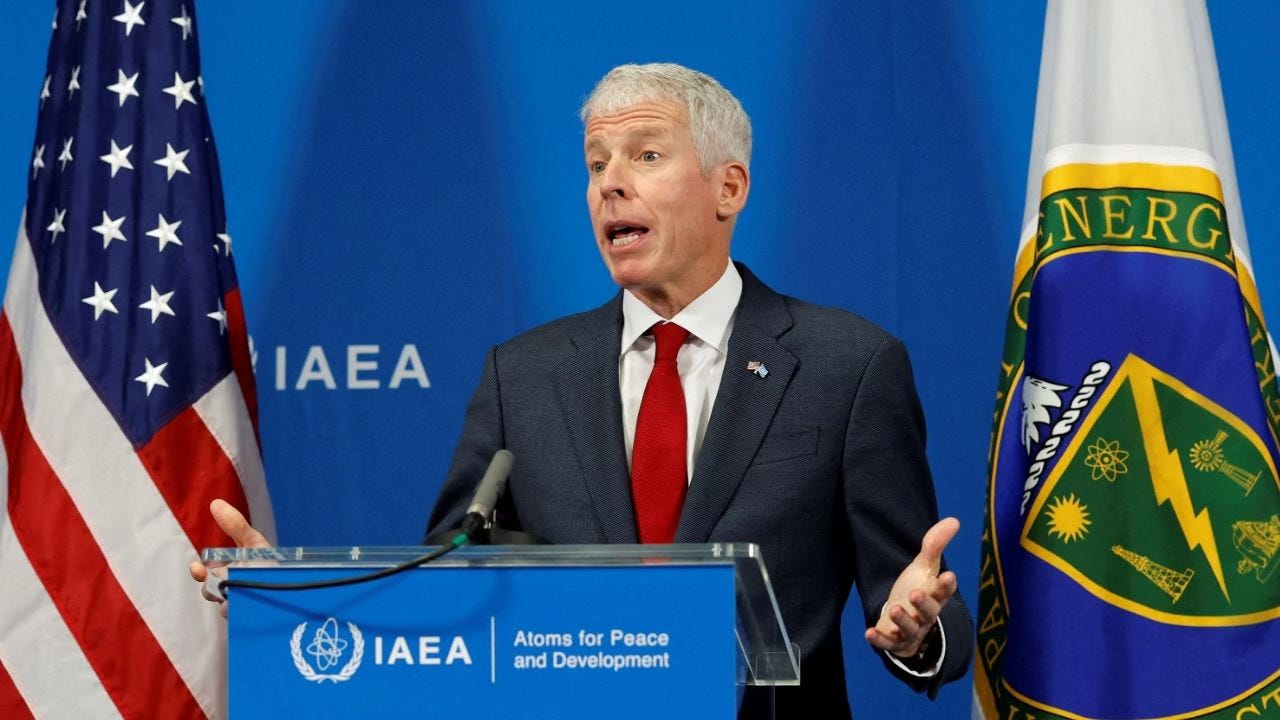
Energy Secretary Chris Wright underscored the scope of the challenge during the 2025 IAEA General Conference:
“We’re moving to a place—and we’re not yet there—to no longer use Russian enriched uranium. We hope to see rapid growth in uranium consumption in the US from both large reactors and small modular reactors. The size of that right buffer would grow with time. We need a lot of domestic uranium and enrichment capacity.”
Washington now faces a dual challenge: purging Russian fuel from its existing supply chain while aggressively expanding the nuclear industry that will require far more of it. At Idaho National Laboratory, material accumulated from decades of past research reactors is being processed into commercial-grade HALEU to support early demonstration projects. It’s an ingenious bridge, but ultimately a temporary fix rather than an operational supply chain.
A more significant operation is taking place in Piketon, Ohio, where Centrus Energy has restarted American HALEU enrichment using domestically developed centrifuges. In June 2025, Centrus produced and delivered 900 kilograms of HALEU under its DOE program, marking an important milestone for an industry that had largely disappeared from American soil.
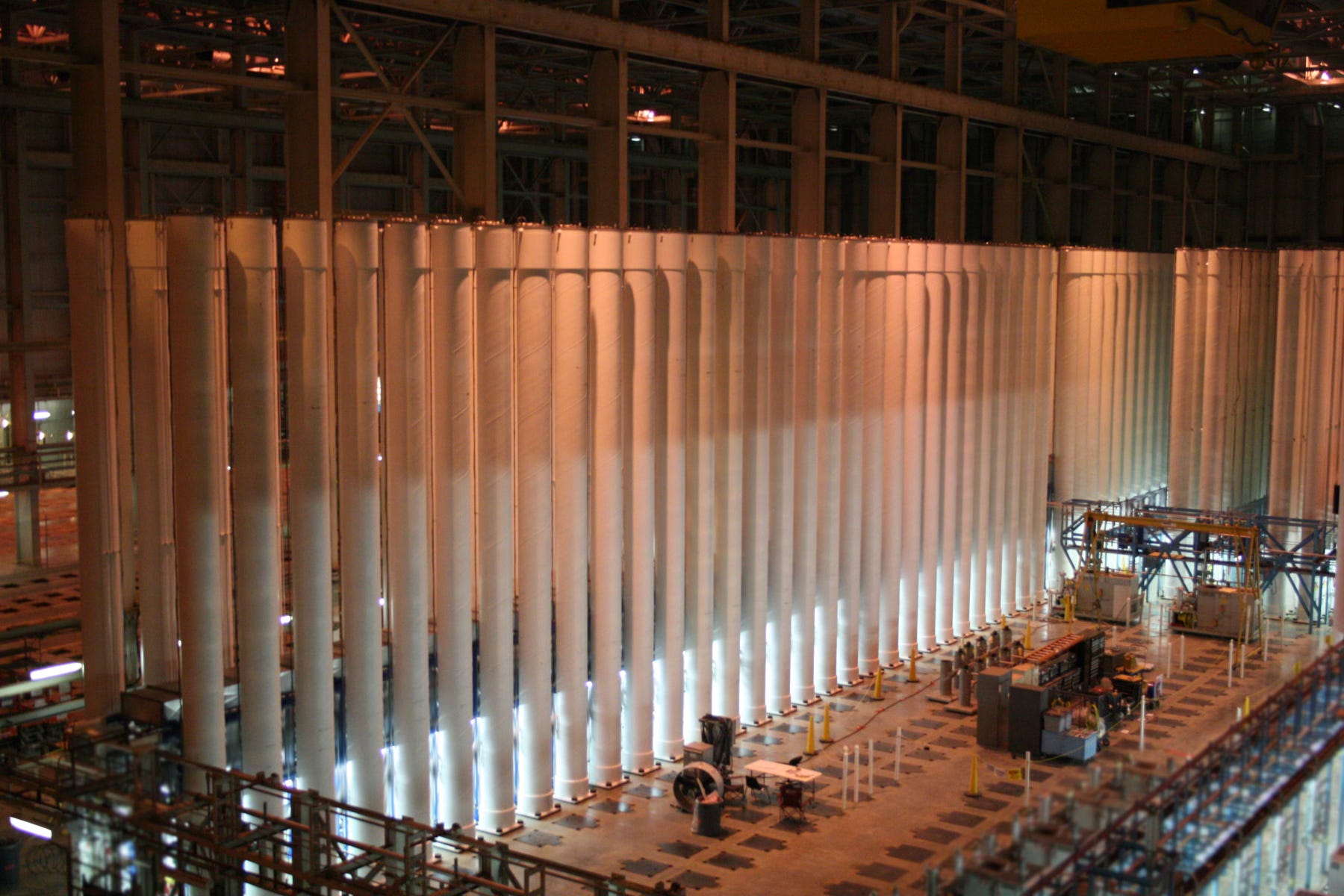
While heralded by nuclear energy advocates, the achievement also starkly revealed the scale of the problem. While 900 kilograms is enough to demonstrate that America can produce HALEU again, building an advanced nuclear industry will require production measured not in hundreds of kilograms, but eventually in tens of tonnes every year. To put this in perspective, TRISO-X alone is licensed to process up to 8 to 16 metric tons of HALEU per year with plans to scale higher.
This transition has created a classic industrial deadlock. Enrichment companies have little incentive to spend billions building centrifuge capacity for reactors that do not yet exist, while reactor developers are reluctant to commit billions to fleets whose fuel supply has not yet been built.
The result is a chicken-and-egg problem that has held back domestic HALEU production in recent years. Centrus chief Daniel Poneman once described the dilemma neatly:
“Nobody wants to order ten reactors without a fuel source, while nobody wants to invest in the fuel source without ten reactor orders.”
In short, America faces a coordination problem. The reactors need the fuel industry to scale first, while the fuel industry needs the reactors to justify scaling at all.
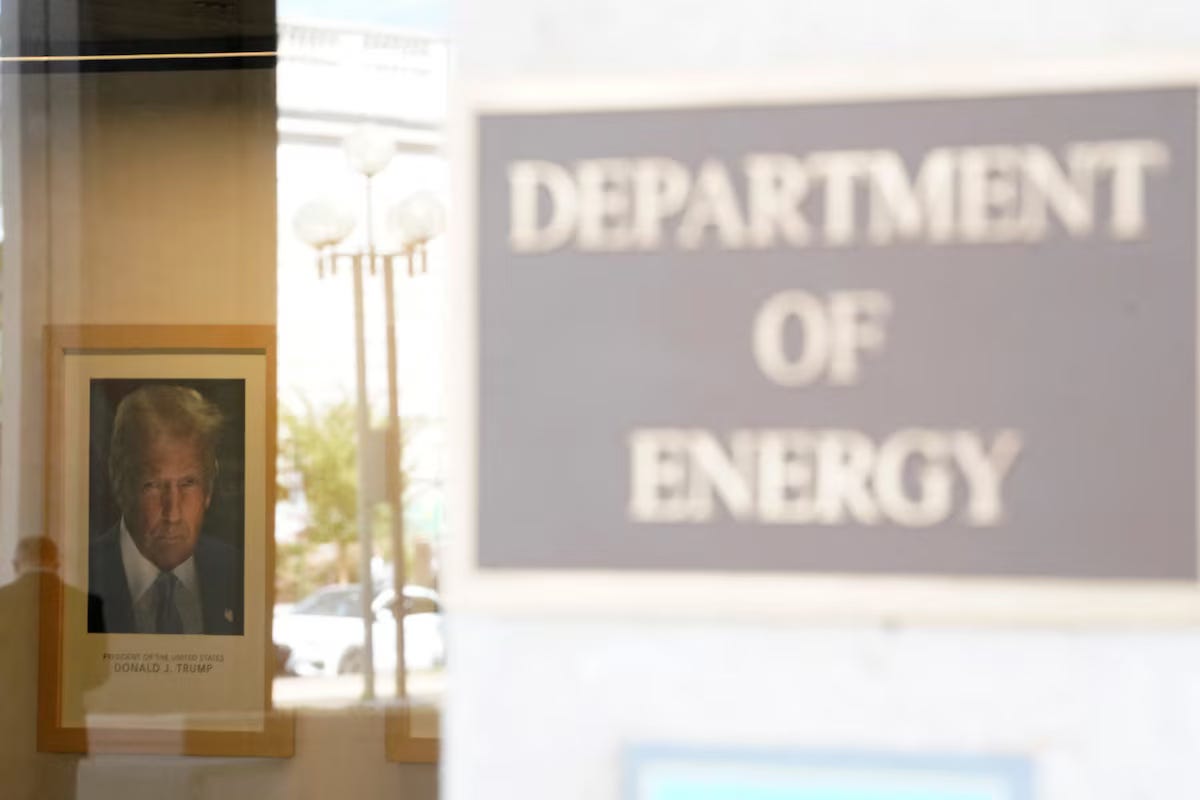
To break this deadlock, Washington is increasingly stepping in to become the buyer before a commercial market fully exists. In 2024, Congress unlocked $2.72 billion to expand production of conventional low-enriched uranium and HALEU following the Russian import ban. By January 2026, the DOE had awarded an additional $2.7 billion to expand domestic enrichment, including up to $900 million to three companies for enrichment services over the following decade. Two of those three companies—American Centrifuge Operating and General Matter—secured awards to develop domestic HALEU enrichment capacity.
Despite all this progress, a statement released by the DOE last week reinforces our earlier findings that the commercial sector still has a long way to go. The department announced conditional commitments to supply HALEU to both NASA and Radiant Industries:
Despite this progress, a recent DOE statement regarding HALEU allocations to organizations like NASA and Radiant Industries reinforces that the commercial sector still has a long way to go:
“HALEU is not currently available from domestic suppliers, and many advanced reactors need the material to achieve smaller designs, longer operating cycles, and increased efficiencies over current technologies. To help fill this gap, DOE created a process for nuclear developers to request HALEU material from DOE sources, including material from the National Nuclear Security Administration.”
The contradiction is telling. The U.S. has no shortage of nuclear ambition, but the industrial base is still catching up. This forces Washington to bridge the gap with government inventories for missions ranging from NASA's SR-1 Freedom trip to Mars to Radiant Industries' microreactors.
The engine driving it requires deep roots. Solving the supply chain crisis of tomorrow ultimately means returning to the landscape where the atomic age first took root.
Which brings us back to Oak Ridge.
Eighty years after rural Tennessee became the industrial heart of the Manhattan Project, the US is confronting a familiar lesson. Scientific leadership alone is not enough. The breakthrough at Oak Ridge was not simply mastering nuclear physics, but building the industrial system capable of turning that knowledge into strategic power.
Now the United States is trying to rebuild what it once took for granted. The technologies are changing, the reactors are becoming more advanced, and the geopolitical rival has changed. The strategic logic has not.
Thank you for reading!
If you enjoyed this piece, consider subscribing for free to receive my posts directly in your inbox and support my work!
📨 If you think someone would enjoy this, send it their way!
Comments
Nothing yet. Say the first thing.
Sign in to join the conversation.