

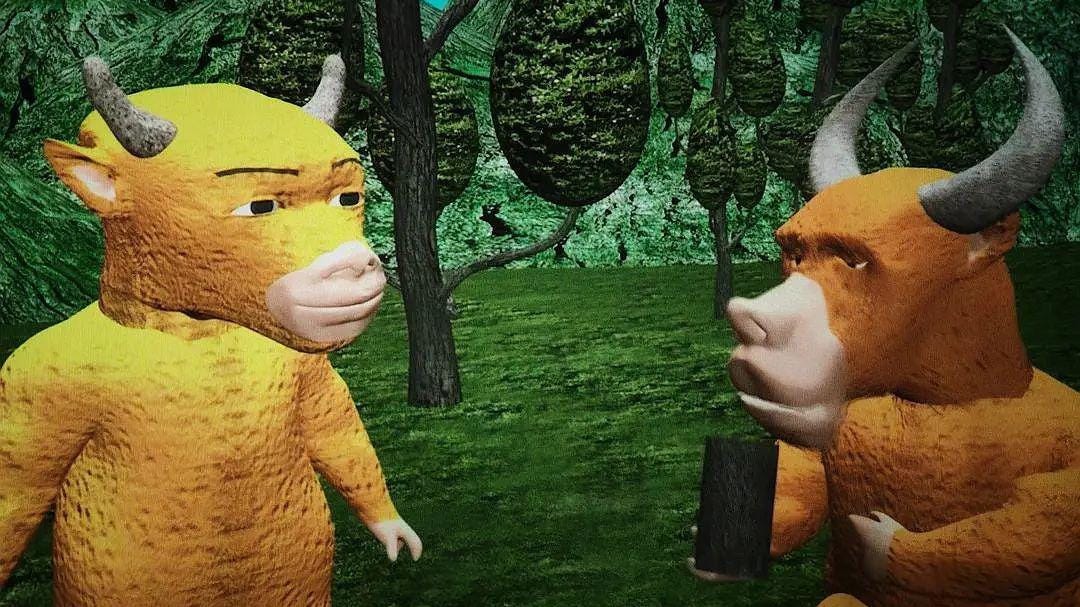
“Not beautiful images, but necessary images.” Robert Bresson’s truism has been on my mind this week following the breakout success of Niu Lai (2026), a deeply surreal animated movie from China that has become the sleeper hit of the summer.
If your Reels algorithm has not deemed you susceptible to this sort of thing, let me catch you up. Niu Lai (which translates to “The Cow is Coming”) is a coming-of-age tale about a young calf, named Niu Lai, who must learn the power of self-reliance to brave the wider world. He befriends a skylark and a leopard along the way, though the twists and turns of the plot are challenging to describe because of the film’s heavy reliance on dream sequences.
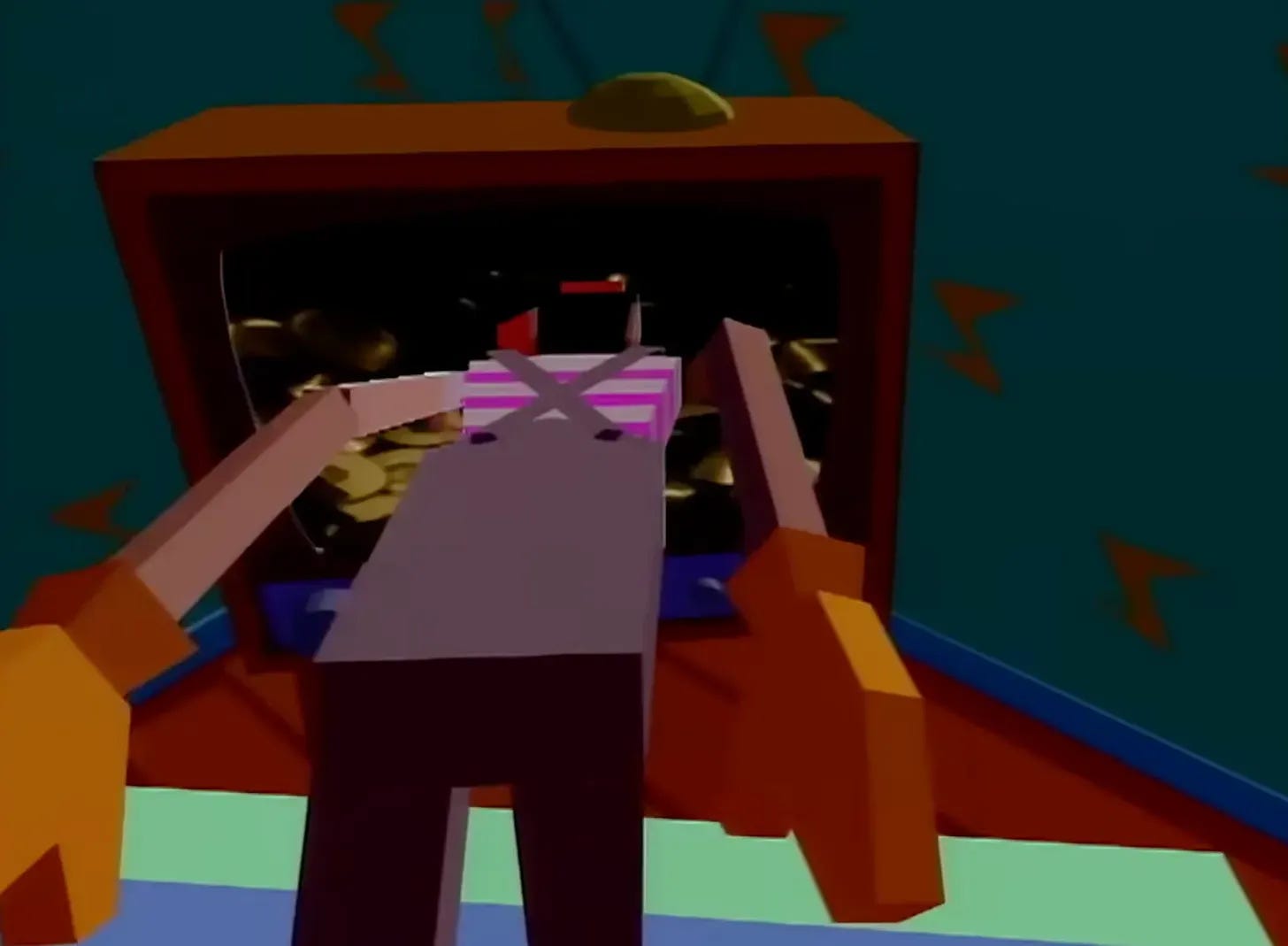
But this doesn’t even begin to capture the way that Niu Lai looks. The animals wouldn’t seem out of place in an early PlayStation game, and their proportions don’t make a ton of sense. Niu Lai’s leopard friend is extremely stout, only a third of Niu Lai’s mom’s height when standing upright, on two feet (which, for some reason, these quadruped characters sometimes do). One extremely memorable dream sequence sees Niu Lai gently jumping upward and taking flight toward a tree, locking eyes with the camera as he hurtles forward like Superman, the film’s pulse receding to slow motion. Ed Power of The Telegraph compared these visuals to Dire Straits’ “Money for Nothing” video—directed by Steve Barron, and groundbreaking at the time for its early use of 3D animation—which features an eerily similar moment in which a blocky character takes flight, diving headfirst into his TV set.
As of this writing, Niu Lai is estimated to have grossed the equivalent of $2.25 million on a budget of a few hundred dollars. The film was made by just two people: Xin Yumeng and Sun Lifang, a son and mother duo. Xin works in interior design, so they animated the film in the architecture program SketchUp, which may explain why the settings—particularly the trees—have fairly detailed 2D approximations of shadow and texture, giving you a sense of real-world things without convincingly replicating them. The film opened quietly in Chinese theaters with no marketing, but, based on everything described above, it became an online meme pretty organically. Now, movie theater workers have begun drawing their own posters in lieu of formal promotional materials.
Many mainstream outlets have framed Niu Lai as 2026’s answer to Tommy Wiseau’s The Room (2003). There’s the “so bad it’s good” element, and then there’s the timing of its release—in a moment of disgust with AI slop, Niu Lai serves up a singular, brashly convention-bucking, clearly human vision. A useful foil for Niu Lai’s visuals might be Video Brinquedo, the Brazilian animation studio that became infamous for its ripoffs of Pixar and DreamWorks movies. Ratatoing is their take on Ratatouille (2007) if you really squint—there are mice, sure, and the movie is set in a restaurant, but the animation software used here can’t hold a candle to Pixar’s technological capabilities. Ratatoing’s 40-minute runtime also felt much longer than it was because of endless, distended, proto-Lynchian dialogue sequences between the mice. Randomly, there is a moment when the mice break into song and dance, Busby Berkeley–style.
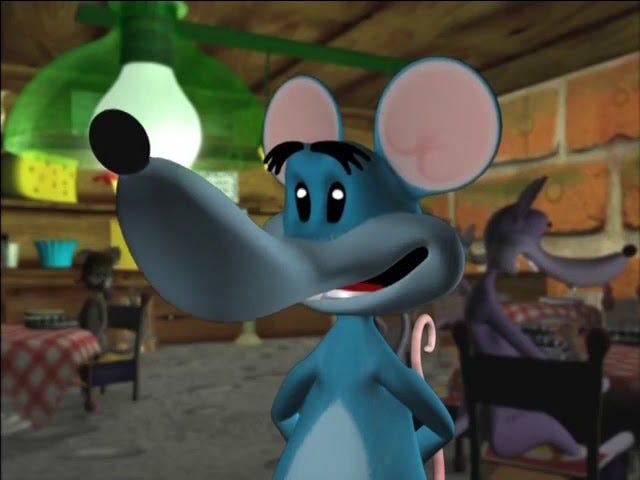
This is where the comparisons to Niu Lai end. The logic behind Ratatoing seems to be: if people like this much better movie that features animated mice, then surely all they need to flock to a movie are the barest signifiers of that very same thing. An online viewership mined comedy from the spectacle of such a bizarre, very corporate-brained failure. In contrast, Niu Lai is closer to outsider art. Its rough-edged animation flows from the earnest pursuit of a single idea—it’s just that what that idea is may not be super legible to viewers. This lets the film thrive on a certain mystery of human intention. Perseverance, too; it took five years for Xin and Sun to make the movie, teaching themselves the basic building blocks of filmmaking and animation over that time. Sun even wrote and performed an original theme song.
There’s also an infectious delight in seeing something that so gleefully bends the accepted rules of filmmaking. Niu Lai breaks from the recent vogue for photorealistic animated features, or the imperceptible way that realistic CG effects are woven into live action movies. In that light, the flying sequence comes across as expressionist—animation makes this kind of imagination possible, liberating characters from the laws of physics, allowing us to realize something stranger and truer to dreams.

Copyright ©2026 Filmmaker Magazine, All rights reserved.
MAILING ADDRESS — Filmmaker Magazine, 55 Washington Street, Brooklyn, NY 11201
No posts
Comments
Nothing yet. Say the first thing.
Sign in to join the conversation.