
In Roberto Bolaño’s vaunted novel 2666 (2004), a Chilean professor of philosophy attempts to recreate a Marcel Duchamp readymade from the artist’s short stay in Buenos Aires in 1918–19. Possessed by an impulse that seems not entirely his own, Oscar Amalfitano—one of a number of academics in the book searching for the disappeared (fictional) German author Archimboldi—hangs a geometry textbook on his clothesline. The piece’s accompanying instructions say to let the wind “go through the book, choose its own problems, turn and tear out the pages.” The original was a wedding gift to Duchamp’s sister.
Lorena Alvarado has heard the Bolaño reference point applied to her debut feature, Lost Chapters (2024), before. “The Bolaño comparison can be a bit misleading,” Alvarado told me. “In a few places, my film has been described as a detective story, which I don’t really think is accurate. It’s a very, very, very subtle search. There is a mundanity to it, like the searches or the interests in our everyday life.”
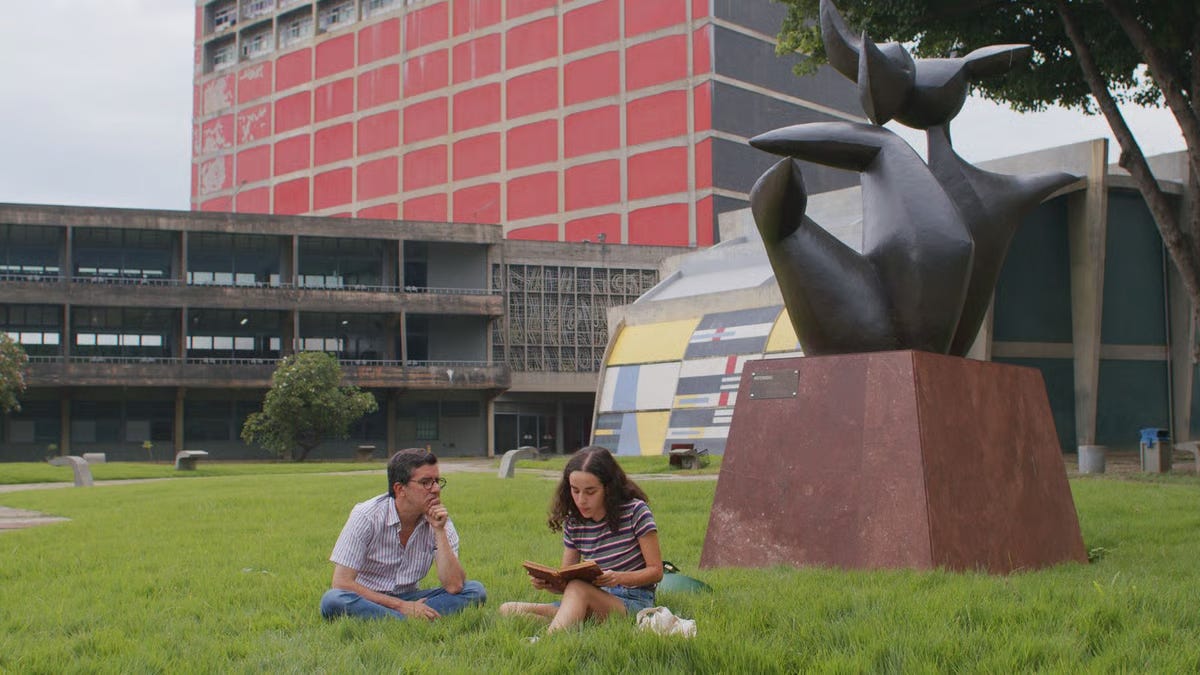
Lost Chapters is indeed a story about the search for a lost author, à la Bolaño, but one enmeshed with the mundane fabric of real life. Alvarado’s family members play versions of themselves: her father, Ignacio (Ignacio Alvarado), a bookseller; her grandmother, whom she calls Mamama (Adela Alvarado), and who is losing her memory; and her sister, Ena (Ena Alvarado), Lorena’s stand-in, who has just returned to Caracas following an extended period abroad. Most of the film is shot in Mamama’s real house, where Alvarado spent much of her childhood, and in a warehouse out of which Ignacio has really been operating his business, having shuttered the bookstore due to the political situation. There, Ena finds a postcard referring to the first Venezuelan novel to ever mention oil, potentially written under a pseudonym by the mysterious real-life Venezuelan author and forgery artist Rafael Bolívar Coronado.
“The project actually started as a documentary about my father’s bookstore,” Alvarado said. “I started shooting interviews with him and other booksellers in Caracas, but I got bored with the documentary format. I wanted to explore the memory of the city through books, and then, as my grandmother has been living with this process of memory-loss for a long time, I recognized that it could be beautiful to explore that as another element.”
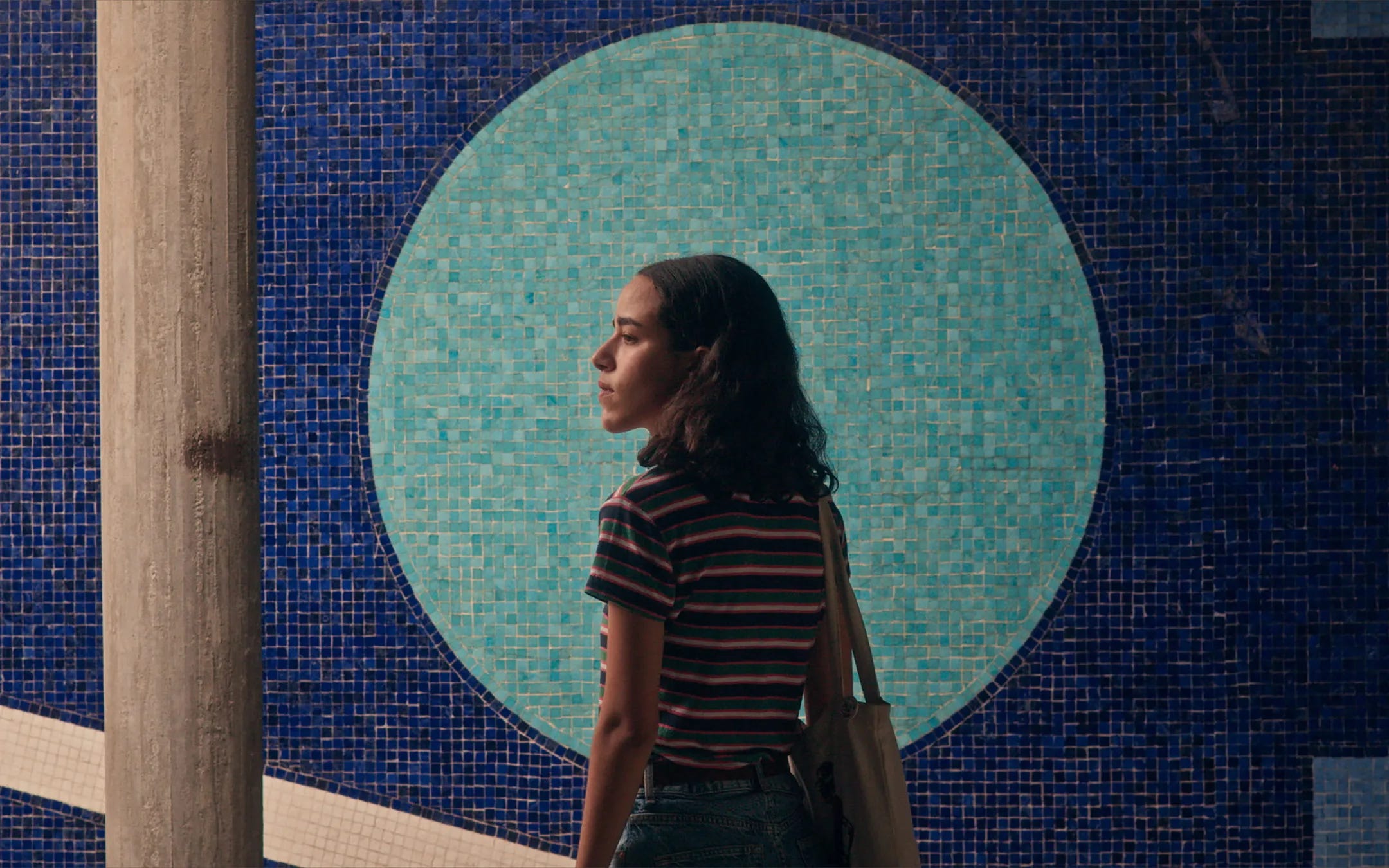
Like the best docufiction films, it is difficult to say whether Lost Chapters is more fact or fabulation. Alvarado’s feature has the feeling of either a feature or a documentary for which the director merely neglected to close the figurative windows, allowing the real world to breeze in. Though Lost Chapters is composed with a Mondrian-esque sense of geometry, Alvarado insists that few shots were planned.
“I had a very rough idea of the story I wanted to tell, but no dialogue,” she says. “I think at some point, I tried to storyboard, but I realized it was useless, because I was working with real people, real moments. I had to let life dictate the shots.”
As noted by Richard Brody in his rave review for The New Yorker, Alvarado’s camera pays peculiar attention to the inanimate objects of the house—books, knickknacks, photographs. “Alvarado’s achievement is nearly animistic,” he writes, “turning objects from icons of life into living things themselves, infused with the being of those who live with and care for them.”
Alvarado and José Ostos, her director of photography and childhood friend, cannot help but find heartfelt and mysterious significance in every nook and cranny of Mamama’s house. One representative shot holds on a wall-mounted shelving unit separated into one hundred or so square compartments, each with its own toy or figurine, some knitted, some ceramic, many bearing the markings of a well-loved inanimate life. As the shot lingers, one begins to notice some empty compartments, but just then the wrinkled hands of Mamama reach up to replace the missing pieces.
“We’ve really lived out the Venezuelan diaspora in a personal way,” Alvarado tells me of her family. “My grandmother had eight children and 20 grandchildren, and seven out of eight of those children have lived in that house, often with their own children. But today, almost all of my cousins have emigrated. The house is packed with objects that people have left behind, and they have this ghostly quality of containing the energy of people that are no longer there. It’s sad and beautiful that the objects are more permanent than the people. In the Venezuelan diaspora, the grandparents are often the ones who stayed, so my grandmother has become the caretaker of all these mementos and memories.”
Parallel to the search for Rafael Bolívar Coronado, Ena also searches for a poem often recited in fragments by Mamama. She attempts to teach her grandmother the lines:
Everything is the same
like that one afternoon.
The garden is enriched
by the same roses
and the same sun
drenches the same things
with a soft clearness of starlight.
But Mamama’s grasp on the language is fading; Ena realizes that the work of memory must fall to her father and herself, that they must grab what they can from the morass encroaching everywhere. The Venezuelan political situation is implied to be one catalyst of this loss, but it only ever enters the frame obliquely, as in a newscast delivered by a colonel, who warns of a coming storm.
Alvarado credits her own archival impulse to Ignacio: “My father, the bookseller, collected this album of mementos that he had found inside books. He had this album of love letters, presentation notes, even a telegraph from the president. There were nude photos, a flower.… It was a beautiful collection of this vast collective memory.”
Lost Chapters lives in this tense intermediary space, paying loving attention to one’s surroundings while remaining painfully conscious of their impermanence in one’s life, and of the frustrating traces that will remain when paths inevitably part. There’s horror and sweetness there: one scene shows Ena and Mamama laughing as the latter struggles to remember the poem; the next shows her wandering off into an uncertain and dangerous night. The spells of forgetfulness that were caught on camera, Alvarado emphasizes, were real.
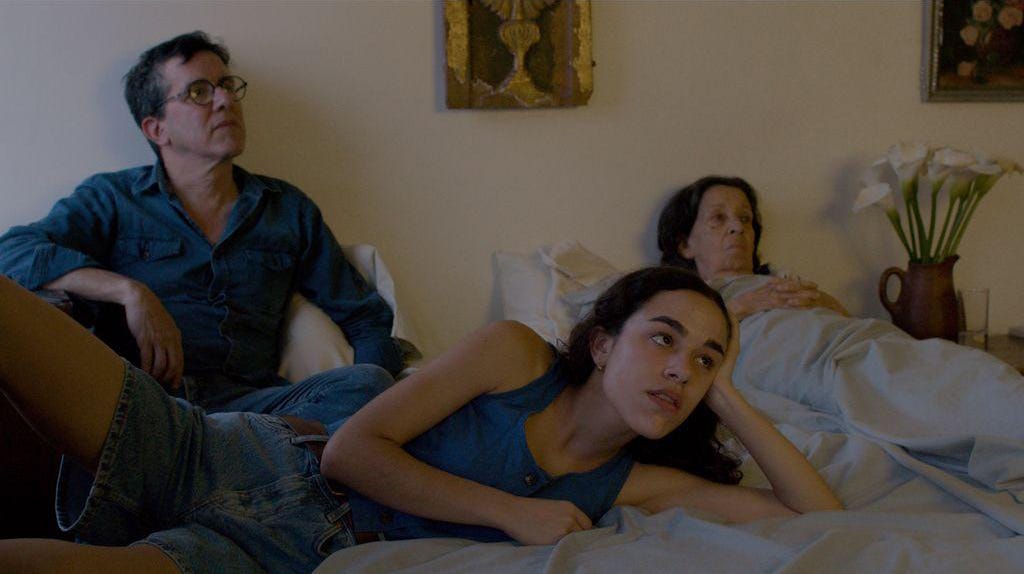
Ignacio sums up his mother’s routine in one scene: “Emptying a drawer, filling it, closing it, the same thing she always does.” The constant rearranging and rehearsing of the half-forgotten poem are poor bulwarks against the tide of loss. The real-life Ignacio, for his part, has endeavored to create The Museum of the Venezuelan Book, a curated selection of the rarest and most important national tomes from his bookstore. “I’d like to clarify that the ‘museum’ is more like a room inside of a house,” Alvarado laughs. While those who remained in Venezuela hold onto what they can, the younger generation gets used to letting go in the diaspora.
“I’ve moved so much that I’ve really had to detach myself from objects,” Alvarado says. “You can’t carry all the things you love with you.” Filmmaking has taken Alvarado from Emerson College in Boston to New York, to Los Angeles, and most recently to Barcelona, where she has begun work on a semi-sequel to her debut, following Ena after her move across the Atlantic.
In Lost Chapters, equal attention is paid to object and human, drawing our eye to these strange things which attract our curiosity and repel our understanding. The work of Rafael Bolívar Coronado might be one such thing.
“Related to 2666, and the first chapters about the characters obsessed with Archimboldi, I’ve discovered this huge cult following for Bolívar Coronado,” Alvarado says. The writer, active in the early 20th century, used as many as 600 assumed names, some belonging to established Venezuelan poets, others entirely fabricated. He wrote seven Cronicas de Indias, historical accounts of travelers to the New World, which were later discovered to be totally anachronistic, the work of an imposter, before dying in a flu epidemic in 1924. The search for Bolívar Coronado amidst these forgeries mirrors Alvarado’s broader investigation, standing in for the stubborn traces of life that cling to what’s left behind, beckoning and frustrating us—the documentary in the fiction, and the fiction in the documentary.
Like Duchamp’s geometry textbook, Lost Chapters is a film hung on a clothesline, the world blowing through it, and it is at once affirming and terrifying that the little bit of life carried on that breeze permeates everything.
No posts
Comments
Nothing yet. Say the first thing.
Sign in to join the conversation.