
Following the screening at the Jerusalem Film Festival, I sat down with director, actor, and writer Polaris Banks and actress and co-writer Mor Cohen to discuss turning their personal struggles into cinema, the challenges of making such an intimate film, their approach to authenticity in filmmaking, and what they learned from creating a project that blurred the boundaries between reality and fiction.
Cinema has a long history of exploring relationships. We have screwball comedies, the romantic comedies we know today, and dramatic takes such as Kramer vs. Kramer and Marriage Story. Are there any films about relationships that stayed with you over the years and perhaps influenced the way you think about cinema?
Polaris: I haven’t seen some of the movies that we keep getting compared to yet. The only ones that are kind of like the big argument movies that I’ve seen are Who’s Afraid of Virginia Woolf? and Marriage Story, but I haven’t seen The War of the Roses. I have seen Kramer vs. Kramer, but I think my favorite relationship sparring movie is My Fair Lady.
My dad has actually been in that play three times. He loves playing Henry Higgins, and I’ve seen the movie a bunch of times.
They find a way to make this tension and cruelty they put between each other watchable and fun. And I just love movies like that, where they are able to take something dark and add some zip to it.
Mor: You mentioned Marriage Story, which we also get compared to a lot. People go like, "Marriage Story and The Blair Witch Project."
When I watched Marriage Story, Polaris and I were still in a place where we would argue a lot. Because I’m sure you know this, the movie is based on our actual marital life before we were able to overcome it.
And a lot of us overcoming it is due to the movie. But when I watched Marriage Story at the time, it really hit me hard.
Specifically, and I’m so happy we’re not there.
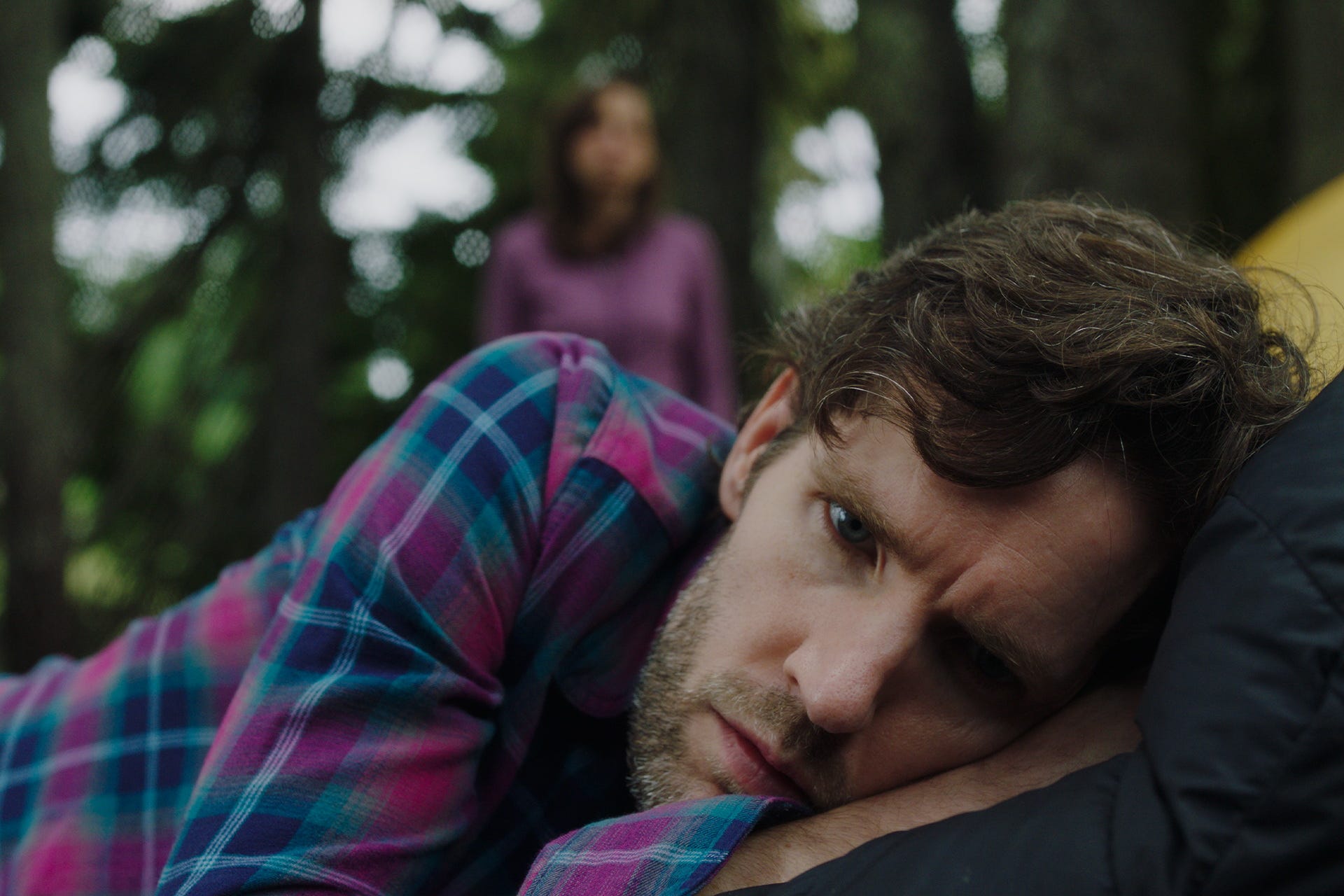
Funny, you mentioned The Blair Witch Project, because my next question is about the film. While watching the middle section of the film, I really thought about The Blair Witch Project and the idea that, when the film was released, it managed to blur the lines between fiction and reality, becoming a cultural phenomenon in the pre-social media age. So my question is: when digital images are everywhere and everyone documents their lives, what does digital cinema mean to you?
Mor: When Polaris was structuring this movie and each segment of it, we were talking about found footage, and he was really working around the angle of how to justify the footage. You know what I mean? How do you justify just keeping filming when something terrible is happening to you?
And he came up with this brilliant idea of shooting as evidence. And the whole social media aspect came up in the writing process, where people used to just document things. Now they use the process of documentation to humiliate another person or catch them.
Polaris: It’s interesting how the camera has now become a weapon for a lot of people, which is something new. When you couldn’t afford film, the best you got was news reporters or documentarians using it that way.
But now everyone can use their camera against each other, to post about each other and document each other. That was really interesting to me. How many times have you been in an argument with your wife and said, “I wish we were recording this.”
Another thing is that you asked an interesting question about what digital cinema means to me. As far as shooting a standard film, it’s not very different. But using cell phones, body cams, or those sorts of things, this is the first time that the camera has become a subjective tool of the character, which is interesting.
What they’re filming, how they’re framing it, and when they’re zooming in are character choices, not necessarily creative choices made by the director in an omniscient way. And that’s really fun to play with.
Mor: It is really fun to play with. I think shooting the found footage part was definitely my favorite part of the whole movie.
Polaris: Definitely a lot lighter on the backpacks.
The way the film is structured, it feels so spontaneous. And I think a lot of the joy of the film is going in blind and not knowing anything. With that, I felt like some of the scenes were improvised. So my question is, how much of the film was discovered during the editing process?
Mor: Zero, everything is scripted to the comma, to the period, or to the exclamation mark. If I said "well" at the beginning of a sentence and that "well" wasn't there, then we started over. The only person who was allowed improvisation was Grae, the interviewer at the end.
Polaris: When you’re doing something low budget and you’re racing against time, and you can only use half the sun because the shadows are moving and that sort of thing, you have to get only what you need and get out of there.
We didn’t have the luxury to find anything. We storyboarded, we rehearsed religiously, we pored over the script, making sure it was exactly what we wanted to say. And that helped us save time and money on this movie, be efficient, and also not exhaust each other with all the hiking and all that.
But another important thing about not improvising is that this is the most personal thing we’re ever going to make, and one of the most personal movies maybe ever made. You can’t just throw out personal information and improvise, then hope that they’ll go with it, and maybe they regret it later, and then you don’t have the coverage without it.
The script was a contract of, “I approve of you saying this. Please don’t say that. I agree to this argument because I make this point later, which justifies it.” We didn’t want to break that trust on set and then have to deal with that.
Also, the movie could get quite tedious if we repeat ourselves too much or go off on tangents. So the script kept it tight, and most of the editing was honestly done in the writing process. We cut a few lines after we’d shot, but almost none of it was changed. It was exactly as written.
You talked about the storyboarding, and I want to ask about the whole process behind it, because the film opens with a text made by two people. And I think that beyond being a statement about the relationship in the film, it is also, in my opinion, a statement about where we are in the industry with AI rising in the background. So my question is, what does it mean to release a film that is so humanly made?
Polaris: It means everything to me because, to me, with AI, we’re really getting smacked in the face with what art truly is. And it’s not just aesthetics. I always use the example of the pyramids. No one is amazed by the pyramids aesthetically. They’re a pile of stones, but they represent what it took to make the thing and that humans made it.
And now everything is that. We have to imbue meaning into our art through our legitimate effort. Otherwise, there’s no one at the other end of the phone call. And as we get more and more superficial things and just fake art flooding the world, I think I want my own work to go as headfirst into authenticity as possible. I want to use natural light. I want to use non-digital animation and practical effects. I want to rehearse with actors instead of finding it in the edit. I want to shoot on film if I can. I want to do everything and also base things on real life.
Don’t make movies about movies about movies. Go to the source. Learn about something firsthand and then tell it through a film. Authenticity is everything now, because that’s what the audience is not going to be able to get anywhere else.
Mor: This movie is so hands-on that even the credits are me writing on Jell-O. And there were a lot of decisions where I thought, “Let’s make it a little easier on ourselves.” I wanted it to be handwritten, and I thought, “I’ll make fonts. I will handwrite fonts and make four different letters, so it’s going to look organic.”
And he was like, “No, not look organic. Be organic.”
I think AI is a great tool for anything that is not art. We can, I’m sure, use it for automation and to make a lot of systems more efficient and helpful to us as people in many different ways throughout our society.
But art is not one of them. Art is something that has to be drawn from an experience that AI can never have. AI can maybe look at the data of other people having experiences, other artists making art. It cannot generate anything that is new. If anything, it’s just a blend of everything that’s recycled from other people’s hard work.
And if we stay on the topic of the human aspect of the film and the process behind it, you mentioned that there was zero improvisation. But there is this very human moment near the end of the film. I don’t want to spoil it, but it’s probably the rawest moment we hear from both of you. When you decided to include that audio, were there any other moments from that process that you considered bringing into the film, or was there a lot of negotiation around what to reveal?
Mor: We fought throughout the whole process. When we started the movie, we were that angry, fighting couple. We really did have a couples therapist at the time who told us not to make it.
She was like, “You’re not ready to make this movie. If you’re going to go make this movie...” She was like, “You’re making a movie about what?” And two weeks before, she was like, “If you’re going to do that now, in the state that you guys are in, you’re not going to come back as a couple. It’s not going to work for you.”
And she wasn’t completely wrong. It was so hard the first week that we really did almost break up.
But this movie really taught us how to be a couple. I think we learned how to be a married couple, to be on each other’s team, to actually listen and work toward a solution rather than toward who won the fight on that set. And without that, I don’t know if we would be married right now.
As the movie progressed, we moved further and further away from that couple. But in the very final scene, when they have the long one-take, a lot of the arguments that we actually had on set made it into that scene during a rewrite session.
Polaris: We didn’t want to leave anything out of the movie that we could. We wanted to not hide anything. And so, honestly, I guess we’re not that bad because there isn’t any chair throwing or setting each other on fire or anything like that in the movie.
But one thing that I did not include was discussions about our families. Because we are consenting to make this movie, but our parents and siblings aren’t. And a lot of our bad behavior, of course, comes from what we’ve learned at home. But that’s not our story to tell. I didn’t want to. I want to keep that between us.
But yeah, that last scene you talked about was accidentally recorded between takes, and I thought it was so funny. I convinced Mor to let us use it.
Mor: I think a lot of the movie process was Polaris making bold choices, and I would go, “We can’t do that. Don’t make me do that. Please don’t let me do that.”
And then he’s like, “Why don’t you sit with it? Just sit and think about it for a little bit.” And a week or two later, I’m like, “If we do that, what would that mean for this and that?” And eventually, I just cave, and he was making all the right decisions.
I was protesting to protect us. Really, I now second and can back every choice that was made in this movie.
I think, from what I’m hearing, the journey is both an emotional one and a physical one. And I’m personally amazed that this is your first feature project. My question is, what have you learned from this movie, and what are you going to bring from what you learned into your next project?
Polaris: In the writing process, I had to write from Mor’s perspective, which is very different from mine. She’s very feminine and emotional, while I’m a very masculine, logical thinker. And not only did I interview her several times to get an understanding of why she does some of the things she does during our arguments, but I also had to get into her character while writing the script.
After writing that big final scene, I walked out crying, and I apologized to her, saying, “I’m so sorry I put you through this.” It was a great exercise in empathizing and expanding your own way of thinking about each other.
But also, from this point on, I think I’ll be able to write characters across a wider range on the emotional, feminine, and masculine spectrum, because no one wants all their characters to sound like them.
So it was a great acting exercise, because when you’re writing, you’re really acting.
Mor: This is definitely the most exposed project I’ve ever done. The most vulnerable, the most personal thing I may ever do. But because this is my specific genre, the more I can lean into real-life events, expand on them, and really dive into them, this is where I want to exist as a creator.
But I think because it was so personal, this is also why it was so hard for me during the first week, when we were working on some of the harder scenes in terms of dialogue and intensity. I was fighting it at the beginning.
It was very hard for me to take direction in some of these scenes, specifically because they were situations that were actually taken from real life. It was hard to take direction from the person you’re clashing with, and they get to tell you how to behave.
And I was like, “Is he just trying to justify what he did to make me look bad?” It was very hard to separate the professional and the personal in this. And I ended up taking very big swings with Polaris’s encouragement and guidance.
And I think what I’m learning is that, as an actor, you keep trying to find the character. And in many cases, finding the character means bringing it closer to yourself. The more of yourself that you can put into it, the fuller the character will be.
And in many cases, as an actor, you would go in thinking, “Okay, this character is like this and like that,” kind of predetermining what the character is or isn’t. And I think this project, more than anything, taught me that there is nothing the character is not.
Polaris: And a more practical lesson I learned as a director on set is that you often prioritize certain things during production. We prioritize filming everything in one direction first, so we won’t have to keep resetting the props, or prioritize the sun, or make sure we get out of a location on time.
But sometimes you have to prioritize your cast’s physical comfort, endurance, and energy. And when I started making this movie with Mor, that was my last concern. I was worried about getting it done.
And that really hit me, because I would get her too cold in the river and we’d have to stop, or I’d exhaust her by making her hike too much in one day, or things like that. I wouldn’t give her enough time to stop sweating and get her makeup done.
And in the future, when I make difficult movies like this, I am going to try to make it as comfortable for my cast as possible and maybe spend a little more time resetting the camera rather than making them go through all the pain and suffering.
No posts
Comments
Nothing yet. Say the first thing.
Sign in to join the conversation.